Product Description
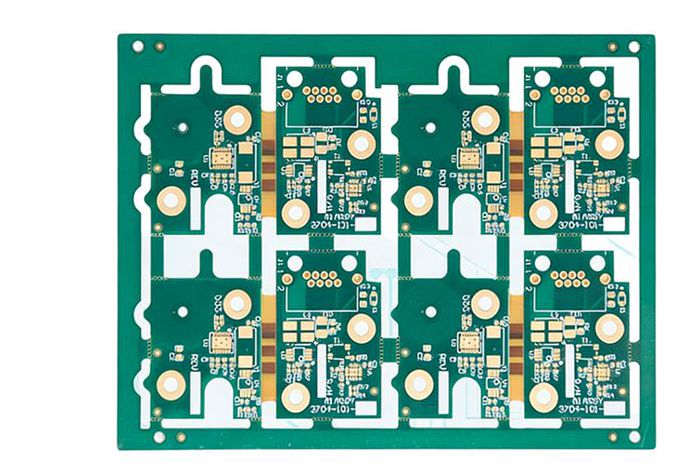
Printed Circuit Boards (PCBs) are the foundation of modern electronic devices. Among the most common types are Single-Sided PCB and Double-Sided PCB, each designed for different levels of circuit complexity and application requirements.
What is a Single-Sided PCB?
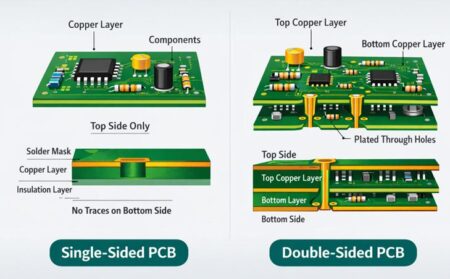
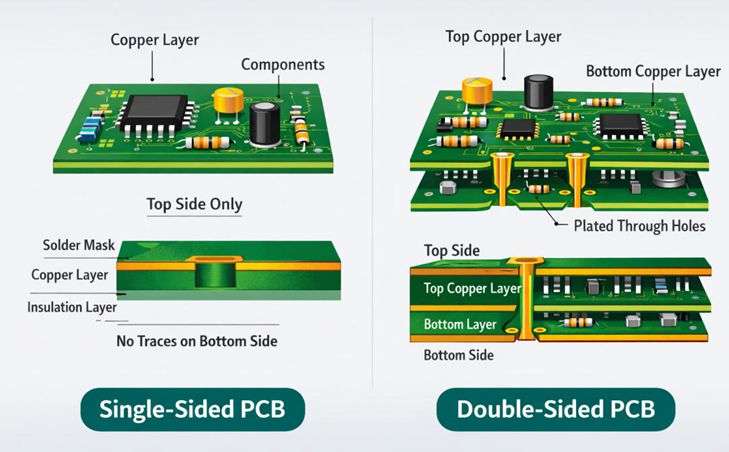
A Single-Sided PCB is the simplest type of printed circuit board. It has only one layer of conductive copper on one side, while the other side is used for mounting components.
Key Features of Single-Sided PCB
- Simple structure with only one conductive layer
- Low manufacturing cost
- Easy design and production process
- Suitable for low-density circuits
- Limited routing capability
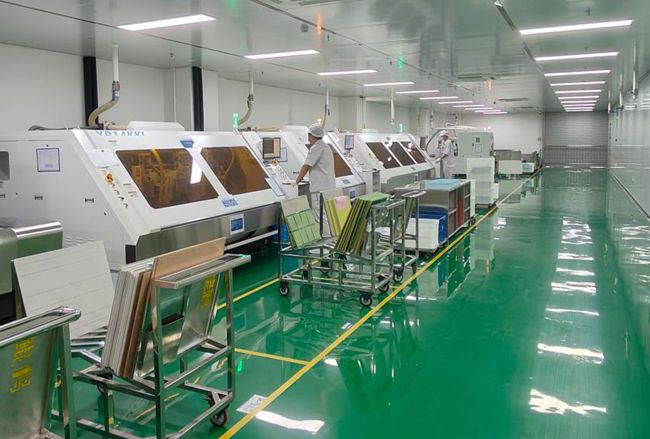
Manufacturing Process of Single-Sided PCB
The production process is relatively straightforward:
- Base material preparation (FR4 or CEM-1)
- Copper layer lamination
- Circuit pattern imaging and etching
- Drilling (if required)
- Solder mask application
- Surface finishing (HASL / OSP)
- Final inspection
Because of its simple structure, Single-Sided PCB manufacturing is fast and cost-effective.
Applications of Single-Sided PCB
Single-sided PCBs are widely used in:
- Consumer electronics (TVs, radios, toys)
- Power supplies
- LED lighting systems
- Household appliances
- Simple control circuits
What is a Double-Sided PCB?
A Double-Sided PCB has conductive copper layers on both sides of the board, allowing more complex circuit designs. The two layers are connected using plated through holes (PTH).
Key Features of Double-Sided PCB
- Higher circuit density than single-sided PCB
- Ability to route circuits on both sides
- Improved electrical performance
- More flexible design options
- Supports more complex components
Manufacturing Process of Double-Sided PCB
The process is more advanced compared to single-sided PCBs:
- Double-sided copper-clad laminate preparation
- Circuit pattern imaging on both sides
- Etching of copper layers
- Drilling and plated through hole (PTH) process
- Solder mask application on both sides
- Surface finishing (ENIG / HASL / OSP)
- Electrical testing and inspection
The key difference is the plating process, which electrically connects both sides of the PCB.
Applications of Double-Sided PCB
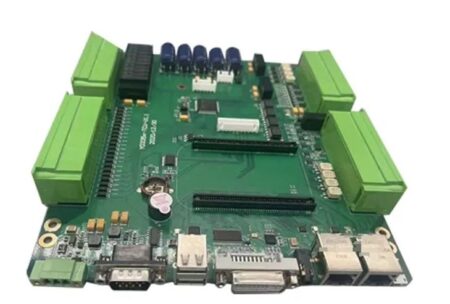
Double-sided PCBs are commonly used in:
- Industrial control systems
- Communication equipment
- Power electronics
- Automotive electronics
- Consumer electronics with higher complexity
Single-Sided PCB vs Double-Sided PCB (Comparison)
| Feature | Single-Sided PCB | Double-Sided PCB |
|---|---|---|
| Layers | 1 | 2 |
| Complexity | Low | Medium |
| Cost | Low | Moderate |
| Routing Capability | Limited | More flexible |
| Application | Simple devices | More complex systems |
Choosing the Right PCB Type
Choosing between Single-Sided PCB and Double-Sided PCB depends on:
- Circuit complexity
- Budget constraints
- Space limitations
- Performance requirements
For simple and cost-sensitive applications, single-sided PCBs are ideal. For more advanced electronic systems requiring higher performance, double-sided PCBs provide better flexibility and functionality.
Contact Us
📧 Email: rfq@ringpcb.com