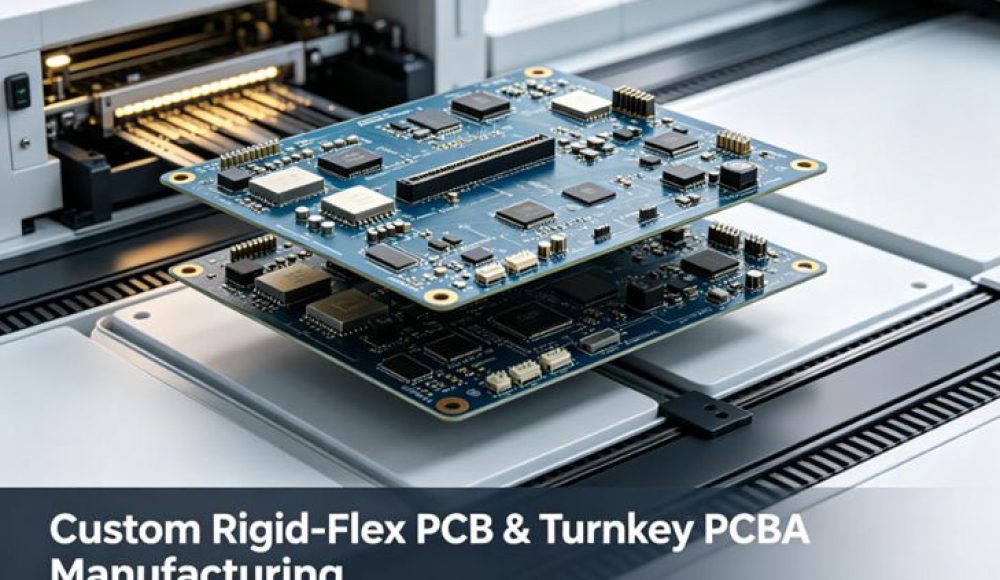
In today’s electronics industry, miniaturization, lightweight design, and high integration have become core competitive standards for consumer, medical, automotive, and industrial devices. Engineers and B2B manufacturers are constantly seeking circuit solutions that save space while maintaining stable performance. As traditional rigid PCBs and pure flexible circuits gradually fail to meet dual demands of structural stability and three-dimensional assembly, custom rigid-flex PCB and PCBA manufacturing has become the preferred solution for compact electronics worldwide. Combined with the latest industry trends and B-end core concerns, this article analyzes why customized rigid-flex assembly is uniquely suitable for miniaturized electronic equipment.
1. Booming Market Demand Driven by Compact Electronics Trend
First of all, the rapid market growth fully proves the irreplaceable value of rigid-flex technology. According to the latest industry data, the global rigid-flex PCB market was valued at USD 8.91 billion in 2025, with a steady CAGR of 6.09% from 2026 to 2031. Driven by the booming demand for foldable devices, wearable gadgets, miniature medical instruments, and compact industrial sensors, rigid-flex PCB adoption continues to rise across high-precision compact electronics fields.
In contrast, traditional circuit solutions face obvious bottlenecks in miniaturized equipment. Multiple rigid boards require additional connectors, wire harnesses and fixing structures, which occupy excessive internal space and increase equipment weight. Therefore, more and more B-end OEMs and design teams are abandoning generic PCB solutions and turning to customized rigid-flex PCB and PCBA manufacturing to solve structural pain points of compact products.
2. Core Structural Advantages Perfectly Adapt to Miniaturized Assembly
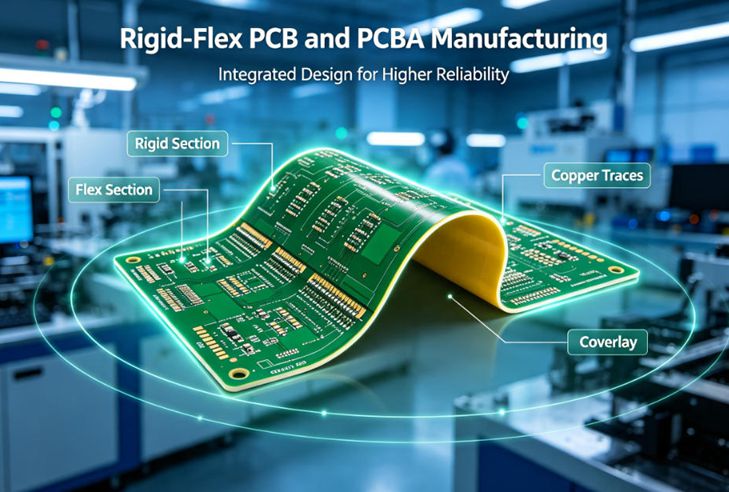
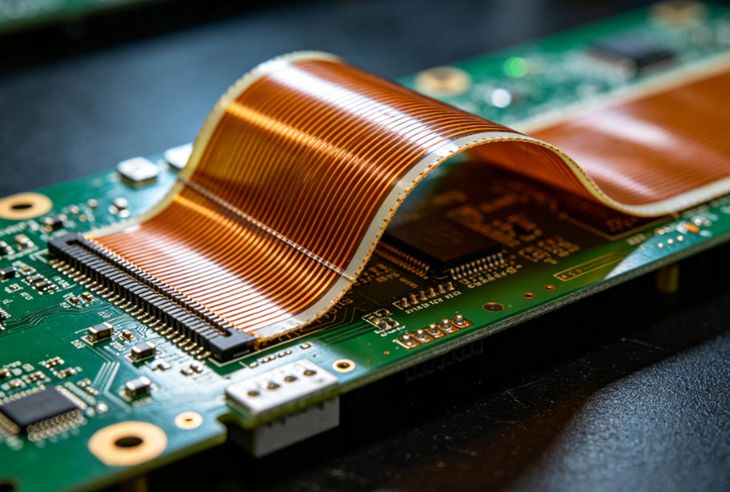
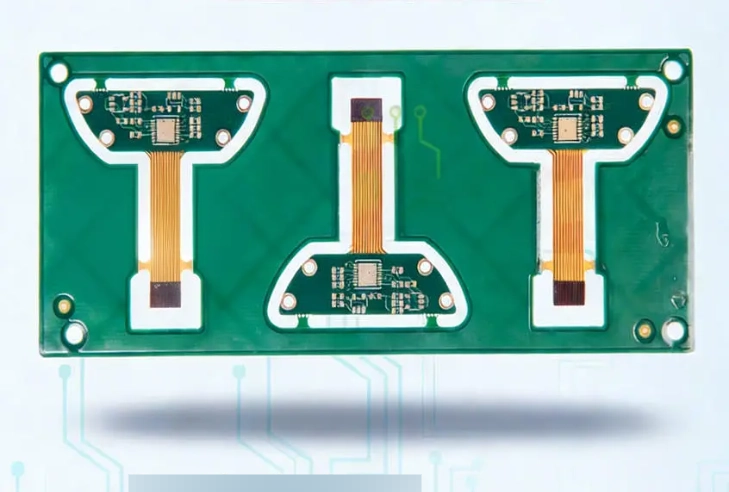
Furthermore, the hybrid structural design of rigid-flex circuits is the fundamental reason for its popularity in compact electronics. Rigid-flex PCBs integrate high-rigidity substrate areas and flexible bending areas in one board, realizing complementary advantages of the two structures.
Specifically, the rigid area provides stable support for high-precision SMT components, ensuring soldering accuracy and structural firmness; the flexible area supports arbitrary bending, folding and 3D winding, which can perfectly fit the narrow and irregular internal space of compact equipment. Industry tests show that customized rigid-flex solutions canreduce assembly volume by 40%–60% compared with traditional multi-board splicing schemes, greatly improving space utilization of miniaturized electronic products.
Whether for ultra-thin wearable devices, portable diagnostic medical equipment, or miniature industrial control modules, custom rigid-flex PCBA can complete highly integrated circuit layout without sacrificing electrical performance, realizing lightweight and miniaturized product iteration.
3. Effectively Reduce Failure Risks and Improve Long-Term Stability
In addition to space optimization, B-end customers are most concerned about product stability and yield rate of compact electronics. Due to narrow internal space and dense layout, miniaturized equipment is more susceptible to vibration, extrusion and temperature changes, making traditional connector connection structures prone to poor contact and circuit failure.
Correspondingly, customized rigid-flex PCB&PCBA adopts an integrated forming design, which eliminates a large number of intermediate connectors and welding points, effectively reducing potential failure points. This customized manufacturing mode can targetedly optimize bending resistance, anti-interference performance and structural toughness according to the usage scenarios of compact equipment, ensuring long-term stable operation of miniaturized electronic products in complex environments.
4. Customized Manufacturing Solves Personalized Pain Points of Compact Products
Most generic rigid-flex boards on the market have fixed specifications, which are difficult to match the personalized structural design and electrical parameter requirements of different compact electronic products. For this reason, professional customized EMS manufacturing has become an indispensable link in high-end miniaturized equipment development.
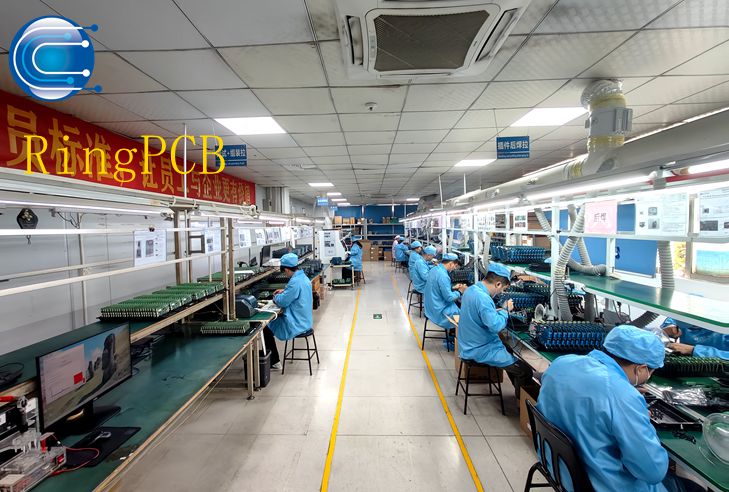
As a professional PCB and PCBA manufacturer with 18 years of industry experience, Ring PCB deeply understands the personalized customization needs of B-end compact electronics projects. We provide full-process customized rigid-flex PCB fabrication and turnkey PCBA assembly services, covering personalized adjustment of board outline, bending radius, layer stackup, substrate materials and circuit parameters.
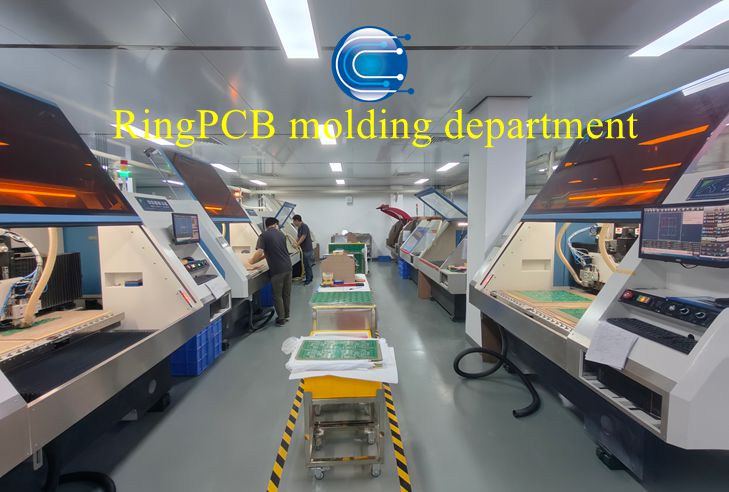
Meanwhile, equipped with a 10,000-square-meter self-operated factory and advanced production and testing equipment, Ring PCB supports rapid prototype verification within 3 days and stable mass production. All products comply with ISO9001, IATF16949 and UL industrial certifications, fully meeting the high-standard manufacturing requirements of medical, automotive and industrial compact electronic equipment.
oplus_0
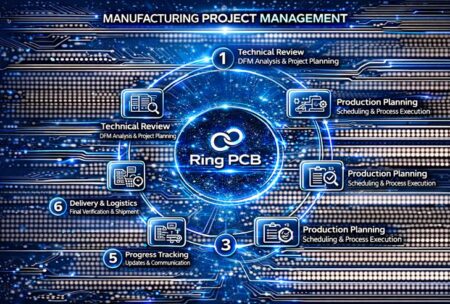
Different from ordinary manufacturers, our professional engineering team providesfree DFM optimization analysis for each customized rigid-flex project, optimizing the design scheme for compact structural characteristics in advance, avoiding production risks, and balancing product miniaturization, performance and cost for customers.
5. One-Stop Turnkey Service Simplifies B-End Supply Chain
Finally, for B-end procurement and engineering teams, efficient supply chain management is also a key factor in project selection. Custom rigid-flex projects involve complex processes such as special board production, precision assembly and multi-dimensional testing, which require high professionalism of manufacturers.
Ring PCB provides integrated one-stop EMS solutions including PCB manufacturing, authorized component sourcing, SMT/THT precision assembly, multi-process quality inspection and finished product packaging. Customers only need to provide Gerber files and BOM lists to complete the whole customized production process, which greatly saves communication costs and shortens the project cycle, and is very suitable for the rapid iteration and mass production needs of compact electronic products.
Conclusion
To sum up, benefiting from its unique structural advantages, high stability and flexible customization capabilities, custom rigid-flex PCB and PCBA manufacturing has become the ideal circuit solution for compact electronics. With the continuous upgrading of miniaturized electronic equipment, customized rigid-flex manufacturing will become the mainstream choice for high-precision and lightweight electronic product design.
If you have customized rigid-flex PCB and PCBA prototype or mass production needs for compact electronic projects, feel free to send your design files and technical requirements to rfq@ringpcb.com. Our professional team will provide you with exclusive technical solutions and competitive quotations within 24 hours.