In 2026, supply chain risk control remains a top priority for electronics OEMs. When selecting a PCB & PCBA manufacturer, engineering and procurement teams must evaluate certifications strategically rather than treating them as decorative badges. Different target markets and product categories require different compliance standards, and mismatched certification can halt product launches or trigger heavy fines.
What Each Core PCB & PCBA Certification Covers
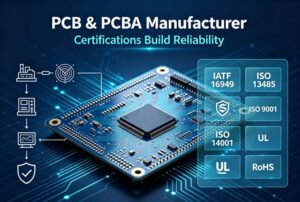
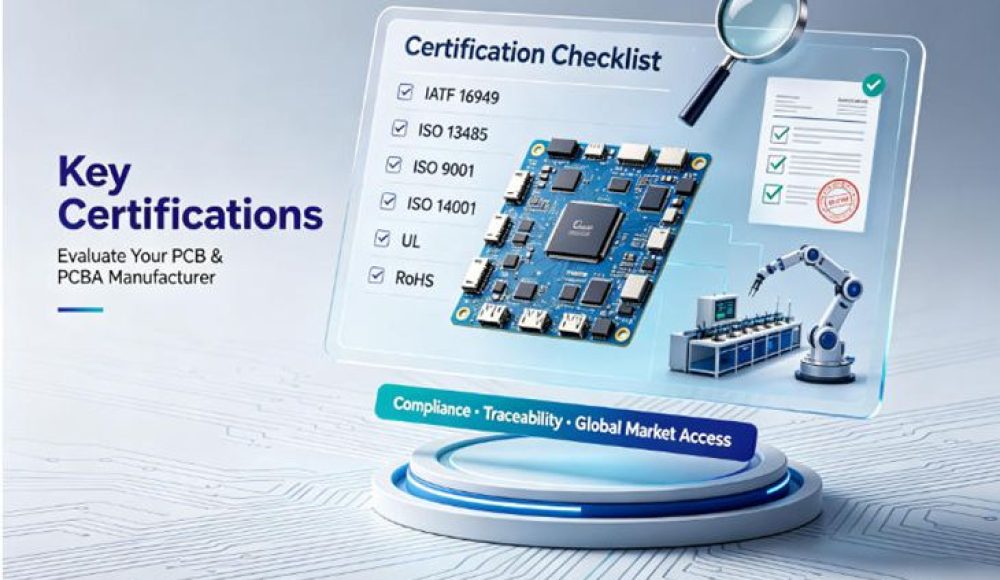
ISO 9001 establishes standardized quality management processes and serves as the minimum qualification for electronics manufacturers. ISO 14001 demonstrates responsible environmental management, a key requirement for large European and North American OEMs. IATF 16949 builds on ISO9001 and adds strict rules for traceability, change management and defect prevention, ideal for high-reliability industrial and robotic PCBA. ISO 13485 is mandatory for medical device PCBA, focusing on product risk control and complete manufacturing records.
For cross-border shipments, UL Recognized certification ensures PCB boards meet North American safety standards, while RoHS compliance restricts hazardous substances for EU market entry. Each certification addresses a distinct requirement, and a full portfolio enables a manufacturer to serve multiple high-end industries simultaneously.
Common Pitfalls When Reviewing Supplier Certifications
One common mistake is assuming a single certification covers all application scenarios. For example, ISO9001 alone cannot replace ISO13485 for medical device projects. Another frequent risk is suppliers whose certificates cover only PCB fabrication, not PCBA assembly. If your project requires full turnkey assembly, confirm that the certification scope includes SMT and through-hole assembly processes.
Additionally, many buyers overlook certificate validity and scope. Some manufacturers hold certificates for a separate production site, not the factory producing your boards. Always ask suppliers to provide certificate copies and confirm the scope includes both PCB fabrication and PCBA assembly before awarding orders.
How Certifications Impact Your Product’s Market Access
Certifications directly determine which global markets your finished hardware can enter. Without UL, your industrial control or robot PCBA may not pass 整机 safety certification in North America. Without RoHS documents, EU customs may detain your shipments. Medical products cannot enter regulated markets without ISO13485-compliant manufacturing records.
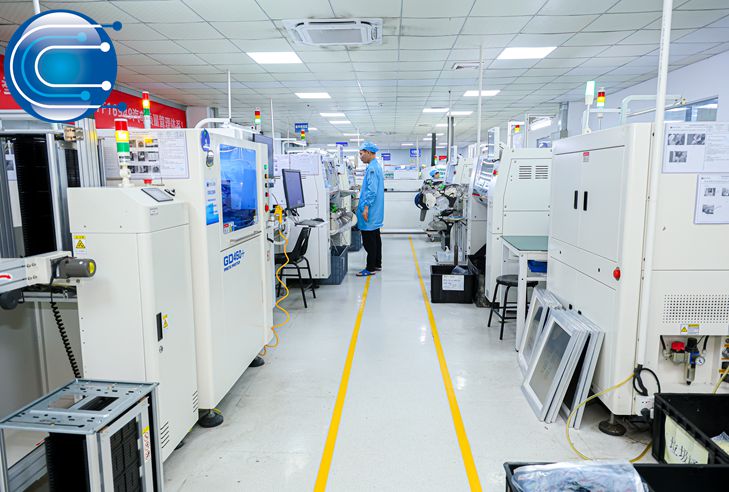
Ring PCB is a trusted PCB & PCBA manufacturer with a complete certification portfolio including IATF 16949, ISO 13485, ISO 9001 and ISO 14001. We also support UL Recognized and RoHS compliance for global projects. Our factory can produce multilayer PCBs up to 62 layers, with monthly bare PCB capacity of 50,000 ㎡ and up to 500 PCBA projects monthly. Our team provides full documentation, audit support and reliability testing for industrial, medical and robotic hardware.
Submit your design files for quotation and technical assessment at rfq@ringpcb.com.