For electronics OEMs, PCB assembly costs are only one part of the manufacturing equation. Component availability, engineering changes, quality control, supplier coordination, and delivery reliability can have an even greater impact on total project cost.
These challenges are particularly relevant to smart home devices, IoT hardware, industrial controllers, and communication electronics.
As electronic products integrate more specialized components, procurement teams must balance competitive pricing with dependable manufacturing execution.
Full turnkey PCBA manufacturing offers an integrated approach by combining PCB fabrication, component sourcing, assembly, inspection, and testing through one coordinated service provider.
However, choosing the right turnkey electronics manufacturing services (EMS) partner requires a clear understanding of the risks, responsibilities, and cost factors involved.
1. Why Component Supply Chain Risk Remains a Priority
Electronic component availability can change rapidly across different product categories.
According to an August 2026 supply chain report from IBS Electronics, seven of fifteen monitored component categories were experiencing severe constraints, while average semiconductor lead times had reached approximately 26.8 weeks.
These figures describe the monitored market categories rather than every component or supplier. Nevertheless, they highlight the importance of proactive sourcing.
For OEM buyers, an unavailable component can delay an otherwise completed production order.
The impact may extend beyond the replacement part itself.
Engineering teams may need to evaluate alternatives, update the BOM, perform additional validation, or revise purchasing schedules.
Consequently, procurement planning should begin during the engineering review stage rather than after PCB fabrication is complete.
2. What Does Full Turnkey PCB Assembly Actually Include?
Full turnkey PCB assembly means that one manufacturing provider coordinates the major activities required to produce assembled circuit boards.
A typical service scope includes PCB manufacturing, electronic component procurement, solder paste stencil preparation, SMT assembly, through-hole assembly, inspection, testing, and shipment.
The customer normally supplies the approved design and production documentation.
This may include Gerber or ODB++ files, a Bill of Materials (BOM), pick-and-place data, assembly drawings, and testing instructions.
The manufacturing partner then reviews the information and identifies potential production constraints.
Compared with managing several independent suppliers, this approach can simplify communication and clarify manufacturing responsibility.
However, service scope should always be confirmed in the quotation.
Programming, test fixture development, conformal coating, enclosure assembly, and specialized reliability testing may require separate specifications or additional charges.
A transparent statement of work helps prevent unexpected costs later.
3. Understanding the True Cost of PCBA Manufacturing
The lowest assembly quotation does not necessarily represent the lowest total manufacturing cost.
OEM buyers should evaluate several cost categories.
PCB Fabrication Costs: Layer count, board dimensions, material selection, copper thickness, surface finish, and fabrication tolerances influence pricing.
Component Costs: The BOM often represents a substantial share of the finished PCBA cost, particularly for assemblies containing processors, memory, and specialized communication devices.
Assembly Costs: Component count, package complexity, double-sided assembly, and through-hole operations affect manufacturing time and process requirements.
Testing Costs: Functional test fixtures, programming, inspection coverage, and operator time contribute to the final quotation.
Logistics and Inventory Costs: Packaging, shipping arrangements, minimum purchasing quantities, and excess material handling also require consideration.
In addition, engineering changes and defective assemblies can create indirect costs.
A good EMS partner should help customers understand these factors rather than simply provide a single unexplained unit price.
4. How BOM Management Helps Control Procurement Risk
A well-managed BOM is essential for predictable PCBA production.
Each component should have a clear manufacturer part number, quantity, reference designation, package specification, and approved sourcing information.
For critical components, an Approved Vendor List (AVL) can identify acceptable manufacturers or part alternatives.
This reduces ambiguity during procurement.
However, alternative component selection should never be based solely on matching package dimensions.
Electrical ratings, pin compatibility, timing characteristics, firmware requirements, and qualification status must also be evaluated.
For example, replacing a power management IC may require checking output regulation, thermal behavior, and startup characteristics.
Similarly, substituting a wireless module may affect firmware integration and regulatory approvals.
Full turnkey EMS providers can identify sourcing options and communicate potential shortages, but the customer should retain approval authority over design-sensitive substitutions.
5. Preventing Quality Problems Before Assembly Begins
Many production defects originate from incomplete documentation or manufacturing constraints that could have been identified earlier.
Design for Manufacturability (DFM) review helps evaluate whether a PCB can be fabricated and assembled consistently.
Common review areas include solder pad dimensions, component spacing, polarity markings, board panelization, connector placement, and fabrication tolerances.
For high-density smart home and IoT PCBAs, special attention may be required for fine-pitch components, wireless modules, and miniature passive devices.
Meanwhile, Design for Testability (DFT) review can identify whether important electrical nodes are accessible for inspection or testing.
These reviews help prevent avoidable problems before materials are committed to production.
Nevertheless, DFM and DFT checks do not replace the customer’s electrical design validation.
Their primary value lies in improving manufacturing readiness and test accessibility.
6. Quality Control Should Be Built Into the Production Workflow
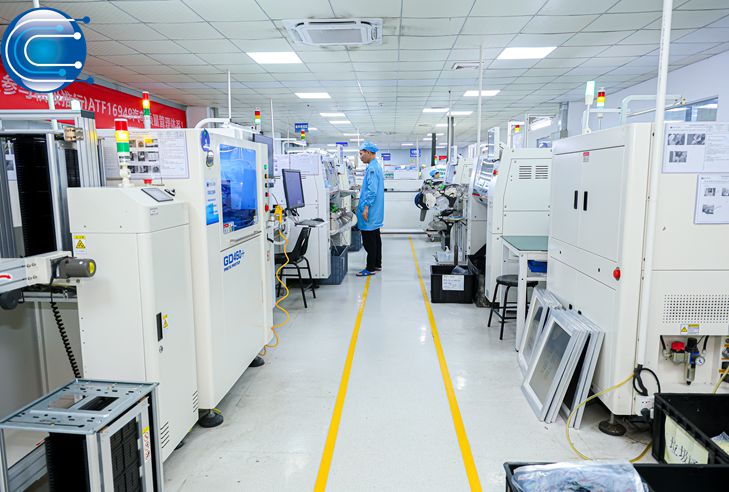
A reliable full turnkey PCBA service should incorporate inspection at multiple stages.
Incoming Quality Control (IQC) helps verify component identity, packaging, and material condition.
Solder Paste Inspection (SPI) checks printing quality before component placement.
Automated Optical Inspection (AOI) identifies visible assembly defects after soldering.
Where appropriate, X-ray inspection can evaluate hidden solder joints beneath certain packages.
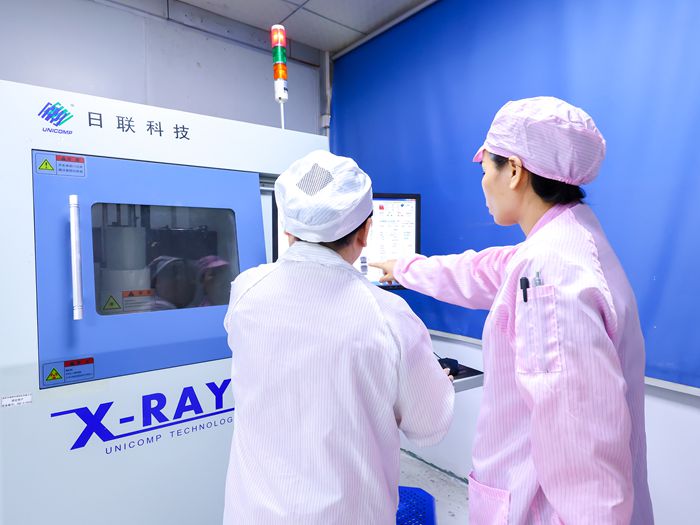
Electrical and functional tests then verify selected circuit characteristics and required operating functions.
For B2B buyers, the important question is not simply whether a manufacturer owns inspection equipment.
Instead, buyers should ask how inspection methods are selected, how defects are recorded, and how corrective actions are managed.
Quality documentation, traceability, and consistent acceptance criteria can be particularly valuable for repeat orders and long product lifecycles.
7. How to Evaluate Delivery Reliability and Production Flexibility
Delivery performance depends on more than the speed of an SMT production line.
PCB fabrication schedules, component lead times, engineering approvals, tooling preparation, and testing capacity all influence the shipment date.
OEM buyers should therefore request a realistic production timeline with clearly defined milestones.
For example, the schedule may distinguish component procurement, PCB fabrication, first article inspection, assembly, testing, and shipment preparation.
It is also useful to discuss what happens when an engineering revision is introduced during production.
Will the supplier stop affected work? How will obsolete materials be handled? Who approves revised documentation?
For smart home and IoT brands, production flexibility may be equally important.
Initial orders can be relatively small, while successful products may require larger repeat batches or multiple variants.
A manufacturing partner should explain how its process supports these changes without sacrificing revision control and quality consistency.
8. Why Integrated EMS Services Benefit Global OEM Buyers
International buyers often face additional challenges involving supplier communication, material coordination, quality documentation, and export logistics.
Working with separate PCB, component, and assembly suppliers can increase the number of handoffs requiring management.
An integrated EMS workflow can consolidate these activities.
For example, PCB fabrication requirements can be reviewed alongside assembly constraints, while component procurement can be scheduled around the approved production release.
This coordination may reduce administrative workload and help identify problems earlier.
However, effective collaboration still depends on clear documentation and communication.
Buyers should establish expectations for engineering change notices, sourcing approvals, inspection records, delivery updates, and nonconforming material handling.
A turnkey manufacturing arrangement works best when both parties understand their responsibilities.
9. Ring PCB: Integrated PCB Assembly and EMS Manufacturing Support
Ring PCB provides PCB fabrication, component procurement, SMT and THT assembly, engineering review, inspection, and testing services for OEM electronics projects.
Founded in 2008, the company serves international customers across industries including industrial control, communication equipment, smart home electronics, and IoT devices.
Its integrated PCB and PCBA manufacturing services help buyers coordinate production activities through a single manufacturing partner.
For customers seeking full turnkey assembly, Ring PCB can review manufacturing files, component requirements, order quantities, and testing expectations before preparing a project quotation.
This approach supports clearer production planning and helps customers evaluate manufacturing feasibility before committing to an order.
Contact Ring PCB for a PCBA quotation: rfq@ringpcb.com
Conclusion
Full turnkey PCBA manufacturing is not simply a convenient outsourcing option. It is a coordinated approach to managing production costs, component availability, assembly quality, and delivery requirements.
For OEM procurement teams, the strongest manufacturing partnerships combine transparent quotations, proactive BOM management, disciplined quality control, and practical engineering communication.
By evaluating these factors together, electronics companies can make better sourcing decisions and build more dependable manufacturing supply chains.