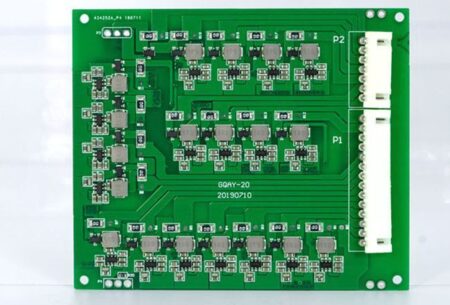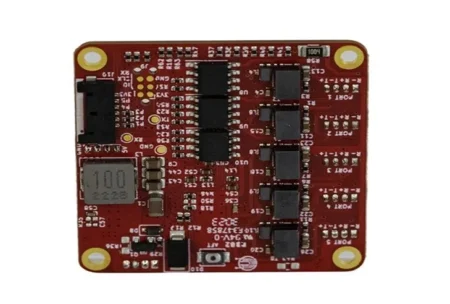

Not every electronics manufacturer needs thousands of identical printed circuit boards in a single order. Many OEMs operate with changing demand, specialized products, multiple PCB revisions, or irregular production schedules.
An industrial equipment manufacturer may require a few boards for engineering evaluation, dozens for customer-specific equipment, and several hundred for recurring production.
For these businesses, large minimum order quantities can create unnecessary inventory and financial exposure.
Flexible PCB Manufacturing offers a different approach: aligning fabrication quantities, delivery arrangements, and repeat-order planning with actual business demand.
However, flexibility must be balanced against manufacturing setup costs, technical requirements, and production efficiency.
Understanding these trade-offs helps OEM buyers structure PCB orders more effectively.
Why Fixed Order Quantities Do Not Fit Every OEM
Traditional purchasing models often assume that larger orders are always more economical.
Although higher quantities can reduce certain setup costs per board, they may not match the purchasing needs of industrial electronics companies.
Some OEMs manufacture low-volume equipment with high product value.
Others support replacement parts, customized machinery, or products with several hardware configurations.
Demand may also change because of customer projects, engineering revisions, or seasonal production schedules.
In these situations, purchasing excess PCB inventory can increase storage costs and expose the buyer to obsolete revisions.
Flexible order arrangements help align purchasing commitments with real requirements.
Understand MOQ in PCB Manufacturing
Minimum Order Quantity, or MOQ, is the smallest quantity a manufacturer will accept under a particular quotation or production arrangement.
MOQ is not always a fixed technical limitation.
It can depend on panel utilization, tooling requirements, fabrication complexity, material purchasing conditions, and production scheduling.
A standard multilayer PCB using commonly available materials may have different order economics from a specialized high-frequency board.
Similarly, a five-board engineering order and a 500-board production order may require different pricing structures.
OEMs should ask suppliers to explain quantity breaks and setup charges rather than comparing unit prices alone.
A flexible MOQ should still be commercially and technically feasible for the actual board.

Small Orders Can Reduce Revision Risk
One of the most important advantages of small PCB orders is reduced exposure to design changes.
During early product development, engineers may identify necessary modifications after testing.
If the OEM has already purchased a large quantity of boards, those changes can create obsolete inventory.
Smaller initial orders allow the engineering team to validate the design before committing to more material.
This approach can be particularly valuable for custom industrial electronics and specialized communication equipment.
However, smaller quantities may have a higher unit price because manufacturing setup costs are distributed across fewer boards.
The purchasing decision should therefore consider both immediate price and revision risk.
Separate Engineering Orders From Recurring Orders
An OEM may use the same PCB manufacturer for several distinct purchasing stages.
Engineering orders focus on obtaining enough boards for evaluation.
Customer qualification orders support product approval or field trials.
Recurring orders replenish production inventory after the design has stabilized.
These stages should not necessarily use identical purchasing terms.
For example, engineering orders may prioritize revision flexibility, while recurring orders may benefit from planned quantities and repeatable manufacturing documentation.
A manufacturer should understand which stage the customer is entering.
This helps both parties discuss suitable quantities, scheduling, and pricing assumptions.
Use Quantity Breaks to Make Better Purchasing Decisions
PCB quotations often provide different unit prices for different quantities.
For example, a buyer might request prices for 10, 50, 100, and 500 boards.
These figures can reveal how setup costs, panel utilization, and production efficiency affect pricing.
However, the lowest unit price is not automatically the best purchasing choice.
If only 50 boards are needed before a planned design revision, ordering 500 may create unnecessary inventory.
A better decision considers expected consumption, engineering stability, storage requirements, and cash flow.
Buyers should also confirm whether the quotation includes tooling, electrical testing, packaging, and transportation.
Evaluate Split Delivery Arrangements
Some OEMs need a small quantity immediately but expect additional demand later.
Split delivery can be useful when the supplier and customer agree on the total order quantity and release schedule.
For example, a manufacturer might produce an approved batch and ship it in several agreed deliveries.
However, split delivery is not identical to placing multiple independent orders.
The arrangement affects inventory ownership, storage responsibility, payment terms, and shipment costs.
The supplier must also confirm whether the production process and material availability support the requested schedule.
OEMs should define these commercial conditions before placing the order.
Plan Repeat Orders With Controlled Documentation
Repeat orders can become more efficient when the manufacturing requirements remain stable.
The approved Gerber files, drill data, stackup, materials, surface finish, and inspection criteria should be clearly identified.
Each order should reference the correct revision.
If the design changes, the customer should communicate the update before the next production release.
This prevents an older fabrication package from being reused unintentionally.
Manufacturers may also need to confirm whether previously approved materials remain available.
A repeat order should never rely solely on the assumption that all manufacturing conditions are unchanged.
Consider Mixed PCB Orders Carefully
OEMs sometimes purchase several PCB designs within the same period.
These may include controller boards, communication modules, power boards, and interface circuits.
Consolidating purchasing communication can simplify administration, but different designs may require different manufacturing processes.
Combining unrelated boards into one fabrication panel is not always technically or economically appropriate.
Material type, thickness, layer count, surface finish, and production tolerances may differ.
Therefore, buyers should distinguish consolidated purchasing from combined manufacturing.
A supplier can evaluate whether any production efficiencies are practical without compromising board quality.
Match Order Flexibility to Inventory Strategy
Flexible PCB purchasing works best when supported by realistic demand planning.
An OEM should understand its expected consumption, reorder frequency, and acceptable inventory levels.
For stable products, larger scheduled orders may offer better economics.
For uncertain demand or products undergoing revision, smaller orders may reduce financial exposure.
A hybrid approach can also be appropriate.
For example, an OEM may use small engineering orders initially and move to scheduled repeat batches once the design is stable.
The goal is to balance supply continuity with inventory risk.
Maintain Quality Across Different Order Sizes
Order flexibility should not create inconsistent acceptance requirements.
A five-board prototype and a recurring production batch may have different commercial arrangements, but critical electrical and mechanical requirements must remain defined.
For rigid multilayer boards, IPC-6012F provides an industry reference for qualification and performance requirements.
Customers should specify the applicable acceptance criteria and any additional testing needs.
If a project requires controlled impedance, specialized materials, or other critical features, these requirements should remain consistent with the approved design.
Quality expectations should not change simply because the order quantity is small.
Flexible PCB Manufacturing With Ring PCB
OEMs benefit from PCB manufacturing arrangements that reflect their actual development and production requirements.
Ring PCB supports custom PCB fabrication, multilayer PCB manufacturing, prototype orders, and small- to medium-batch manufacturing requirements, together with component sourcing and PCBA services.
Its manufacturing workflow allows customers to discuss different order quantities, engineering revisions, and fabrication specifications within a coordinated quotation process.
For projects involving irregular demand or recurring custom electronics, early communication about expected quantities and purchasing schedules can help identify practical production options.
Send your Gerber files, board specifications, target quantities, and delivery requirements to rfq@ringpcb.com for a project-specific quotation.
References
- IPC. IPC Releases IPC-6012F, Qualification and Performance Specification for Rigid Printed Boards.
https://www.ipc.org/news-release/ipc-releases-ipc-6012f-qualification-and-performance-specification-rigid-printed - Global Electronics Association. An Active, Growing PCB Industry Tilts Toward High-Complexity Leaders. May 2026.
https://mail.iconnect007.com/article/150099/an-active-growing-pcb-industry-tilts-toward-highcomplexity-leaders/150096/aep - Ring PCB. PCB Fabrication and Assembly Services.
https://www.ringpcb.com/