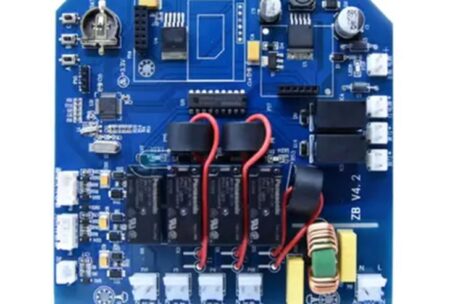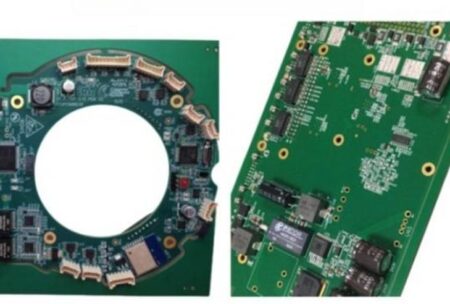
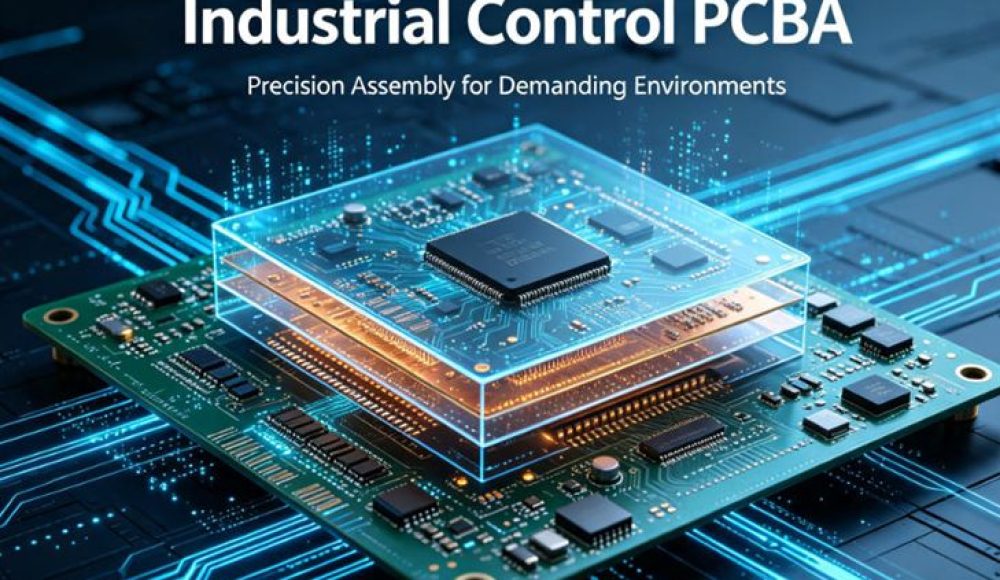
As industrial automation segments into increasingly niche application scenarios, off-the-shelf generic control boards can no longer meet the differentiated demands of mid-to-high-end equipment OEMs. According to a 2026 industrial electronics benchmark report, 62% of premium industrial equipment manufacturers have shifted from standard commercial control modules to custom industrial control PCBA solutions, driven by needs for targeted functionality, precise mechanical fit and long-term supply independence.
For many procurement and engineering teams, custom PCBA is still mistakenly perceived as an expensive option reserved only for ultra-high-volume programs. In reality, for applications with specific I/O configurations, communication protocols, enclosure dimensions or environmental requirements, tailored assembly often delivers a lower total cost of ownership while creating lasting product competitive advantages. This article explains why standard control boards fall short for modern industrial use cases, outlines four core value streams of customized design, and shares best practices for avoiding costly implementation pitfalls.
1. Why Off-the-Shelf Control Boards Fall Short for Modern Industrial Equipment
Standard commercial control modules work for basic, low-complexity applications, but they create growing limitations as equipment functionality and durability requirements rise.
First, unnecessary functional redundancy drives up costs. Generic boards are designed to serve the broadest possible market, packing extra I/O ports, communication channels and processing capacity that most applications never use. Customers pay for unused features, and the extra circuit complexity introduces unnecessary failure points. For specialized equipment such as dedicated conveyor controllers or custom temperature regulators, this over-engineering represents pure wasted expense.
Second, fixed form factors create mechanical integration headaches. Standard boards come in predetermined sizes and mounting layouts, forcing equipment designers to adapt enclosures and wiring around the board rather than optimizing the system as a whole. This leads to larger control cabinets, awkward cable routing and reduced shock and vibration resistance due to suboptimal mounting.
Third, supply chain control is limited. When OEMs rely on third-party standard boards, they are vulnerable to product discontinuation, price increases and allocation changes decided by the module vendor. A single end-of-life notice can force a full hardware redesign, disrupting production schedules and incurring costly re-certification work.
Finally, standard boards prevent true product differentiation. If every competitor uses the same off-the-shelf control module, equipment performance converges and brands can only compete on price rather than technical capability.
2. Four Core Value Streams of Custom Industrial Control PCBA
Customized assembly design addresses each of these limitations at the source, delivering value that extends far beyond simple circuit optimization.
2.1 Precise Function Matching for Optimized Performance
With custom PCBA, every circuit element is designed around the exact application requirements. Engineers specify only the necessary I/O count, processing power and communication interfaces, eliminating redundant components and reducing board complexity. Fewer components mean fewer potential failure points and improved inherent reliability. Furthermore, designers can optimize signal paths for sensitive analog circuits or high-current power sections, achieving better noise immunity and thermal performance than generic boards can deliver.
2.2 Form Factor Optimization for Mechanical Integration
Tailored PCB dimensions, mounting hole positions and connector placement allow the control board to fit perfectly within the target enclosure. This optimization reduces cabinet size by 15–30% in most cases, simplifies internal wiring and improves overall mechanical robustness. Boards can be shaped to fit around existing mechanical components, enabling more compact equipment designs that stand out in competitive markets. For portable industrial instruments and space-constrained machine installations, this form factor freedom is not a luxury — it is a fundamental design requirement.
2.3 Full Supply Chain and Lifecycle Control
When an OEM owns the board design, it controls the product roadmap. There is no risk of sudden discontinuation by a module vendor, and component substitutions can be managed proactively rather than imposed unexpectedly. Custom designs also protect intellectual property, as core control logic and hardware architecture cannot be easily replicated by competitors purchasing the same off-the-shelf modules. This control is particularly valuable for industrial equipment with 10–15 year service lifecycles, where long-term spare part availability is a customer expectation.
2.4 Lower Total Cost of Ownership Over Time
While custom PCBA involves upfront NRE (Non-Recurring Engineering) costs for design and tooling, it typically reduces per-unit production cost by 12–28% compared to equivalent off-the-shelf control modules. Eliminating redundant components, removing middleman markup and streamlining assembly all contribute to ongoing savings that recoup the initial investment within 12–24 months for medium-to-high volume programs. Additional savings come from reduced field service costs, as purpose-built boards demonstrate higher reliability than generic alternatives.
3. Common Pitfalls in Custom Industrial Control PCBA Implementation
Despite these advantages, custom projects sometimes fail to deliver expected returns due to avoidable planning mistakes.
The most frequent error is focusing only on upfront NRE cost without calculating long-term savings. Programs with annual volumes above 500 units almost always achieve positive ROI from customization, but teams that evaluate only initial engineering expense may incorrectly reject the option.
Another common pitfall is delaying manufacturing partner involvement until the design is complete. Bringing a PCBA manufacturer in at the final prototype stage misses opportunities for DFM optimization that can improve yield, reduce cost and enhance reliability. Early collaboration ensures that the design is both high-performing and production-ready.
The third pitfall is overlooking component lifecycle planning. Industrial products have long service lives, and selecting consumer-grade semiconductors with short availability windows leads to premature redesign needs. Proper custom projects include proactive component lifecycle management, with second-source options identified before mass production begins.
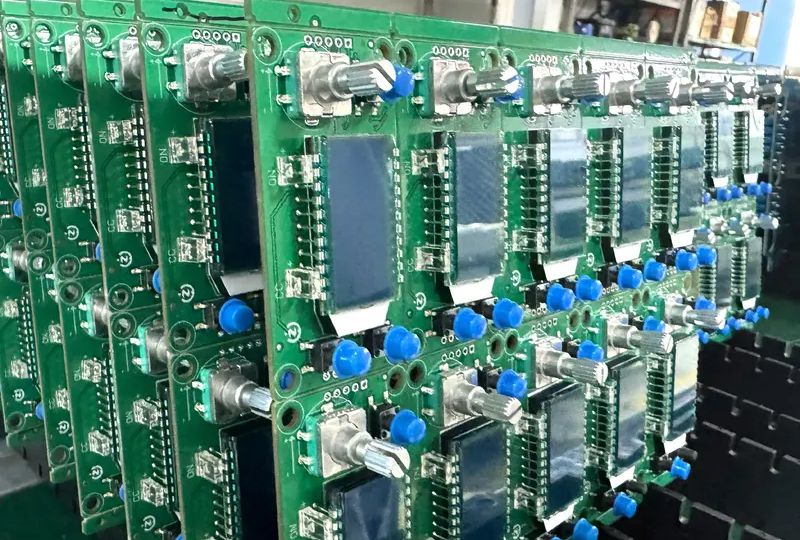
How Ring PCB Delivers Successful Custom Industrial Control PCBA Projects
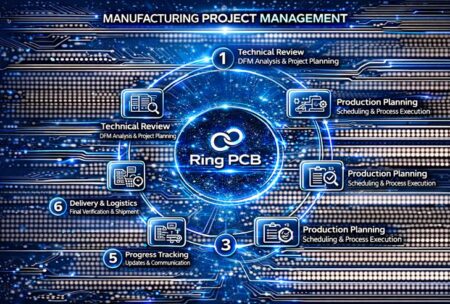
Ring PCB specializes in end-to-end custom industrial control PCBA solutions, supporting customers from initial design review through full volume production and ongoing lifecycle management. Our team works alongside client engineering teams from the earliest concept stages, providing DFM guidance, material selection advice and manufacturability feedback to ensure designs achieve their performance and cost targets.
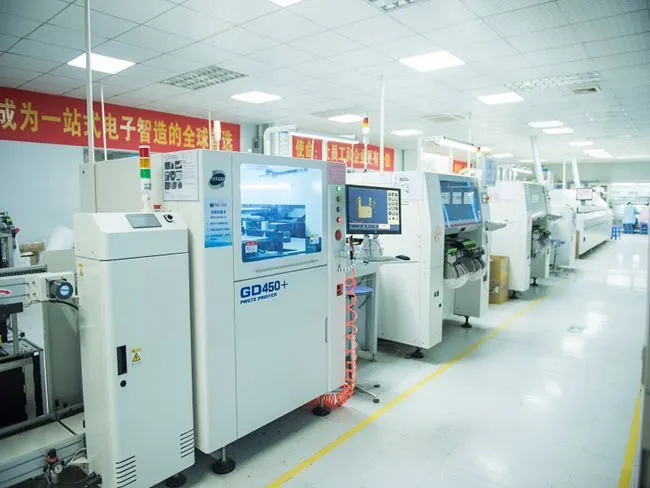
We handle every step of production in-house — from PCB fabrication and authorized component sourcing to precision SMT/DIP assembly and comprehensive testing. All industrial control assemblies are manufactured to IPC-A-610 Class 2 standards, with Class 3 options available for high-reliability applications. We also maintain component lifecycle tracking for every customer program, providing advance obsolescence notifications and form-fit-function replacement recommendations to protect long-term production continuity.
Whether you are upgrading an existing equipment line or developing an entirely new control platform, our team tailors the manufacturing solution to your exact volume, certification and performance requirements rather than forcing you into a one-size-fits-all standard product.
Conclusion
Custom industrial control PCBA has evolved from a niche premium option to a strategic choice for industrial OEMs seeking performance differentiation, mechanical optimization and long-term supply control. While off-the-shelf boards remain suitable for simple, low-volume applications, tailored designs deliver superior performance, lower long-term costs and greater product autonomy for most mid-to-high-end industrial equipment programs. The key to realizing these benefits lies in early manufacturing collaboration, sound lifecycle planning and a total-cost evaluation perspective rather than a narrow focus on upfront expense.
If you are evaluating whether custom control PCBA makes sense for your equipment program, share your design requirements, volume projections and application details with us at rfq@ringpcb.com. Our engineering team will provide a free feasibility assessment and total cost comparison to help you make an informed decision.