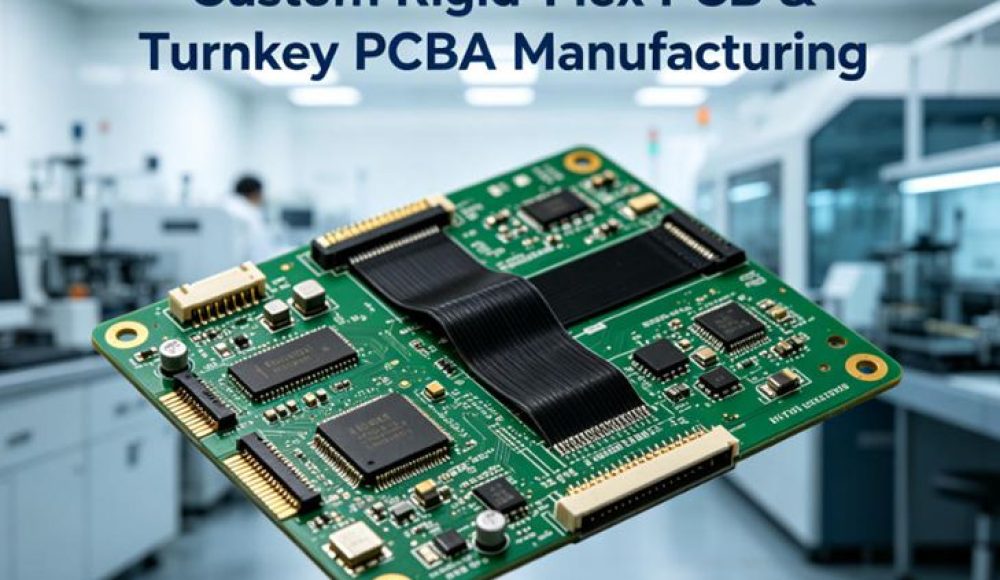
Across medical devices, automotive electronics, aerospace systems and industrial automation, high-reliability electronic equipment operates under strict zero-failure standards. For these applications, even minor circuit malfunctions can lead to severe consequences: production line shutdowns, vehicle safety hazards, or compromised patient care. As traditional rigid PCB and cable harness assemblies struggle to meet the dual demands of structural stability and long-term fatigue resistance, custom rigid-flex PCB and PCBA manufacturing has emerged as the preferred solution for high-reliability scenarios. This article explores the unique advantages of rigid-flex assemblies for mission-critical equipment, core manufacturing standards, and how specialized EMS partnerships elevate product reliability.
1. Surging Demand from High-Reliability End Markets
First and foremost, the rapid expansion of mission-critical electronics is driving sustained growth in high-grade rigid-flex PCB adoption. According to industry market data, the global rigid-flex PCB market is projected to reach $13.1 billion by 2027, with over 62% of demand originating from high-reliability sectors including medical devices, automotive ADAS systems, aerospace avionics and industrial control equipment.
Furthermore, as these industries continue to upgrade product performance, design requirements are growing more stringent. Equipment must deliver 5–15 years of stable service life while withstanding temperature cycling, mechanical vibration, electromagnetic interference and compact installation spaces. Generic off-the-shelf rigid PCB solutions can no longer meet these comprehensive standards, pushing more OEMs to turn to customized rigid-flex PCBA manufacturing tailored to their specific reliability requirements.
2. Core Reliability Advantages of Rigid-Flex Assemblies
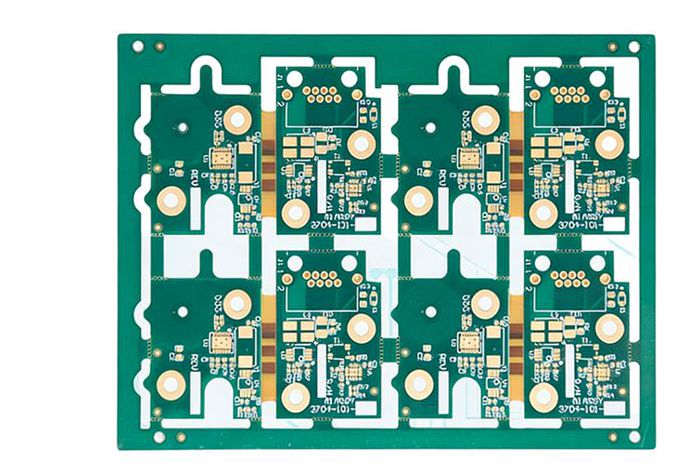
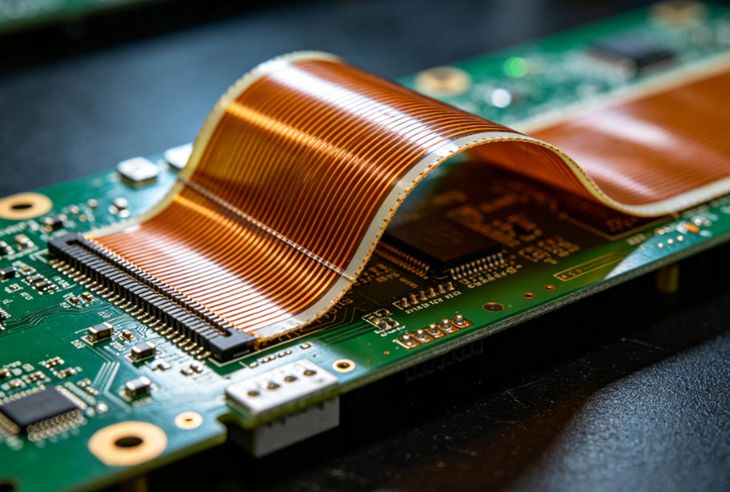
The unmatched reliability of rigid-flex PCBs stems from their integrated hybrid structure, which eliminates the weakest points of traditional circuit assembly systems. To start with, rigid-flex designs drastically reduce potential failure points. Traditional multi-board architectures rely on dozens of connectors, wire harnesses and solder joints to link separate modules; industry statistics show these interconnection components account for over 30% of field failures in industrial and automotive electronics. By integrating rigid and flexible circuit sections into a single unified board, rigid-flex PCBA eliminates most intermediate connections, cutting fault risks at the source.
In addition, rigid-flex assemblies deliver superior environmental adaptability for harsh operating conditions. The flexible polyimide substrate has excellent fatigue resistance, vibration damping and temperature stability, allowing the board to withstand long-term mechanical shock, repeated thermal cycling and high-EMI factory or on-road environments. For aerospace and portable medical equipment, the lightweight, shock-resistant structure further improves overall device durability and service life.
Finally, rigid-flex PCBs support optimized 3D routing that reduces assembly stress. Unlike rigid boards that require forced fitting into irregular equipment cavities, flexible sections can be bent and routed to match the internal structure, avoiding solder joint stress and circuit deformation caused by improper assembly. This structural compatibility directly extends the long-term operational stability of end products.
3. Key Manufacturing Standards for High-Reliability Rigid-Flex PCBA
High-reliability rigid-flex manufacturing requires strict process control across every production stage, far beyond the standards of consumer-grade circuit boards. First, material selection is the foundation of reliability. High-Tg FR-4 substrates are used for rigid sections to resist thermal warping, while high-performance polyimide (PI) films are selected for flexible areas to guarantee bending fatigue resistance and temperature tolerance. For medical and automotive applications, materials must also meet RoHS, REACH and biocompatibility compliance requirements.
Second, precision process control ensures consistent batch quality. High-reliability rigid-flex boards require strict impedance matching, optimized bend radius design and standardized multilayer lamination processes, all aligned with IPC-A-610 Class 3 industrial quality standards. Even minor deviations in lamination pressure or etching accuracy can lead to hidden circuit failures in long-term operation.
Most importantly, multi-stage rigorous quality verification is non-negotiable. From bare board electrical testing and impedance measurement to post-assembly AOI inspection, BGA X-ray analysis and functional reliability testing, every production step must be systematically verified to eliminate hidden defects before shipment.
4. Partnering with a Certified EMS Provider for Guaranteed Performance
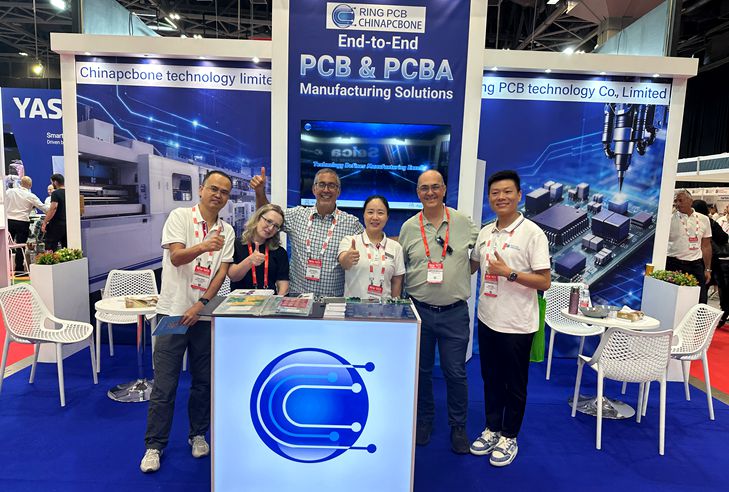
Given the high technical barriers of high-reliability rigid-flex manufacturing, choosing an experienced, fully certified manufacturing partner is the most effective way for OEMs to mitigate product risks. Ring PCB, a Shenzhen-based professional PCB and PCBA manufacturer with 18 years of industry experience, specializes in custom rigid-flex solutions for high-reliability sectors. Operating a 10,000-square-meter self-owned factory with 500 skilled employees, the company serves leading global clients including ABB, Siemens, Emerson and Hitachi across industrial, medical and automotive fields.
All rigid-flex production at Ring PCB complies with international high-reliability certifications, including ISO9001, IATF16949 for automotive electronics, ISO13485 for medical devices, and UL safety certification, fully meeting the compliance requirements of mission-critical applications. The company provides end-to-end turnkey services from 3-day rapid prototyping to high-volume mass production, covering PCB fabrication, authorized component sourcing, precision SMT/THT assembly and finished product testing.
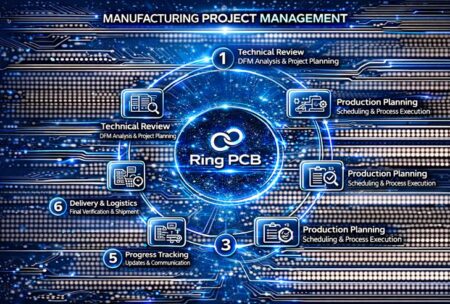
To ensure consistent reliability, Ring PCB implements full-process quality inspection including SPI 3D solder paste testing, AOI optical inspection, LCR component verification and BGA X-ray inspection. The in-house engineering team also provides free DFM (Design for Manufacturing) optimization in the early project phase, helping clients adjust stackup design, bend radius parameters and material selection to balance reliability, performance and production cost.
Conclusion
To sum up, custom rigid-flex PCB and PCBA manufacturing addresses the core pain points of traditional circuit solutions in high-reliability applications, delivering lower failure rates, longer service life and better environmental adaptability. As mission-critical electronics continue to advance in performance and miniaturization, rigid-flex technology will become an increasingly core solution for high-reliability equipment design.
If you are developing rigid-flex PCB projects for medical, automotive, aerospace or industrial high-reliability applications, you are welcome to send your Gerber files, BOM list and technical requirements to rfq@ringpcb.com. Ring PCB’s professional engineering team will provide free DFM analysis and a customized competitive quotation within 24 working hours.