In 2026, stricter global regulatory standards and supply chain traceability rules redefine quality benchmarks for electronics OEMs. Learn how professional end-to-end PCB & PCBA manufacturing service mitigates compliance risks, ensures consistent quality, and how RingPCB’s certified source factory delivers fully auditable, IPC-compliant solutions.
Introduction
Global electronics supply chains entered a new era of regulatory rigor in 2026. The EU’s CSRD (Corporate Sustainability Reporting Directive), updated REACH Annex XVII restrictions, US UFLPA enforcement and IPC-A-610 Class 3 revision have all raised the bar for quality documentation, material traceability and ethical supply chain management. For OEMs sourcing circuit boards, working with fragmented vendors — separate PCB fabricators, component distributors and assembly houses — has become a major compliance liability.
Industry data shows that 68% of international electronics shipments delayed at customs in 2025 were held due to incomplete compliance documentation from multi-supplier PCBA projects. Meanwhile, 52% of product recall events traced back to unqualified raw materials or uncontrolled assembly processes that no single supplier took responsibility for. Against this backdrop, a fully integrated end-to-end PCB & PCBA manufacturing service has evolved from a convenience option into a strategic necessity for brands targeting European, North American and Asia-Pacific markets.
This article examines the 2026 quality and compliance landscape for PCB and PCBA products, breaks down the most costly risks faced by procurement and quality teams, and explains how a unified end-to-end PCB & PCBA manufacturing service from an ISO-certified source factory like RingPCB eliminates compliance gaps, standardizes quality across the full production cycle, and reduces audit and market-entry risks.
1. 2026 Regulatory & Quality Landscape: What’s Changing for PCB & PCBA
Five key shifts are making quality and compliance more complex and more critical than ever, all of which favor integrated end-to-end PCB & PCBA manufacturing service models over fragmented sourcing:
1.1 Stricter Chemical & Environmental Compliance
The EU added 12 new substances of very high concern (SVHC) to the REACH candidate list in late 2025, and the revised RoHS 3 enforcement takes full effect in 2026, imposing stricter limits on phthalates and flame retardants in electronic assemblies. For PCB products, this means not only the bare board itself but all solder masks, surface finishes, components and soldering materials must meet identical standards. Multi-supplier chains often fail here: the PCB factory may be RoHS compliant, but the assembly house may use non-conforming solder paste or auxiliary materials.
1.2 Mandatory Supply Chain Traceability
Under CSRD and US conflict mineral rules, OEMs must trace raw materials — including copper foils, substrate resins and metal components — back to their origin and document ESG performance at every tier. Traditional multi-vendor PCBA workflows cannot produce a single, continuous traceability record, leaving buyers exposed to fines of up to 5% of global revenue for non-reporting.
1.3 Higher Bar for Functional Safety Standards
IEC 62368-1 (third edition) and IEC 61851-1:2023 for EV charging equipment now require documented process control evidence for high-voltage PCB assemblies, including creepage distance verification records and solder joint reliability test data. Suppliers that cannot provide batch-level test reports will be excluded from qualified vendor lists for medical, automotive and new energy clients.
1.4 IPC Class 3 Becomes the Norm for Industrial & New Energy
In 2026, over 45% of industrial and new energy PCBA projects specify IPC-A-610 Class 3 acceptance criteria, up from 29% in 2023. Meeting Class 3 requires tighter process controls at every step — from PCB etching tolerance to SMT placement accuracy to X-ray void inspection. Small assembly shops without standardized procedures struggle to hold Class 3 yields above 90%.
1.5 Audit Frequency Rises Sharply
Large OEMs and brand owners now conduct 2–3 on-site or remote quality system audits per year, plus random batch verification upon delivery. Suppliers with siloed production data and incomplete document management fail these audits at a 61% rate, resulting in immediate order suspension.
2. Core Procurement Risks Without End-to-End PCB & PCBA Manufacturing Service
Most quality and compliance failures do not come from one obvious mistake — they emerge from gaps between suppliers. Below are the top pain points reported by B2B procurement managers in 2026:
2.1 Compliance Blame-Shifting Between Suppliers
When a shipment fails RoHS testing or gets held at customs, the PCB fabricator blames the component supplier, the assembly house blames the PCB vendor, and the OEM absorbs the cost and delay. Without a single accountable party, resolution cycles average 6–8 weeks and often end with the buyer writing off the entire batch.
2.2 Incomplete Traceability Records
Separate suppliers keep separate records. Bare PCB batch numbers, component lot codes and assembly production logs do not align, making it impossible to build a full unit-level traceability file. For automotive and medical customers, this alone disqualifies a supplier from approved vendor status.
2.3 Inconsistent Quality Standards
A PCB built to IPC Class 2 will not deliver Class 3 reliability after assembly, even if the assembly house follows Class 3 rules. Mismatched standards across fabrication, component sourcing and assembly create hidden defects that only appear after 6–12 months of field operation — triggering expensive warranty claims.
2.4 Delayed NPI Certification
When design, fabrication and assembly teams work for different companies, compliance reviews happen late in the cycle. Design flaws that violate safety creepage rules or EMC requirements are not caught until prototype testing, causing 2–3 extra design spins and delaying market launch by 3–6 months.
2.5 Counterfeit & Grey-Market Component Risks
Small assembly houses often source components from unauthorized brokers to cut costs and shorten lead times. Counterfeit or reclaimed power ICs, capacitors and connectors are a top cause of premature field failure. Without centralized, authorized sourcing in an end-to-end PCB & PCBA manufacturing service, buyers have no reliable way to verify component authenticity.
3. How End-to-End PCB & PCBA Manufacturing Service Delivers Quality & Compliance
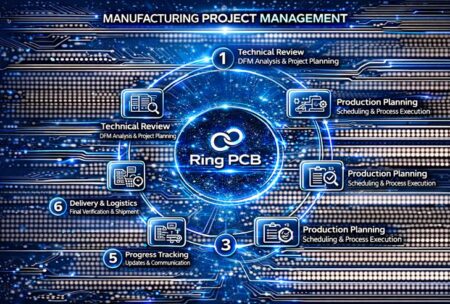
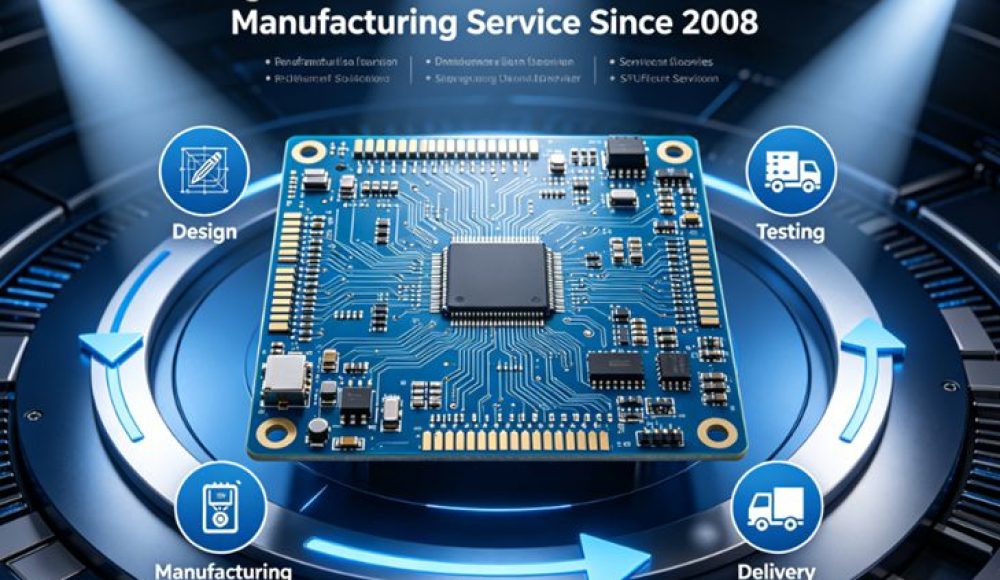
A true end-to-end PCB & PCBA manufacturing service unifies design review, bare PCB fabrication, authorized component procurement, SMT/DIP assembly, functional testing and final inspection under one quality management system and one legal entity. This structure closes the gaps that cause most compliance failures.
3.1 DFM & Compliance Review Before Production Starts
Quality and compliance are built in, not inspected in. In a mature end-to-end PCB & PCBA manufacturing service, engineering teams conduct a dual DFM/DFC (Design for Manufacturing / Design for Compliance) review at the quotation stage:
- Verify PCB layout meets IPC-2221 trace width, spacing and creepage rules for target safety standards
- Flag material selections that conflict with RoHS, REACH or customer-specific prohibited substance lists
- Validate component choices against authorized distribution channels and long-term availability
- Align stack-up, copper weight and surface finish with assembly process requirements to avoid defects later
This upfront review reduces compliance-related rework by more than 70% compared to post-design correction.
3.2 Unified Material Control & Incoming Quality Inspection
End-to-end factories source all materials — substrates, copper foils, solder masks, components and chemicals — through approved, audited suppliers. Every batch enters a centralized IQC (Incoming Quality Control) process:
- Material certificates of compliance (CoC) are verified and stored in the MES system
- Components undergo authenticity and electrical screening for high-value ICs and power devices
- PCB base materials are tested for Tg value, CTE and chemical composition to match specification
- All materials are labeled with unique lot codes for full forward and backward traceability
Because one team owns all material decisions, there is no risk of unapproved substitutions or undocumented material changes between fabrication and assembly.
3.3 Standardized In-Process Quality Control Across Every Stage
In fragmented supply chains, each supplier runs its own tests to its own standards. In an end-to-end PCB & PCBA manufacturing service, a single QMS defines inspection criteria from etch to final test:
- PCB fabrication: AOI for inner and outer layers, impedance testing, hole wall quality inspection, solder mask adhesion testing and electrical open/short testing — all aligned with IPC-6012 Class 3
- SMT assembly: SPI paste inspection, post-reflow AOI, first article inspection (FAI) for every new batch, and X-ray inspection for BGA/QFN and power device thermal pads
- Through-hole assembly: Selective soldering process control, manual visual inspection per IPC-A-610 and pull-force testing for leaded components
- Final verification: In-circuit test (ICT), functional test (FCT), Hi-Pot and insulation resistance testing as required
Every inspection result is logged by unit serial number, creating a complete birth record for each board.
3.4 Full Traceability & Audit-Ready Documentation
A core advantage of end-to-end PCB & PCBA manufacturing service is one source of truth for all quality and compliance data:
- Unit-level traceability linking PCB lot number, all component lot codes, production timestamp, machine parameters and test results
- Batch-level compliance documents: RoHS/REACH declarations, material CoCs, test reports and certification files
- Process control records: reflow temperature curves, X-ray void rate reports, thermal cycling test data and FAI reports
- ESG and supply chain documentation: conflict mineral statements, origin records and sustainability data for CSRD reporting
All documents are available on demand in standardized formats, ready for customer audits and regulatory inspections.
3.5 Continuous Improvement & Corrective Action Ownership
When quality issues do occur, an end-to-end provider owns the entire root cause analysis and corrective action process — no finger-pointing, no cross-supplier coordination delays. The same engineering team that designed the process can adjust fabrication parameters, assembly profiles or inspection criteria rapidly, preventing recurrence.
4. RingPCB: Your Certified Source for End-to-End PCB & PCBA Manufacturing Service
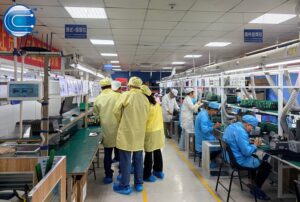
As an ISO 9001, IATF 16949, ISO 14001 and UL certified one-stop PCB & PCBA manufacturer founded in 2008, RingPCB delivers fully integrated end-to-end PCB & PCBA manufacturing service built for the 2026 compliance landscape. Our 10,000㎡ in-house automated factory brings PCB fabrication, authorized component sourcing, SMT/DIP assembly and reliability testing under a single IPC-aligned quality management system.
4.1 Quality System & Compliance Certifications
RingPCB’s quality framework is validated by internationally recognized certifications covering every major target market:
- ISO 9001:2015 general quality management
- IATF 16949:2016 automotive-grade process control
- ISO 14001:2015 environmental management
- UL recognition for PCB base materials and finished assemblies
- Full RoHS, REACH and California Prop 65 compliance for all standard products
- IPC-A-610 Class 3 certified inspection team with regularly retrained technicians
We update our compliance library quarterly to track new EU, US and Asian regulatory changes, so customers do not need to monitor every rule change themselves.
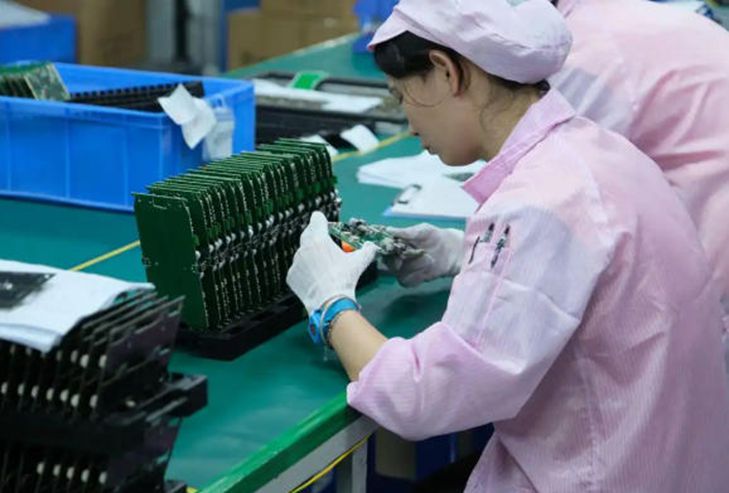
4.2 Technical Breakthroughs in Quality Consistency
RingPCB has invested heavily in solving the most persistent quality challenges in high-reliability PCBA production:
- Heavy copper PCB process control: Proprietary etching and lamination technology achieves ±5% copper thickness tolerance for 2–10oz boards, ensuring consistent current-carrying capacity and thermal performance across batches
- Low-void power device soldering: Optimized stencil design and reflow profiling deliver <3% void rate for MOSFET and IGBT thermal pads — well below the 10% industry Class 3 threshold
- MES-driven traceability: Our in-house MES system records every production parameter and material lot at the individual board level, supporting full forward and backward traceability within 4 hours of inquiry
- Automated inspection coverage: 100% AOI + X-ray inspection for all SMT assemblies eliminates human visual error and catches micro-defects invisible to the naked eye
4.3 End-to-End Service Scope & Flexibility
RingPCB’s end-to-end PCB & PCBA manufacturing service covers the full product lifecycle:
- Design support: Free DFM/DFC review, stack-up design, impedance calculation and thermal layout optimization
- PCB fabrication: From 2-layer standard boards to 24-layer HDI, heavy copper, metal core and ceramic substrates
- Component sourcing: Authorized franchised distribution channels only, with anti-counterfeiting screening for all ICs and power components
- Assembly services: High-speed SMT, through-hole, selective soldering, conformal coating and box build
- Testing & validation: ICT, FCT, Hi-Pot, thermal cycling, IR thermography, vibration and humidity aging
- Logistics & documentation: Export packaging, customs documentation and full compliance file delivery
We support order volumes from 1-piece prototype and NPI pilot runs up to 100,000+ unit monthly mass production, with the same quality standards applied to every batch size.
4.4 Real-World Impact: Compliance Overhaul for Industrial Control PCBA
A US-based industrial automation OEM previously worked with three separate suppliers — a domestic PCB broker, a component distributor and a local assembly house. In 2025, one of their shipments was detained at US customs due to missing RoHS traceability records, resulting in a $75,000 fine and a 10-week delivery delay. They also faced a customer audit failure because they could not provide unified process control records.
After switching to RingPCB’s end-to-end PCB & PCBA manufacturing service, the customer received:
- A single, fully traceable production record for every batch, with PCB lot, component lots and test data linked by serial number
- Standardized RoHS, REACH and conflict mineral documentation ready for customs and customer audits
- IPC-A-610 Class 3 assembly with full X-ray and FAI reports included with every shipment
- A dedicated account team that owns all quality and compliance issues end to end
Within six months, the customer passed two consecutive customer audits with zero major findings, eliminated customs detention events, and reduced field return rates by 62%.
5. 2026 and Beyond: The Future of PCB & PCBA Quality
Looking ahead, two trends will further strengthen the value of integrated end-to-end PCB & PCBA manufacturing service:
- AI-powered quality prediction: AI systems will analyze real-time production data to predict defects before they occur, further lifting first-pass yield
- Digital product passports: The EU’s planned Digital Product Passport (DPP) will require electronic lifecycle records for electronics products — a capability only end-to-end manufacturers can implement efficiently
- Sustainability as a quality metric: Carbon footprint tracking and circular economy requirements will become standard supplier evaluation criteria, favoring factories with full control over material and energy inputs
OEMs that consolidate their PCB and PCBA supply chain now will be best positioned to meet these upcoming requirements without costly system overhauls.
Conclusion
In 2026, quality and compliance are no longer just checkboxes — they are market access requirements and core competitive differentiators. Fragmented multi-supplier sourcing creates invisible gaps that lead to customs delays, audit failures, field recalls and unexpected costs. A unified end-to-end PCB & PCBA manufacturing service closes those gaps by placing one expert team in charge of every step from design review to final test, with a single source of truth for all quality and compliance data.
RingPCB’s 18 years of experience as a source factory, combined with our full certification portfolio, MES-powered traceability and IPC-aligned process controls, make us a trusted partner for OEMs serving industrial, automotive, new energy and medical markets worldwide. Our end-to-end PCB & PCBA manufacturing service is designed to not just meet today’s standards, but adapt to tomorrow’s regulatory changes — so you can focus on product innovation, not supply chain compliance risk.
Send your Gerber files and BOM to rfq@ringpcb.com for a free DFM/DFC review and custom quotation, or visit www.ringpcb.com to download our full quality and compliance certification package.