
Quick turn PCB manufacturing helps OEMs accelerate engineering validation, urgent product revisions, and time-sensitive electronics projects.
However, fast PCB fabrication depends on more than production equipment. Incomplete Gerber files, unclear material requirements, and delayed engineering approvals can prevent an urgent order from entering manufacturing.
For OEM engineers and purchasing managers, the best approach is to prepare a complete technical package before requesting a quotation.
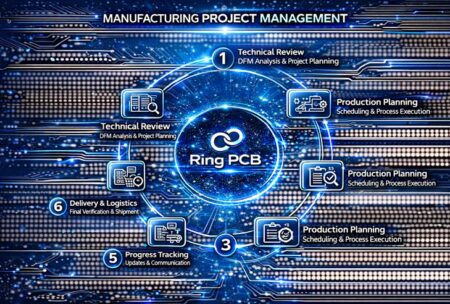
Ring PCB supports PCB prototyping in as little as 3 days and qualifying PCB and PCBA production schedules as short as 7 days.
These capabilities can help customers accelerate development and production planning, provided the design, materials, order quantity, and manufacturing requirements support the requested schedule.

The following checklist explains how to prepare a quick-turn PCB order effectively.
Why Quick-Turn PCB Manufacturing Requires Preparation
A conventional PCB order may provide additional time for engineering questions and material coordination.
A quick-turn project operates within a tighter schedule.
Even a short delay caused by missing fabrication information can affect the expected completion date.
For example, a customer may submit a six-layer PCB design without specifying the finished board thickness or approved stackup.
The manufacturer must clarify these requirements before releasing the job.
Therefore, fast manufacturing begins with complete technical documentation and timely communication.
2026 PCB Industry Trends and Urgent Manufacturing
The Global Electronics Association reported that North American PCB shipments increased 23.5% year over year in August 2026.
The three-month book-to-bill ratio reached 1.29, reflecting order activity within the surveyed market.
However, these figures do not establish the available capacity of an individual PCB factory.
For urgent OEM projects, manufacturing feasibility depends on the specific board technology, material availability, and production requirements.
Consequently, buyers should confirm project-specific schedules rather than relying on general industry lead-time assumptions.
Check 1: Verify Gerber and Drill Files
Accurate fabrication data is the foundation of quick-turn PCB manufacturing.
Gerber files should represent the intended copper layers, solder mask, silkscreen, and board outline.
NC drill files should correctly identify the required drilled features.
Plated and non-plated holes should be clearly distinguished where applicable.
All files must originate from the same approved design revision.
For example, an updated copper layout combined with an outdated drill file can create manufacturing uncertainty.
Before submission, engineers should review the exported data and confirm that the fabrication package is complete.
Check 2: Confirm PCB Stackup and Materials
Multilayer PCB orders require clear stackup information.
The customer should specify layer count, finished board thickness, copper requirements, and relevant dielectric characteristics.
For high-speed applications, material properties may influence electrical performance.
Therefore, any proposed laminate substitution should receive appropriate engineering approval.
Material availability can also affect quick-turn feasibility.
For example, a conventional FR-4 construction may have different procurement requirements from a specialized high-frequency laminate.
Early material confirmation helps manufacturers prepare realistic schedules.
Check 3: Identify Controlled-Impedance Requirements
Controlled-impedance PCB manufacturing requires additional engineering information.
Customers should provide target impedance values, relevant structures, and acceptable tolerances.
The manufacturer may also need the approved stackup and reference-layer information.
For high-speed communication equipment, incorrect impedance can affect signal performance.
Consequently, impedance requirements should be included with the initial quotation package.
Ring PCB supports controlled-impedance PCB manufacturing, allowing customers to coordinate electrical requirements with fabrication feasibility.
Engineering adjustments should be confirmed before production.
Check 4: Select the Appropriate Surface Finish
Surface finish affects PCB fabrication and subsequent component assembly.
Common options include HASL, lead-free HASL, and ENIG.
The correct selection depends on component requirements, assembly processes, and product specifications.
Some finishes may involve different processing arrangements.
Therefore, OEM buyers should confirm availability when requesting urgent fabrication.
Solder mask color and special cosmetic requirements should also be identified.
A clear surface-finish specification reduces unnecessary quotation revisions.
Check 5: Review Mechanical and Drilling Requirements
Board dimensions, slots, routing features, and hole tolerances influence manufacturing complexity.
For example, press-fit connectors may require carefully controlled finished hole dimensions.
Mounting holes may have different requirements from plated electrical vias.
The fabrication drawing should identify critical tolerances and special mechanical features.
Manufacturers can then evaluate whether the design fits the requested production schedule.
This is especially important for compact multilayer PCBs containing dense drilling patterns.
Check 6: Confirm Quantity and Manufacturing Scope
A quick-turn quotation should clearly identify the required board quantity.
An engineering team may need only a few boards for initial testing, while another project may require a larger qualification batch.
Customers should also distinguish bare PCB fabrication from completed PCBA manufacturing.
An assembled PCB project may involve component sourcing, stencil preparation, SMT placement, soldering, inspection, and testing.
These activities introduce additional scheduling requirements.
Ring PCB’s integrated PCB fabrication and PCBA services help customers coordinate manufacturing stages through a single supplier.
However, the agreed delivery schedule must reflect the complete production scope.
Check 7: Confirm Component Availability for PCBA
For urgent assembly orders, component availability can be as important as PCB fabrication speed.
A complete BOM should include manufacturer part numbers, quantities, and approved alternatives.
Critical components should be checked before confirming the overall production schedule.
If a component is unavailable, any proposed replacement must be approved by the customer.
Ring PCB provides component sourcing and full-turnkey PCB assembly services, helping OEMs coordinate material preparation with manufacturing.
Early procurement review can reduce delays between bare-board completion and assembly.
Check 8: Define Inspection and Testing Requirements
Quick-turn manufacturing should maintain appropriate quality controls.
Bare-board electrical testing can identify open and short circuits.
For assembled products, AOI and other inspection methods may be appropriate depending on the design.
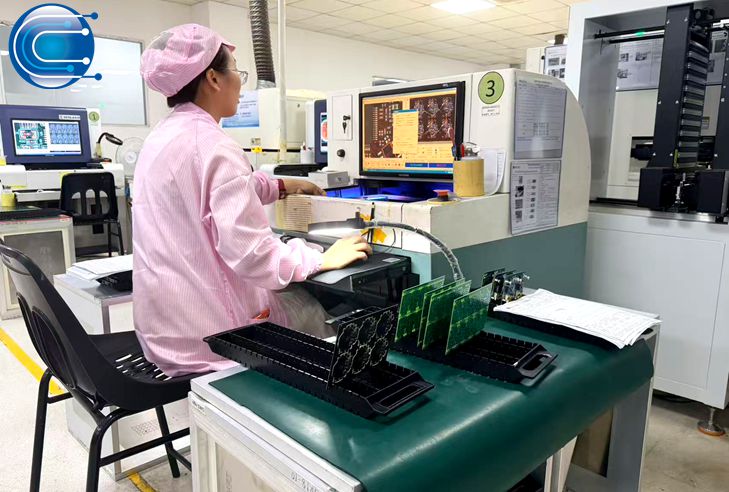
Functional testing requirements should be defined when applicable.
Ring PCB reports UL, ISO 9001, ISO 14001, ISO 13485, and IATF 16949 certifications within its quality and management framework.
These credentials reflect its commitment to structured manufacturing processes and industry-specific requirements.
Nevertheless, customers should confirm the applicable product standards, inspection methods, and testing scope for each order.
Check 9: Establish a Clear Approval Process
Urgent manufacturing projects benefit from efficient engineering communication.
The customer should identify who can approve fabrication questions, material alternatives, and proposed adjustments.
If several departments must review every decision, production release may be delayed.
However, critical electrical or mechanical requirements should never be changed without approval.
A clear communication process helps manufacturers resolve necessary questions while maintaining design control.
For international OEM customers, timely responses can be particularly valuable when engineering teams operate across different time zones.
Check 10: Define the Delivery Deadline Accurately
Customers should distinguish manufacturing completion from shipment and final delivery.
A three-day PCB prototype schedule does not automatically mean international delivery within three calendar days.
Similarly, a seven-day PCB or PCBA production schedule depends on project specifications and agreed manufacturing conditions.
Transportation arrangements, customs procedures, and destination requirements may affect arrival time.
Therefore, OEM buyers should confirm the production schedule, shipment method, and required delivery milestone separately.
A realistic quotation should reflect these conditions.
How Ring PCB Supports Fast PCB and PCBA Manufacturing
Ring PCB combines PCB fabrication, engineering DFM review, component sourcing, SMT and through-hole assembly, inspection, and full-turnkey electronic manufacturing services.
Its rapid manufacturing capabilities include PCB prototyping in as little as 3 days and qualifying PCB and PCBA production schedules as short as 7 days.
Supported by its reported UL, ISO 9001, ISO 14001, ISO 13485, and IATF 16949 certifications, Ring PCB emphasizes quality management alongside manufacturing efficiency.
For OEM customers developing industrial controllers, communication equipment, IoT devices, and custom electronics, this coordinated approach can simplify project preparation and reduce unnecessary handoffs.
To request a quick-turn quotation, send your Gerber files, drill data, stackup specifications, BOM if assembly is required, quantities, and target delivery date to rfq@ringpcb.com.
References
- Global Electronics Association. North American PCB Shipments Jump 23.5% in August, Extending Strong 2026 Growth. September 2026.
- IPC. IPC-6012F, Qualification and Performance Specification for Rigid Printed Boards.
- IPC. IPC-A-610, Acceptability of Electronic Assemblies.
- Ring PCB. https://www.ringpcb.com/
Core Keywords:
SEO Title:
SEO Meta Description: