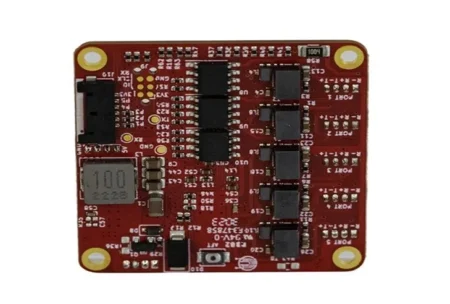
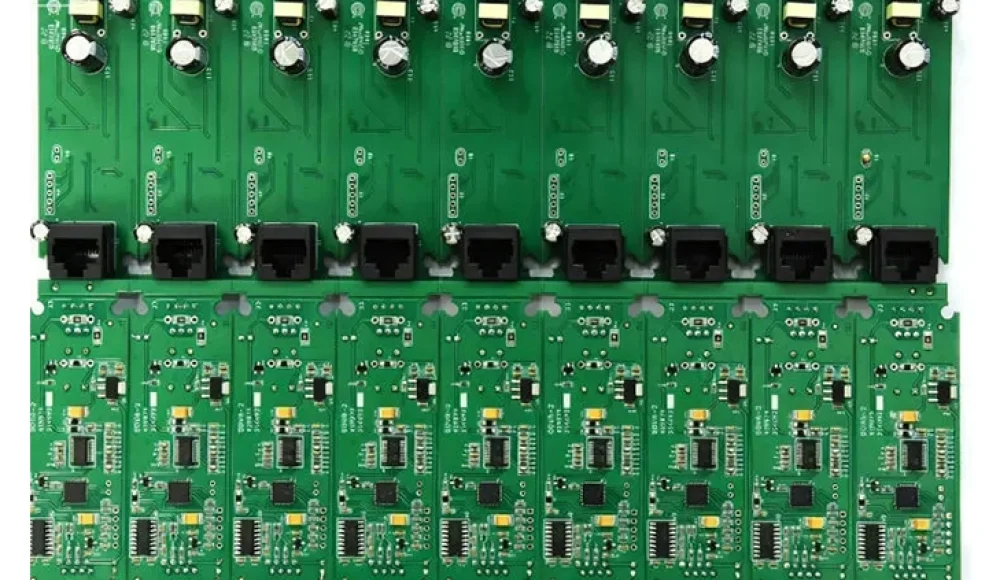
Smart home products are becoming more interconnected, intelligent, and demanding to manufacture. Smart lighting, thermostats, security cameras, environmental sensors, and connected appliances increasingly rely on compact printed circuit board assemblies (PCBAs) to manage wireless communication, power conversion, sensing, and control.
For original equipment manufacturers (OEMs), delivering a reliable smart device requires more than selecting the right wireless module. PCB fabrication quality, component availability, assembly accuracy, and production testing all influence how consistently the finished product performs.
As the Matter ecosystem expands, smart home PCBA manufacturing must also accommodate increasingly diverse device categories and integration requirements. Choosing a manufacturing partner with comprehensive PCB assembly and full-turnkey electronics manufacturing services (EMS) can help product teams manage these challenges more efficiently.

1. Why Smart Home PCBA Manufacturing Is Becoming More Complex
The Connectivity Standards Alliance released Matter 1.5 in November 2025, introducing support for additional device categories, including cameras, closures, soil sensors, and enhanced energy management functions.
This development reflects a broader movement toward interoperable connected products.
However, interoperability at the software and protocol level does not automatically guarantee reliable hardware operation.
A smart home PCBA may integrate several functional circuits:
- Wireless communication modules supporting Wi-Fi, Bluetooth Low Energy, or Thread.
- Microcontrollers and memory for embedded software execution.
- Power management circuits for battery-powered or mains-powered operation.
- Sensors, relays, and control interfaces.
- Security-related hardware and programming interfaces.
Each subsystem introduces manufacturing considerations. For example, compact layouts can increase soldering complexity, while poorly controlled assembly variations may affect electrical performance.
Consequently, OEM buyers should evaluate PCBA manufacturing capabilities alongside wireless technology selection.
2. Wireless Performance Starts With Manufacturing Consistency
Wireless connectivity is central to smart home product reliability.
Although antenna design and RF layout are primarily engineering responsibilities, manufacturing consistency also matters.
PCB material properties, stackup accuracy, copper geometry, and solder mask characteristics can influence high-frequency circuit behavior. Component placement and soldering quality are equally important around RF matching networks, oscillators, and wireless modules.
For smart home PCB assembly, manufacturers should review:
Controlled PCB Fabrication: Appropriate stackup tolerances, trace dimensions, and impedance requirements should be defined in the manufacturing documentation.
Precise SMT Placement: Miniature capacitors, inductors, and RF components require accurate placement to maintain repeatable assembly conditions.
Thermal Process Control: Reflow profiles should be compatible with the selected components and PCB construction.
Inspection Coverage: AOI and other suitable methods should identify visible assembly defects before functional testing.
Importantly, a PCBA supplier should not promise wireless performance based on visual inspection alone. RF measurements and connectivity tests require an agreed test procedure and appropriate equipment.
3. Managing Compact and High-Density Smart Home Assemblies
Smart home manufacturers frequently face strict product size constraints.
Wall-mounted sensors, smart switches, wearable controllers, and compact gateways may require dense component placement on relatively small PCBs.
This creates challenges involving solder paste deposition, fine-pitch packages, thermal dissipation, and component accessibility.
A Design for Manufacturability (DFM) review can identify issues before production, such as insufficient component spacing, unsuitable pad geometry, difficult panelization, and connector interference.
Meanwhile, Design for Testability (DFT) considerations help ensure critical signals and power rails can be checked during manufacturing.
For example, a battery-powered environmental sensor may require accessible programming pads, current-consumption measurement points, and reliable battery connector placement.
Resolving these issues before the first production build can reduce avoidable rework and improve prototype-to-production transfer.
4. Power Management and Product Reliability
Energy efficiency is particularly important for battery-operated smart home devices.
Even a well-designed low-power circuit can experience problems if assembly defects create leakage paths, intermittent connections, or unstable power delivery.
For mains-powered devices, additional attention may be required for electrical isolation, creepage and clearance, thermal behavior, and applicable safety requirements.
A practical PCBA quality plan may include solder paste inspection, automated optical inspection, electrical testing, and functional verification.
Depending on the product, testing may also cover:
- Power-up behavior and supply voltage stability.
- Sleep-mode and active-mode current consumption.
- Sensor response and calibration.
- Wireless module programming and basic connectivity.
- Relay switching or output control.
- Firmware identification and configuration.
These tests should be defined against the customer’s approved design and acceptance criteria.
Furthermore, regulatory requirements such as radio approvals, electromagnetic compatibility, and product safety certification must be addressed at the appropriate product level. PCB assembly inspection alone cannot establish finished-device compliance.
5. How Full-Turnkey EMS Simplifies Smart Home Production
Many smart home brands rely on external suppliers for PCB fabrication, electronic components, and assembly.
Managing these activities separately can create additional coordination work, especially when designs contain wireless modules, specialized sensors, or components with variable availability.
Full-turnkey PCB assembly brings several production responsibilities together.
Typically, the process includes engineering file review, PCB fabrication, BOM procurement, SMT assembly, through-hole assembly where required, inspection, testing, and delivery.
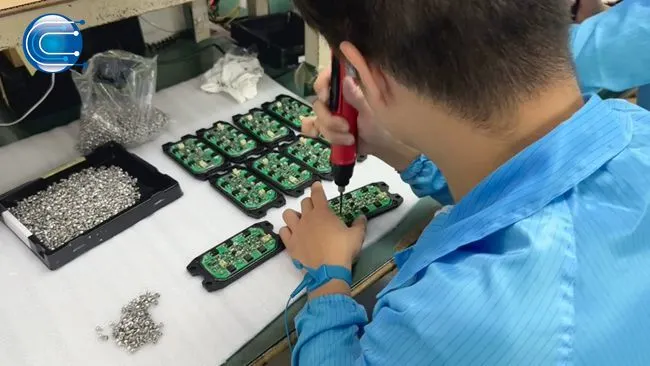
This integrated approach can provide several practical benefits.
First, component procurement can be coordinated with the approved BOM and production schedule.
Second, manufacturing feedback can be communicated earlier, reducing delays caused by incompatible footprints or missing production information.
Third, quality records and component traceability can be managed through a more consistent workflow.
Finally, a single manufacturing contact can simplify engineering changes during new product introduction.
However, turnkey service does not replace the customer’s responsibility for product architecture, firmware, or certification unless those services are explicitly included in the agreement.
6. What Smart Home OEM Buyers Should Ask Before Selecting a PCBA Supplier
Choosing a PCBA manufacturer should involve more than comparing unit prices.
OEM procurement teams should ask whether the supplier can support the required PCB construction, component packages, assembly volumes, and inspection methods.
It is also important to clarify how component substitutions are approved, how first article inspection is performed, and what testing documentation will accompany the shipment.
For connected devices, buyers should confirm whether programming and functional test procedures can be implemented using customer-supplied firmware, fixtures, and instructions.
Another important question concerns production continuity.
Can the supplier support engineering revisions without losing BOM traceability? Can it identify components approaching end-of-life? Can prototype processes be transferred into repeat production?
These questions often reveal more about manufacturing readiness than a general claim of advanced SMT capability.
7. Supporting Smart Home PCB Assembly With Ring PCB
As smart home devices continue to evolve, manufacturers need reliable PCBA production processes that can accommodate compact layouts, wireless components, and changing order volumes.
Ring PCB supports OEM customers with PCB fabrication, component sourcing, precision SMT and through-hole assembly, DFM review, inspection, and project-specific testing.
Its full-turnkey EMS approach helps coordinate manufacturing activities from prototype assembly through volume production, while allowing customers to retain control of their product designs and technical specifications.
For smart home PCBA projects, customers can provide Gerber files, BOMs, assembly drawings, and testing requirements for manufacturing review and quotation.
Contact Ring PCB: rfq@ringpcb.com
Conclusion
Successful smart home products depend on the combination of sound electronics design and repeatable manufacturing execution.
As Matter expands and connected devices become more sophisticated, OEM buyers should prioritize RF-related manufacturing consistency, assembly quality, component traceability, and test planning.
A capable full-turnkey PCBA manufacturing partner can help reduce coordination challenges and support a smoother transition from connected-device prototypes to scalable production.