Global electronics supply chains have faced persistent volatility throughout 2026, driven by AI-driven semiconductor shortages, fluctuating raw material prices for copper and CCL laminates, and tightening international compliance regulations. Latest industry research shows that nearly 63% of global OEMs have suffered production delays, quality failures or budget overruns over the past year due to fragmented multi-supplier PCB & PCBA cooperation. When buyers separate PCB fabrication, component procurement, assembly and testing among different vendors, scattered handoffs, blurred accountability and inconsistent technical standards form systemic risks that easily derail hardware projects.
As the world’s most complete electronics manufacturing cluster, China’s full turnkey PCB assembly service has become a mainstream risk-control solution for overseas buyers. Unlike decentralized consigned manufacturing, full turnkey EMS integrates the whole production chain within one qualified manufacturer. This article sorts out four major common manufacturing risks and elaborates on how China’s mature turnkey services systematically mitigate these hidden dangers.

1. Major Hidden Risks Brought by Fragmented Multi-Vendor Cooperation
Before analyzing the advantages of turnkey solutions, it is necessary to clarify the four most concerned risks for B-side industrial, medical and automotive electronics purchasers.
1.1 Unclear Quality Accountability Leads to High Rework Costs
When circuit boards fail functional testing after assembly, independent suppliers often shift blame mutually. PCB factories attribute defects to poor component quality, while assemblers blame flawed bare board design. According to IPC industrial statistics, this “blame game” wastes an average of 1–2 weeks on problem investigation, and rework losses usually account for more than 25% of the total project budget. For high-reliability industrial and medical PCBA, delayed troubleshooting will directly cause equipment downtime and certification delays.
1.2 Component Shortage & Counterfeit Material Risks
Since 2026, power ICs, MCUs and high-frequency connectors still maintain lead times of 15–40 weeks globally. Individual buyers lack bargaining power against distributors and are prone to encountering counterfeit, obsolete or mismatched components. Dispersed procurement cannot set up unified incoming inspection standards, making fake chips flow into assembly lines easily, triggering batch product scrapping.
1.3 Technical Mismatch Between PCB Fabrication and Assembly
Different manufacturers have different process thresholds for etching, lamination and reflow soldering. Layouts confirmed by PCB factories may not adapt to SMT equipment parameters of assembly workshops, resulting in solder joint cracks, impedance deviation and low production yield. Industry data shows over 60% of mass-production yield problems originate from inconsistent DFM standards among separated vendors.
1.4 Compliance & Schedule Risks from Fragmented Management
Products exported to Europe, North America and Turkey must meet RoHS, REACH and CE standards. Scattered suppliers cannot form complete, unified material traceability documents, which may lead to customs detention. Besides, schedule coordination among multiple vendors introduces repeated delays; 20% to 30% of split projects miss launch deadlines due to cascading delays.
2. How China’s Full Turnkey PCB Assembly Eliminates Manufacturing Risks
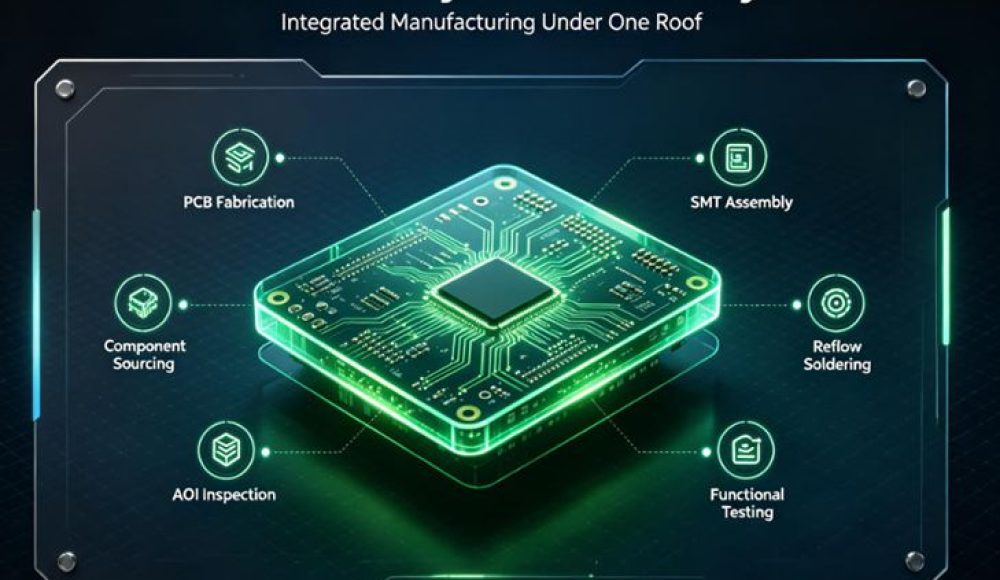
Reliable Chinese turnkey manufacturers integrate DFM review, PCB production, authorized component sourcing, precision assembly, standardized testing and compliance documentation under one management system, targeting the above risks one by one.
2.1 Single Accountability Eliminates Blame Games & Stabilizes Quality
The core advantage of turnkey service lies in exclusive responsibility for finished product quality. Once defects appear, the manufacturer bears all inspection, rework and debugging costs without cross-vendor wrangling. Professional factories implement unified IPC-A-610 Class 2/3 standards throughout fabrication and assembly, synchronizing board parameters and soldering profiles to avoid technical mismatch.
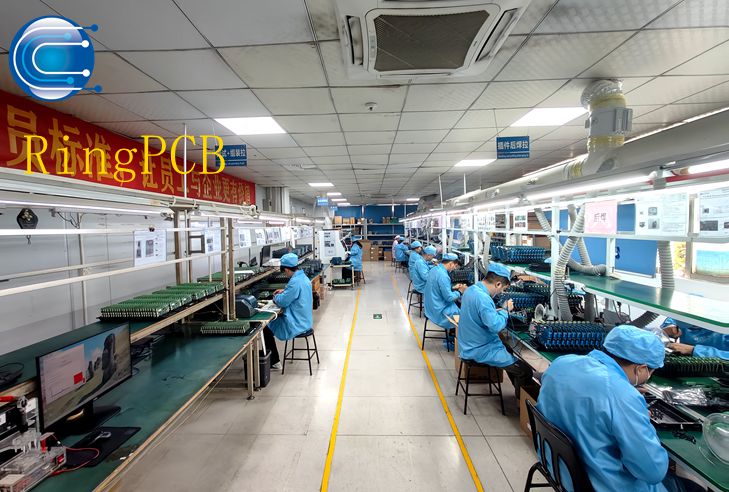
Ring PCB, as an experienced China-based full turnkey manufacturer, has built standardized unified process specifications for all projects. Our internal engineering team completes DFM review covering both PCB structure and assembly feasibility before formal production, which effectively eliminates design loopholes that easily trigger yield collapse. Our consistent quality control system reduces customer after-sales troubleshooting time greatly compared with multi-supplier cooperation mode.
2.2 Centralized Authorized Sourcing Resolves Component Shortage Risks
Chinese leading EMS providers rely on local dense industrial clusters to establish long-term cooperative relations with global official component distributors. Large-scale collective procurement gains priority material allocation during shortage cycles, and professional IQC laboratories conduct authenticity identification for all incoming parts to block counterfeits thoroughly.
Our procurement team at Ring PCB keeps multi-source alternative component libraries for mainstream industrial chips and power semiconductors. When primary materials face long lead times, we quickly provide verified replacement schemes without changing product functions, effectively preventing production suspension caused by material out-of-stock.
2.3 Integrated Digital Management Controls Delivery & Compliance Risks
Qualified turnkey factories adopt MES digital systems to record every production procedure in real time, forming complete batch traceability files. All material reports, inspection records and aging test data can be sorted rapidly to satisfy global customs and certification audits. Meanwhile, unified scheduling arranges PCB production, component preparation and assembly progress synchronously, removing schedule conflicts caused by multi-party coordination.
2.4 Flexible Production Smooths Prototype-to-Mass Scaling Risks
Most Chinese turnkey factories own both small-batch rapid prototype lines and high-speed automated mass-production lines, maintaining identical process standards in different volume phases. Parameter data verified in small samples can be directly applied to large-scale production, avoiding yield decline during order expansion.
3. Practical Reference for Global Buyers to Select Qualified Chinese Turnkey Suppliers
To maximize risk reduction effects, purchasers should focus on four evaluation indicators rather than only comparing unit prices:
First, confirm whether the manufacturer owns independent factories instead of outsourcing core processes;
Second, check its long-term authorized component supplier list and anti-counterfeit inspection capabilities;
Third, verify complete compliance document support for your target export markets;
Fourth, confirm the supplier’s track record of smooth prototype-to-production scaling.
Conclusion
Against the background of continuous global supply chain turbulence, full turnkey PCB assembly in China has evolved from a simple cost-saving choice into an essential risk-management tool for global electronics manufacturers. It solves accountability chaos, material insecurity, technical mismatch and compliance troubles by integrating all manufacturing links, greatly shortening project cycles and stabilizing long-term production expectations.
If you are looking for a trusted full turnkey PCB & PCBA partner to reduce your manufacturing risks, send your Gerber files, BOM lists and detailed technical requirements to rfq@ringpcb.com. Our professional engineering team will deliver a comprehensive DFM risk assessment and competitive customized quotation within 24 working hours.