Introduction
For communication equipment OEMs, a reliable PCBA supply chain is essential to maintaining production schedules and meeting customer delivery commitments. Network infrastructure products, wireless communication systems and optical networking equipment often depend on specialized semiconductors, multilayer PCBs, high-speed connectors and other components with different sourcing cycles.
Even when the assembly process is well controlled, a shortage of one critical component can delay an entire production order. Similarly, a late PCB delivery, an unapproved component substitution or an unexpected engineering change can disrupt the transition from prototype to mass production.
These challenges have become particularly relevant in 2026. The Global Electronics Association reported in August 2026 that 64% of surveyed electronics manufacturers faced limited component or material availability or extended lead times. More than half reported longer supplier lead times in the second quarter compared with the first quarter.
For communication equipment buyers, the message is clear: PCBA lead time must be managed across the entire supply chain, not just the SMT production stage.
1. Identify the Main Sources of PCBA Lead Time
The total lead time of a communication PCBA project usually includes several connected stages:
- Technical document review and manufacturing feasibility assessment.
- PCB material procurement and board fabrication.
- Electronic component sourcing.
- Incoming inspection and material preparation.
- SMT and through-hole assembly.
- Inspection, electrical testing and customer-required functional testing.
- Final quality review and shipment preparation.
The actual duration depends on board complexity, component availability, order quantity, production capacity and inspection requirements.
One common planning mistake is to calculate lead time only from the expected SMT assembly duration. In reality, PCB fabrication and component procurement may take longer than the assembly itself.
OEMs should therefore request a project schedule that identifies the main procurement and manufacturing milestones.
2. Improve BOM Readiness Before Releasing Production
The Bill of Materials (BOM) is one of the most important documents in PCBA procurement. Incomplete or inaccurate BOM information can delay quotation, sourcing and production preparation.
For communication products, BOM review should cover:
- Manufacturer part numbers and approved manufacturers.
- Package type and component specifications.
- Required quantities and production allowances.
- Lifecycle status and potential obsolescence.
- Availability and estimated procurement lead time.
- Approved alternatives, if applicable.
A clear BOM helps the manufacturer identify sourcing risks before the order is released.
Where a component is unavailable, the manufacturer should communicate the issue and provide relevant alternative information for customer evaluation. Substitutions should only be implemented after the required technical review and customer approval.
This process reduces the risk of using components that are mechanically compatible but electrically unsuitable.
3. Build a Risk-Based Component Sourcing Strategy
Not every component requires the same procurement strategy. Common passive components may be available from multiple qualified sources, while specialized processors, RF devices or communication ICs may have limited alternatives.
A practical approach is to classify components according to their supply risk.
High-risk components may include parts with long lead times, single-source dependence, allocation restrictions or limited lifecycle availability.
Medium-risk components may have multiple suppliers but still require careful planning due to fluctuating demand.
Lower-risk components may be standard parts with broader availability, although their specifications and approved sources must still be controlled.
For critical components, OEMs can consider longer-term demand forecasts, early purchasing, approved alternative parts and appropriate inventory strategies.
However, purchasing too much inventory also creates financial and operational risks. Excess stock can become obsolete when a communication product is revised or discontinued.
The objective should be to balance supply security with inventory exposure.
4. Coordinate PCB Fabrication and Component Procurement
PCB fabrication and component sourcing should be planned in parallel whenever project information allows.
For example, a multilayer communication PCB may require specific laminate materials, controlled impedance, a defined copper structure and particular surface finishes. If the selected material has limited availability, it may affect the board delivery schedule.
Similarly, an assembly order may be ready for SMT production but remain on hold because a small number of critical components have not arrived.
To reduce these risks, manufacturers and OEMs should align:
- PCB specifications and fabrication lead time.
- Material availability and approved substitutions.
- BOM status and procurement progress.
- Assembly drawings and production revisions.
- Inspection and testing requirements.
This coordination is especially important for products containing high-layer-count boards or specialized components.
Industry research published in 2026 also points to increasing demand for advanced PCB technologies. Grand View Research identifies high-speed data communication, 5G infrastructure and data center investment among the drivers of PCB market growth. These developments reinforce the importance of matching material and fabrication planning to the product’s technical requirements.
5. Control Engineering Changes During Production
Engineering changes are a normal part of electronics manufacturing, but poorly managed changes can create serious supply chain problems.
A revision to the PCB layout, BOM or assembly drawing may affect material orders, production preparation and inspection procedures.
Before releasing production, the OEM and manufacturer should establish document revision control. The approved Gerber files, BOM, assembly drawings and technical specifications should be clearly identified.
When a change occurs, both parties should review:
- Whether existing materials can still be used.
- Whether the PCB fabrication process needs adjustment.
- Whether component placement or soldering requirements change.
- Whether inspection or test procedures need updating.
- Whether the production schedule will be affected.
For repeat orders, revision control is equally important. A stable manufacturing record helps prevent outdated documents from being reused.
6. Use Pilot Runs and FAI to Reduce Mass Production Risk
Moving directly from a prototype to a large production order can expose OEMs to avoidable risks.
A pilot run provides an opportunity to verify the manufacturing process under more representative production conditions. It can help identify issues related to component availability, assembly yield, soldering quality, inspection coverage and production cycle time.
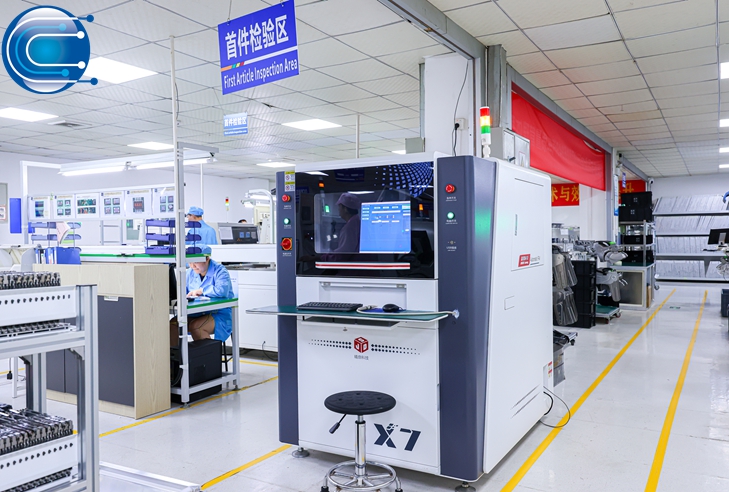
First Article Inspection (FAI) is another useful verification step. It checks whether the initial assembled product conforms to the approved manufacturing documentation and customer requirements.

Depending on the project, the verification plan may include:
- Component placement and polarity checks.
- Solder joint inspection.
- AOI and X-Ray inspection where appropriate.
- Electrical continuity testing.
- Functional testing according to customer specifications.
- Review of material and production records.
The results should be evaluated before full production release. This helps reduce the likelihood of repeating the same issue across a larger batch.

7. Build a More Realistic Delivery Plan
A dependable PCBA delivery plan should include more than a single estimated completion date.
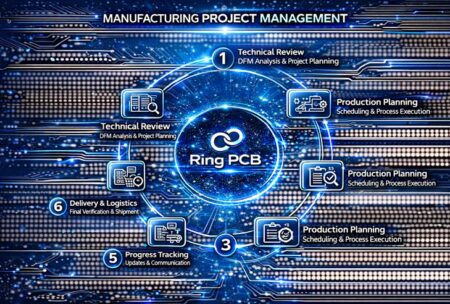
OEMs should work with their manufacturing partner to establish milestone visibility, including document approval, material readiness, PCB completion, assembly start, inspection completion and shipment.
It is also useful to define how schedule changes will be communicated. If a critical component is delayed, early notification gives the buyer more time to review options rather than discovering the problem near the planned shipment date.
For recurring communication PCBA orders, rolling forecasts can help manufacturers plan materials and capacity more effectively. Forecasts should be distinguished from firm purchase orders so that both parties understand their respective commitments.
How Ring PCB Supports Communication PCBA Production Planning
Ring PCB provides PCB fabrication, component sourcing, SMT assembly, through-hole assembly, inspection and testing services. Its integrated manufacturing capabilities help customers coordinate PCB production and PCBA assembly within one manufacturing organization.
Founded in 2008, Ring PCB operates a 10,000+ sqm self-owned factory with approximately 500 employees. It has five automated SMT lines, monthly bare PCB production capacity of approximately 50,000 sqm and the ability to handle around 500 PCBA projects per month. PCB fabrication capability extends up to 62 layers.
For suitable projects, rapid PCB prototyping can be available in as little as three days, depending on specifications and material availability. Actual production schedules are confirmed after reviewing the project requirements and sourcing conditions.
Customers can provide Gerber files, BOM data and detailed technical requirements. Ring PCB reviews the manufacturing information, communicates any relevant feasibility or sourcing concerns and confirms the project requirements before order acceptance.
Conclusion
Managing communication PCBA lead time requires coordination across PCB fabrication, component sourcing, assembly, inspection and production planning. In a supply environment where component availability and material lead times can change, early risk identification is more valuable than relying on optimistic production estimates.
By improving BOM readiness, controlling engineering changes, planning materials in advance and verifying pilot production, OEMs can reduce supply chain uncertainty and improve delivery reliability.
For communication PCB and PCBA manufacturing support, contact Ring PCB:
Email: rfq@ringpcb.com
References and Further Reading
- Global Electronics Association – Supply Chain Availability, August 2026:
- Grand View Research – Printed Circuit Board Market:
- C-MAC – Market Update, August 2026