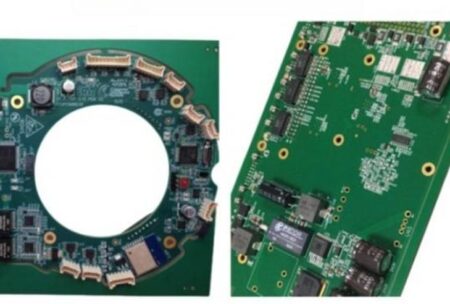
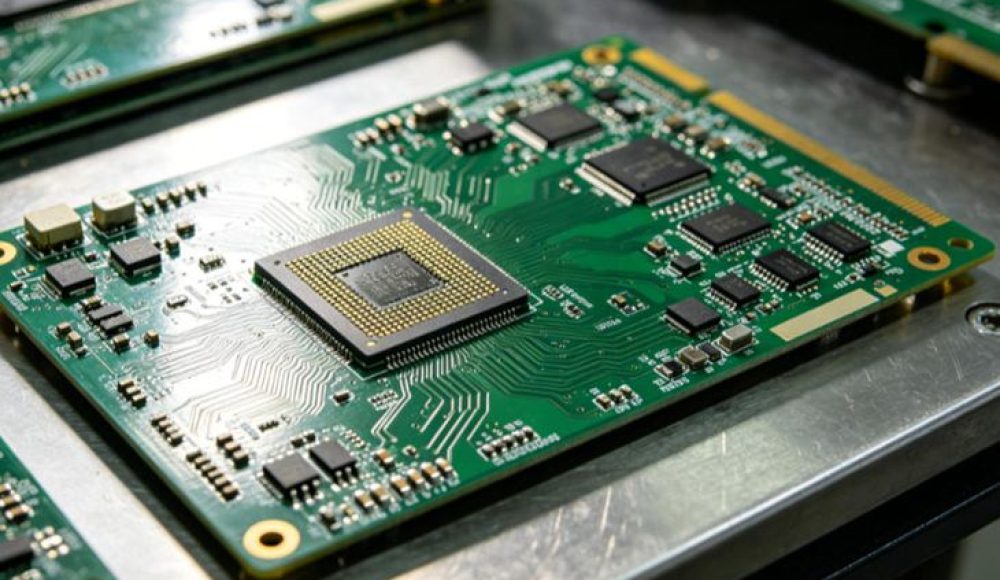
Turkey has firmly established itself as a critical industrial hub bridging Europe, the Middle East and Central Asia. Driven by expansion in automotive machinery, textile automation, food processing equipment and renewable energy infrastructure, local OEMs and system integrators face rising demand for reliable industrial control PCBA. Unlike consumer electronics, industrial control boards serve as the core brain of automated production lines; any unexpected board failure leads to costly factory downtime. However, many Turkish hardware developers encounter persistent sourcing obstacles: limited local high-grade PCBA capacity, component supply volatility, strict TR RoHS & CE compliance requirements, and suppliers lacking specialized experience for harsh-environment industrial boards. Targeted manufacturing services customized for Turkish buyers effectively resolve these pain points. This article explores core requirements of industrial control PCBA and how professional EMS partners support Turkey’s automation sector.
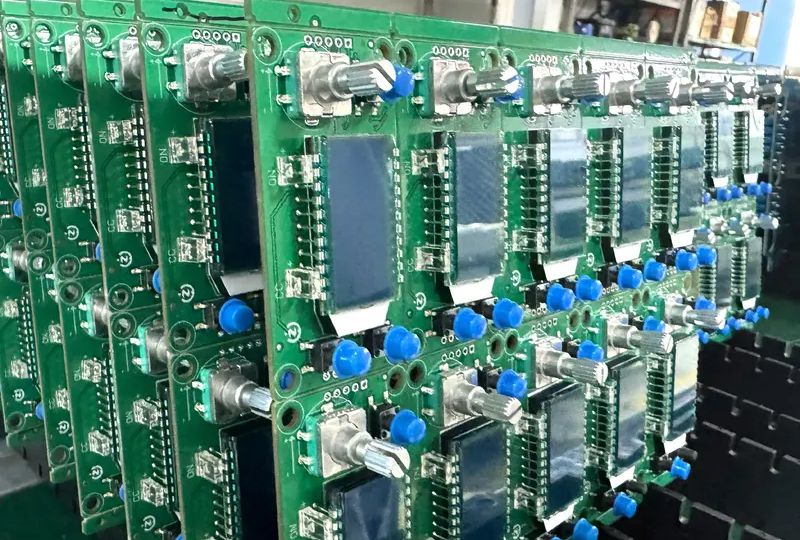
1. Unique Demands of Industrial Control PCBA for Turkey’s Operating Environment
Most Turkish automation equipment operates under complex working conditions: extreme temperature swings across inland and coastal regions, factory vibration, humidity, dust and electromagnetic interference from motors and power equipment. Industrial control PCBA must maintain stable continuous operation for 10–15 years, far exceeding the service life requirements of consumer circuit assemblies.
From a compliance perspective, all electronic boards circulating in Turkey must meet TR RoHS standards aligned with EU directives, and control systems for export to the European Customs Union require complete CE documentation covering LVD and EMC directives. Many local Turkish OEMs struggle to find suppliers that can provide fully traceable material reports, test certificates and compliance files ready for TAREKS customs inspection.
Additionally, Turkey’s automation market features mixed order demands: small prototype batches for new equipment R&D, medium-volume pilot runs, and scalable mass production for mature machinery. Suppliers that only support large-volume orders or lack flexible fast-turn services cannot match the development rhythm of local Turkish manufacturers.
2. Top Challenges Faced by Turkish Buyers Sourcing Industrial Control PCBA
2.1 Insufficient Local Manufacturing Capacity for High-Reliability Boards
Turkey’s domestic EMS industry focuses heavily on low-to-medium complexity assembly. Advanced industrial-grade processes such as heavy copper PCB fabrication, precise BGA rework, conformal coating and rigorous thermal cycling testing remain limited. Many Turkish integrators have to rely on overseas manufacturers for custom control boards, creating long lead-time risks.
2.2 Component Sourcing Risks & Currency Pressure
Global shortages of industrial ICs, wide-temperature capacitors and communication modules continue to affect procurement cycles. Combined with local currency fluctuation, unstable component pricing squeezes profit margins for Turkish OEMs. Suppliers without stable global component distribution partnerships cannot lock in favorable material costs or offer validated alternative parts during shortages.
2.3 Lack of Early-Stage Technical Support
Numerous circuit defects only emerge after prototypes arrive in Turkey. Many overseas manufacturers merely execute production according to provided Gerber files, without proactive DFM review tailored to industrial control scenarios. Without advance optimization on thermal layout, EMI suppression and assembly feasibility, customers waste funds on repeated sample iterations and face delayed product launches.
2.4 Unclear Communication & Compliance Document Gaps
Time zone differences and inconsistent technical communication often lead to misunderstandings over manufacturing standards. Worse still, many suppliers fail to deliver complete compliance documentation required for Turkish customs and EU export audits, triggering shipment delays or customs detention.
3. Core Advantages of Specialized Industrial Control PCBA Service for Turkish Clients
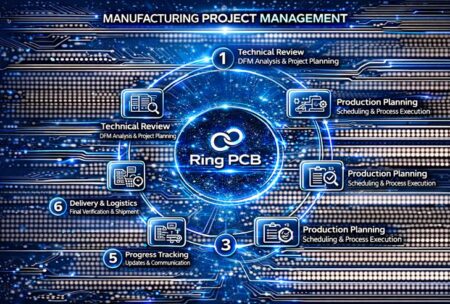
Professional EMS providers serving Turkey’s market build service frameworks specifically for local automation OEMs, covering design review through finished board delivery.
3.1 Industrial-Grade Process Standards for Harsh Working Conditions
Qualified industrial control PCBA follows strict IPC-A-610 Class 3 standards. Key processes include heavy copper PCB production for power control modules, selective wave soldering for through-hole connectors, conformal coating protection against moisture and dust, and standardized functional testing simulating Turkey’s wide temperature range. These processes significantly improve board stability in inland manufacturing workshops and coastal humid environments.
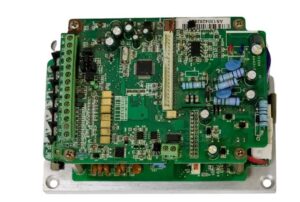
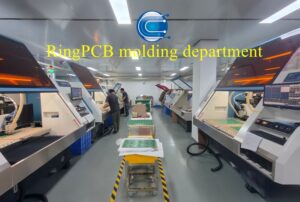
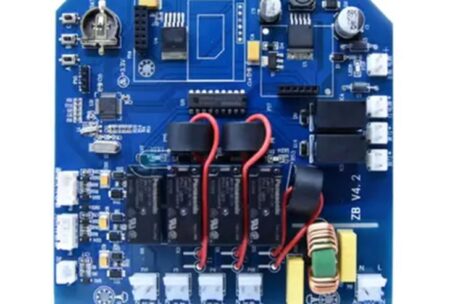
Ring PCB delivers customized industrial control PCBA turnkey services for Turkish automation OEMs. We manufacture custom PLC main boards, servo drive control assemblies, HMI core boards and renewable energy controller PCBA. Our in-house factory supports full processes including PCB fabrication, authorized component sourcing, precision SMT assembly, X-ray inspection for BGA joints, conformal coating and customized functional testing. All production batches retain complete manufacturing traceability.
3.2 Compliance Support Aligned with Turkey & EU Market Rules
We systematically prepare TR RoHS material declarations, test records and technical files to satisfy Turkish customs TAREKS checks and CE marking requirements for exports to the EU Customs Union. Our engineering team helps customers avoid common compliance pitfalls that frequently delay shipments into Turkey.
3.3 Flexible Production Matching Turkey’s Mixed-Volume Demand
Our service covers fast prototype samples, small-batch pilot production and scalable mass manufacturing. Whether Turkish clients require 20 prototype control boards for equipment testing or continuous bulk orders for machinery exports, we adjust production lines flexibly and maintain consistent process standards across all order sizes.
3.4 Streamlined Communication & Stable Supply Chain
Our project team maintains regular communication suitable for Turkey’s time zone. With long-term cooperation with global authorized component distributors, we actively mitigate lead-time risks for industrial-grade semiconductors and propose verified alternative components to prevent production interruptions.
4. Advice for Turkish OEMs Selecting Industrial Control PCBA Suppliers
When evaluating overseas PCBA manufacturers, Turkish buyers should prioritize these criteria:
- Verify practical experience producing industrial control PCBA, including heavy copper boards, high-noise environment controller assemblies.
- Confirm the supplier can provide complete, standardized compliance documentation for TR RoHS and CE marking.
- Confirm whether DFM analysis for industrial reliability is included before production, not only basic manufacturability checks.
- Ask about flexibility to handle both low-volume prototypes and future volume ramp-up.
Pure price-focused selection often leads to hidden field failure costs and customs compliance risks, which inflict heavier losses on automation equipment manufacturers.
Conclusion
Turkey’s automation industry continues expanding, creating sustained demand for robust industrial control PCBA. Local OEMs and system integrators need manufacturing partners that understand regional compliance rules, industrial application environments and flexible order requirements. Targeted turnkey industrial control PCBA services bridge the gap between overseas manufacturing capacity and Turkey’s unique market demands, reducing supply chain risks, cutting iteration cycles and supporting local machinery brands competing across Europe and the Middle East.
If you are a Turkish automation OEM or system integrator seeking reliable industrial control PCBA manufacturing solutions, submit your Gerber files, BOM and technical specifications to rfq@ringpcb.com. Our engineering team will deliver a detailed DFM assessment and competitive quotation within 24 working hours.