
When OEM buyers compare quotations for multilayer printed circuit boards, the price per board is often the first number they examine. However, the lowest fabrication price does not necessarily produce the lowest finished assembly cost.
A multilayer PCB may require specialized materials, multiple lamination stages, precise drilling, controlled impedance, and demanding inspection procedures. Once components, SMT assembly, testing, and logistics are included, manufacturing decisions become even more interconnected.
For industrial electronics, communication devices, and embedded control products, cost optimization must therefore extend beyond bare-board pricing.
Combining Multilayer PCB Manufacturing with a One-Stop PCB Assembly Service can provide better visibility into the factors influencing total manufacturing cost.

What Determines Multilayer PCB Manufacturing Cost?
Several technical variables influence the cost of a multilayer PCB.
Layer count is important because additional layers generally increase material usage, processing steps, and manufacturing complexity.
Board dimensions and panel utilization also affect how many usable circuits can be produced from a manufacturing panel.
Other cost drivers include material type, copper thickness, minimum trace and spacing, drilling requirements, surface finish, and inspection specifications.
For example, a high-layer-count board with complex blind and buried vias may require more processing than a conventional through-hole design.
However, two boards with identical layer counts can have very different manufacturing costs.
OEMs should therefore evaluate the complete fabrication specification rather than using layer count as the only comparison.
Why Manufacturing Yield Changes the Real Cost
Manufacturing yield measures the proportion of acceptable products produced during a process.
When yield decreases, material consumption, processing time, and inspection costs are spread across fewer usable boards.
For multilayer PCBs, defects may originate from inner-layer processing, lamination, drilling, plating, solder mask application, or other fabrication stages.
A complex board rejected late in production may represent considerable accumulated manufacturing cost.
Therefore, process stability is an important cost-control factor.
OEMs should ask manufacturers how they monitor defects and address recurring production problems.
A reliable production process may provide better overall value than an aggressive quotation that leaves little allowance for manufacturing complexity.
Improve Panel Utilization Without Compromising Quality
Panelization influences both fabrication efficiency and assembly handling.
Poor panel utilization can increase material waste, while unsuitable panel layouts may create difficulties during SMT processing.
Board shape, tooling holes, breakaway tabs, component placement, and depanelization methods should be considered together.
For example, a compact PCB with irregular edges may benefit from an assembly panel designed to support automated placement and soldering.
However, panelization must not introduce excessive mechanical stress or interfere with components.
When fabrication and assembly teams coordinate panel design, they can balance material utilization with production requirements.
This is a practical opportunity for One-Stop PCB Assembly Service to support cost optimization.
Avoid Unnecessary Manufacturing Complexity
Advanced PCB features can solve important engineering problems, but they should be used only when justified.
Blind vias, buried vias, microvias, sequential lamination, and extremely fine geometries may increase manufacturing cost.
Similarly, unnecessarily tight tolerances can reduce production flexibility.
During DFM review, engineers should distinguish essential electrical requirements from specifications that can be adjusted safely.
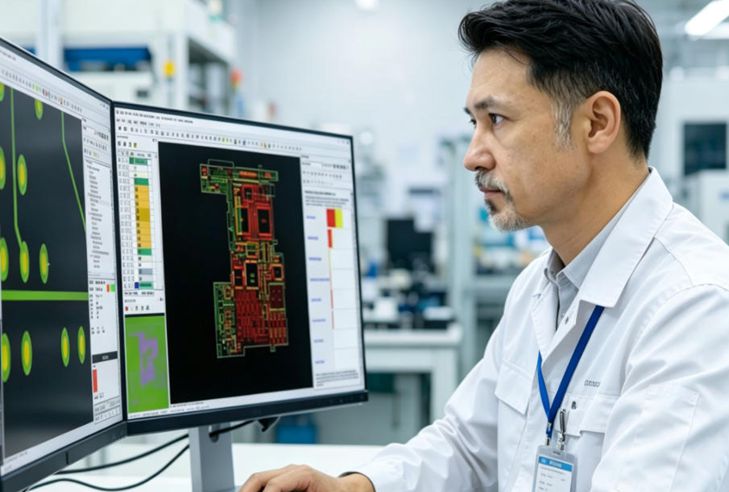
For example, a simpler via structure may be suitable if it satisfies routing density and signal integrity requirements.
However, manufacturers should never remove critical design features solely to reduce cost without customer approval.
The objective is to eliminate avoidable complexity while preserving product performance.
Material Selection Affects Cost and Availability
PCB laminate selection influences electrical behavior, thermal performance, and purchasing flexibility.
Standard FR-4 materials are suitable for many industrial and commercial electronics applications.
Higher-temperature or lower-loss materials may be necessary for selected operating conditions.
However, using premium materials throughout a board without a defined requirement can increase cost.
Material availability also affects production planning.
Specialized laminates may have different lead times, minimum order quantities, and processing considerations.
OEMs should specify critical material properties and discuss approved options during engineering review.
This allows cost decisions to be evaluated alongside technical requirements.
Component Sourcing Can Exceed Bare-Board Savings
For many assembled products, electronic components represent a substantial portion of total cost.
Processors, memory, power management devices, connectors, and specialized semiconductors can influence the quotation more than small differences in PCB fabrication price.
Therefore, a complete cost review should include the BOM.
A turnkey manufacturing partner can check part numbers, purchasing quantities, availability, and potential sourcing risks.
Approved alternatives may improve procurement flexibility, but electrical and mechanical compatibility must be verified.
Uncontrolled substitutions can create additional testing or qualification costs.
Consequently, component purchasing and manufacturing engineering should remain connected.
Reduce Rework Through Assembly Process Control
Assembly defects can increase the cost of an otherwise acceptable multilayer PCB.
Fine-pitch components, BGAs, large thermal pads, and mixed SMT/THT assemblies require appropriate process controls.
Solder paste inspection helps identify printing problems before placement.
AOI can detect visible defects, while X-ray inspection can support evaluation of hidden solder joints.
These methods do not eliminate every defect, but they can help identify problems before more value is added through subsequent production stages.
IPC J-STD-001J and IPC-A-610J provide recognized references for soldering requirements and assembly acceptability.
OEMs should agree on applicable workmanship criteria before manufacturing begins.
Understand the Cost of Fragmented Supplier Management
A project using separate PCB fabrication, component sourcing, assembly, and testing suppliers may appear inexpensive when individual quotations are compared.
However, the total cost can include additional shipping, incoming inspection, purchasing administration, inventory handling, and technical coordination.
Engineering changes may also require multiple suppliers to update their documentation and schedules.
A One-Stop PCB Assembly Service can consolidate these activities into a coordinated workflow.
This does not guarantee a lower price for every project.
Instead, it provides an opportunity to evaluate total cost with fewer disconnected assumptions.
Buyers should request quotations that clearly identify fabrication, materials, assembly, testing, tooling, and logistics.
Calculate Total Cost of Ownership
Total cost of ownership includes expenses beyond the initial manufacturing invoice.
Potential factors include defect-related rework, replacement assemblies, inventory exposure, production delays, and supplier management.
For example, a board with a lower unit price but a higher defect rate may create additional inspection and repair costs.
Similarly, a delayed component shipment can disrupt a production schedule even when fabrication costs are favorable.
Procurement teams should compare suppliers using consistent requirements and complete project assumptions.
The most economical option is the one that balances cost, quality, delivery, and engineering support over the intended production lifecycle.
Use NPI to Identify Cost Problems Early
New Product Introduction provides an opportunity to evaluate manufacturing costs before recurring production begins.
Prototype and pilot builds can reveal panelization problems, difficult assembly operations, test inefficiencies, or unnecessary material requirements.
These findings should be reviewed before production volume increases.
For example, improving test access may reduce recurring functional test time.
Adjusting an approved panel layout may improve handling efficiency.
Early cost analysis can therefore prevent repeated expenses across future orders.
Ring PCB: Integrated Multilayer PCB and Assembly Services
Cost-effective multilayer PCB production requires coordination between fabrication, sourcing, assembly, and quality control.
Ring PCB provides multilayer PCB manufacturing, component procurement, SMT and THT assembly, engineering review, inspection, testing, and One-Stop PCB Assembly Service.
Its integrated workflow helps OEMs evaluate manufacturing requirements across multiple production stages rather than treating bare-board cost as the only consideration.
For projects involving multilayer industrial controllers, communication equipment, or embedded electronics, a complete manufacturing quotation can help identify cost drivers and potential optimization opportunities.
Send your Gerber files, BOM, assembly drawings, expected quantities, and testing requirements to rfq@ringpcb.com.
References
- IPC. Electronics Industry Demand Holds Steady Amid Tariff Turbulence. May 22, 2025.
- IPC. IPC Releases “J” Revisions to Two Leading Standards for Electronics Assembly. April 8, 2024.
- Ring PCB. One-Stop PCB & PCBA Manufacturer: Cut Supply Chain Risks in 2026.
Core Keywords:
SEO Title:
SEO Meta Description: