Procurement teams opened 2026 expecting a normal year of price negotiation. What they got was a repricing event. Industry sentiment data from March 2026 showed roughly 78% of manufacturers reporting rising material costs, and PCB prices jumped by as much as 40% in a single month during the spring supply shock. Copper foil rose by up to 30%, epoxy resin lead times stretched from three weeks to fifteen, and copper-clad laminate lead times reached six months with allocation quotas attached.
None of this is a short spike. It is structural, and it changes how a PCB order should be placed.
Why the Numbers Moved
Three forces stacked at once.
Demand absorbed capacity. AI server and high-performance computing demand pulled laminate capacity away from commodity FR-4. Advanced laminates moved from a competitive market to an allocated one, and allocation decides who gets material first: forecasted customers with order history, not spot buyers.
Raw material concentration. Raw materials represent roughly 60% of a typical PCB cost structure, with CCL alone above a quarter. When a small set of qualified suppliers controls low-loss resin and ultra-low-loss copper foil, pricing power sits with them. Ultra-low-loss laminate lead times stretched to 20 weeks after a 2025 resin plant fire removed capacity, and at least one major laminate supplier reported capacity booked through mid-2026.
Trade friction. Section 301 duties of 25% on Chinese-origin PCBs remain a line item in North American landed cost, and copper futures moved more than 12% after the July 2025 tariff announcement, because copper foil can represent roughly 60% of PCB value with no scalable domestic substitute.
What It Does to a Quote
Buyers see the pass-through in four forms, and each one is worth pricing into your model.
- Quote validity compressed. Thirty- and sixty-day quotes now carry seven to fourteen days, or an explicit material surcharge clause. An old quote is an estimate.
- Repricing on reorder. The same Gerber files come back 10–30% higher, with the largest jumps on multilayer and high-Tg builds.
- Expedite premium. When standard lead times stretch, buyers pay 25–100% rush premiums to hold a schedule.
- Allocation asymmetry. Spot buyers pay more and wait longer than buyers with rolling forecasts.

Five Moves That Protect the Budget
1. Split the BOM by risk. Standard 2-layer and 4-layer FR-4 builds face limited exposure; high-layer-count, HDI, low-loss and heavy-copper builds carry most of the material risk. Fund the risky part first, and stage the rest.
2. Quote in two currencies of time. Ask for both a firm material basis date and a validity window. A price without a material basis is a guess.
3. Build a qualified second source before you need it. Dual sourcing advanced laminates is now standard practice among server OEMs, who also raised safety-stock coverage to eight to twelve weeks. Qualification takes months, so it must start before the shortage.
4. Give your fabricator a forecast. Allocation rewards visibility. A rolling twelve-week forecast, even at ±30% accuracy, moves a buyer from spot pricing into the allocated pool.
5. Design margin as a cost tool. A stack specified tightly around a single scarce laminate has no substitution room. One alternate dielectric that meets the same loss target is cheap insurance.
Where a Capable Fabricator Absorbs Some of the Risk
Cost control is partly a purchasing strategy and partly a matter of who builds the board.
RingPCB holds stock positions across a broad laminate range — SYE, ITEQ, TUC, Panasonic, Rogers, Taconic, Isola, Ventec, KB and HZ — so a single-material shortage does not stop a stack from being scheduled. Where a program can accept a qualified alternate dielectric with equivalent electrical performance, our engineering team will say so before quoting rather than after the material fails to arrive.
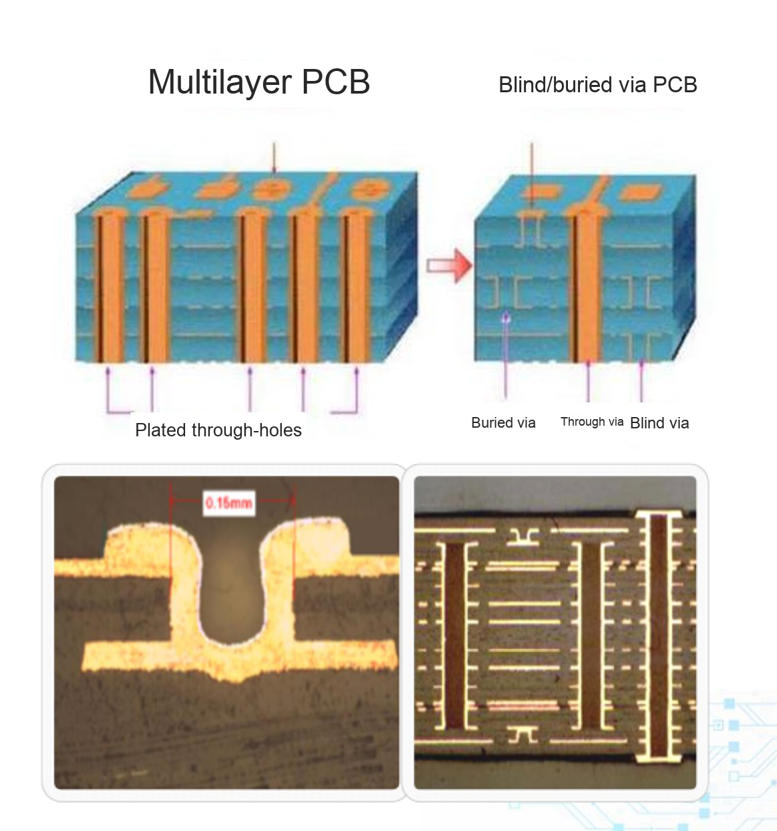
Our process range is deliberately wide, spanning 70 layers on prototype and 30 layers in volume, 20 oz sample copper and 12 oz in production, ELIC HDI on samples and 2+N+2 in series, with finish options from OSP and immersion tin through ENIG, immersion silver, hard gold plating and gold finger plus ENIG. That range matters commercially: it means one supplier can hold a program from first prototype through small batch and into series, instead of three quotes at three prices from three vendors.
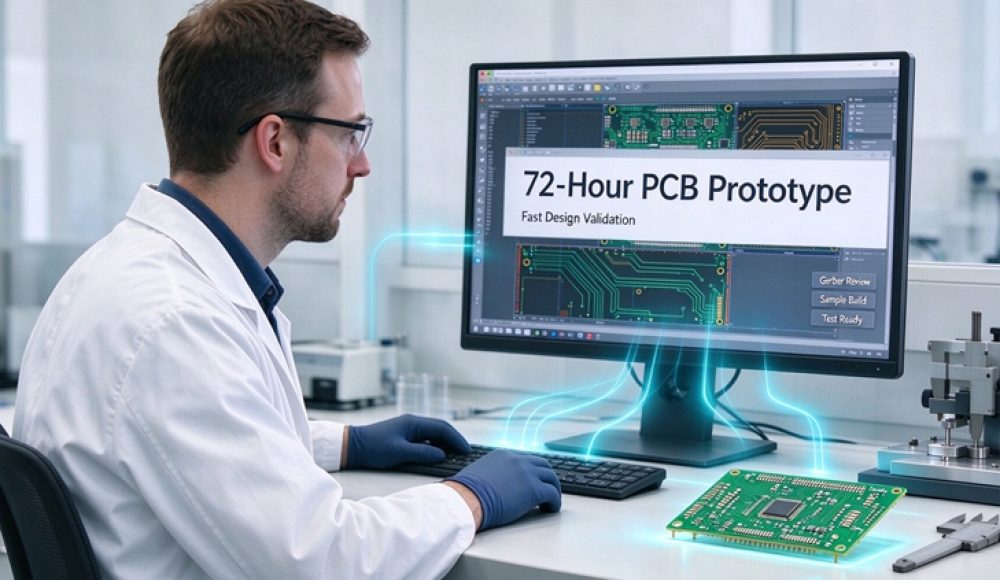
For buyers working against a compressed schedule, 72-hour rapid prototyping and flexible small-batch production remove the expedite premium from the early phases, when designs still change. Combined with PCBA assembly and component sourcing under one purchase order, the number of lead-time handoffs drops, and every removed handoff is a removed schedule risk.
What to Do This Quarter
Renegotiate nothing until you know your material exposure. Map every active BOM by laminate class, mark which stacks have no qualified alternate, and ask each fabricator for sample and volume capability in writing. Then place orders with a validity window you can defend internally.
RingPCB manufactures from your Gerber files and BOM, reviews stack-up and material availability before committing a date, and quotes both prototype and volume in the same document.
Send your Gerber files and BOM to rfq@ringpcb.com.
References:
- PCBGOGO, PCB Price Increase 2026
- Electronics Manufacturers, PCB Materials Bottleneck
- Mordor Intelligence, High-Speed PCB Market
- DX Circuit, Raw Material Price Surge 2026