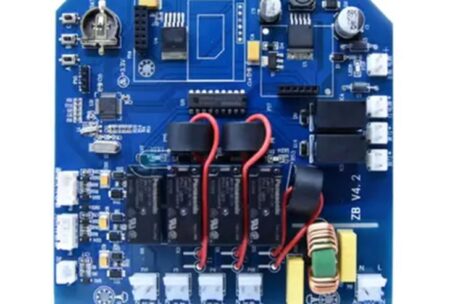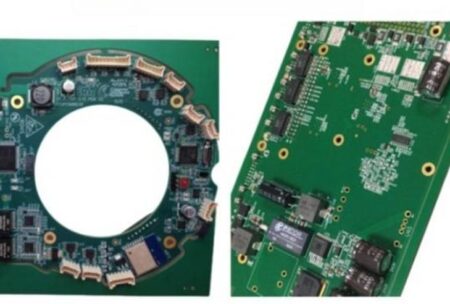
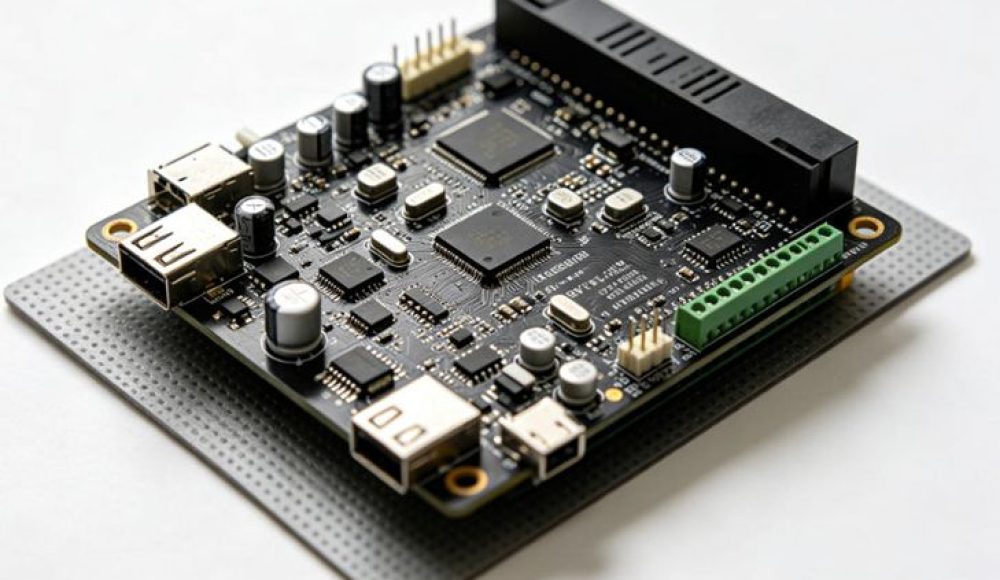
Driven by worldwide new energy infrastructure construction, the global smart EV charger PCBA market maintains explosive growth in 2026. Official IEA industry data forecasts the EV charger circuit board market will achieve a 14.7% compound annual growth rate from 2024 to 2030, hitting a total scale of $12.8 billion in 2030. Meanwhile, the popularity of 800V high-voltage vehicle platforms, ISO 15118 intelligent interactive charging and OCPP 2.1 grid interconnection has raised unprecedented strict standards for charger control PCBA.
Nevertheless, B-side charger OEMs, equipment integrators and charging operators are universally trapped in severe supply chain troubles. A 2026 industry survey shows over 60% of charger purchasers have suffered production suspension, batch quality inconsistency and overseas certification delay caused by unqualified PCBA suppliers. Unlike ordinary consumer circuit boards, smart EV charger PCBA runs continuously outdoors under high temperature, high humidity, voltage surge and strong electromagnetic interference, demanding a service life longer than 10 years and strict IEC 61851 safety certification. This article sorts out mainstream procurement pain points of charger PCBA, analyzes core technical requirements of intelligent charging boards, and explains how standardized turnkey manufacturing addresses long-term stability risks.
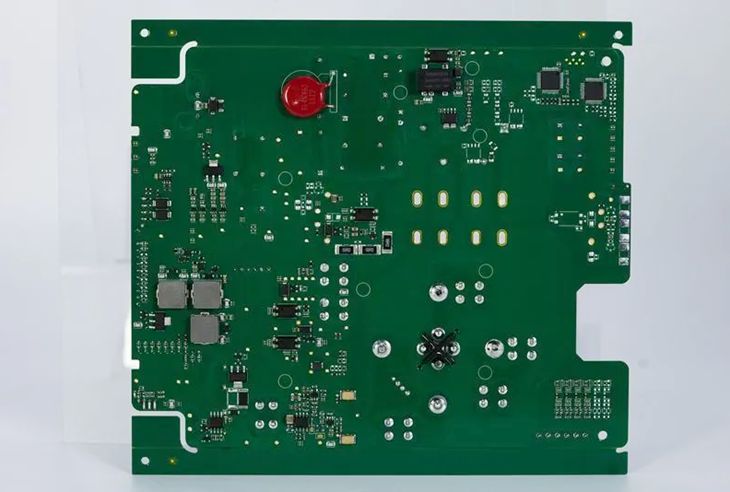
1. Four Top Pain Points of Smart EV Charger PCBA Procurement for B-side Clients
In recent years, low-price vicious competition in the electronics industry has made many small manufacturers cut corners on raw materials and production processes, bringing four prominent hidden troubles for charger enterprises.
1.1 Unstable Delivery & Scaling Difficulties
Most small-scale PCBA factories outsource core production links to third-party workshops. Once orders surge or raw materials are in short supply, delivery cycles will be delayed for weeks, directly leading to assembly line shutdown and order default losses for charger manufacturers. Besides, many suppliers can only support small prototype samples but cannot smoothly expand to mass production, with yield dropping sharply during volume upgrading.
1.2 Poor Batch Consistency & High Field Failure Rate
Unified process parameters are hard to guarantee in scattered outsourced production. Different batches of PCBA have obvious parameter deviation, which requires repeated manual debugging during finished charger assembly. Statistically, thermal runaway, short circuit and charging interruption failures of public charging piles are mainly derived from irregular PCBA production, with outdoor failure rates rising sharply in high-temperature summer seasons.
1.3 Incomplete Compliance Documents Blocking Global Export
Europe, North America and Southeast Asia require CE, UL, RoHS and local special certification for charging equipment. Many general PCBA manufacturers only provide finished boards, lacking complete material traceability reports, EMC test records and safety inspection files, making overseas certification progress stagnant and missing international order deadlines.
1.4 Outdated Design Lags Behind Intelligent Upgrading
Traditional PCBA only supports basic charging control, failing to match current mainstream demands such as plug-and-charge automatic identification, vehicle-grid bidirectional interaction and remote fault diagnosis. Ordinary manufacturers lack DFM forward design optimization, unable to realize high-efficiency thermal layout and anti-interference wiring for high-power intelligent charging boards.
2. Mandatory Technical & Reliability Requirements for Modern Smart EV Charger PCBA
To adapt to harsh outdoor working conditions and intelligent upgrading trends, qualified smart charger PCBA must meet standardized industrial specifications in three dimensions.
2.1 High Thermal Dissipation & Wide-Temperature Resistance
Continuous high-current operation generates massive heat, so mainstream high-power charging PCBA adopts 3–6oz heavy copper PCB and high-Tg FR-4 substrates above 170℃. Qualified boards need stable operation between -40℃ and 85℃, passing 1000 times of thermal cycling testing without solder joint cracking or board delamination. Conformal coating is essential for outdoor equipment to resist moisture, salt fog and dust erosion.
2.2 Strict Safety & EMC Anti-interference Standards
All charger control boards must comply with IEC 61851 safety standards, with reinforced insulation design between AC power and DC output circuits to prevent electric leakage and short circuit. Meanwhile, high-frequency switching signals easily cause electromagnetic interference; PCBA layout needs professional grounding optimization to pass CISPR 32 EMC certification, avoiding communication disconnection between charging piles and vehicles.
2.3 Intelligent Communication Compatibility
New-generation smart PCBA must reserve hardware interfaces for CAN FD, OCPP 2.1 and ISO 15118 PLC power carrier communication, supporting automatic vehicle identification, automatic billing and vehicle-grid energy scheduling, which is the core hardware foundation of future smart charging stations.
3. How Professional Turnkey Manufacturing Solves EV Charger PCBA Pain Points
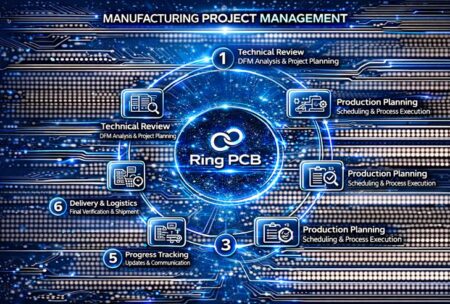
Integrated self-operated EMS manufacturers realize full-link control from design optimization, PCB production, component procurement, precision assembly to finished testing, systematically eliminating the above manufacturing risks. Ring PCB has long focused on customized production of smart EV charger PCBA, with dedicated production lines for new energy power electronics. Our complete turnkey service perfectly fits the iteration rhythm of charger OEMs from prototype verification to large-scale mass production. First, our professional engineering team provides free DFM pre-review before production. We optimize thermal layout, power line wiring and anti-interference structure in advance, effectively reducing hidden dangers such as local overheating and signal disorder, and greatly improving the first-pass yield after mass scaling. Second, we establish long-term cooperative relations with global authorized semiconductor distributors.
We prioritize the supply of industrial-grade SiC chips, high-temperature capacitors and communication modules, build alternative material libraries to cope with global component shortages, and strictly implement IQC incoming inspection to block counterfeit and inferior materials, stabilizing delivery cycles all year round. Third, all charger PCBAs go through standardized AOI optical inspection, X-ray BGA detection, ICT circuit testing and simulated high-low temperature aging testing. We can systematically organize complete RoHS, CE, UL certification documents and full batch production traceability records, helping customers smoothly complete overseas customs clearance and product certification. Furthermore, we support personalized customization: residential AC charger control boards, commercial DC fast-charging mainboards and energy storage integrated charging control modules can all be tailored, and we reserve upgrade space for intelligent communication protocols to keep products adaptable to long-term industry upgrading.
4. Practical Suggestions for Selecting EV Charger PCBA Suppliers
Global charger purchasers can judge supplier quality from four key indicators:
- Confirm independent self-owned factories rather than full outsourcing, ensuring unified process standards for samples and mass production;
- Verify successful manufacturing cases of high-power charging PCBA and complete reliability testing equipment;
- Confirm the supplier’s ability to provide standardized international certification documents;
- Evaluate technical after-sales support, including firmware debugging guidance and long-term material supply guarantee.
Conclusion
As global charging infrastructure continues to upgrade toward high power, intelligence and high safety, smart EV charger PCBA has become the core competitive component of charging equipment. Low-quality boards bring huge hidden costs such as after-sales maintenance, certification failure and order loss, while professional integrated turnkey manufacturing can steadily control quality, delivery and compliance risks. Choosing a reliable PCBA manufacturer with new energy industry experience is the key for charger brands to seize overseas market share.
If you need customized smart EV charger PCBA solutions, please send your Gerber files, BOM lists, power parameters and certification requirements to rfq@ringpcb.com. Our professional new energy engineering team will deliver detailed DFM analysis and competitive official quotation within 24 working hours.