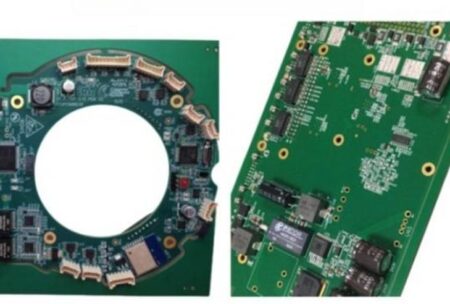
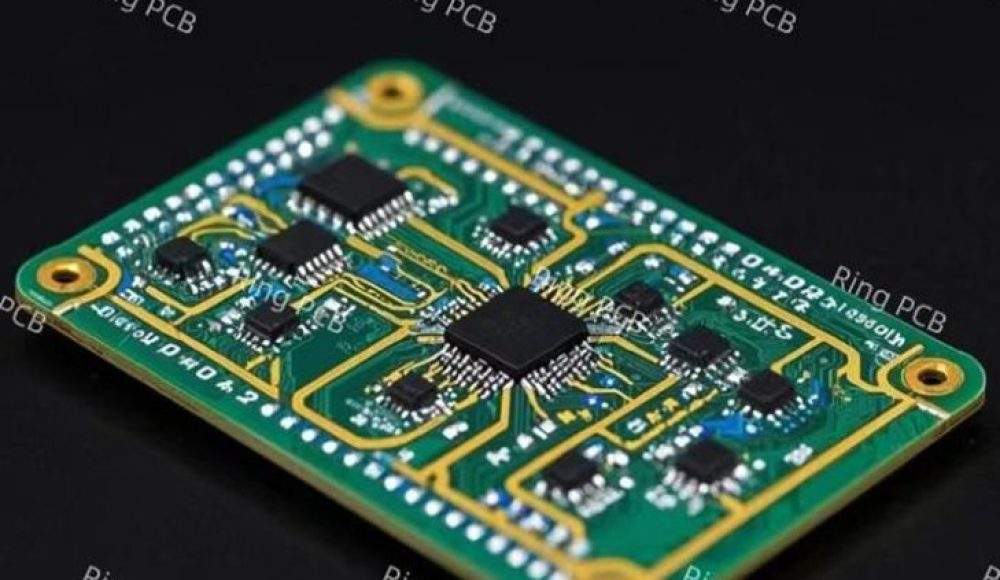
Fast product development often fails not because of design quality, but because PCB manufacturing takes too long. When you are under pressure to validate circuits, delays of even a few days can interrupt testing cycles and slow down your entire engineering roadmap. That is why quick turn pcb manufacturing plays a critical role in modern electronics development.
However, speed alone is not enough. You also need stable electrical performance, repeatable quality, and controlled production processes. To solve this balance between speed and reliability, Ring PCB provides structured rapid PCB prototyping and turnkey assembly services designed for engineering teams worldwide.
What Quick Turn PCB Means in Real Engineering Projects
A quick turn pcb service focuses on accelerating prototype validation. It helps engineers move from design to physical testing without long production queues. In practice, this approach reduces iteration delays and improves decision-making speed during product development.
For example, you typically use quick-turn production when:
- You need to validate a new circuit design quickly
- You must fix design issues after lab testing
- You are preparing a demo for investors or pre-production review
Therefore, quick-turn manufacturing directly supports faster engineering cycles and reduced time-to-market.
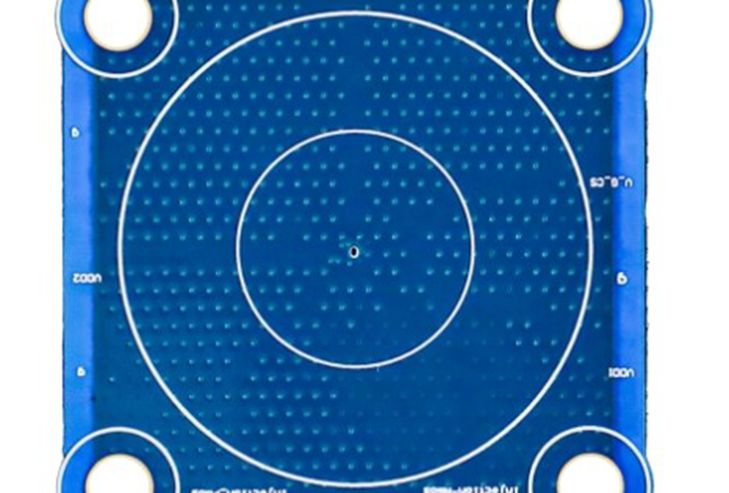
Engineering Strength Behind Quick Turn PCB Manufacturing
Fast delivery only works when the manufacturing system is controlled and predictable. In addition, process stability ensures that speed does not introduce hidden quality risks.
Ring PCB operates a vertically integrated production system that supports both prototype and small-batch manufacturing. As a result, engineers can scale from validation to production without switching suppliers.
Key capabilities include:
- Prototype delivery within 3–7 working days
- Minimum order quantity starting from 1 unit
- Support for 4–48 layer PCB structures
- Controlled impedance for high-speed circuits
- Full SMT and turnkey PCBA integration
Moreover, the factory operates under ISO9001, ISO14001, ISO13485, IATF16949, UL, and RoHS certifications. The production system also supports international logistics workflows, including Amazon SPN-aligned supply chain requirements and FMC-compliant export coordination for global electronics distribution.
Quick Turn PCB vs Standard PCB Manufacturing
| Factor | Quick Turn PCB | Standard PCB Manufacturing |
|---|---|---|
| Lead Time | 3–7 days | 10–25 days |
| MOQ | 1 unit | 100–500 units |
| Purpose | Prototype validation | Mass production |
| Engineering Iteration | Frequent changes | Stable production |
| Cost per Unit | Higher | Lower |
In addition, quick-turn PCB manufacturing focuses on engineering flexibility, while standard production focuses on cost efficiency and volume stability.
Quick Turn PCB Manufacturing Process at Ring PCB
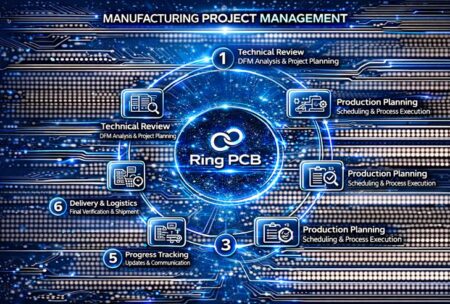
To maintain both speed and consistency, Ring PCB follows a structured engineering workflow:
1. DFM Engineering Review
Engineers analyze your design to identify manufacturability risks before production begins.
2. Material Selection
Depending on application needs, the team selects FR4, high-speed laminates, or polyimide materials.
3. Fabrication & Imaging
LDI laser exposure and precision etching ensure accurate circuit definition.
4. SMT Assembly (Optional PCBA)
If required, components are assembled using automated SMT lines with controlled reflow processes.
Applications of Quick Turn PCB
Quick-turn PCB manufacturing is widely used across industries where fast iteration determines success. For example:
- IoT device prototyping and testing
- Industrial control system development
- Consumer electronics pre-production validation
- Telecommunications hardware testing
- Medical electronics functional verification
In these scenarios, engineering speed often matters more than unit cost, especially during early-stage development.
FAQ
Q1: How fast can quick turn PCB be delivered?
Most prototypes are delivered within 3–7 working days depending on complexity.
Q2: Does Ring PCB support assembly services?
Yes, full turnkey PCB and PCBA services are available under the same workflow.
Q3: What is the minimum order quantity?
MOQ starts from 1 unit for prototype and engineering validation.
Q4: Can quick turn PCB be used for high-speed designs?
Yes, controlled impedance and high-speed materials are supported for advanced applications.
Conclusion
A successful quick turn pcb strategy is not only about faster delivery, but also about maintaining engineering stability throughout every iteration cycle. When manufacturing is integrated with design validation, product development becomes more predictable and efficient. With structured engineering workflows and certified production systems, Ring PCB helps global engineers accelerate innovation from prototype to production.