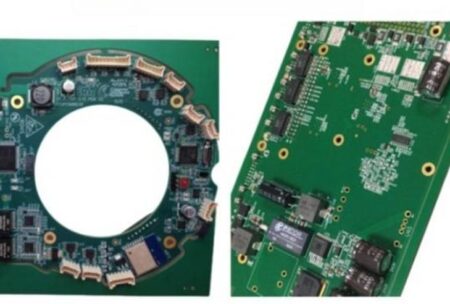
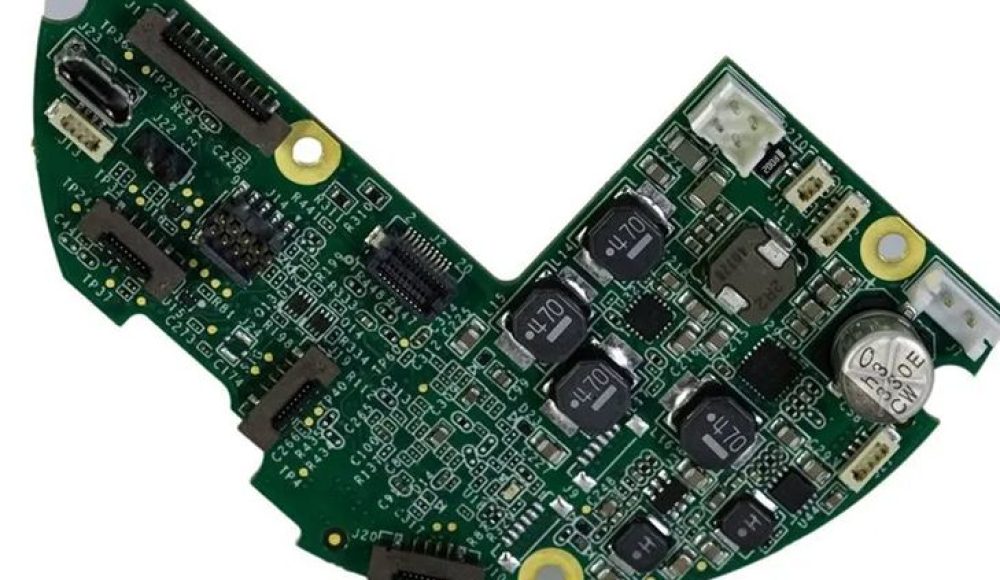
Power supply pcb board and high-power PCBA systems are the backbone of modern electronics, especially in applications such as EV charging stations, energy storage systems, industrial motor drives, and server power supplies.
Unlike standard low-power boards, high-power designs must continuously handle:
High current load
Elevated operating temperature
Electromagnetic interference (EMI)
Long-term reliability stress
A poor power supply pcb board design can lead to serious failures such as voltage instability, overheating, system shutdown, and even catastrophic field failure. Therefore, engineering-level design and manufacturing precision are critical.
In practical industrial production, manufacturers such as Ring PCB are often involved in translating these design requirements into manufacturable high-reliability PCBA solutions, ensuring design intent is maintained during fabrication and assembly.
To ensure stable performance under these demanding conditions, several critical design factors must be carefully considered.
1: Current Handling Capability and Copper Thickness
One of the most important factors in power supply pcb board design is current-carrying capacity.
High-power systems require:
Heavy copper thickness (typically 3 oz to 20 oz)
Wide power traces or copper pours
Low resistance current paths
Insufficient copper thickness leads to:
Excessive heat generation
Voltage drop across traces
Reduced system efficiency
For high-power PCBA applications, copper structure design directly determines system stability and lifespan.
2: Thermal Management and Heat Dissipation
Thermal performance is a core challenge in high-power pcb board design.
Effective thermal strategies include:
Thermal vias for vertical heat transfer
Metal core PCB (MCPCB) structures
Heat sinks and forced cooling systems
Optimized component placement
High current flow naturally generates heat. Without proper thermal design, hotspots can form and accelerate PCB degradation or solder joint failure.
Proper thermal management ensures stable operation even under continuous full-load conditions.
3: Power Integrity and Voltage Stability
Power integrity refers to the quality of voltage delivery across the pcb board under dynamic load conditions.
Key design practices include:
Decoupling capacitors near power pins
Low-impedance power distribution networks (PDN)
Stable ground plane design
Proper regulator selection (LDO vs switching regulators)
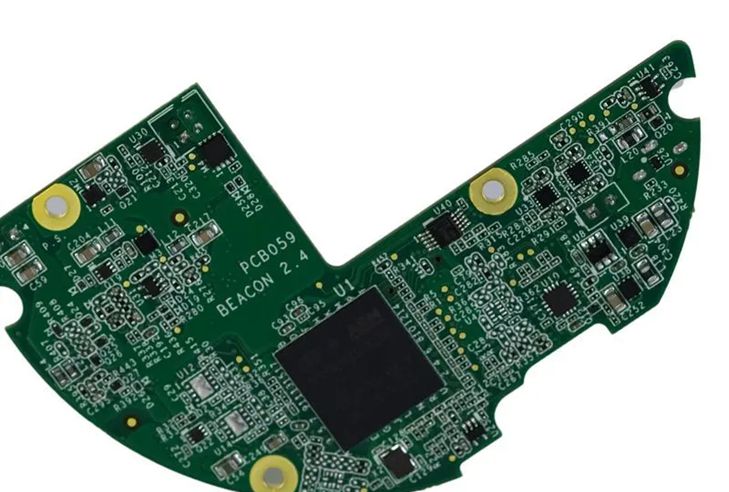
A well-designed power supply pcb board ensures minimal voltage ripple and stable performance across all load conditions.
4: EMI and EMC Control
High-power pcb boards generate strong electromagnetic fields, especially in switching power supply designs.
To reduce EMI issues, engineers should implement:
Ground plane shielding
EMI filters at input/output stages
Short switching loops
Proper component isolation between noisy and sensitive circuits
Without proper EMI control, systems may fail regulatory compliance or suffer from signal interference and unstable operation.
5: Material Selection and Dielectric Performance
Material selection plays a critical role in power supply pcb board reliability.
Common materials include:
FR-4 (standard applications)
High-Tg FR-4 (thermal stability)
Ceramic substrates (high-end power systems)
Rogers laminates (high-frequency + power hybrid systems)
Key material properties include:
Thermal conductivity
Dielectric strength
Glass transition temperature (Tg)
Incorrect material selection can lead to delamination, insulation breakdown, and reduced lifespan.
6: High-Reliability Assembly and Soldering Quality
In high-power PCBA manufacturing, assembly quality is as important as circuit design.
Critical processes include:
IPC-A-610 Class 3 assembly standard
100% AOI inspection
X-ray solder joint verification
Flying probe electrical testing
Poor solder quality can cause:
High resistance joints
Intermittent failures under vibration
Thermal fatigue cracking
Reliable assembly ensures long-term field performance in harsh environments.
7: Testing, Validation and Reliability Verification
Before mass production, high-power pcb board assemblies must undergo strict validation.
Common testing methods:
Functional testing under load
Thermal cycling tests
Burn-in testing
Electrical performance verification
These tests simulate real-world operating conditions such as:
Continuous high current operation
High temperature environments
Voltage fluctuation scenarios
This ensures product stability before deployment in mission-critical systems.
High-Power Power Supply pcb board Manufacturing by Ring PCB
As an ISO-certified PCB and PCBA manufacturer since 2008, Ring PCB provides end-to-end high-power power supply pcb board solutions for global customers.
Our capabilities include:
Heavy copper PCB fabrication (3 oz–20 oz)
High-current PCBA assembly (up to 500A+)
Thermal optimization design support
EMI/EMC engineering solutions
Full turnkey PCB & PCBA manufacturing
We operate a 10,000㎡ factory with 500 employees and advanced SMT production lines, enabling fast prototyping and scalable mass production.
Applications of Power Supply pcb board & PCBA
Our high-power PCB solutions are widely used in:
EV charging infrastructure systems
Energy storage inverter systems
Industrial motor control systems
Server and data center power supplies
Renewable energy systems
Smart grid power distribution
Conclusion
In modern high-power electronic systems, the performance and reliability of a power supply pcb board directly determine overall system stability. From current handling and thermal management to EMI control and material selection, every design detail plays a critical role in ensuring safe and efficient power delivery under continuous load conditions.
As applications such as EV charging systems, energy storage inverters, industrial automation, and server power supplies continue to demand higher power density, the need for precision-engineered power supply pcb board solutions becomes increasingly important. A well-designed board not only improves electrical performance but also significantly reduces risks such as overheating, voltage instability, and premature system failure.
At Ring PCB, we combine advanced manufacturing capabilities with strict quality control standards to deliver high-reliability power supply pcb board and PCBA solutions for global industrial customers. From prototype development to mass production, we ensure stable performance, fast delivery, and engineering-level support for complex power applications.