Introduction
As wearable devices, medical instruments, industrial IoT sensors, and aerospace portable electronics rapidly iterate in 2026, custom rigid-flex PCB and PCBA solutions have evolved from niche high-end applications to mainstream scalable manufacturing standards. Industry statistics show that rigid-flex circuit solutions can reduce assembly connectors by up to 65%, cut structural failure rates by 42%, and improve mass production yield by over 30% compared with traditional rigid PCB connection schemes. For electronic product developers, the biggest challenge is no longer prototype feasibility, but how to convert small-batch proof-of-concept custom rigid-flex PCB designs into stable, cost-effective, large-scale mass production while maintaining consistent quality across thousands or tens of thousands of units.
Most generic manufacturers excel at small-batch rigid-flex samples but struggle with scalable production stability, including inconsistent bending resistance, lamination delamination, low PCBA assembly yield, and uncontrollable lead times. This blog breaks down core scalable manufacturing pain points, key process standards, and professional DFM optimization logic for custom rigid-flex PCB and PCBA manufacturing, combining RingPCB’s mass production experience to help brands achieve seamless transition from prototype verification to commercial volume delivery.
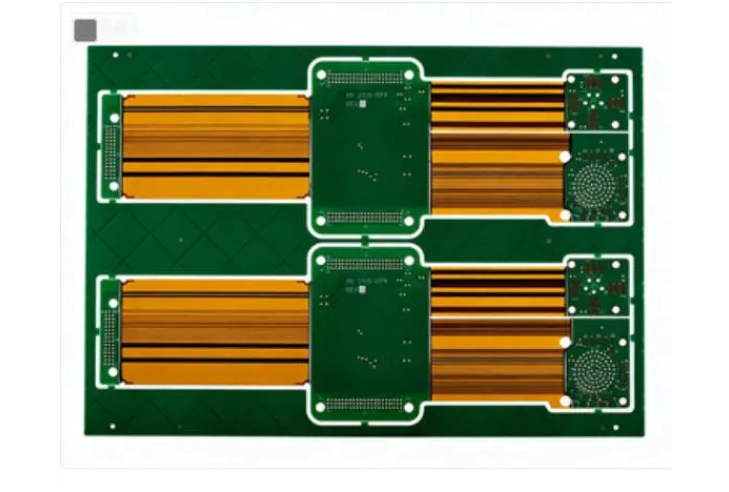
1. Why Scalable Rigid-Flex PCB & PCBA Manufacturing Matters in 2026
Traditional electronic structural designs rely on rigid PCBs paired with flexible connecting wires or external connectors. This fragmented solution works for low-volume prototypes but exposes fatal flaws in scaled production: complex manual assembly processes, high labor costs, unstable contact resistance, and poor vibration and bending resistance, leading to frequent after-sales failures in terminal equipment.
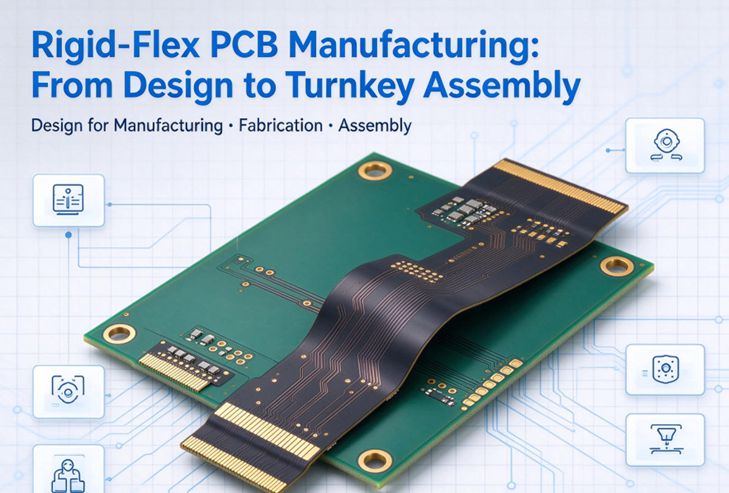
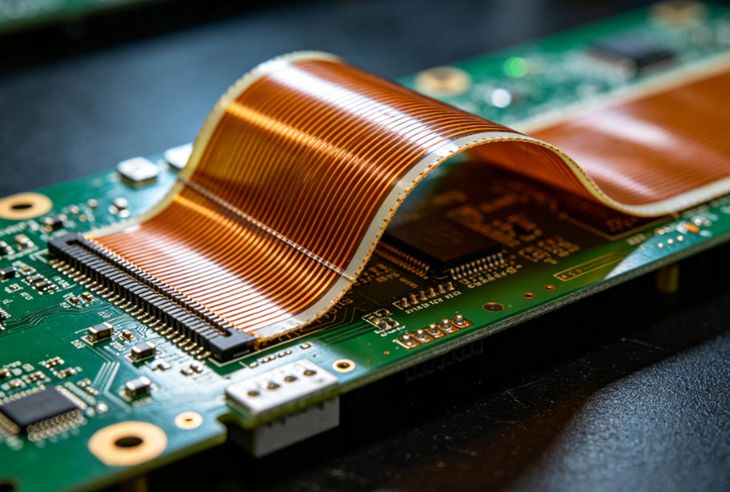
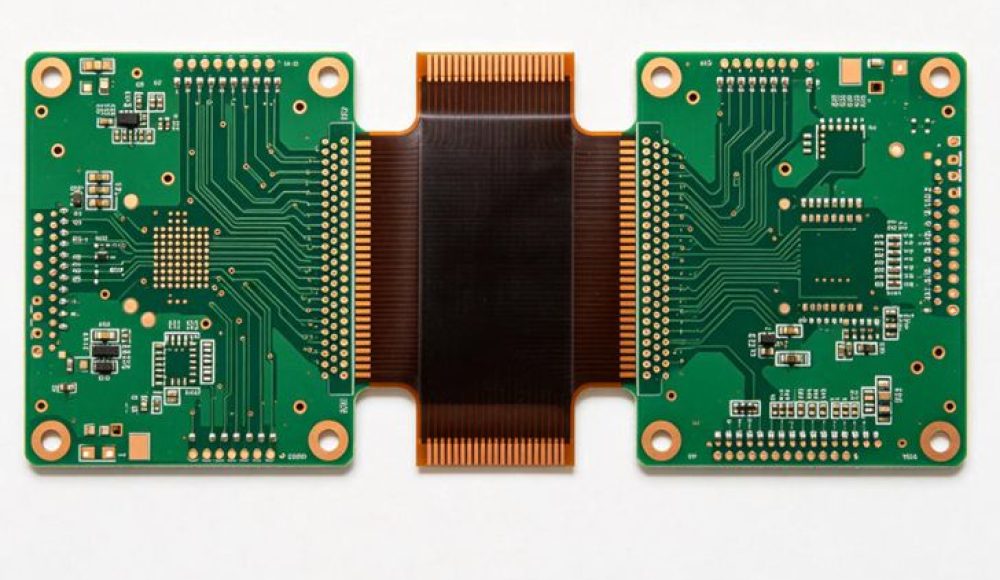
Custom rigid-flex PCB and PCBA integrates rigid FR-4 regions for component soldering and flexible PI regions for dynamic bending connectivity. The integrated one-piece structure eliminates redundant connectors and wiring harnesses, delivering three core scalable production advantages:
-
Higher mass production consistency: Integrated molding reduces manual assembly errors, stabilizing batch yield above 98.5%.
-
Lower long-term manufacturing costs: Simplified supply chain and fewer spare parts reduce overall BOM costs for large orders.
-
Stronger terminal reliability: Professional bending zone design adapts to repeated folding scenarios, avoiding loose connection failures in long-term equipment operation.
Currently, mid-to-high-end electronic fields such as smart wearables, industrial inspection equipment, and portable medical devices have fully taken custom rigid-flex PCB scalable manufacturing as the preferred solution for new product mass production.
2. Top 4 Scalable Production Pain Points for Custom Rigid-Flex PCB & PCBA
Based on 2026 mass production data of rigid-flex products, most project scaling failures stem from process and design defects that are ignored in the prototype stage, rather than structural design problems. We summarize four core pain points that plague product iteration and volume delivery:
2.1 Unstable Lamination Alignment Leading to Batch Delamination
Rigid-flex boards involve composite lamination of FR-4 rigid material and PI flexible material. Ordinary factories lack precise temperature and pressure gradient control, resulting in inconsistent thermal expansion coefficients between different materials. In mass production, this easily causes interlayer delamination, board warpage, and positional deviation of inner circuits. Data shows that 38% of rigid-flex batch failures are caused by unstandardized lamination processes.
2.2 Unoptimized Bending Zones Restricting Mass Assembly
Many customized rigid-flex prototypes reserve unreasonable bending widths, copper foil layouts, and transition zone designs. Although they pass laboratory tests, they are prone to flexible layer cracking and circuit breakage during automated SMT assembly and terminal repeated bending. Unoptimized bending structures will force enterprises to redesign molds, delaying mass production cycles by 1–2 months.
2.3 Low PCBA Yield Due to Special Fixturing Deficiencies
Unlike standard rigid boards, custom rigid-flex PCB cannot be directly fixed on conventional SMT production lines. Unprofessional fixture design easily causes flexible zone deformation, solder paste deviation, and component offset, resulting in low assembly yield and increased rework costs in large-batch production.
2.4 Inconsistent Quality Between Prototypes and Mass Production
Many manufacturers use manual customized processes for samples and simplify processes for mass production to save costs. This leads to significant differences in material batches, pressing parameters, and surface treatments between sample boards and volume boards, causing terminal equipment performance fluctuations and brand after-sales risks.
3. Core Technical Standards for Scalable Custom Rigid-Flex PCB & PCBA Manufacturing
Real scalable rigid-flex manufacturing is not simply replicating a large number of samples, but building standardized, repeatable, and controllable process systems. RingPCB summarizes mature industrial-grade scalable manufacturing standards based on long-term mass delivery experience:
3.1 Standardized Stack-Up & DFM Early Optimization
All custom rigid-flex PCB projects adopt unified stack-up design specifications in the early DFM stage. Our engineering team optimizes copper density distribution, bending zone arc transition, and rigid-flex boundary partitioning according to product bending frequency and installation space. We eliminate stress concentration risks in advance to ensure that the structural stability of each batch of boards remains consistent.
3.2 Precision Composite Lamination Process
Adopting segmented temperature and pressure lamination technology, we precisely match the thermal expansion parameters of PI flexible material and FR-4 rigid material. The interlayer alignment accuracy is controlled within ±0.05mm, effectively avoiding batch delamination and warpage problems. The whole process complies with IPC industrial standards, fully adapting to long-term stable mass production of rigid-flex boards.
3.3 Custom SMT Fixture & PCBA Scalable Assembly
For different rigid-flex structural designs, we independently develop dedicated anti-deformation fixtures to ensure flat and stable board feeding during SMT mounting and reflow soldering. Equipped with high-precision solder paste printing and automatic optical inspection equipment, our PCBA assembly yield for customized rigid-flex boards is steadily maintained above 98.5%, perfectly supporting batch orders from hundreds to tens of thousands of units.
3.4 Batch Material Consistency Control System
We adopt fixed-brand batch raw material supply and unified production process parameters for mass production. All flexible substrates, copper foils, and adhesive films have complete batch traceability records. We strictly eliminate material replacement and process simplification, ensuring zero difference in electrical performance and structural durability between prototype and mass-produced custom rigid-flex PCB and PCBA products.
4. RingPCB’s Advantages in Scalable Rigid-Flex PCB & PCBA Manufacturing
As a professional manufacturer focusing on high-reliability customized circuit board mass production, RingPCB has built a complete closed-loop service system from rigid-flex PCB customization, proofing, standardized mass production to one-stop PCBA assembly, fully meeting the scalable delivery needs of industrial, medical, wearable, and automotive electronic projects.
We support 2–12 layer custom rigid-flex PCB manufacturing and multi-specification customized PCBA processing. Equipped with automated lamination production lines, professional rigid-flex bending test laboratories, and full-process SMT assembly equipment, we realize stable delivery of small-batch trial production and large-batch mass production. All products comply with IPC, RoHS, REACH, and ISO9001 quality certification standards, with stable batch defect rates below 0.5%.
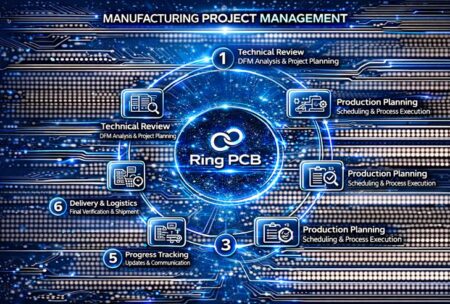
Different from manufacturers that only focus on sample quality, we take “scalable mass production stability” as the core assessment standard. In the early communication stage, engineers will evaluate product batch production risks, provide targeted DFM optimization solutions, and formulate exclusive scalable production processes for customers’ customized rigid-flex projects, helping brands quickly complete market iteration and large-scale commercialization.
5. Future Trends of Scalable Rigid-Flex Manufacturing
With the miniaturization, lightweight, and high-reliability development of terminal electronic products, the market demand for custom rigid-flex PCB and PCBA will continue to grow. Future scalable manufacturing will develop towards higher layer counts, ultra-thin flexible layers, ultra-high bending resistance, and intelligent full-process consistency control.
At the same time, downstream brand customers will pay more attention to supplier batch stability, supply chain continuity, and full-life-cycle cost performance, eliminating manufacturers with unstable sample-to-mass-production conversion capabilities. Professional standardized scalable manufacturing capabilities will become the core competitiveness of rigid-flex PCB and PCBA suppliers.
Conclusion
Custom rigid-flex PCB and PCBA manufacturing is not only a structural customization technology, but more importantly, a systematic scalable production capability. Many electronic projects have excellent prototype performance but fail in large-scale mass production due to ignored process optimization and batch control details. Choosing a manufacturer with standardized processes, stable batch quality, and one-stop PCBA supporting capabilities is the key to reducing project risks and accelerating commercialization.
If you are developing customized rigid-flex circuit projects and need scalable production process evaluation, DFM risk optimization, or batch quotation support, RingPCB’s professional rigid-flex engineering team provides free technical consultation and customized solution planning. Send your Gerber files and project requirements to rfq@ringpcb.com to obtain reliable scalable rigid-flex PCB and PCBA manufacturing solutions. Visit our official website https://www.ringpcb.com for more customized rigid-flex mass production cases.