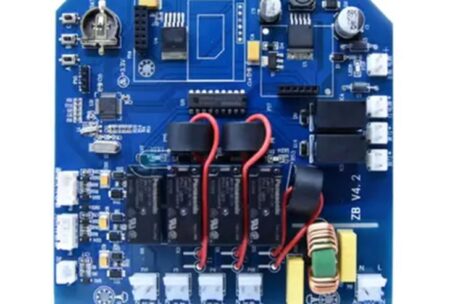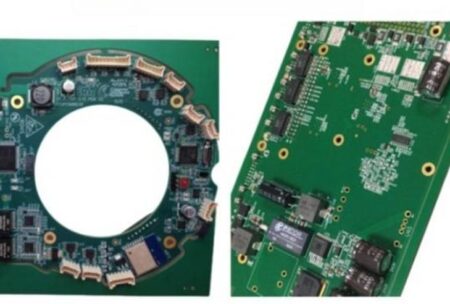
Industrial electronics often remain in service much longer than the components used to manufacture them. An industrial controller, communication gateway, or power management module may require maintenance and replacement assemblies for many years, while its processors, memory devices, connectors, and other electronic components undergo multiple lifecycle changes.
This creates a difficult challenge for OEMs: how can a product remain manufacturable when some of its original components are discontinued or no longer readily available?
A dependable EMS Solution should address more than initial PCB fabrication and assembly. It should support component lifecycle visibility, controlled material purchasing, engineering change coordination, and long-term production planning.
For manufacturers of industrial automation equipment, infrastructure electronics, and embedded systems, these activities help protect product availability throughout its intended service life.

Why Component Obsolescence Matters to Industrial OEMs
Electronic components do not always remain available for the entire lifetime of the equipment that uses them.
Semiconductor manufacturers may discontinue older products, introduce new package versions, or change manufacturing processes.
Other parts may become difficult to source because of reduced demand or changes in distribution.
For consumer electronics, a company may respond by introducing a new product generation.
Industrial OEMs often have fewer options.
Customers may require replacement boards that remain compatible with existing equipment, software, and mechanical interfaces.
A discontinued component can therefore affect maintenance obligations, production schedules, and customer relationships.
Obsolescence planning should begin while the original product is still in production.
Understand PCN, PDN, and EOL Notifications
Component lifecycle management relies on understanding supplier notifications.
A Product Change Notification, or PCN, informs customers about a proposed or implemented change affecting a component.
Such changes may involve manufacturing locations, materials, packaging, or other characteristics.
A Product Discontinuance Notification, often abbreviated PDN, communicates that a component is being discontinued.
End of Life, or EOL, describes the point at which a product reaches the end of its supported commercial lifecycle.
The exact terminology and notification process vary among manufacturers.
OEMs should therefore monitor official supplier communications and confirm how each notice affects their approved BOM.
Not every PCN requires a design change, but relevant notifications should be reviewed before the affected components enter production.
Identify High-Risk Components in the BOM
Not all electronic components carry the same obsolescence risk.
Standard passive components may have several technically suitable sourcing options.
Specialized microcontrollers, communication ICs, programmable logic devices, and proprietary connectors may have fewer alternatives.
An effective lifecycle review should classify components according to availability, manufacturer support, replacement options, and product criticality.
For example, a discontinued processor with unique firmware requirements may create a greater continuity risk than a standard resistor.
The assessment should also consider expected annual demand and the remaining service life of the finished equipment.
This allows OEMs to prioritize the components that could cause the most serious production disruption.
Plan Last-Time Buy Decisions Carefully
When a critical component approaches discontinuation, the manufacturer may announce a final order deadline.
A Last-Time Buy, or LTB, allows customers to purchase remaining quantities before regular supply ends.
However, purchasing too much inventory creates financial and storage risks.
Purchasing too little may leave the OEM unable to support future production or maintenance requirements.
A practical LTB calculation should consider expected production demand, service replacements, repair requirements, and available inventory.
It should also account for component storage conditions and potential material degradation.
OEMs and EMS providers should define ownership and liability for long-term inventory before placing large commitments.
A last-time purchase is a planning decision, not an automatic solution to obsolescence.
Evaluate Replacement Components Before Approval
Finding a component with similar specifications does not guarantee interchangeability.
For example, an alternative voltage regulator may have different startup behavior, thermal characteristics, or package dimensions.
A replacement oscillator may affect timing requirements.
A substitute communication IC may require firmware changes or different electrical interfaces.
Therefore, alternatives should be evaluated against the original product requirements.
The review may include datasheet comparison, footprint compatibility, electrical analysis, assembly considerations, and functional validation.
For critical changes, additional qualification may be necessary.
An EMS manufacturer can help identify sourcing and manufacturing implications, but the OEM should approve changes affecting the product design.
This protects configuration integrity across production revisions.
Consider PCB and Assembly Impacts of Obsolescence
A component replacement may require changes to the PCB itself.
For example, a discontinued package may be replaced by a smaller device with different pad geometry.
A new connector may require modified mounting holes or mechanical clearance.
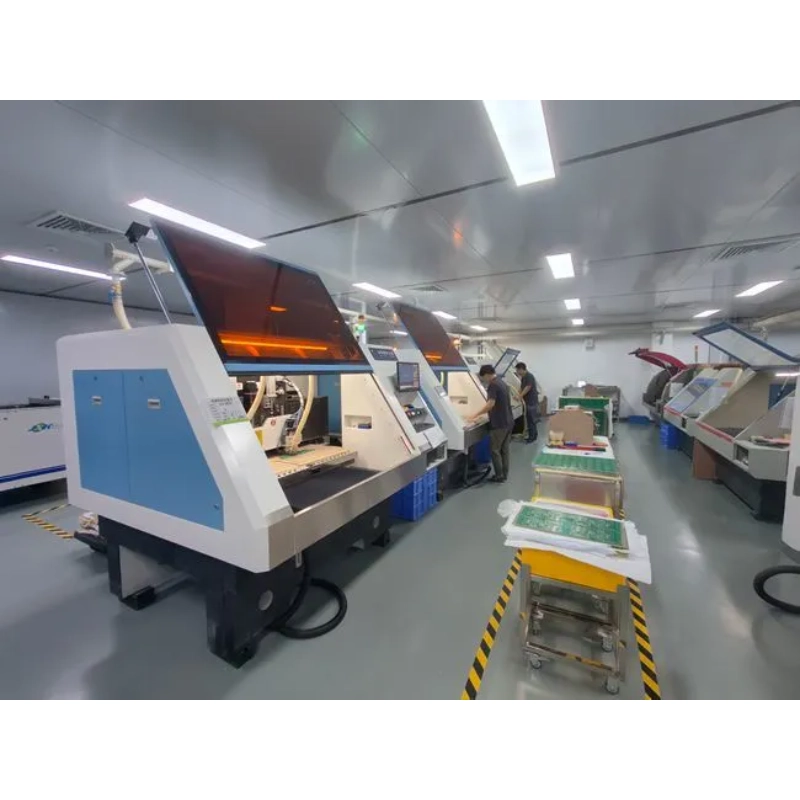
Such changes can affect fabrication data, solder paste stencils, placement programs, inspection instructions, and test fixtures.
Consequently, component lifecycle management should not operate independently from PCB manufacturing and assembly engineering.
The OEM should determine whether a replacement can be implemented as a controlled component substitution or requires a new PCB revision.
The manufacturing team should then confirm the correct documentation and production setup.
Maintain Revision Compatibility for Existing Equipment
Long-life industrial products may have several hardware and firmware revisions operating in the field.
A new replacement assembly must be compatible with the equipment it is intended to support.
For example, a revised communication controller may use a different component while retaining the same external interface.
However, compatibility cannot be assumed solely because the board fits mechanically.
Firmware behavior, communication protocols, power consumption, and environmental performance may also matter.
OEMs should maintain a revision compatibility matrix showing which assemblies can replace earlier versions.
This information should guide manufacturing, testing, labeling, and spare-parts fulfillment.
Manage Long-Term Component Storage
Inventory planning is an important part of production continuity.
Electronic components may have storage requirements involving moisture sensitivity, temperature, humidity, packaging integrity, or shelf life.
Long-term storage can also create traceability challenges when materials are purchased across multiple years.
A manufacturing plan should define appropriate storage conditions and inventory rotation procedures.
Where required, incoming material checks should confirm that stored components remain suitable for assembly.
OEMs should avoid assuming that an unused component is automatically acceptable simply because it has remained in its original packaging.
Material condition and handling history can affect manufacturing reliability.
Prevent Unauthorized Sourcing During Shortages
As components become scarce, buyers may encounter unfamiliar distributors or unusually priced inventory.
However, sourcing discontinued parts from unverified channels can introduce authenticity and quality risks.
A low-cost component is not useful if its origin or condition cannot be established.
EMS procurement teams should follow approved sourcing requirements and maintain appropriate purchasing records.
If an alternative source is proposed, the OEM should understand the associated risks and any additional verification needed.
For critical components, the cost of inspection or qualification should be included in the purchasing decision.
A disciplined sourcing process is particularly important for products with long field-service commitments.
Create a Long-Term Production Continuity Plan
An effective continuity plan should connect component lifecycle monitoring with production forecasts and engineering responsibilities.
OEMs can begin by identifying critical components and reviewing their expected availability.
They should then establish procedures for supplier notifications, alternative-part evaluation, last-time purchasing, and revision approval.
Production forecasts should be updated periodically to reflect actual customer demand.
The EMS provider should communicate material risks early enough for the OEM to make informed decisions.
Where a redesign becomes unavoidable, the manufacturing plan should account for new PCB files, assembly instructions, and validation requirements.
The objective is to manage transitions deliberately rather than react to shortages after production has stopped.
How an EMS Solution Supports Lifecycle Management
A coordinated EMS relationship can improve communication between procurement, PCB fabrication, assembly, and production planning.
When a critical component changes, these teams can evaluate material availability alongside the consequences for manufacturing.
However, EMS support does not eliminate the OEM’s responsibility for product engineering and lifecycle decisions.
The two parties should establish clear responsibilities for monitoring notices, approving alternatives, purchasing inventory, and releasing revised documentation.
This creates a more dependable framework for sustaining mature electronic products.
Long-Term Electronics Manufacturing Support From Ring PCB
Maintaining production continuity requires reliable component sourcing, controlled PCB and PCBA manufacturing, and clear communication about engineering changes.
Ring PCB provides PCB fabrication, component procurement, SMT and THT assembly, engineering manufacturing review, inspection, testing, and full-turnkey EMS services.
For OEMs manufacturing industrial controllers, communication equipment, and other long-life electronic products, coordinated manufacturing support can help address component availability and production planning requirements.
Customers should provide approved manufacturing files, current BOM information, expected demand, and any known component lifecycle concerns for project-specific evaluation.
Contact rfq@ringpcb.com to discuss your PCB, PCBA, and EMS manufacturing requirements.
References
- IPC. IPC Releases “J” Revisions to Two Leading Standards for Electronics Assembly. April 8, 2024.
- IPC. IPC-6012F: Qualification and Performance Specification for Rigid Printed Boards. October 18, 2023.
- Ring PCB. Full Turnkey PCB Assembly and EMS Solutions.
- Ring PCB. PCB and PCBA Manufacturing Services.