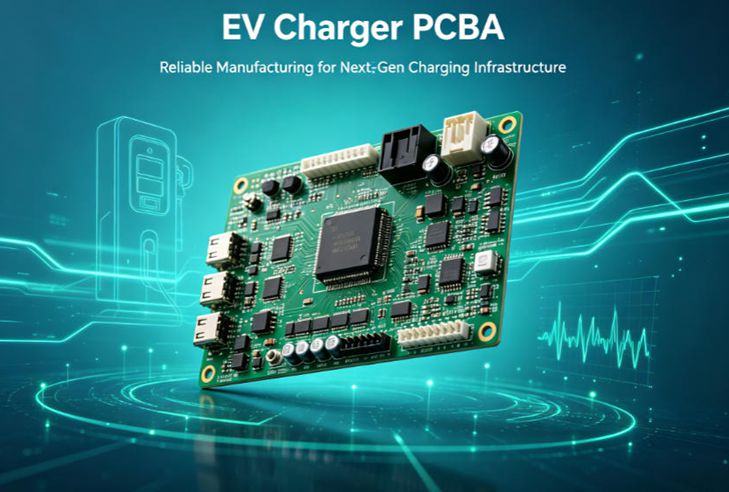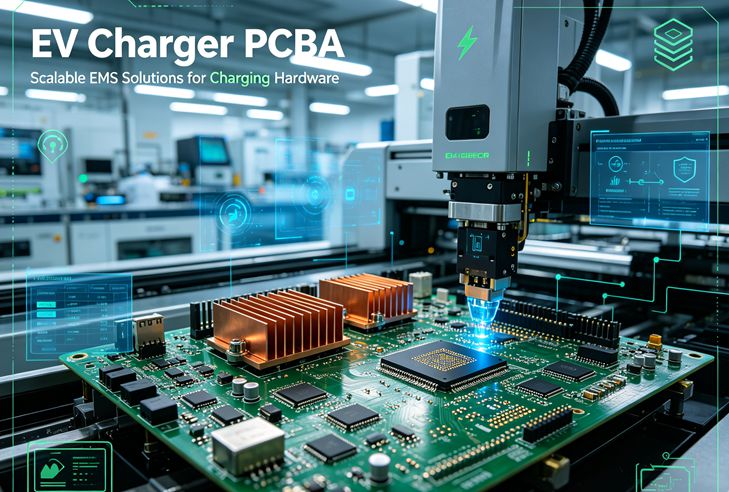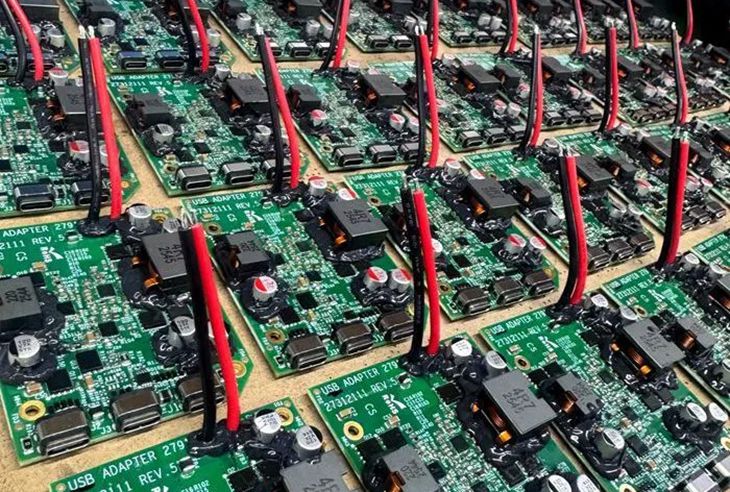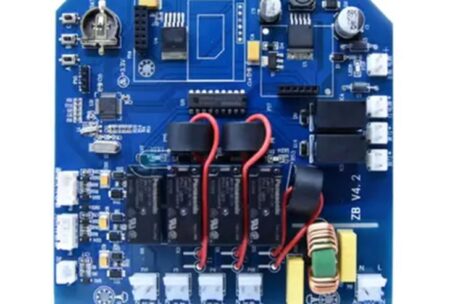
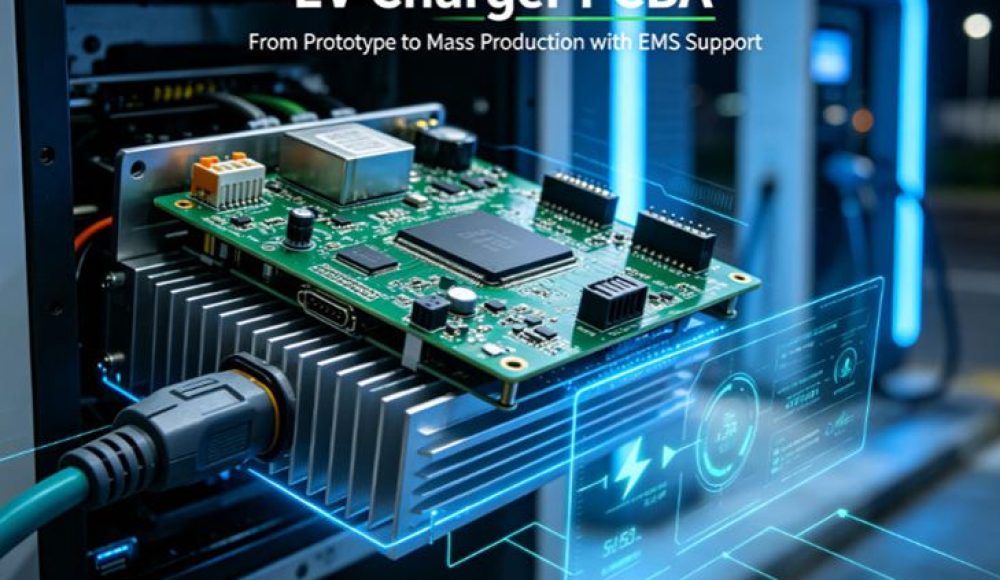
The global EV charging infrastructure market keeps expanding rapidly in 2026. Market research shows that more than 60 % of field‑returned EV charger failures trace back to PCBA‑related manufacturing defects, rather than original design flaws. For OEMs and hardware developers, choosing the right EMS partner becomes one of the most critical decisions to reduce warranty risks and guarantee long‑term stable operation of charging equipment. This article explores how professional EMS services lift reliability for EV charger PCBA projects.
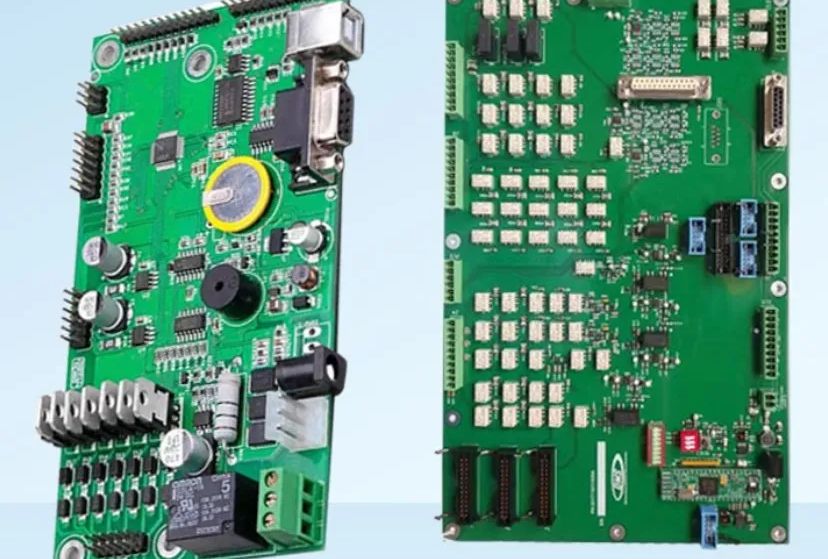
Why EV Charger PCBA Places Unique Burdens on Manufacturing
Unlike consumer‑grade circuit boards, EV charger PCBA runs under high‑voltage, high‑current working conditions. Repeated thermal cycling from charging‑discharging cycles creates mechanical stress on solder joints for MOSFET, IGBT and high‑power connectors. Meanwhile, outdoor deployment exposes assemblies to wide temperature swings, humidity and salt‑spray environments. Even a minor void in power‑component soldering may gradually expand and trigger thermal runaway after months of field operation.
Many product teams assume that finishing schematic and layout equals solving all technical challenges. Nevertheless, poor manufacturing execution can invalidate well‑optimized designs. For instance, improper reflow profiles for heavy‑copper boards will generate excessive void ratios under power chips, directly shortening product service life. That is where professional EMS solutions deliver tangible value beyond simple SMT assembly.
Core EMS Capabilities That Directly Lift EV Charger PCBA Reliability
First of all, experienced EMS providers carry out thorough DFM reviews before prototyping. They check creepage distance, heavy‑copper manufacturability, thermal‑via layout and high‑voltage isolation requirements, catching potential risks before mass production. In addition, mature EMS teams implement controlled soldering processes for thick‑copper substrates, including nitrogen reflow and X‑ray inspection for power device solder pads to limit void percentage within acceptable thresholds.
Furthermore, complete validation workflows set professional EMS apart from basic assembly houses. Standard testing portfolios for EV charger PCBA include hipot safety test, full‑load burn‑in, thermal cycling and EMC pre‑check. These test procedures simulate real‑world working stress and filter out infant‑mortality failures before shipment. On top of that, full traceability of components, batch records and test logs supports after‑sales troubleshooting for global customers.
Common Pitfalls When Selecting an EMS Provider for EV Charger Projects
Even though many factories claim to handle power electronics assembly, not all own sufficient experience for EV charger PCBA. Some providers only deliver surface‑mount work without supporting component sourcing or pre‑certification consultation. Others skip essential inspection steps to cut production costs, which will cause heavy losses for OEMs at later stages.
Therefore, procurement teams should evaluate three key points: relevant project references for EV or energy‑storage PCBA, complete quality‑management certifications, and full‑chain testing capacity. Avoid judging suppliers purely based on unit price, as hidden quality costs from field returns are far higher than manufacturing cost differences.
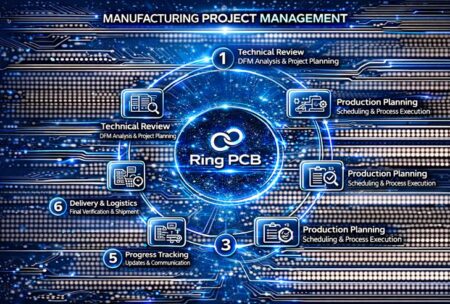
For customers sourcing EV charger PCBA worldwide, Ring PCB delivers mature EMS solutions tailored for new‑energy charging hardware. With in‑house manufacturing resources, our team performs DFM optimization, component procurement, SMT assembly and multi‑dimensional reliability validation for EV charger PCBA. We help international clients reduce certification risks and stabilize mass‑production yields, from small‑batch prototypes to large‑volume orders.
If you want to discuss your EV charger PCBA project requirements, please send inquiries to rfq@ringpcb.com.