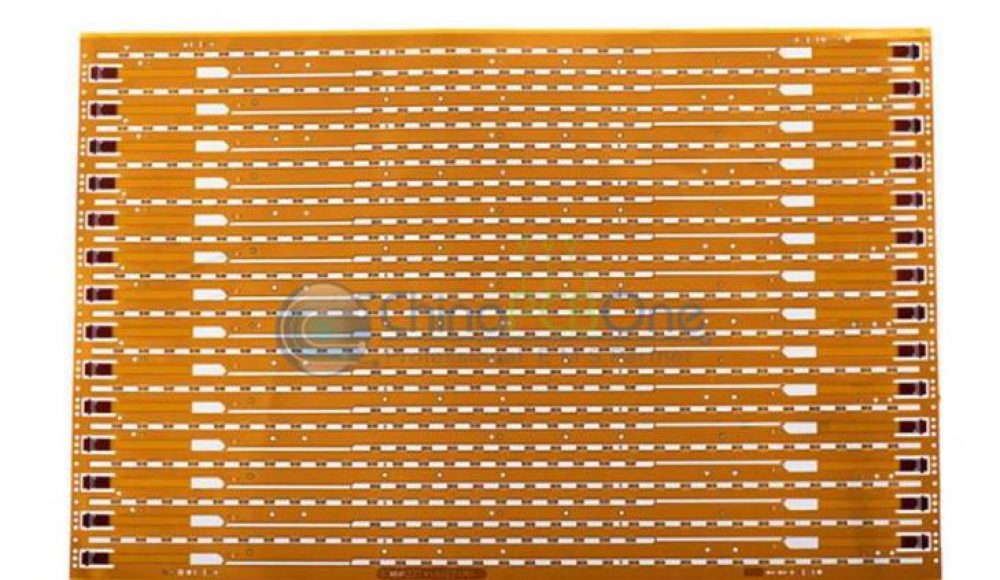
Flexible printed circuit boards are increasingly important in electronic products where space, weight, movement, and routing flexibility are major design considerations. From automotive electronics and medical devices to wearable products and compact consumer equipment, flexible circuits help engineers connect components in areas where conventional rigid boards may be difficult to install.
However, selecting a flexible PCB manufacturer requires more than comparing quotations or checking whether a supplier offers single-sided and double-sided circuits. Flexible PCBs use different materials and manufacturing processes from conventional rigid boards. Their performance also depends heavily on how they are installed, supported, and bent during product operation.
For B2B buyers, the key is to identify a supplier that understands the intended application and can manufacture the required circuit structure consistently.

1. Why Demand for Flexible PCBs Is Increasing
Electronic products are becoming smaller, lighter, and more integrated. At the same time, many applications require circuits to fit into curved housings, narrow spaces, moving assemblies, or compact modules.
Flexible PCBs address these requirements by using bendable insulating substrates, commonly polyimide, instead of relying on a conventional rigid laminate structure. They can reduce the need for separate cables and connectors in certain applications, simplify internal routing, and help engineers use available product space more efficiently.
Market forecasts reflect this demand. Grand View Research estimates that the global flexible printed circuit board market will increase from approximately USD 30.2 billion in 2026 to USD 50.8 billion by 2030, representing a projected CAGR of 13.7% from 2025 to 2030. Its report identifies automotive electronics, miniaturized devices, wearables, and medical applications as important growth drivers. These are third-party market estimates, not audited shipment totals, but they indicate the expanding role of flexible circuits in modern electronics.
For buyers, this growth also means that supplier selection and manufacturing quality deserve closer attention.
2. Check Whether the Manufacturer Supports Your Required FPC Structure
Flexible PCBs are available in different constructions, and each serves different application needs.
A single-sided flexible PCB has conductive copper on one side of the insulating base material. It can be suitable for relatively simple circuits where routing density is limited.
A double-sided flexible PCB provides conductive layers on both sides and can support more complex routing. Multilayer flexible PCBs are used when a product requires higher circuit density or more complicated interconnections.
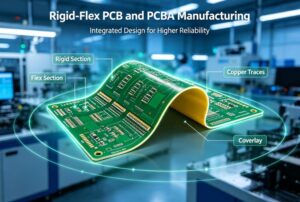
Buyers should also distinguish between a flexible PCB and a rigid-flex PCB. A flexible PCB is designed to bend within its intended application, while a rigid-flex construction combines rigid and flexible sections in one integrated board structure.
Before requesting quotations, clarify:
- Required number of conductive layers
- Finished board thickness
- Copper thickness
- Minimum trace width and spacing
- Required bend areas and bend direction
- Connector, stiffener, and reinforcement requirements
- Surface finish and coverlay specifications
- Dimensional and electrical requirements
A supplier’s ability to manufacture one FPC structure does not necessarily mean it can support every flexible circuit design. The actual construction should be reviewed against the manufacturer’s process capabilities.
3. Evaluate Polyimide Materials and Copper Selection
Material selection has a direct influence on flexible circuit performance.
Polyimide is widely used as a flexible PCB base material because it offers flexibility and thermal stability. However, buyers should not assume that all polyimide films, adhesives, and copper-clad materials have identical properties.
The appropriate material system depends on the product’s operating temperature, required flexibility, thickness limitations, electrical performance, and manufacturing process.
Copper selection is equally important. Rolled annealed copper is often considered for applications involving repeated bending because of its characteristics under flexing conditions. Electrodeposited copper may also be used in flexible circuit constructions, depending on the design and application. The choice should be evaluated with the supplier based on the intended bending conditions and reliability requirements.
It is particularly important to identify whether the circuit will experience static bending or dynamic bending. A circuit that is bent once during installation has different requirements from one that moves repeatedly throughout the product’s service life.
4. Static Bending and Dynamic Flexing Require Different Considerations
One of the most important questions for a flexible PCB project is how the circuit will move after assembly.
Static bending generally means that the circuit is bent into position during installation and remains in that position during normal operation. This may be used in compact electronic assemblies where a flexible section routes around a housing or connects two internal areas.
Dynamic flexing involves repeated movement during product operation. Examples may include moving mechanisms, folding structures, or electronic assemblies that repeatedly change position.
Dynamic applications usually require more careful attention to bend radius, copper construction, layer arrangement, material fatigue, and mechanical support. A design that performs adequately in a static installation may not achieve the required service life under repeated movement.
To help a manufacturer assess the application, buyers should provide:
- Minimum bend radius
- Expected bending direction
- Number of bending cycles, if known
- Movement speed or operating frequency, where relevant
- Operating temperature range
- Mechanical support and installation conditions
These details allow the supplier to assess whether the proposed construction is appropriate. If the actual operating conditions are unclear, reliability expectations may be difficult to evaluate accurately.
5. Review Coverlay, Stiffeners, and Connector Areas
Flexible PCB manufacturing involves more than producing conductive traces on a bendable substrate. Protective and reinforcement structures are also important.
Coverlay is commonly used to protect copper circuitry in flexible areas. Unlike the solder mask typically applied to many rigid PCBs, coverlay is a flexible protective film with openings for pads and other exposed features. Its material, thickness, and opening accuracy can affect the finished circuit.
Stiffeners may be added to selected areas to provide mechanical support. For example, a connector region may require reinforcement so that it can withstand insertion, removal, or handling forces. Stiffeners can use different materials depending on the application and thickness requirements.
Connector pads, plated areas, and transitions between rigid and flexible regions also deserve attention. Poorly defined reinforcement or exposed-copper requirements may create manufacturing and assembly difficulties.
Therefore, buyers should provide clear drawings and specifications showing where coverlay openings, stiffeners, exposed pads, and other mechanical features are required.
6. Ask How the Manufacturer Controls Quality and Reliability
Flexible circuits can be sensitive to mechanical and dimensional variations. A reliable supplier should be able to explain how critical manufacturing steps are controlled.
Depending on the construction, relevant process considerations may include copper pattern formation, etching, drilling, coverlay alignment, lamination, surface finishing, and final dimensional inspection.
For multilayer flexible circuits, layer alignment and lamination consistency become particularly important. For circuits with dynamic bending requirements, the material construction and bend-area design should be evaluated together rather than treated as separate issues.
Buyers should also clarify the inspection scope. Electrical continuity and isolation checks, dimensional inspection, visual examination, and application-specific reliability tests may be relevant depending on the project. Not every test is automatically included in every supplier’s standard quotation, so the inspection plan should be agreed before production.
It is also worth asking how the supplier manages nonconforming products, engineering changes, and repeat-order consistency. These procedures matter when an FPC becomes part of a long-term product program.
7. Compare Flexible PCB Manufacturers Beyond Quotation Price
The lowest initial quotation may not represent the best overall value.
A flexible circuit that uses an unsuitable material or an insufficiently defined bend structure can create problems during product assembly or field operation. Rework, redesign, and replacement costs may exceed the original price difference.
When comparing suppliers, evaluate the following areas:
- Experience with the required FPC layer structure
- Material and copper options
- Capability to manufacture the specified thickness and dimensions
- Understanding of static and dynamic bending requirements
- Coverlay and stiffener processing
- Inspection and electrical test scope
- Communication during manufacturing review
- Material availability and repeat-order support
It is also useful to ask for clarification on any quotation exclusions. For example, tooling, special testing, stiffener processing, or non-standard materials may be quoted separately.
A good supplier should explain what is included, what requires further review, and which technical details could affect cost or lead time.
8. Prepare a Clear Technical Package Before Requesting a Quote
A complete project package helps a flexible PCB manufacturer evaluate the requirements more accurately.
Depending on the project, buyers should prepare circuit manufacturing data, layer information, material requirements, mechanical drawings, bend-area details, stiffener specifications, surface finish requirements, and inspection expectations.
If the flexible circuit will be assembled into a larger product, relevant assembly information should also be shared. This helps clarify connector locations, installation constraints, and any mechanical requirements that may affect the finished circuit.
When some specifications are not yet finalized, buyers should identify them clearly rather than allowing the manufacturer to assume values. Early communication can reduce quotation revisions and help both parties establish realistic production expectations.
Working with Ring PCB
Choosing a supplier should begin with the specific circuit construction and operating conditions required by the product. For projects that include conventional rigid boards or assembled PCB modules, Ring PCB provides PCB fabrication, component sourcing, SMT assembly, through-hole assembly, and PCBA manufacturing support.
Established in 2008, Ring PCB operates a self-owned factory covering more than 10,000 square meters, with five automated SMT production lines and rigid PCB manufacturing capability of up to 62 layers. Its first article inspection equipment supports production verification.
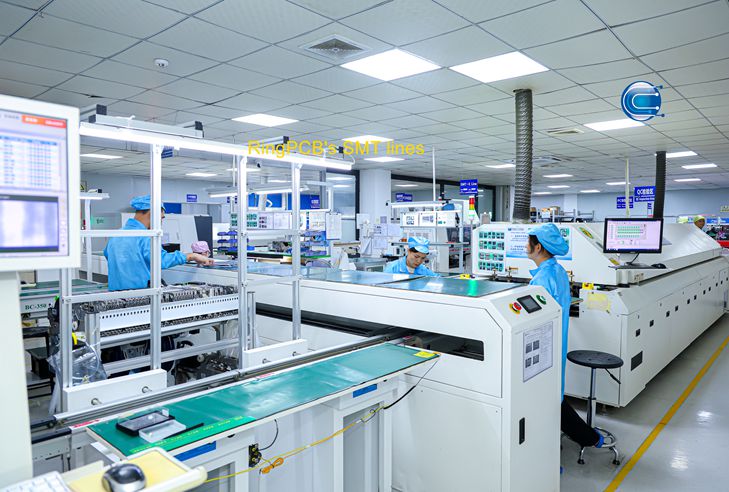
For rigid PCB and PCBA projects, customers can submit Gerber files, BOM information, and technical specifications for manufacturing communication and feasibility review. Flexible or rigid-flex requirements should be confirmed against the specific manufacturing scope before project placement.
To discuss your PCB or PCBA manufacturing requirements, contact:
References and Sources
- Grand View Research — Flexible Printed Circuit Boards Market, 2025–2030, updated July 2026
- BCC Research — Global Flexible PCB Market, February 2026
- Printed Circuit Engineering Association — Market Watch: AI Computing Surge Reshaping PCB Material Landscape, June 2026
- Ring PCB — PCB and PCBA Manufacturing Trends OEMs Should Watch, September 2026