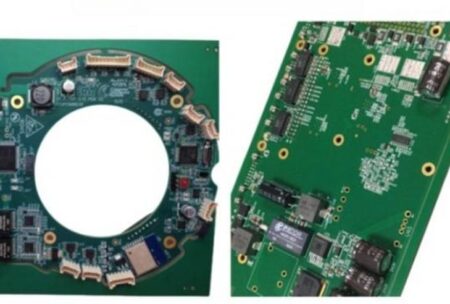
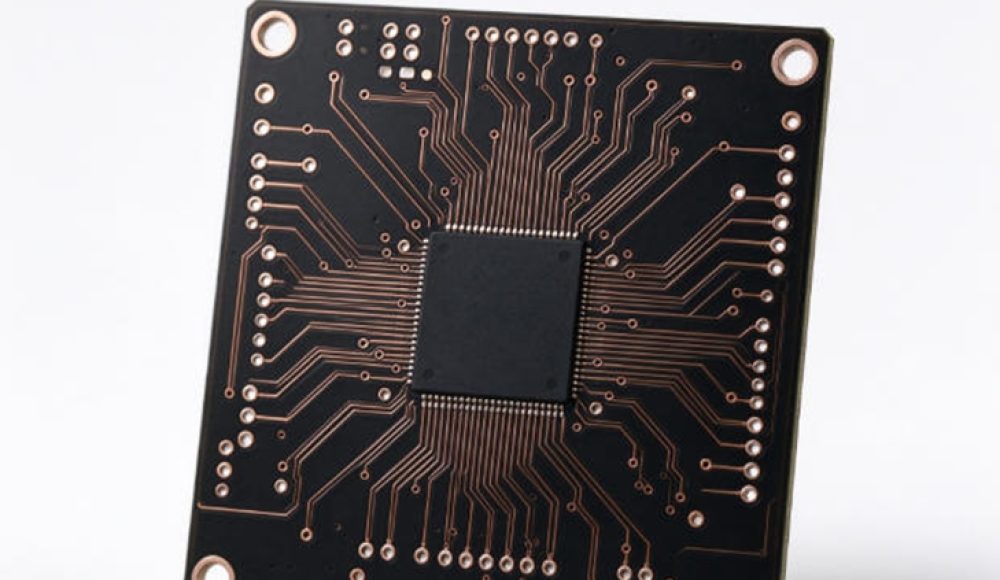
As electronic products become more compact and powerful, rigid printed circuit boards must support higher component density, more complex routing, and increasingly demanding electrical and thermal requirements. For OEMs in industrial automation, telecommunications, automotive electronics, and computing, choosing the right rigid PCB manufacturing partner is no longer simply a matter of comparing unit prices. Material availability, layer-count capability, process consistency, engineering communication, and long-term production support all influence the success of a project.
The market outlook reflects this continued demand. Grand View Research estimates that the global PCB market will grow from approximately USD 87.8 billion in 2026 to USD 130.3 billion by 2033, with a projected CAGR of 5.8%. Rigid PCBs accounted for the largest product-type share in 2025, supported by their extensive use in consumer electronics, automotive systems, and industrial equipment. These figures are market estimates rather than audited industry totals, but they indicate the importance of rigid board manufacturing in the wider electronics supply chain.
1. Why Rigid PCB Manufacturing Requirements Are Becoming More Demanding
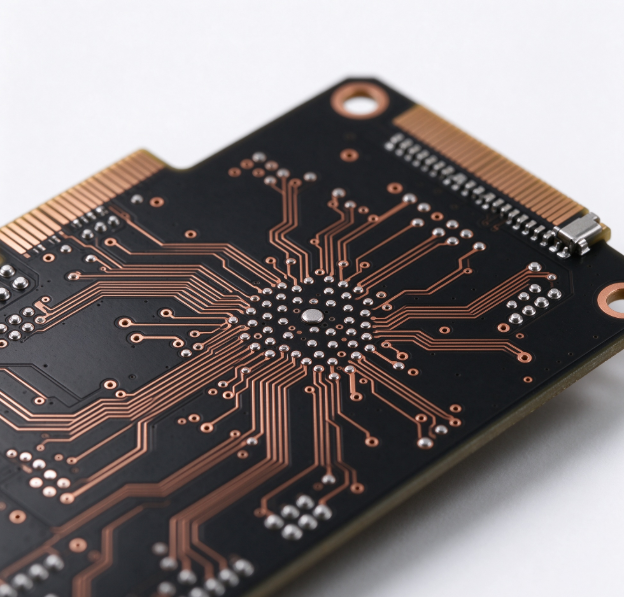
Rigid PCBs remain widely used because they provide mechanical stability, dimensional consistency, and compatibility with established assembly processes. They are suitable for products that require fixed board structures, reliable component mounting, and repeatable production.
However, modern applications are raising the technical expectations placed on manufacturers.
Industrial control systems may require multilayer boards to accommodate dense circuitry and stable signal transmission. Automotive electronics must withstand temperature variation, vibration, and long operating cycles. Telecommunications and computing equipment increasingly depend on controlled impedance, low-loss materials, and more complex routing structures.
AI-related hardware is also influencing the PCB material landscape. Industry reporting in 2026 has highlighted growing demand for large-format, high-layer-count boards and advanced copper-clad laminates used in high-performance computing. This trend can place pressure on high-grade copper foil, resin systems, and glass fabric availability.
For buyers, the implication is clear: a supplier’s general production capacity does not automatically demonstrate that it can manufacture a particular board reliably. Capability must be evaluated against the actual technical requirements of the project.
2. Evaluate Layer Count, Board Structure, and Process Capability
Layer count is an important starting point when assessing a rigid PCB manufacturer, but it should never be the only selection criterion.
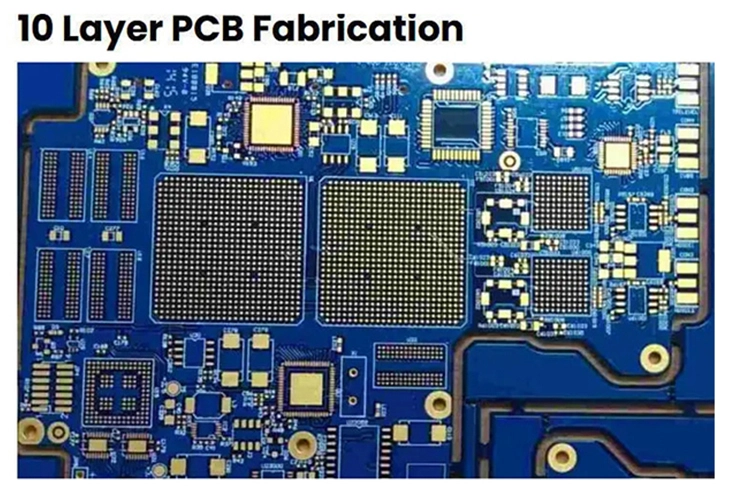
A manufacturer may advertise a high maximum layer count, yet the practical manufacturing window also depends on board thickness, copper weight, aspect ratio, minimum trace and spacing, via structure, and finished board dimensions.
For example, a multilayer industrial control PCB may require a specific combination of signal, ground, and power layers. If the board has a high layer count and a relatively small finished thickness, lamination control and registration accuracy become particularly important.
Before placing an order, buyers should confirm:
- Supported layer counts and board thickness ranges
- Available copper weights and finished copper requirements
- Minimum trace width and spacing
- Minimum mechanical drill size and via options
- Registration and dimensional tolerance requirements
- Supported surface finishes and solder mask options
- Material options for standard and higher-performance applications
It is also useful to ask whether the manufacturer can produce the required construction repeatedly, rather than relying only on a maximum capability figure shown in a brochure.
3. Select PCB Materials According to Electrical and Environmental Needs
FR-4 remains a common substrate for rigid PCBs because of its established processing characteristics, availability, and cost-effectiveness. Nevertheless, not every FR-4 material is identical.
Different resin systems and glass styles can have different glass transition temperatures (Tg), coefficients of thermal expansion (CTE), dielectric properties, and thermal performance. These differences can affect multilayer reliability, especially when a board experiences repeated thermal cycles or contains plated through-holes with demanding aspect ratios.
For high-speed or high-frequency applications, standard FR-4 may not always meet signal-loss requirements. Depending on the operating frequency and electrical specifications, buyers may need to consider low-loss laminates or hybrid material constructions.
The right selection should be based on the board’s actual operating environment and electrical requirements. Choosing a more expensive material without a technical reason can increase cost unnecessarily, while selecting a material only because it is cheaper may create reliability or signal-integrity risks later.
Buyers should provide the manufacturer with the required material grade or clearly defined performance specifications. If alternatives are being considered, the proposed material should be reviewed against the original electrical, thermal, and mechanical requirements before approval.
4. Understand the Importance of DFM and Manufacturing Data Review
A complete manufacturing data package helps reduce misunderstandings between the customer and PCB supplier.
Typical fabrication information includes Gerber or other accepted manufacturing data, NC drill files, stackup details, board dimensions, copper requirements, surface finish specifications, and fabrication notes. The exact package depends on the project and the manufacturer’s accepted data formats.
A manufacturing review should look for inconsistencies between the supplied files and specifications. Examples include mismatched board outlines, unclear drill definitions, insufficient spacing, inconsistent layer naming, and missing stackup information.

These issues may not always make a board impossible to manufacture, but they can lead to clarification cycles, revised quotations, or production delays.
For this reason, buyers should choose a supplier that communicates clearly when information is incomplete or when a requested feature needs further confirmation. A responsible manufacturing review should identify questions before production begins rather than making unsupported assumptions.
5. Look Beyond Unit Price: Quality and Delivery Consistency Matter
The lowest quotation does not necessarily represent the lowest total project cost.
A PCB with inconsistent dimensions, poor hole quality, unsuitable material selection, or inadequate process control may lead to assembly problems, rework, or delayed product delivery. These consequences can outweigh a small difference in the original board price.
When evaluating a supplier, buyers should understand how production quality is monitored. Relevant topics include incoming material verification, process control, lamination consistency, drilling quality, plating control, solder mask application, surface finish, and final inspection.
It is also important to confirm how nonconforming products are handled and how manufacturing questions are communicated. For long-term OEM programs, a supplier’s ability to maintain consistent specifications across repeat orders is particularly valuable.
Delivery planning deserves the same attention. Lead time can be affected by board complexity, material availability, production loading, special processes, and inspection requirements. A realistic schedule should be confirmed against the actual project rather than based solely on a general lead-time statement.
6. Consider Supply Chain Stability and Long-Term Production Support
PCB manufacturing depends on a range of upstream materials, including copper-clad laminates, copper foil, prepreg, glass fabric, solder mask, and surface-finish chemicals. Changes in material availability can affect both pricing and production schedules.
The Global Electronics Association’s September 2026 North American PCB industry update reported strong year-to-date booking growth alongside lower year-over-year monthly shipments. The association also identified copper foil, resin, and electronic glass fabric as important supply-chain constraints, particularly for advanced board materials. Although this survey focuses on participating North American manufacturers, it illustrates why buyers should pay attention to material planning and order visibility.
For OEMs, useful supplier questions include:
- Are the specified materials currently available?
- Will material substitutions require customer approval?
- How are repeat-order specifications maintained?
- Can the supplier support prototype and production requirements?
- How are schedule changes and material risks communicated?
A reliable supplier should provide clear answers and avoid making delivery commitments without considering the actual production conditions.
7. What OEMs Should Confirm Before Selecting a Rigid PCB Manufacturer
A practical supplier evaluation should combine technical, commercial, and operational considerations. Buyers can begin with a structured checklist:
- Confirm that the supplier’s layer-count and dimensional capabilities match the project.
- Verify material specifications and acceptable alternatives.
- Review the manufacturing data package for completeness.
- Confirm critical tolerances, copper requirements, and via structures.
- Understand the supplier’s quality inspection and nonconformance procedures.
- Check material availability and realistic lead-time expectations.
- Evaluate communication quality and support for repeat orders.
These checks help procurement teams compare manufacturers on more than price and advertised capacity.
Working with Ring PCB
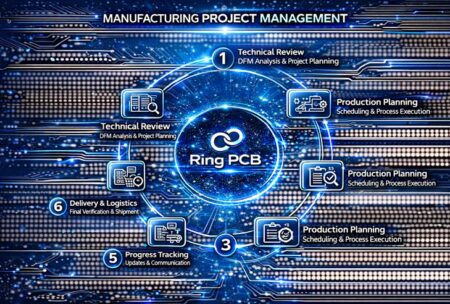
For projects involving rigid multilayer boards and PCB assembly, Ring PCB provides PCB fabrication, component sourcing, SMT assembly, through-hole assembly, and PCBA manufacturing support. Established in 2008, the company operates a self-owned manufacturing facility covering more than 10,000 square meters and supports rigid PCB production of up to 62 layers.
Ring PCB also has five automated SMT production lines and first article inspection equipment to support production verification. PCB prototypes may be available in as little as 72 hours, depending on board specifications, material availability, and project requirements.
Customers can submit Gerber files, BOM information, and technical specifications for manufacturing communication and feasibility review. This helps clarify project requirements before an order is confirmed.
For rigid PCB manufacturing or PCBA project inquiries, contact Ring PCB at:
References and Sources
- Grand View Research — Printed Circuit Board Market Size, Share Report, 2026–2033
- Global Electronics Association — September 2026 North American PCB Industry Results
- Printed Circuit Engineering Association — AI Computing Surge Reshaping PCB Material Landscape, June 2026
- Ring PCB — PCB and PCBA Manufacturing Trends OEMs Should Watch, September 2026