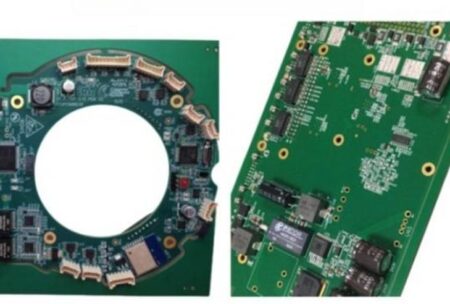
Custom medical PCBA forms the hardware backbone of modern diagnostic, monitoring and surgical devices. According to 2026 industry survey statistics, roughly 44% of medical hardware developers encountered unexpected deviations when executing custom PCBA orders, and most of these failures trace back to suppliers without self‑operated production lines. Many brokers promise full customization services on paper, yet they subcontract core manufacturing steps to scattered external workshops. For regulated medical hardware, customisation is far more than modifying board outlines or component placement. It covers tailored process parameters, custom test workflows, traceable change control and medical‑grade material handling — capabilities that are hard to deliver without in‑house factory control.
Why Broker‑Based Suppliers Struggle With Custom Medical PCBA
At first glance, broker‑style suppliers appear to accept nearly all custom medical PCBA requests. Nevertheless, since they own no production equipment or in‑house process teams, every custom requirement gets relayed to multiple third‑party subcontractors.
Complex custom demands such as non‑standard PCB cut‑outs, special anti‑corrosive surface finishes, custom SMT fixture requirements and customer‑defined FCT test thresholds become vulnerable to information loss during cross‑factory hand‑offs. Sales teams pass along specifications, but they cannot supervise real‑time equipment adjustments or verify whether subcontractors strictly follow custom process profiles. Worse still, every design revision has to be communicated separately to each outsourced workshop. Under ISO 13485 rules, even minor process adjustments need formal risk assessment and complete change records. When workflows are split across different vendors, compiling unified, audit‑ready Device History Records becomes extremely difficult. Quite a few OEMs only discover these compliance gaps when facing EU MDR or FDA audits, resulting in costly project delays.
Self‑Operated Facilities Close The Gap Between Custom Requirements & Actual Production
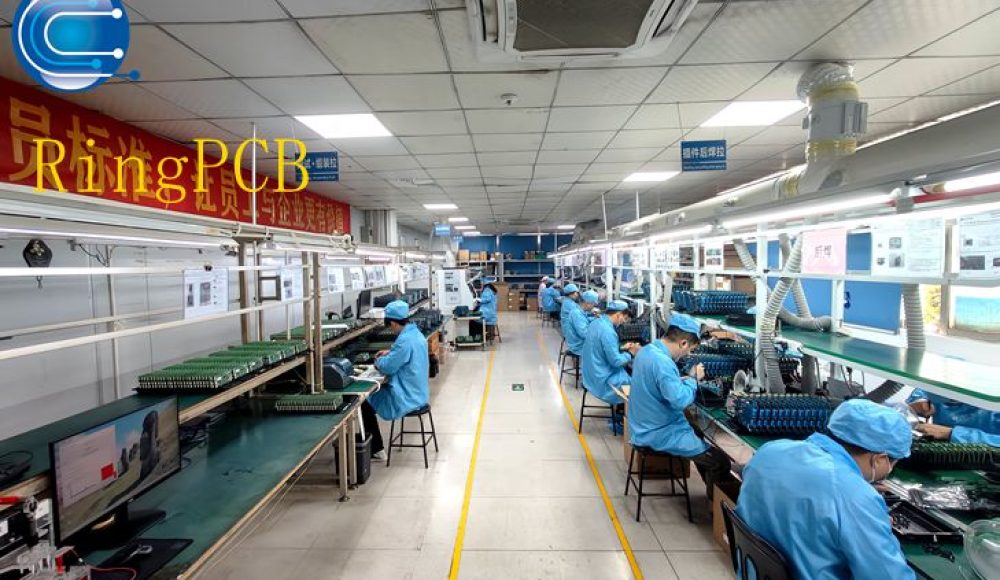
In contrast, self‑operated manufacturing unifies engineering, production and quality assurance teams within one factory site. All key workflows including PCB fabrication, precision SMT assembly, custom fixture machining, special surface treatment and functional testing are completed internally, without relying on external subcontractors.
When customers submit custom medical PCBA specifications, hardware engineers can talk directly with SMT operators and QA technicians to evaluate manufacturability early in the project cycle. If your medical device requires unique features such as irregular board geometry for compact surgical instruments, modified reflow soldering profiles for sensitive biological sensors, or dedicated test setups for patient‑connected hardware, adjustments can be implemented and validated on‑site. There is no information distortion caused by multi‑layer external communication. This direct collaboration turns abstract custom requirements into repeatable, production‑ready manufacturing parameters, rather than only producing one‑off working prototypes.
Controlled Change Management for Iterative Custom Medical PCBA
Apart from physical manufacturing capabilities, iterative custom medical projects demand strict, auditable change management. Medical device development normally involves repeated tweaks: component swap‑outs, trace width adjustments, or slight modification to test criteria. According to ISO 13485:2016, every single change, no matter how small, must go through risk evaluation, formal approval and full documentation for regulatory submissions.
Within a self‑operated facility, all custom revisions are logged inside one unified quality‑management system. Engineers record material updates, assembly‑parameter tweaks and test‑threshold adjustments, and archive complete DHF and DHR documentation for every batch. On the other hand, multi‑vendor outsourced projects suffer fragmented record‑keeping. Some change logs may be retained by one subcontractor, while other critical records disappear at another external workshop. Such incomplete documentation will block regulatory approval and increase product‑recall risks. Self‑operated factories eliminate this blind spot by managing all custom‑change records in‑house.
Scale Custom Medical PCBA While Preserving Quality Consistency
Another frequently overlooked pain point for custom medical projects is the prototype‑to‑volume consistency gap. Many brokers can deliver functional custom prototypes by leveraging flexible small‑batch subcontractors. However, when projects ramp to medium‑volume production, orders are often shifted to different low‑cost external factories. The original custom assembly parameters are lost, leading to batch‑to‑batch quality drift.
With self‑operated facilities, custom process settings validated during prototype builds are preserved for subsequent pilot and mass‑production runs. The same equipment, fixtures and QA standards apply throughout the whole product lifecycle. For medical devices with multi‑year production cycles, this continuity avoids costly re‑validation work triggered by process variations.
Delivering Reliable Custom Medical PCBA at Ring PCB
Truly compliant custom medical PCBA needs both deep engineering know‑how and full in‑house manufacturing control. Ring PCB operates self‑managed production facilities and never subcontracts critical medical‑grade PCBA workflows to unknown third‑party factories.
Our cross‑functional team handles your custom medical requirements end‑to‑end: custom PCB outline fabrication, special surface‑finish configuration, dedicated FCT fixture development, and fine‑tuned SMT assembly parameters. Every modification is formally documented within our ISO 13485‑certified QMS, delivering audit‑ready records for regulatory reviews. We support custom medical PCBA for point‑of‑care analyzers, wearable patient monitors and surgical auxiliary hardware, covering prototype validation all the way to stable volume production.
If you are sourcing a reliable partner for your custom medical PCBA project, please forward your design files and detailed requirements to rfq@ringpcb.com.