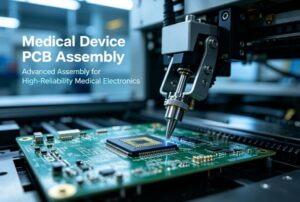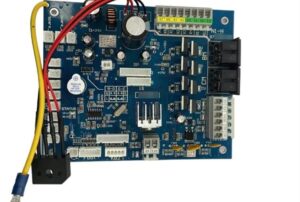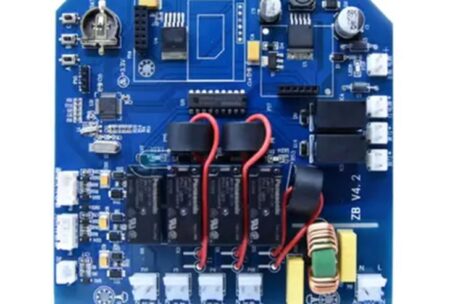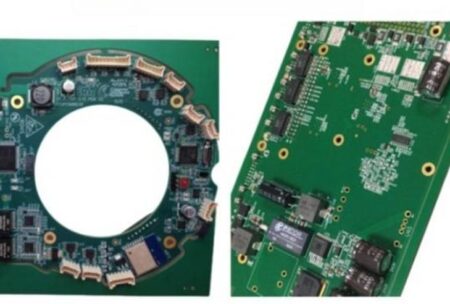
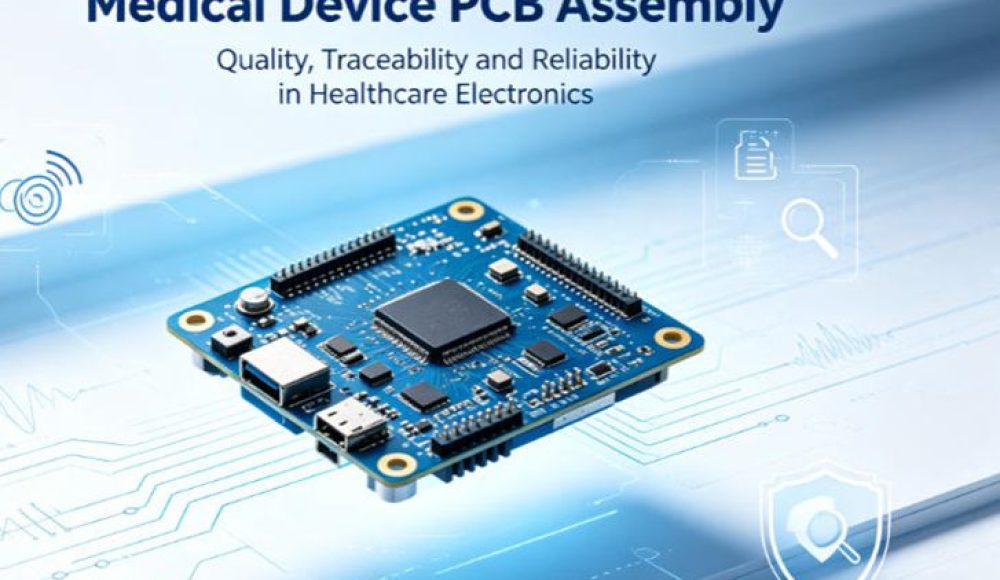
The global medical electronics market keeps expanding, and more medical OEMs are moving away from generic off‑the‑shelf circuit assemblies. According to 2026 industry research, over 41% of new‑generation medical hardware projects require highly customized medical PCBA to fit specialized mechanical structures, clinical working environments and unique sensor requirements. While customization unlocks device innovation, it also brings unique technical and regulatory barriers that standard PCBA suppliers cannot handle. For hardware developers, understanding how to implement compliant medical‑grade customization is critical for successful product development.
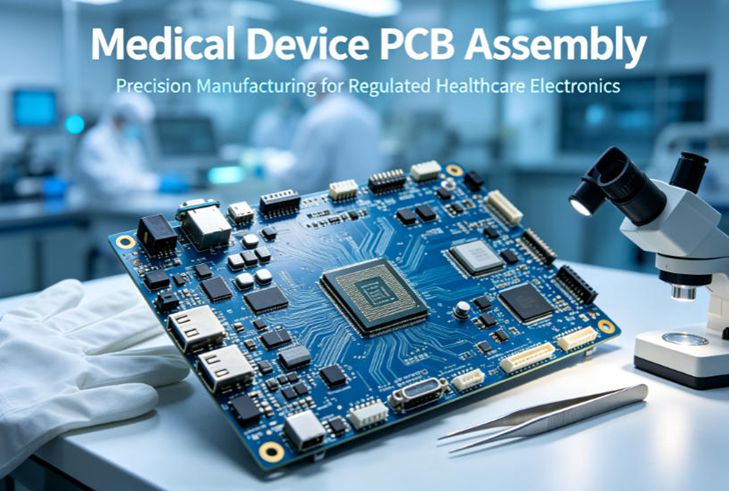
Why Off‑the‑Shelf PCBA Falls Short for Specialized Medical Hardware
Many product teams start development hoping to reuse ready‑made PCBA modules to cut costs and shorten cycles. Nevertheless, standard assemblies are designed for mass‑consumer or general‑industrial scenarios, and they rarely satisfy medical‑specific constraints.
Hand‑held surgical instruments, compact point‑of‑care diagnostic analyzers and implant‑connected patient monitors have highly constrained internal housing space. Standard rectangular PCBA cannot match irregular enclosure outlines. Besides mechanical limits, many medical devices need customized analog signal circuits for biological sensor signal acquisition. Generic circuit boards often introduce signal noise that distorts biological measurement data. Even if hardware functions work in lab tests, such non‑customized assemblies frequently fail IEC 60601‑1 medical safety certification. In the worst‑case scenario, teams have to restart hardware redesign after large‑volume orders are completed.
Core Customization Dimensions for Medical PCBA
Custom medical PCBA is far more than modifying circuit traces on Gerber files. It covers multi‑dimensional adjustments aligned with end‑use clinical conditions.
First comes mechanical form‑factor customization. Manufacturers need to deliver special outline shapes, cutouts, cavity structures and ultra‑thin board profiles to fit narrow device internal chambers. In addition, electrical performance customization is essential. Many medical applications require customized impedance control, reinforced isolation barriers and low‑leakage circuit design to satisfy patient‑contact safety standards.
Material and surface‑finish customization represents another vital layer. Some devices used in repeated high‑temperature sterilization environments demand special anti‑corrosive surface coatings. Wearable medical patches may need biocompatible surface treatment to avoid skin irritation. Furthermore, customized testing workflows cannot be ignored. Unlike consumer‑product mass testing, medical PCBA often requires customer‑specific FCT test fixtures, customized test thresholds and dedicated test procedures for each unique assembly variant.
Balancing Customization with Rigid Medical Regulatory Rules
This is the biggest pain point B‑side buyers encounter. Plenty of contract manufacturers can implement mechanical or electrical customization, yet few keep regulatory requirements in mind throughout modification processes.
Every single customization change must be documented within ISO 13485‑compliant Device History Records. Without formal change records, even perfectly functional customized PCBA will create obstacles for FDA 510(k) submission or EU MDR audits. Minor adjustments such as altering surface finish or adjusting component placement cannot be treated as trivial tweaks. Each revision needs complete traceability records, material certificates and process parameter logs. Many engineering teams learn this lesson the hard way at the late‑stage regulatory audit.
Compliant Custom Medical PCBA From Ring PCB
Tailored medical PCBA calls for manufacturing expertise combining customization capability and medical regulatory awareness. Ring PCB delivers full‑range custom medical PCBA services within our self‑operated facilities.
Our engineering team joins in early‑stage requirement evaluation. We handle custom form‑factor fabrication, special surface finish selection, custom impedance tuning and dedicated test‑fixture development. Every custom modification is fully logged for audit‑ready documentation complying with ISO 13485 and IPC‑A‑610 Class 3 standards. We support custom medical PCBA for portable diagnostic devices, patient monitoring hardware and surgical auxiliary equipment, from low‑volume prototype validation to formal production batches.
Share your custom medical PCBA project specifications with our team via rfq@ringpcb.com to get your dedicated solution.