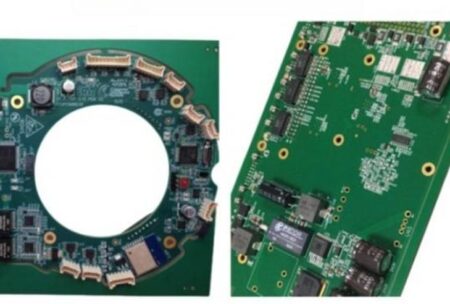

A common misconception holds rigid-flex PCB technology as a premium, cost-prohibitive option reserved only for aerospace or medical applications. However, 2026 industry cost analysis shows that when evaluated across the full product lifecycle, custom rigid-flex PCB and PCBA manufacturing delivers measurable total cost of ownership (TCO) reductions for mid-to-high volume industrial, automotive and consumer electronics products. While bare board unit costs remain higher than standard rigid PCBs, the elimination of secondary components, assembly labor, testing steps and field warranty expenses often offsets the upfront premium within the first year of production.
Many procurement teams evaluate circuit board solutions solely on per-unit board pricing, overlooking cascading savings across assembly, inventory, testing and post-sales support. This article breaks down the hidden cost advantages of integrated rigid-flex construction, explains which use cases deliver the strongest ROI, and outlines how specialized manufacturing partners help buyers maximize value without compromising quality.
1. Breaking Down the Cost Misconception
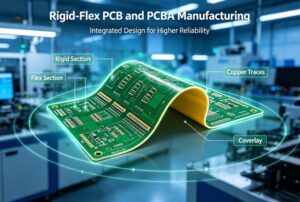
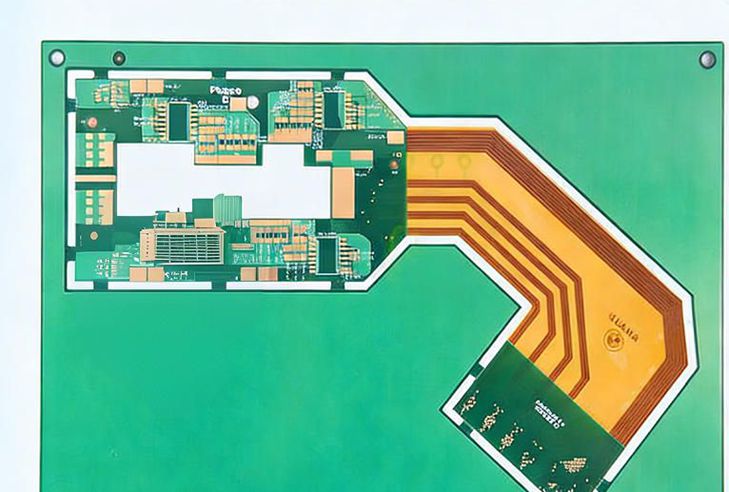
At first glance, rigid-flex PCBs carry a 25–60% higher per-unit board price compared to equivalent multi-board rigid solutions. This premium stems from more complex lamination processes, specialized polyimide materials, additional coverlay processing and stricter inspection requirements. For low-volume, simple products, this upfront differential can be difficult to justify. For higher-volume products with long lifecycles, however, the downstream savings quickly overwhelm the initial board cost increase.
Industry benchmark data from IPC indicates that for products with 2+ interconnected rigid boards, rigid-flex integration reduces total product manufacturing cost by an average of 18–32%. These savings come not from the boards themselves, but from the elimination of surrounding components, processes and failure risks that buyers rarely factor into initial sourcing comparisons.
2. Core Cost Reduction Drivers of Rigid-Flex Integration
2.1 Elimination of Connectors, Cables and Assembly Labor
The most direct savings come from removing board-to-board connectors, flexible flat cables, wire harnesses and associated crimping and assembly operations. A typical 3-board rigid assembly may require 4–6 connectors, multiple cable assemblies and 2–3 hours of manual assembly labor. A unified rigid-flex design eliminates these components entirely.
Component cost savings alone often range from $8 to $25 per unit, depending on connector type and count. Labor savings are equally significant: rigid-flex assemblies reduce final assembly time by 40–70% because there are no cables to route, connectors to seat or harnesses to secure. For products built in volumes of 10,000 units or more, these savings rapidly exceed the incremental cost of the rigid-flex board itself.
2.2 Reduced Testing, Rework and Warranty Expenses
Conventional multi-board assemblies require testing at each interconnection point. Connector misalignment, cold solder joints on harness terminals and intermittent contact issues drive rework rates of 5–12% in typical volume production. Rigid-flex construction eliminates these failure modes entirely, reducing in-factory rework costs and cutting field warranty claims.
For industrial and automotive products, warranty cost savings are particularly impactful. Field service calls, replacement parts and brand damage from reliability issues carry costs far exceeding the original production expense. Manufacturers report that rigid-flex designs reduce field failure-related costs by 60–75% over a 5-year product lifecycle.
2.3 Simplified Inventory, Supply Chain and Quality Tracking
Managing multiple board SKUs, connector part numbers and cable assemblies adds administrative overhead, inventory carrying costs and quality tracking complexity. Each additional component introduces another supplier, another incoming inspection step and another potential quality deviation. Consolidating everything into a single rigid-flex assembly streamlines the BOM to one part number, simplifies procurement and reduces inventory holding costs.
2.4 Smaller Form Factor Reduces Enclosure and Logistics Costs
Rigid-flex integration allows tighter 3D packaging, reducing overall product size by 20–40%. Smaller enclosures require less material, lower tooling costs and reduce shipping and logistics expenses per unit. For portable and wearable products, these packaging advantages directly translate into higher perceived product value and stronger market competitiveness.
3. Use Cases With the Strongest ROI
Rigid-flex technology delivers the fastest payback in specific product categories. High-vibration products such as robotic arm controllers and automotive under-hood electronics see rapid returns through reduced warranty expenses. Miniature medical devices and wearable diagnostic equipment benefit from both size reduction and reliability improvement. High-volume consumer products with multi-board architectures achieve savings through assembly labor reduction.
Conversely, very low-volume products with simple 2-board designs and low reliability requirements may not justify the upfront engineering investment. The strongest business cases exist for products with production volumes above 2,000 units per year and expected lifecycles of 3 years or longer.
4. How Specialized Manufacturing Maximizes Cost Value
The cost advantages of rigid-flex design only materialize when manufacturing is optimized for yield and efficiency. Poorly optimized rigid-flex production can suffer from low yields that erase projected savings.
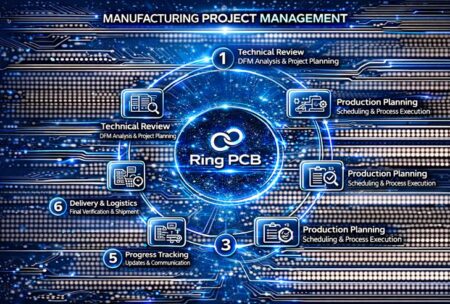
Ring PCB brings years of specialized rigid-flex PCB and PCBA manufacturing experience to every customer project. Our engineering team works directly with client design teams during the DFM phase to optimize stack-up configurations, bend zone geometries and panelization layouts for maximum production yield. We balance material selection with performance requirements, recommending cost-appropriate polyimide and adhesive options that meet reliability targets without unnecessary premium materials.
Our integrated in-house fabrication and assembly facility means boards move directly from fabrication to SMT assembly without intermediate shipping or handling. This vertical integration reduces lead times, minimizes handling damage and lowers logistics overhead — savings we pass through to our customers. We also offer tiered testing packages matched to product requirements, so buyers pay only for the inspection level their application actually needs.
For customers transitioning from existing rigid multi-board designs, we provide comparative TCO analysis outlining projected savings across assembly, components, testing and warranty phases. This transparent approach helps procurement and engineering teams make informed investment decisions based on full lifecycle economics, not just initial board pricing.
Conclusion
Evaluating rigid-flex PCB and PCBA manufacturing solely on upfront board price misses the full economic picture. When connector costs, assembly labor, rework, warranty expenses and inventory overhead are all factored in, rigid-flex integration often delivers substantial net cost savings while simultaneously improving product reliability and reducing size. For the right applications and production volumes, it is not a premium upgrade — it is a cost-optimizing investment that pays dividends across the entire product lifecycle.
If you would like to explore whether rigid-flex technology can reduce total costs for your next product, send your current design files, BOM and volume projections to rfq@ringpcb.com. Our team will provide a complimentary TCO comparison and DFM optimization proposal tailored to your specific application.