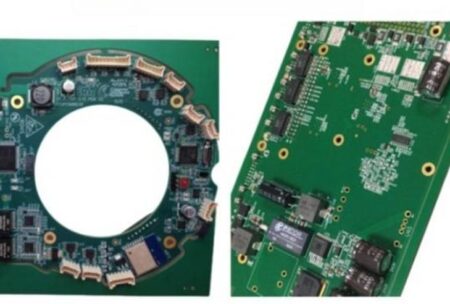
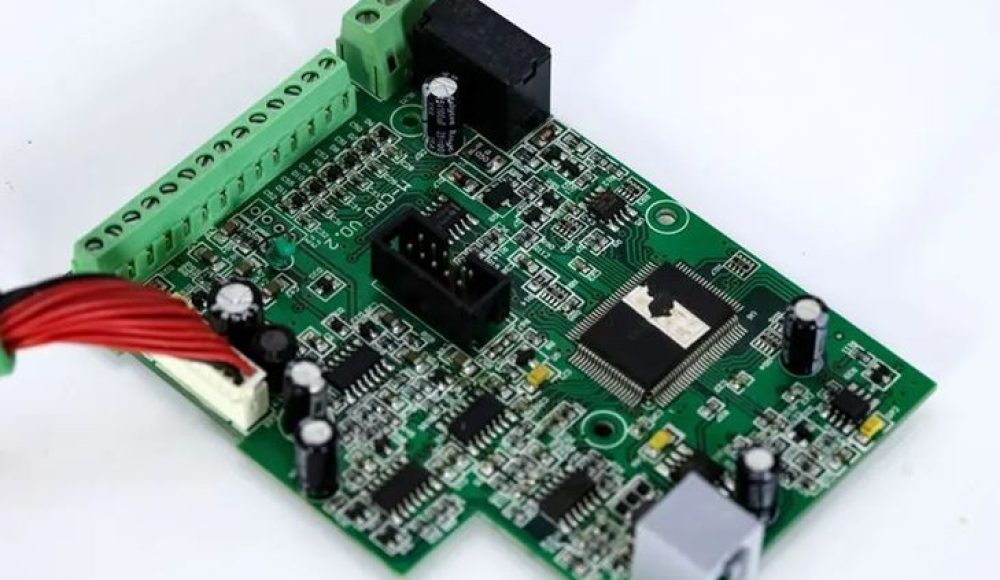
As Industry 4.0 and smart manufacturing accelerate global industrial upgrading, industrial control systems have become the core backbone of automated production lines, smart factories and industrial IoT infrastructure. At the heart of every industrial control system lies a printed circuit board, whose reliability directly determines equipment uptime, operational safety and long-term maintenance costs. For industrial OEMs and system integrators, choosing a reliable PCB manufacturing partner is no longer a secondary procurement decision—it is a strategic investment that directly impacts product competitiveness and end-customer satisfaction. This article breaks down the core requirements of industrial control PCBs, latest market trends, and how specialized manufacturing delivers long-term value for industrial clients.
1. Market Trend: Growing Demand for Industrial Control PCB Solutions
First and foremost, the expanding industrial automation sector is driving sustained growth in demand for high-performance industrial control PCBs. According to Grand View Research, the global industrial PCB market is valued at USD 9.2 billion in 2025 and is projected to grow at a compound annual growth rate of 5.8% through 2030, fueled by widespread adoption of factory automation, industrial robotics and smart grid infrastructure.
Furthermore, as industrial control systems grow more complex—integrating data acquisition, motion control, communication and human-machine interaction functions—PCB designs are evolving from simple 2-layer boards to high-density multilayer boards, heavy copper power boards and mixed-signal control boards. This rising complexity raises the bar for manufacturing precision and reliability, making generic consumer-grade PCB solutions unsuitable for industrial applications.
2. Why Reliability Is Non-Negotiable for Industrial Control PCBs
Unlike consumer electronics that operate in mild, controlled environments, industrial control systems run 24/7 in harsh conditions, including wide temperature fluctuations, constant mechanical vibration, high electromagnetic interference (EMI) and dusty factory settings. For these applications, even minor PCB defects can trigger catastrophic consequences.
To put this in perspective, a single control board failure in an automated production line can cause full line shutdowns, resulting in tens of thousands of dollars in lost output per hour, plus secondary risks such as supply chain delays and workplace safety hazards. Industry statistics show that 22% of industrial equipment unplanned downtime stems from PCB and electronic component failures, making circuit board reliability a top priority for industrial procurement and engineering teams.
In addition, industrial control products typically have a service life of 5 to 10 years, far longer than consumer electronics. This requires PCBs to maintain stable performance over long-term operation, with resistance to thermal aging, oxidation and mechanical wear—standards that far exceed basic consumer PCB manufacturing requirements.
3. Core Manufacturing Standards for High-Reliability Industrial Control PCBs
To meet the strict demands of industrial scenarios, reliable industrial control PCB manufacturing follows specialized design and production standards across the entire workflow.
First, material selection is the foundation of reliability. High-Tg FR-4 substrates are the standard for industrial PCBs, offering superior thermal stability and resistance to warping under wide temperature cycles. For high-power industrial control and power supply boards, heavy copper structures (1oz to 3oz) are adopted to enhance current-carrying capacity and reduce heat generation.
Second, precision process control ensures consistent performance. Industrial control PCBs require strict impedance control, optimized EMI shielding layouts and standardized multilayer lamination processes, all aligned with IPC-A-610 Class 2 or Class 3 industrial quality standards.
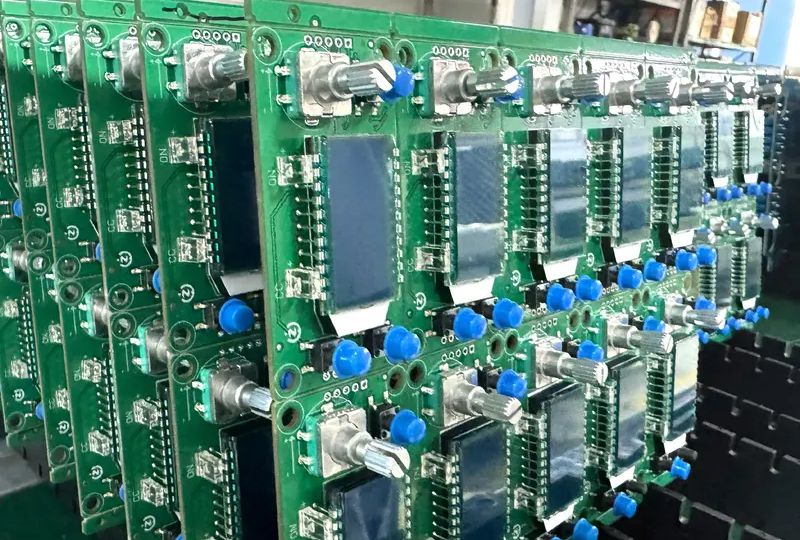
Most importantly, rigorous multi-stage quality inspection eliminates hidden defects. From bare board electrical testing to post-assembly verification, every production step requires systematic checks to catch issues such as solder joint defects, component misalignment and internal circuit faults before shipment.
4. How a Specialized Manufacturing Partner Adds Value for Industrial Clients
For industrial OEMs, partnering with a PCB manufacturer specialized in industrial control applications delivers far more than just finished boards—it reduces overall project risks and optimizes total cost of ownership.
On one hand, experienced industrial PCB manufacturers provide professional DFM (Design for Manufacturing) support in the early design phase, helping clients optimize board layout, material selection and stackup design to avoid production risks and balance performance with cost. On the other hand, specialized manufacturers offer flexible production scaling, supporting rapid prototype validation for R&D projects as well as stable high-volume production for mature products, adapting to the full product lifecycle of industrial equipment.
For these reasons, working with a trusted, certified EMS partner has become the preferred choice for global industrial OEMs. Ring PCB, a Shenzhen-based professional PCB and PCBA manufacturer with 18 years of industry experience, is a proven reliable partner for industrial control system PCB solutions.
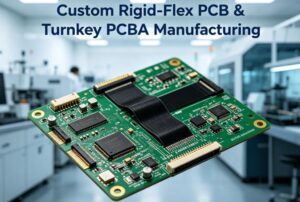
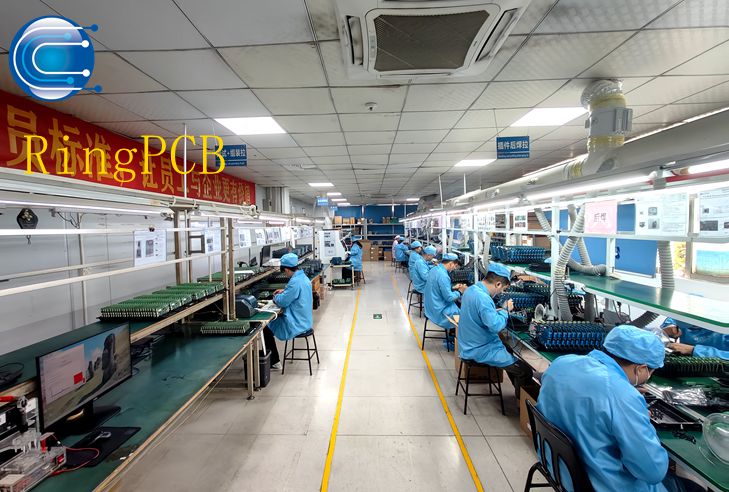
Founded in 2008, Ring PCB operates a 10,000-square-meter self-owned manufacturing facility with 500 skilled employees, serving leading global industrial clients including ABB, Siemens, Emerson and SUPCON. The company provides end-to-end solutions from bare PCB fabrication to full-turnkey PCBA assembly, covering 2 to 48-layer rigid PCBs, heavy copper boards, rigid-flex PCBs and complete SMT/THT assembly services.
All industrial control products are manufactured under certified quality systems including ISO9001, IATF16949, UL and ISO13485, fully complying with international industrial standards. Ring PCB implements strict multi-stage quality inspections including SPI 3D solder paste testing, AOI optical inspection, LCR component verification and BGA X-ray inspection, ensuring consistent high quality across prototype and mass production batches. With support for 3-day rapid prototyping and flexible production scaling, the company caters to both R&D trial orders and long-term mass production demands for industrial control equipment.
Conclusion
To sum up, reliable PCB manufacturing is the foundational pillar of stable, high-performance industrial control systems. As industrial automation continues to advance, demand for high-quality, long-lasting industrial control PCBs will keep growing, and partnering with a specialized manufacturing provider will be key for OEMs to stay competitive.
If you are developing industrial control systems and need a reliable PCB manufacturing partner, feel free to send your Gerber files, BOM list and technical requirements to rfq@ringpcb.com. Ring PCB’s professional engineering team will provide free DFM analysis and a customized competitive quotation within 24 working hours.