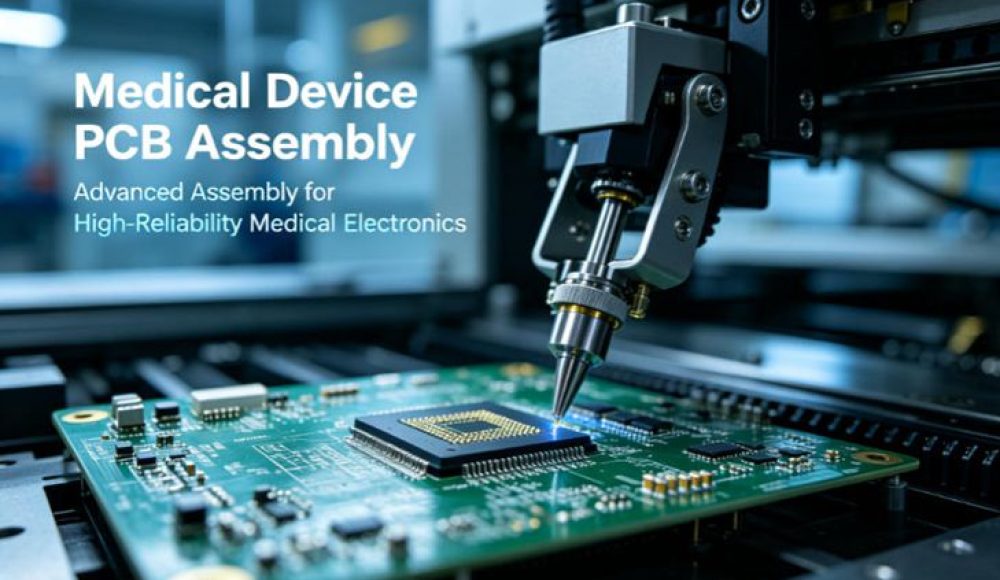
Medical electronics are undergoing a technology-driven transformation. Driven by aging populations, the rise of telehealth, and AI-powered diagnostics, the global medical device PCB market is expected to expand steadily through the rest of the decade, with demand shifting dramatically toward miniaturized, connected, and high-reliability circuit boards. For OEMs and engineering teams, staying competitive means understanding how these trends are reshaping PCB manufacturing requirements.
Miniaturization and HDI: Packing More Function Into Smaller Footprints
The most visible trend in medical PCB design is relentless miniaturization. Portable diagnostic tools, wearable patient monitors, and implantable devices all demand higher circuit density in smaller form factors. This has pushed medical PCB manufacturing rapidly into high-density interconnect (HDI) technology, microvias, fine-pitch components, and thinner substrate profiles.
Medical HDI boards differ from consumer HDI in one critical way: they must maintain extreme reliability even with tighter geometries. Fine traces and microvias cannot compromise insulation resistance, thermal cycling performance, or long-term durability. For Class III devices, every design choice must balance miniaturization against 10+ year service life and patient safety. This requires advanced fabrication capabilities, precise lamination control, and rigorous reliability testing that standard PCB shops often cannot deliver consistently.
Flexible and Rigid-Flex PCBs for Next-Generation Medical Form Factors
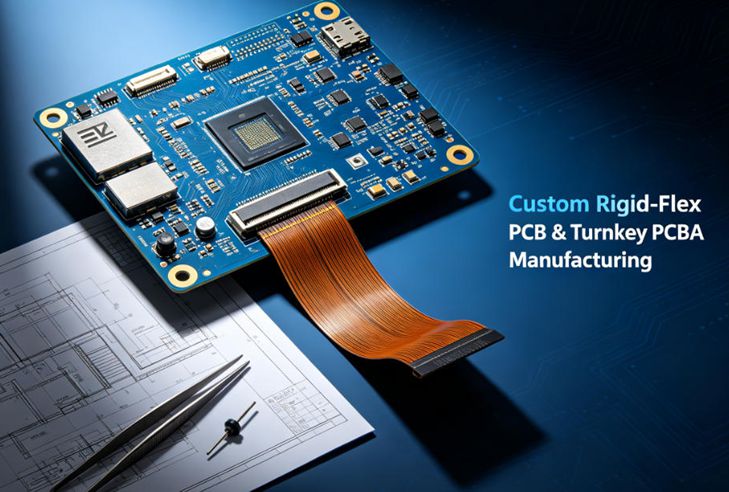
Flexible and rigid-flex PCBs are another fast-growing segment in medical device manufacturing. Flexible circuits enable compact, ergonomic designs for wearable patches, endoscopic cameras, surgical instruments, and portable monitoring equipment where rigid boards would be impractical.
However, medical flex PCBs carry unique manufacturing challenges. They require biocompatible base materials, specialized surface finishes, and controlled impedance for high-speed sensor signals. Repeated flexing cycles in surgical tools or wearable devices demand robust copper plating and adhesive systems that resist fatigue and delamination over millions of bending cycles. For device developers, early collaboration with a PCB manufacturer experienced in medical flex design is essential to avoid costly mechanical failures later in the product lifecycle.
IoMT and Connectivity: Raising the Bar for Signal Integrity
The Internet of Medical Things (IoMT) market is projected to exceed $124 billion in 2026, fueled by remote patient monitoring, connected hospital equipment, and cloud-based health data systems. Connected medical devices require PCBs that support wireless connectivity (Wi-Fi, Bluetooth, cellular), precision analog sensing, and reliable data transmission in electrically noisy clinical environments.
This places new demands on PCB stackup design, impedance control, and EMC performance. Medical devices must meet IEC 60601-1-2 EMC standards while maintaining accurate sensor readings. Poor stackup design or inconsistent impedance can degrade wireless performance, introduce measurement noise, or cause electromagnetic interference with other hospital equipment. For manufacturers, this means investing in advanced impedance testing, signal integrity verification, and EMC-aware layout review capabilities.
AI-Enabled Medical Hardware: More Processing, More Thermal Challenges
As AI moves into bedside diagnostics, imaging analysis, and patient monitoring, medical devices are integrating more powerful processors and higher-density memory. This increases power density and thermal stress on the PCB.
High-performance medical PCBs now require careful thermal management design: heavy copper layers for power circuits, optimized copper pouring, thermally conductive dielectric materials, and strategic component placement. Thermal reliability is not optional—overheating can degrade sensor accuracy, shorten component life, and even create patient safety risks under IEC 60601 temperature limits.
Advanced PCB Manufacturing for Medical Innovation at Ring PCB
Medical device innovation depends on PCB manufacturing partners that can translate complex design requirements into reliable, production-ready boards. Ring PCB operates self-owned manufacturing facilities equipped for advanced medical PCB fabrication, including HDI boards, rigid-flex circuits, high-frequency connected devices, and thermally optimized power boards.
Our in-house engineering team works closely with medical device developers from the early design phase, offering DFM guidance, material selection support, and stackup optimization tailored to clinical performance requirements. All medical-grade boards are manufactured under strict process controls and inspected to IPC-6012 Class 3 standards, with full traceability documentation available for regulatory needs.
From quick-turn prototype builds to stable volume production, Ring PCB supports medical device companies across diagnostic imaging, patient monitoring, wearable health, laboratory equipment and industrial healthcare segments.
If you are developing an advanced medical device and need a trusted PCB manufacturing partner, share your project details with us at rfq@ringpcb.com.