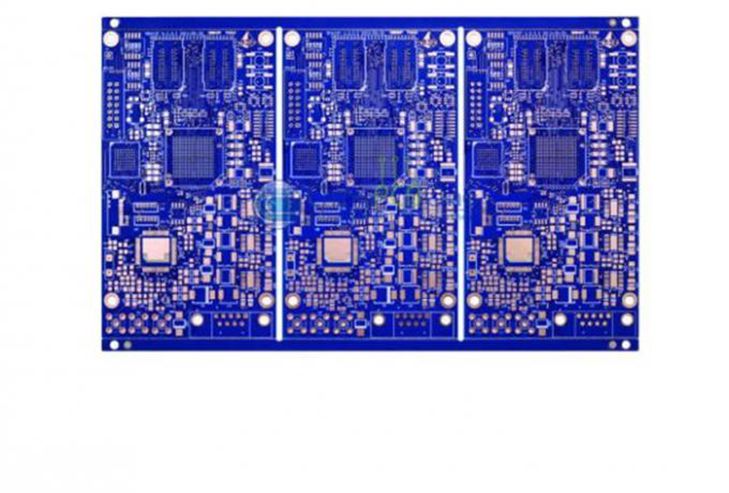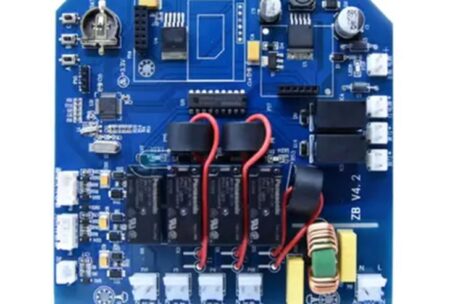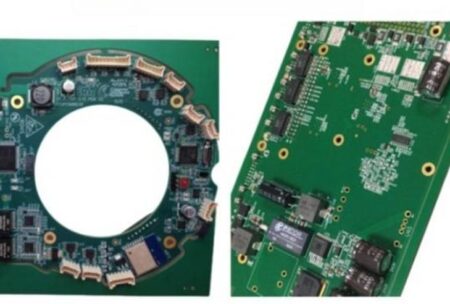
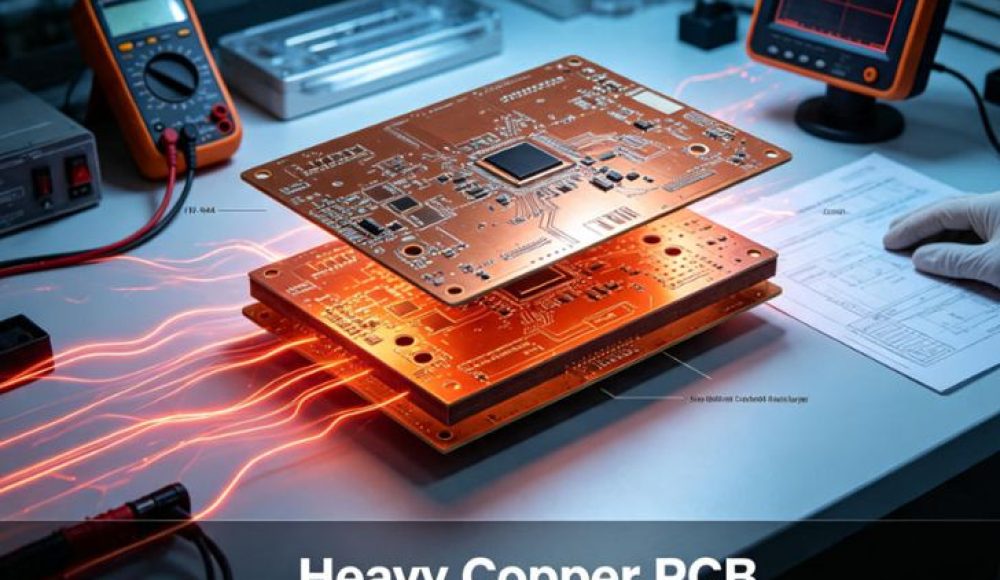
When high current, heat generation, and long-term reliability become critical, a standard PCB may not provide enough copper capacity or thermal performance. Heavy copper PCB technology gives you thicker copper conductors for demanding power and industrial designs. If you need a custom board with controlled impedance, high current capacity, or rapid prototype delivery, Ring PCB provides manufacturing support from engineering review through production.
Founded in 2008, Ring PCB operates a self-owned 10,000-square-meter manufacturing facility in Shenzhen, China, with approximately 500 employees. Its production capabilities cover PCB fabrication, component sourcing, SMT and through-hole assembly, testing, and full-turnkey PCBA services.
What Is a Heavy Copper PCB?
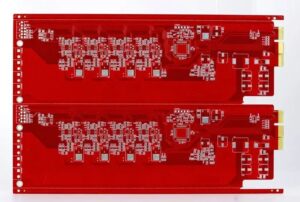
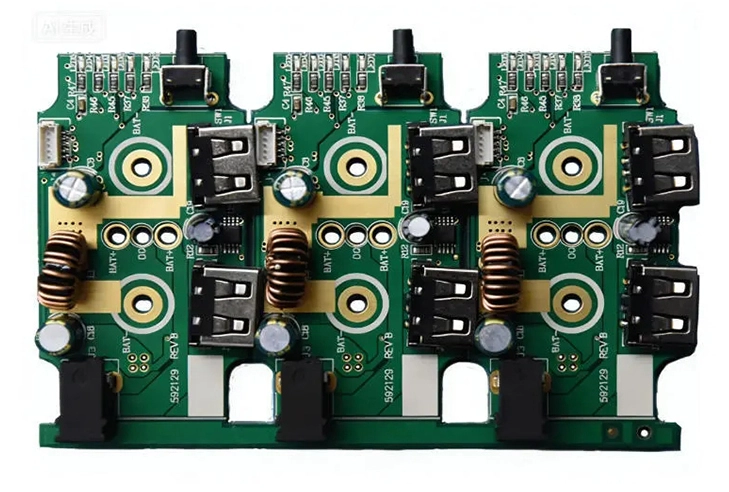
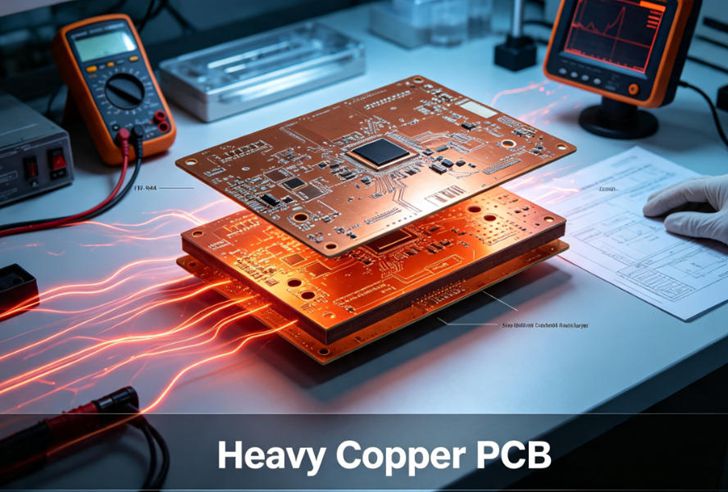
A heavy copper PCB uses significantly thicker copper than conventional circuit boards. The increased copper cross-section allows the board to carry higher current while improving heat distribution and mechanical durability.
Ring PCB manufactures 2–20 layer heavy copper PCBs with copper thickness up to 20 oz/ft² (700 μm). Depending on your design, the board can also support thicknesses from 0.5 mm to 5 mm, with surface finishes including ENIG, HASL, OSP, immersion tin, and immersion silver.
This construction is particularly useful when your application has limited space but requires high current handling and reliable thermal performance.
Key Heavy Copper PCB Specifications
- Layer count: 2–20 layers
- Copper thickness: Up to 20 oz/ft² (700 μm)
- Board thickness: 0.5–5 mm
- Minimum trace width/spacing: 0.2/0.2 mm, depending on copper weight
- Minimum hole size: 0.25 mm (10 mil)
- Through-hole copper plating: 25–75 μm
- Impedance control: 50 Ω and 75 Ω, ±5% tolerance
- Inspection: AOI and X-ray inspection
- Prototype lead time: From 3 working days, depending on design complexity
Why Choose Heavy Copper PCB for Power Electronics?
You typically choose heavy copper when conventional copper thickness cannot comfortably meet the electrical or thermal requirements of your design.
Higher Current-Carrying Capacity
Thicker copper provides a larger conductive cross-section, helping your PCB handle higher current with lower resistance and reduced power loss.
This makes heavy copper designs suitable for power supplies, automotive electronics, industrial control systems, renewable energy equipment, and high-power LED applications.
Improved Thermal Management
Copper conducts heat efficiently away from high-load areas. By distributing heat more effectively, a heavy copper PCB can help reduce thermal stress on components and improve operational stability.
For example, if your power electronics design experiences concentrated heat around MOSFETs, power connectors, or switching components, a properly engineered copper structure can provide a more effective thermal path.
Greater Mechanical Durability
Heavy copper structures can provide increased mechanical strength, which benefits equipment operating under vibration, temperature changes, or other demanding industrial conditions.
Heavy Copper PCB vs. Standard PCB
| Feature | Standard PCB | Heavy Copper PCB |
|---|---|---|
| Copper thickness | Conventional copper weights | Up to 20 oz/ft² |
| Current capacity | Suitable for general electronics | Designed for higher-current applications |
| Thermal performance | Moderate | Enhanced heat distribution |
| Typical applications | Consumer and general electronics | Power, automotive, industrial and renewable energy |
| Manufacturing complexity | Standard | Requires specialized process control |
| Best suited for | Low-to-medium power | High-current and high-power designs |
The right choice depends on your current load, thermal requirements, layer structure, available space, and production volume. Ring PCB can review your Gerber files and technical specifications before production.
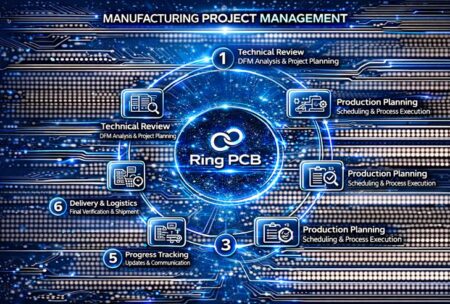
How Ring PCB Manufactures Your Heavy Copper PCB
When you need a custom heavy copper PCB, the manufacturing process should start with engineering validation rather than simply placing an order.
- Submit your design
Provide your Gerber files, stack-up information, BOM if assembly is required, copper weight, board dimensions, and technical requirements. - Engineering and DFM review
Ring PCB reviews your design for manufacturability, including trace width, spacing, hole sizes, copper distribution, layer structure, and impedance requirements. - Prototype production
For suitable designs, Ring PCB supports rapid prototyping from 3 working days, helping you evaluate electrical and mechanical performance before mass production. - Testing and inspection
Production uses equipment including LDI systems, CNC drilling machines, AOI, X-ray inspection, and other testing equipment to control manufacturing quality. - Mass production and PCBA
After prototype approval, you can move to larger-volume PCB production or combine PCB fabrication with SMT, through-hole assembly, component sourcing, and functional testing.
Quality Certifications and Manufacturing Experience
When you source a heavy copper PCB manufacturer, certification and production experience matter because high-current boards require consistent process control.
Ring PCB has operated since 2008 and has supplied tens of thousands of PCB types to more than 3,000 customers in over 50 countries. Its manufacturing and quality management systems include:
- ISO 9001
- ISO 14001
- ISO 13485
- IATF 16949
- UL certification
- RoHS and REACH compliance
The company operates production lines 24/7 and maintains engineering and sales support across three shifts. This structure helps international customers coordinate projects across different time zones.
Applications of Heavy Copper PCBs
A custom heavy copper PCB can support a range of demanding applications, including:
- Automotive electronics requiring high current and reliability
- Industrial control equipment operating under continuous loads
- Power supply systems with high-current switching circuits
- Renewable energy equipment such as power conversion systems
- High-power LED systems requiring effective thermal management
- Aerospace and defense-related electronics where reliability is critical
Your final PCB specification should always be determined by the actual electrical, mechanical, thermal, and environmental requirements of the application.
FAQ
What copper thickness can Ring PCB manufacture?
Ring PCB supports heavy copper designs with copper thickness up to 20 oz/ft² (700 μm). The final copper weight depends on your electrical requirements and board structure.
How fast can you get a heavy copper PCB prototype?
Ring PCB supports 3-day rapid prototyping for suitable designs. Actual lead time depends on layer count, copper thickness, board complexity, materials, and testing requirements.
Can Ring PCB provide PCB assembly with heavy copper boards?
Yes. Ring PCB provides one-stop PCB and PCBA services, including component sourcing, SMT assembly, through-hole assembly, testing, and quality inspection. This allows you to manage PCB fabrication and assembly through one manufacturing partner.
Conclusion
Choosing the right heavy copper PCB manufacturer can directly affect current capacity, thermal performance, reliability, and production scheduling. Ring PCB combines 18 years of PCB manufacturing experience, a 10,000-square-meter self-owned facility, approximately 500 employees, advanced inspection equipment, international certifications, and rapid prototyping capability to support demanding PCB projects.
If you are developing a high-current power supply, automotive control board, industrial system, or renewable energy product, you can submit your Gerber files and technical requirements to Ring PCB for an engineering review and customized quotation. Request a heavy copper PCB prototype to evaluate your design before moving into mass production.