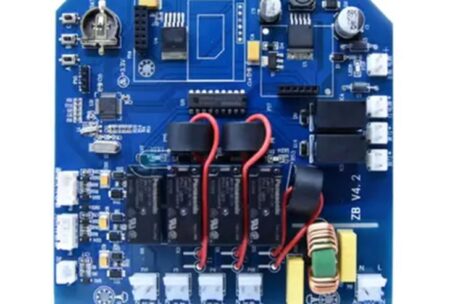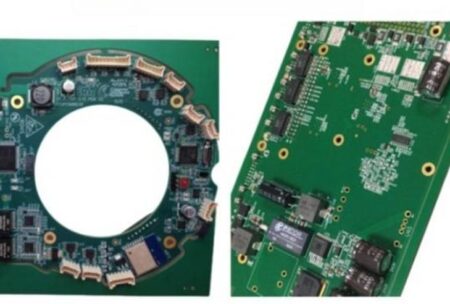
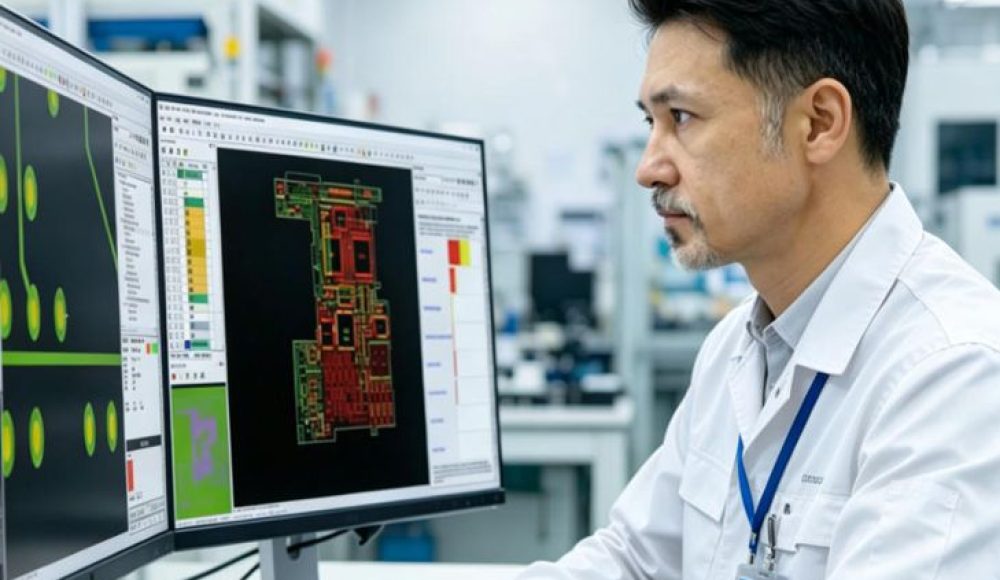
A successful multilayer PCB prototype is an important engineering milestone, but it does not guarantee reliable volume production.
When an OEM increases production quantities, manufacturing processes must deliver consistent results across different material batches, assembly runs, and engineering revisions.
For products such as industrial controllers, communication modules, medical equipment electronics, and embedded computing systems, inconsistent manufacturing can lead to difficult troubleshooting and costly production delays.
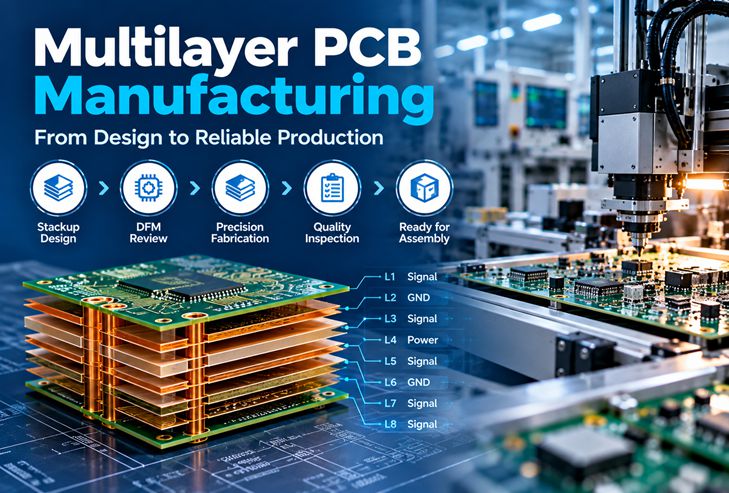
Therefore, Multilayer PCB Manufacturing requires a quality strategy that extends from New Product Introduction (NPI) through fabrication, assembly, testing, and long-term production.
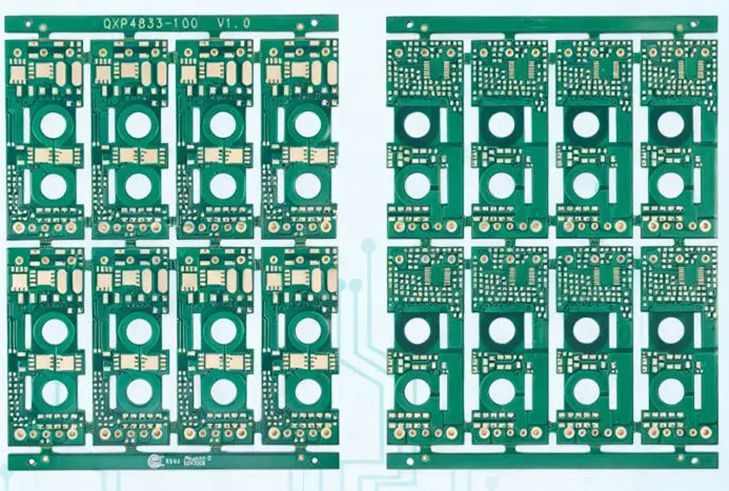
A One-Stop PCB Assembly Service can support this process by coordinating the major manufacturing stages within a connected workflow.
Why Prototype Success Does Not Guarantee Production Consistency
Engineering prototypes are often produced in small quantities under closely monitored conditions.
During volume manufacturing, however, variations in materials, processing equipment, operators, and production schedules become more significant.
For multilayer PCBs, small differences in dielectric thickness, layer alignment, drilling, or plating may influence finished-board quality.
Assembly introduces additional variables involving solder paste, placement, reflow, and component handling.
Consequently, OEMs should validate not only the electrical design but also the manufacturing process.
The objective is to produce consistent assemblies without relying on exceptional manual intervention.
Start NPI With a Controlled Manufacturing Package
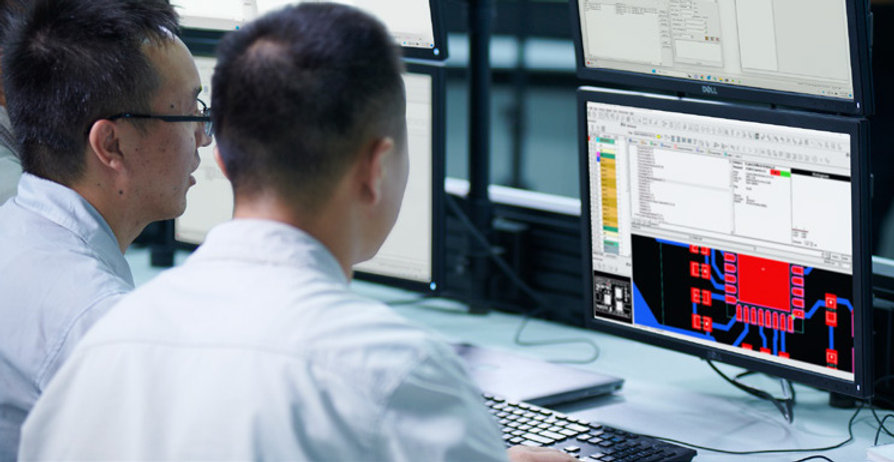
An effective NPI process begins with complete and consistent documentation.
The manufacturing package typically includes Gerber or ODB++ data, drill files, PCB stackup information, BOM, placement files, assembly drawings, and relevant technical specifications.
For controlled-impedance boards, impedance requirements and approved materials should also be documented.
Testing instructions and acceptance criteria must be available before production reaches the relevant stage.
All files should reference the same approved revision.
A mismatch between PCB fabrication data and BOM information can create avoidable manufacturing errors.
Document control is therefore one of the earliest quality activities in NPI.
Verify Multilayer PCB Fabrication Quality
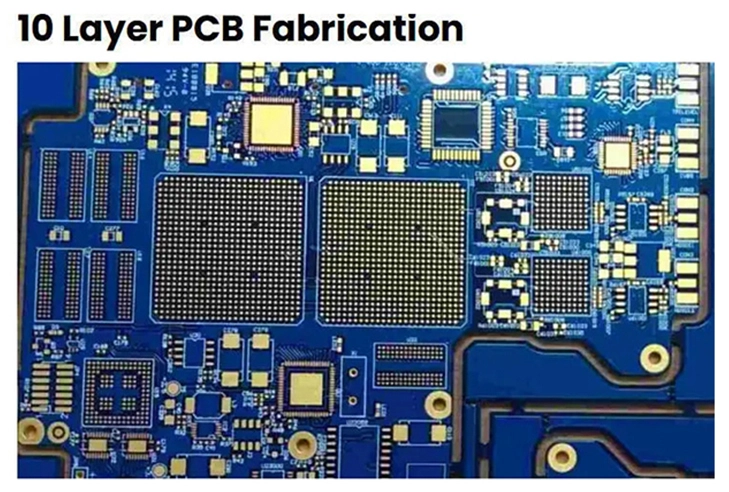
Multilayer PCB fabrication involves several critical stages.
Inner-layer imaging and etching define the internal circuitry.
Lamination combines the layers into a finished structure.
Drilling and plating create electrical connections between layers.
Solder mask and surface finish complete the board for assembly.
Each stage introduces different potential defects.
For example, poor registration may reduce alignment margins, while plating defects can affect interlayer connectivity.
Manufacturers should use suitable inspection and process controls to identify these problems.
IPC-6012F provides a relevant industry reference for rigid printed board qualification and performance requirements.
However, customer-specific requirements should also be defined in the manufacturing documentation.
Connect Bare-Board Inspection With Assembly Requirements
A bare PCB can pass electrical testing yet still create difficulties during component assembly.
Excessive warpage, unsuitable solder mask geometry, surface-finish issues, or inaccurate board dimensions may affect downstream production.
Therefore, bare-board acceptance and assembly readiness should be evaluated together.
For example, a high-density board containing BGAs may require careful attention to flatness and solder pad quality.
A One-Stop PCB Assembly Service can improve coordination between fabrication and assembly teams.
This allows manufacturing concerns to be discussed before the boards enter the SMT production line.
Control SMT and Through-Hole Assembly Processes
Multilayer PCBAs may contain fine-pitch processors, passive components, connectors, relays, and power devices.
Different components require different assembly considerations.
For SMT production, solder paste printing, placement accuracy, reflow profiles, and moisture-sensitive component handling are important.
Through-hole assembly requires appropriate soldering methods, inspection, and mechanical support.
Mixed-technology assemblies may also require careful process sequencing.
IPC J-STD-001J addresses soldering processes and materials, while IPC-A-610J provides electronic assembly acceptance criteria.
The applicable acceptance class and customer requirements should be agreed before production.
Build an Inspection Strategy Around Product Risk
No single inspection method can detect every manufacturing defect.
Therefore, quality planning should consider the product’s complexity and failure risks.
Solder Paste Inspection can evaluate paste deposition before component placement.
Automated Optical Inspection identifies many visible assembly defects.
X-ray inspection can provide information about hidden solder joints beneath packages such as BGAs.
Electrical testing can detect certain connectivity or component-related faults.
Functional testing verifies whether the completed assembly performs its intended operations.
The required combination depends on product design, test accessibility, and customer specifications.
Manufacturers should explain what each method can and cannot verify.
Use Pilot Builds to Validate Manufacturing Readiness
Pilot production provides an opportunity to evaluate the complete manufacturing workflow before increasing quantities.
The pilot build should confirm that approved materials are available, fabrication processes are stable, assembly instructions are clear, and testing procedures are repeatable.
It should also reveal practical problems involving fixtures, component handling, inspection access, and packaging.
Defects and deviations should be documented and investigated.
For example, recurring soldering problems may require process adjustment, while intermittent functional failures may need electrical investigation.
Pilot results should support a documented decision about production readiness.
This reduces the risk of transferring unresolved problems into larger manufacturing batches.
Maintain Traceability Across Production Stages
Traceability helps manufacturers and OEMs understand how a product was built.
Depending on the project, records may include PCB material lots, component batches, production dates, assembly revisions, inspection outcomes, and functional test results.
If a field problem occurs, these records can help narrow the investigation.
For example, a defect associated with a specific component lot may affect only certain production batches.
However, traceability requirements vary by application.
OEMs should define the level of documentation they need before manufacturing begins.
A coordinated turnkey workflow can simplify the collection and management of production records.
Manage Engineering Changes Without Creating New Defects
Engineering changes are common during NPI and recurring production.
A revised PCB stackup, component replacement, connector change, or updated test procedure may affect several manufacturing stages.
Therefore, changes should be reviewed before implementation.
The manufacturer should identify which files, materials, assembly programs, and test instructions are affected.
Obsolete documentation must be prevented from entering active production.
For products with long service lives, revision history is also valuable for maintenance and troubleshooting.
Clear approval procedures help ensure that production changes remain intentional and traceable.
Use Quality Metrics to Improve Manufacturing
Quality management should support continuous improvement rather than simply recording defects.
Useful indicators may include fabrication yield, assembly first-pass yield, recurring defect categories, rework frequency, and functional test results.
However, metrics should be interpreted in context.
A complex high-layer-count assembly may require different expectations from a simple two-layer board.
Manufacturers and OEMs should review recurring issues and identify corrective actions.
Where appropriate, process changes can be validated during controlled production runs.
The objective is to improve manufacturing consistency while maintaining the approved product requirements.
Why Integrated Manufacturing Helps Long-Term Production
When PCB fabrication, component sourcing, assembly, and testing are managed separately, engineering changes and quality investigations may require coordination across multiple suppliers.
An integrated manufacturing workflow can simplify communication and improve visibility into production history.
However, integration alone does not guarantee quality.
The manufacturer must still maintain documented processes, competent personnel, appropriate equipment, and clear customer requirements.
OEMs should evaluate these capabilities when selecting a long-term manufacturing partner.
Ring PCB: Multilayer PCB and One-Stop Assembly Support
Reliable production requires coordination between engineering requirements, PCB fabrication, component sourcing, assembly, and testing.
Ring PCB supports multilayer PCB projects through fabrication, DFM review, component procurement, SMT and THT assembly, AOI and X-ray inspection, functional testing, and One-Stop PCB Assembly Service.
Its integrated workflow helps OEMs coordinate manufacturing activities from prototypes and pilot builds to recurring production.
For projects requiring controlled stackups, dense assemblies, and consistent quality documentation, early technical communication can help identify potential risks before production release.
To request a manufacturing review or quotation, send your Gerber files, BOM, stackup specifications, assembly drawings, expected quantities, and testing requirements to rfq@ringpcb.com.
References
- IPC. Recently Released IPC Standards and Documents. Includes IPC-6012F, Qualification and Performance Specification for Rigid Printed Boards.
- IPC. IPC Releases “J” Revisions to Two Leading Standards for Electronics Assembly. April 8, 2024.
- Ring PCB. Multilayer PCB Manufacturing: Key Risks Solved by Full-Turnkey PCB & PCBA Partnerships. September 11, 2026.