
Introduction
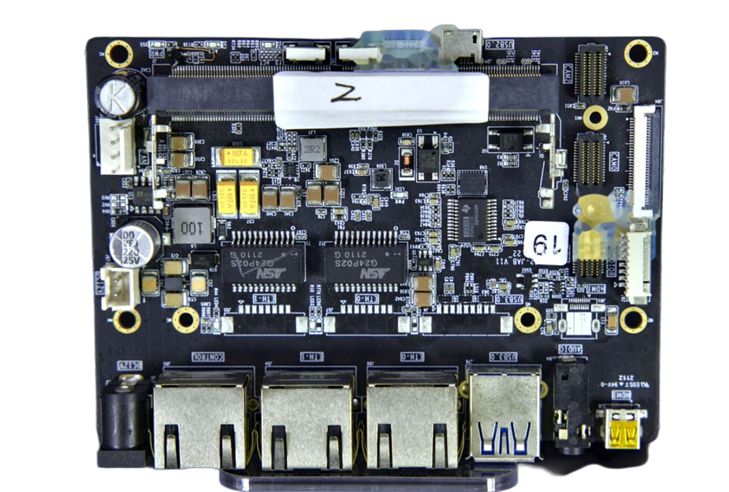
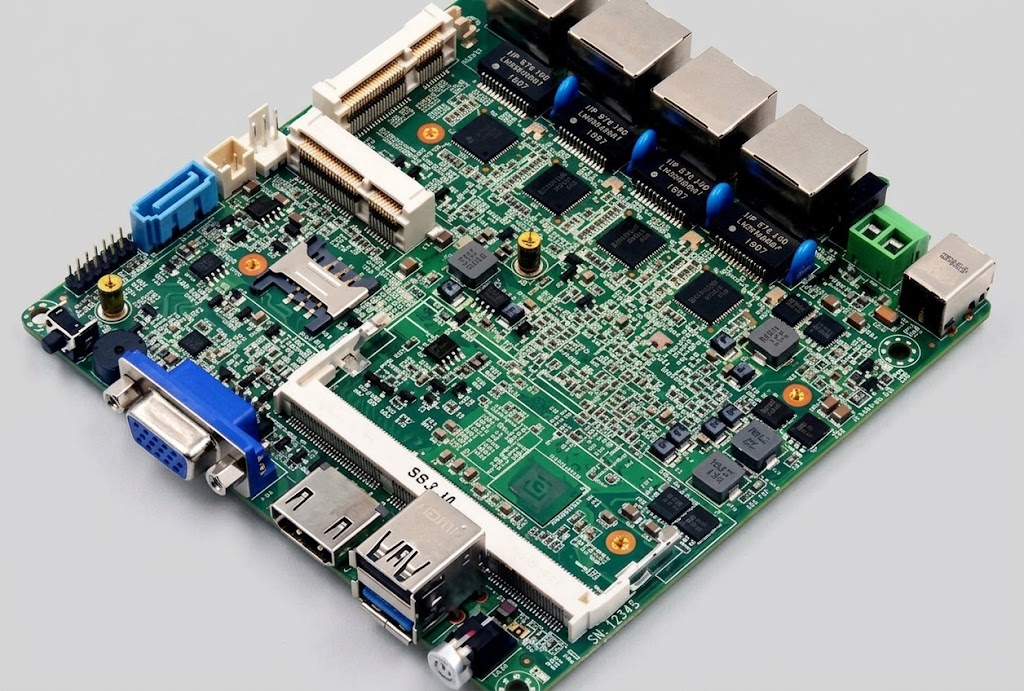
Communication equipment manufacturers face increasing pressure to deliver reliable products while managing cost, quality and supply chain complexity. Whether the product is a network switch, optical transceiver, wireless communication module or base station control board, the performance of the assembled PCB can directly affect the reliability of the finished system.
Choosing the right PCB Assembly Manufacturer is therefore an important procurement decision. A supplier should do more than provide a competitive quotation. It should understand the technical requirements of the project, maintain controlled assembly processes, manage component sourcing risks and support production from initial builds to repeat orders.
For B2B buyers, the challenge is determining which manufacturer can meet both current project requirements and future production needs. The following factors provide a practical framework for supplier evaluation.
1. Evaluate Manufacturing Capabilities Against Your Product Requirements
Not every PCB assembly supplier is suitable for every communication product. A board containing standard passive components and conventional IC packages may require a different manufacturing setup from a high-density board with fine-pitch components, BGAs or complex connectors.
Before requesting quotations, prepare the main technical information:
- Gerber files and PCB fabrication specifications.
- BOM with manufacturer part numbers.
- Assembly drawings and pick-and-place files.
- Board dimensions, layer count and thickness.
- Component package types and pitch requirements.
- Surface finish and other relevant PCB specifications.
- Inspection and testing requirements.

A qualified manufacturer should review these documents and identify potential production concerns before confirming the quotation.
Buyers should also check whether the supplier can support the required combination of PCB fabrication, SMT assembly, through-hole assembly, component sourcing and testing. When these services are coordinated by one manufacturer, communication between fabrication and assembly teams can be more efficient.
2. Check PCB Fabrication and Assembly Integration
Communication equipment may require multilayer PCBs, controlled impedance, dense routing and stable interlayer connections. If PCB fabrication and assembly are managed by separate suppliers, engineering changes or manufacturing issues may require additional coordination.
An integrated PCB and PCBA manufacturer can provide a more connected manufacturing workflow.
For example, a fabrication issue involving board thickness, solder mask registration or surface finish may affect subsequent assembly. When fabrication and assembly teams work within the same manufacturing organization, these concerns can be reviewed earlier.
However, integrated manufacturing does not automatically guarantee better quality. Buyers should still evaluate the manufacturer’s actual process controls, inspection procedures and ability to meet the project specifications.
Useful questions include:
- Can the supplier manufacture the specified PCB layer count?
- Can it review the customer’s Gerber files and fabrication notes?
- How are PCB electrical tests and assembly inspections managed?
- How are engineering changes communicated between processes?
- Can the supplier provide inspection records when requested?
The goal is to confirm that the supplier’s capabilities match the actual product rather than relying on general claims.
3. Assess Quality Management and Inspection Procedures
Quality consistency is a major concern for communication equipment, particularly products used in network infrastructure where unexpected failures can create costly maintenance and service interruptions.
A supplier’s quality management system should be supported by practical manufacturing controls.
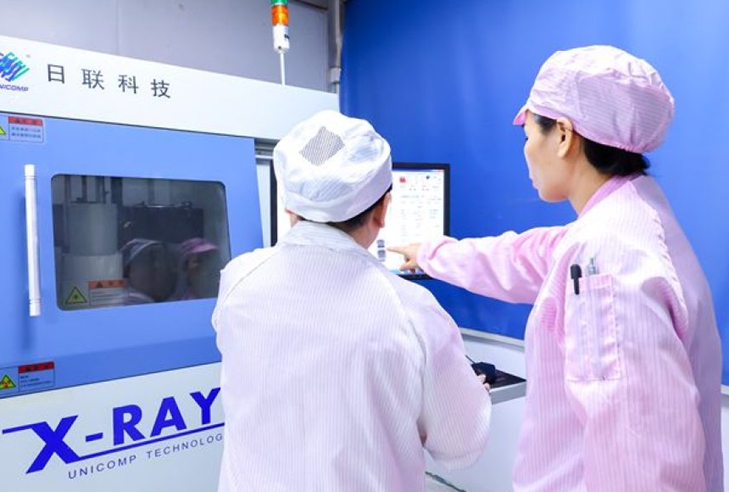
During SMT production, relevant controls may include solder paste printing inspection, placement verification, reflow profiling and AOI. For boards containing BGA packages or other hidden solder joints, X-Ray inspection may be appropriate.
Additional checks can include:
- Incoming Quality Control (IQC) for components and materials.
- First Article Inspection (FAI) before production release.
- In-process inspection during assembly.
- Electrical testing for open and short circuits.
- Functional testing based on customer specifications.
- Final inspection and production record management.
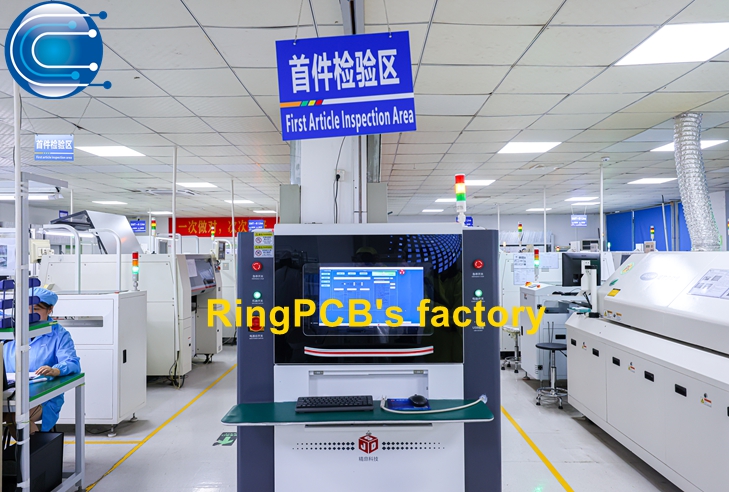
Buyers should ask how defects are recorded, how corrective actions are managed and how repeated production issues are prevented.
A certificate alone does not demonstrate that every process is suitable for a specific project. It is important to review the scope of certifications and confirm that the manufacturer’s documented procedures align with the product’s requirements.
4. Review Component Sourcing and Authenticity Controls
Component procurement can be one of the most challenging parts of communication PCBA manufacturing. Specialized processors, memory devices, RF components and high-speed connectors may have different lead times and availability conditions.
In August 2026, the Global Electronics Association reported that 64% of surveyed electronics manufacturers were experiencing limited component or material availability or extended lead times. The survey also identified memory, laminates and resins, microprocessors and passive components among the categories contributing to supply pressure.
This highlights why component sourcing should be evaluated alongside assembly capability.
A reliable supplier should be able to explain:
- Where components are sourced.
- How authorized or qualified suppliers are selected.
- How incoming components are inspected.
- How lot and supplier information is recorded.
- How obsolete or unavailable parts are handled.
- How alternative components are submitted for customer approval.
Buyers should not accept substitutions solely because a component has similar dimensions or appears to have comparable specifications. Electrical performance, package compatibility, reliability and regulatory requirements must all be considered.
5. Compare Production Capacity and Delivery Reliability
A manufacturer’s production capacity should be assessed in relation to the buyer’s actual demand.
A supplier may have sufficient equipment for prototype builds but limited capacity for recurring orders. Conversely, a large factory may not provide the flexibility required for low-volume engineering builds or frequent product revisions.
When evaluating capacity, consider:
- Number and configuration of SMT lines.
- PCB fabrication capability and monthly capacity.
- Available production shifts.
- Experience with similar board complexity.
- Capacity allocation for repeat orders.
- Ability to manage urgent engineering changes.
It is also important to distinguish quoted lead time from confirmed delivery performance. Buyers should ask how the supplier calculates lead time, whether material procurement is included and how schedule changes are communicated.
A realistic production schedule should account for PCB fabrication, component availability, assembly, inspection and any customer-required testing.
6. Understand Engineering Communication and Change Control
Communication equipment projects may evolve during development. Component revisions, PCB updates, firmware-related hardware changes and supplier substitutions can all affect production.
A capable PCB Assembly Manufacturer should maintain a clear process for reviewing and documenting changes.
Before production, both parties should agree on the applicable Gerber revision, BOM version, assembly drawing and other manufacturing files. Changes should be reviewed for their impact on materials, process settings, testing and delivery schedules.
This is particularly important for repeat orders. Manufacturing from an outdated BOM or an unapproved component alternative can create avoidable quality and traceability problems.
7. Look Beyond Unit Price When Comparing Quotations
A low assembly price does not necessarily mean a lower total project cost.
A meaningful quotation comparison should include PCB fabrication, component procurement, tooling or stencil charges, assembly, inspection, testing, packaging and logistics where applicable.
Buyers should also consider the potential cost of rework, scrap, production delays and supplier coordination.
For communication equipment, a supplier that offers transparent costing and early manufacturing feedback may help reduce downstream expenses even if its initial quotation is not the lowest.
Why Consider Ring PCB as Your PCB Assembly Manufacturer?
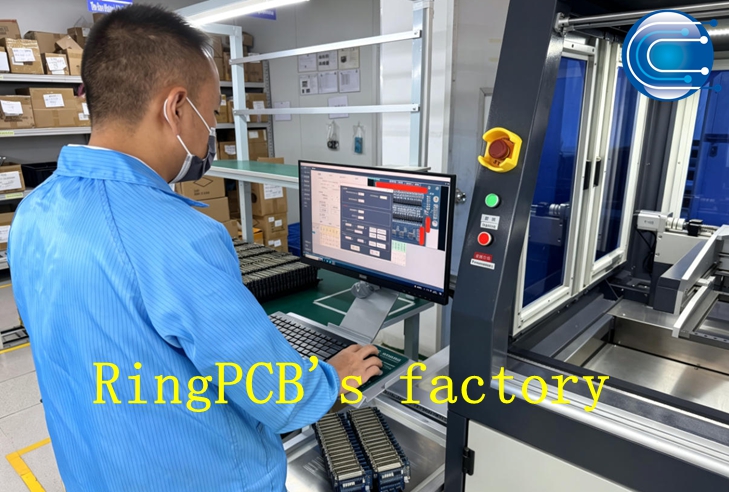
Ring PCB has provided PCB and PCBA manufacturing services since 2008. Its 10,000+ sqm self-owned factory and approximately 500 employees support integrated manufacturing operations.
The company’s capabilities include PCB fabrication up to 62 layers, five automated SMT lines, component sourcing, through-hole assembly, inspection and testing. Ring PCB has a monthly bare PCB production capacity of approximately 50,000 sqm and can handle around 500 PCBA projects per month.
Its quality management certifications include ISO 9001, ISO 14001, ISO 13485, IATF 16949 and UL-related certification. Applicable requirements should be confirmed according to the project and certification scope.
Customers can submit Gerber files, BOM data and detailed technical requirements for review. Ring PCB communicates with customers to assess manufacturing feasibility and project requirements before order acceptance.
Conclusion
Choosing a PCB Assembly Manufacturer for communication equipment requires a balanced assessment of manufacturing capability, quality controls, component sourcing, production capacity and engineering communication.
Instead of comparing suppliers only by unit price, OEMs should evaluate how well each manufacturer can support the complete manufacturing requirement and maintain consistency across repeat orders.
A structured supplier evaluation can help reduce procurement risks, improve production planning and establish a more dependable manufacturing relationship.
To discuss your communication PCBA requirements, contact Ring PCB:
Email: rfq@ringpcb.com
References and Further Reading
- Global Electronics Association – Supply Chain Availability, August 2026:
- Mordor Intelligence – Electronic Manufacturing Services for Communication Equipment:
- IPC – Standards and Industry Resources