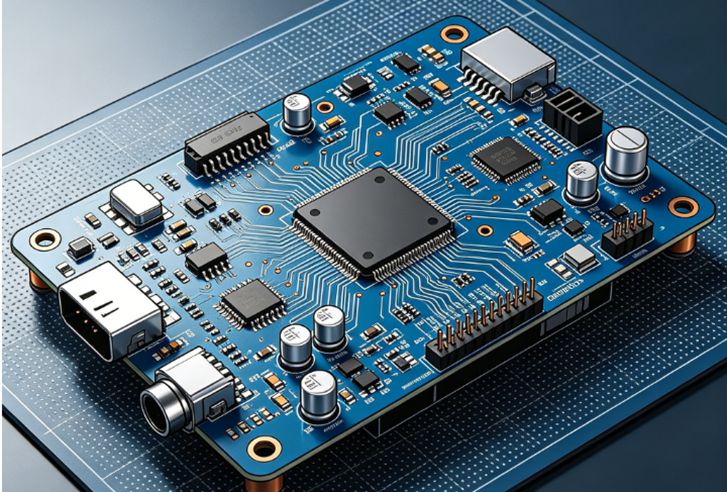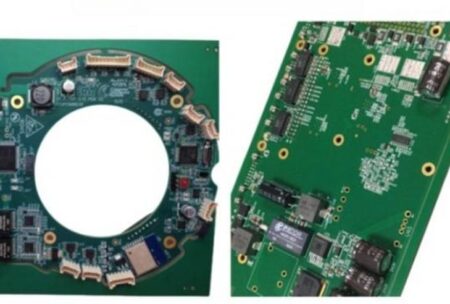
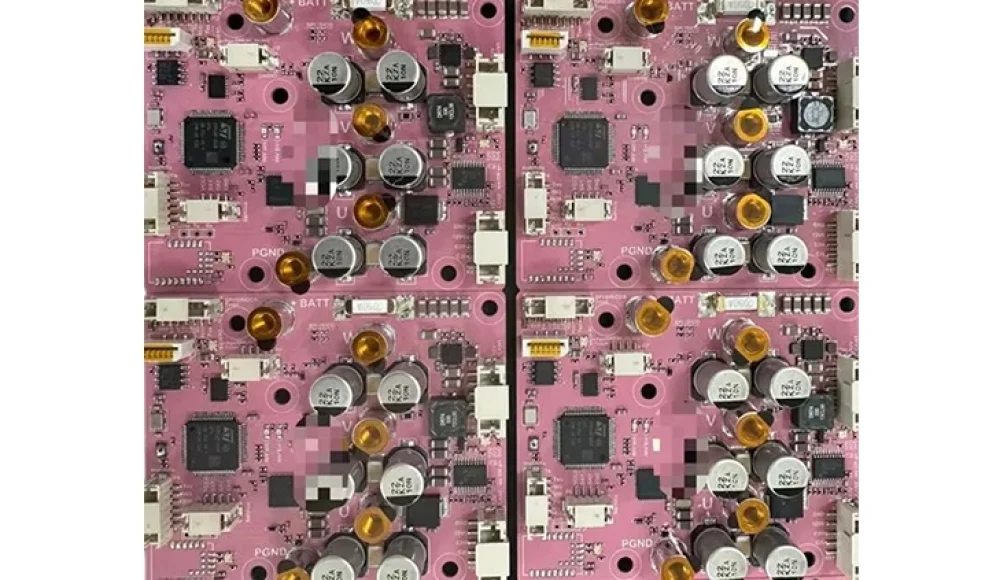
Smart robots rely on increasingly sophisticated electronic systems to coordinate motion, process sensor information, communicate with external equipment, and manage power. From industrial robotic arms and autonomous mobile robots to humanoid platforms, these functions depend on reliable printed circuit board assemblies (PCBAs).
As robot architectures become more integrated, multilayer PCBs are playing an important role in combining processors, memory, communication interfaces, motor-control signals, and power distribution within compact electronic assemblies.
For robotics OEMs, however, selecting a multilayer PCB manufacturer is not simply a matter of choosing a board with more copper layers. Stackup design, signal integrity, thermal behavior, assembly quality, and production consistency all influence the final result.
1. Why Smart Robotics Require Multilayer PCB Technology
A modern robot may contain several electronic subsystems, including a main controller, motor drivers, sensor interfaces, communication modules, and power management circuits.
These subsystems exchange signals continuously. A controller may process encoder feedback while coordinating motor commands, receiving sensor data, and communicating with a higher-level computing platform.
If all these circuits are placed on a simple two-layer board, routing space can quickly become limited.
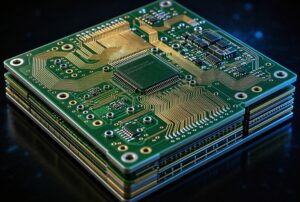
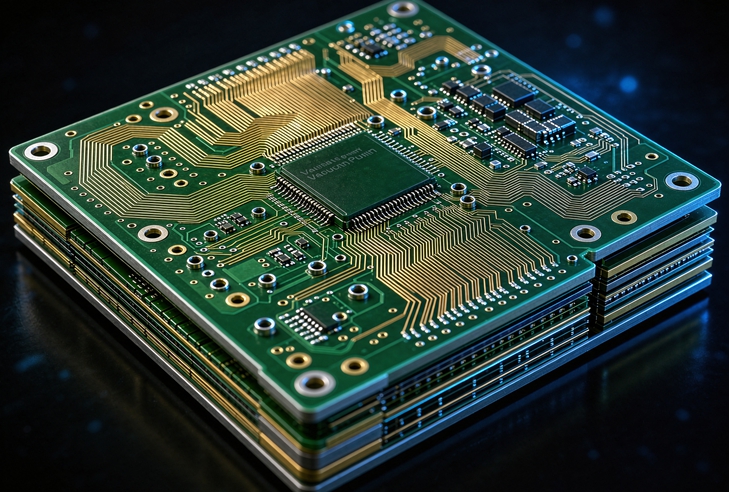
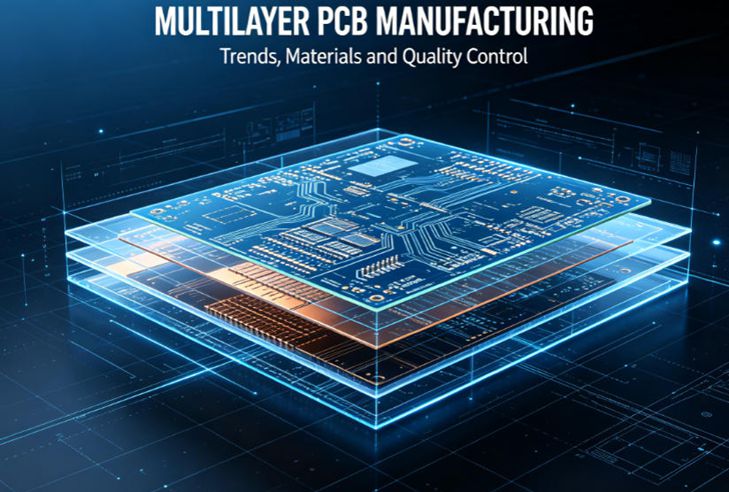
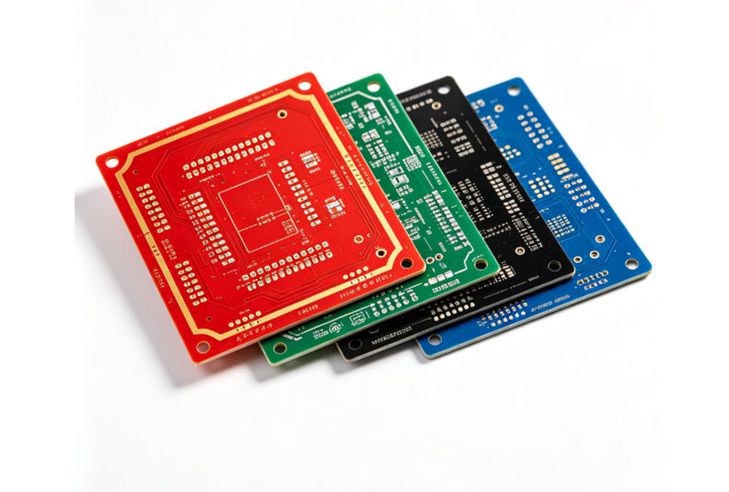
Multilayer PCBs provide additional conductive layers for signal routing, ground references, and power distribution. This allows engineers to organize complex circuitry more efficiently.
For example, a robot controller PCB may use dedicated reference planes to support high-speed digital signals, while separate routing regions accommodate lower-speed control interfaces and power circuits.
The exact layer count should be determined by circuit complexity, electrical requirements, board dimensions, and manufacturing cost rather than by selecting the highest available number.
2. The Growing Demand for Reliable Robot Electronics
The robotics market is expanding across manufacturing, logistics, electronics production, and other industrial applications.
According to the International Federation of Robotics, global industrial robot installations reached 603,307 units in 2025, representing an 11% increase compared with 2024. Installations in the electronics industry also grew by 10%.
These figures demonstrate the continued importance of automation and the electronic systems that support it.
At the same time, advances in artificial intelligence, machine vision, and sensing are expanding the functions that robots can perform.
For PCB manufacturers, this creates several practical requirements:
- More complex control and communication circuitry.
- Higher integration of processors and memory.
- Reliable signal transmission between subsystems.
- Compact board layouts with efficient power distribution.
- Repeatable assembly quality for production scaling.
Consequently, multilayer PCB manufacturing needs to support both electrical performance and practical production requirements.
3. Stackup Design and Signal Integrity in Robot Controller PCBs
The PCB stackup is one of the most important manufacturing considerations for a multilayer robot controller.
A suitable stackup determines how signal, ground, and power layers are arranged. It also affects impedance, electromagnetic compatibility, crosstalk, and overall board thickness.
High-speed communication interfaces and processor-related signals may require controlled impedance and appropriate reference planes.
Meanwhile, motor-control and switching circuits can generate electrical noise that interferes with sensitive sensor or communication signals if routing and grounding are not properly managed.
Manufacturing teams should therefore review the customer’s stackup information before production.
Important considerations include:
Layer Arrangement: Signal and reference layers should be organized according to the electrical requirements of the design.
Dielectric Selection: Core and prepreg materials influence dielectric properties, thickness tolerance, and signal behavior.
Copper Distribution: Balanced copper distribution helps control board warpage and supports stable fabrication.
Via Structures: Through, blind, or buried vias may be selected according to routing density and interconnection requirements.
Impedance Control: Specified impedance values and tolerances should be communicated clearly in the fabrication documentation.
A stackup that is theoretically possible in PCB design software may still require adjustment to match available materials and manufacturing processes. Early engineering review can help identify such issues before fabrication begins.
4. Thermal Management and Power Distribution
Robots often operate with multiple electronic systems active at the same time.
Processors, communication devices, power management ICs, and motor-control circuits can all contribute to heat generation.
Although multilayer construction provides more routing flexibility, it does not automatically solve thermal problems.
Engineers should consider copper distribution, component placement, thermal vias, board thickness, and the available cooling path.
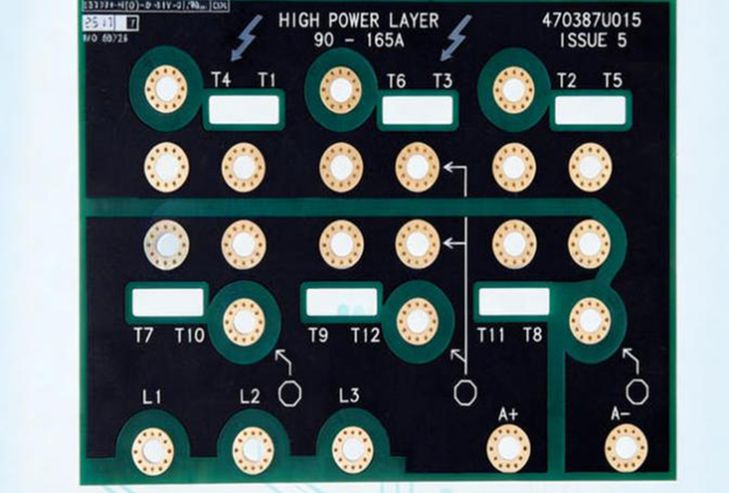
For power-related sections, copper plane design must also account for current capacity and voltage drop.
In some designs, a combination of multilayer construction and heavier copper may be appropriate. However, copper weight, trace width, and thermal requirements should be evaluated together rather than treated as independent specifications.
This is particularly important when a robot controller integrates both sensitive processing circuits and power-related functions.
5. PCBA Manufacturing Challenges for Complex Robot Controllers
A multilayer bare PCB is only one part of the manufacturing process. The finished PCBA must also meet the customer’s component, assembly, and testing requirements.
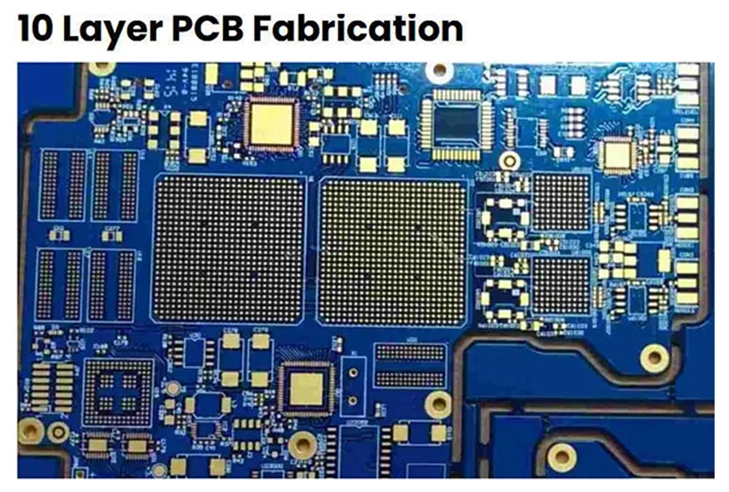
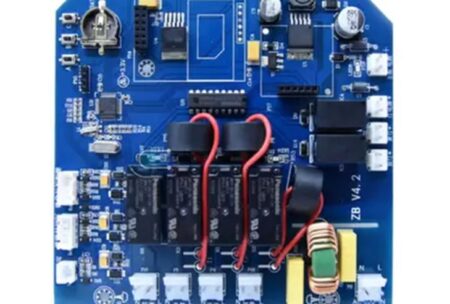
Robot controller boards may contain fine-pitch ICs, BGAs, miniature passive components, connectors, and power devices.
These components require accurate solder paste printing, automated placement, and controlled reflow soldering.
Depending on the assembly design, through-hole connectors or mechanically demanding components may also require THT assembly.
A suitable manufacturing workflow may include:
- BOM and component availability review.
- Gerber and assembly data verification.
- PCB fabrication and incoming inspection.
- Solder paste printing and SPI.
- Automated SMT placement and reflow.
- THT assembly where specified.
- AOI and applicable X-ray inspection.
- Electrical and functional testing according to customer requirements.
For BGA components and other packages with hidden solder joints, X-ray inspection can provide additional visibility where appropriate.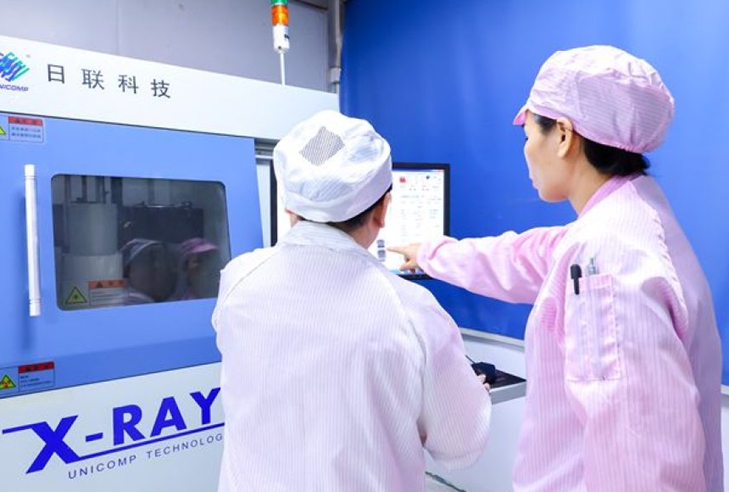
First Article Inspection is also useful when introducing a new robot controller assembly or transferring a revised design into production.
6. Design for Manufacturability Before Volume Production
A complex robot controller may work during engineering evaluation but still present manufacturing risks.
For example, insufficient component spacing, unsuitable footprints, limited test access, or difficult panelization can increase assembly complexity.
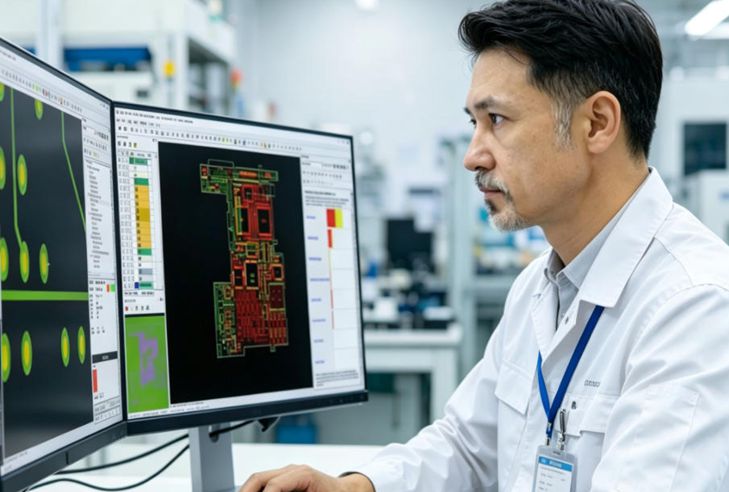
Design for Manufacturability (DFM) review helps identify these concerns before production.
Design for Testability (DFT) review is equally important. Test points, programming interfaces, and access to critical power or signal nodes can make electrical verification more practical.
For OEM buyers, it is worth discussing these requirements with the PCB assembly provider before releasing production files.
A clear documentation package should include the latest Gerber files, BOM, pick-and-place data, assembly drawings, and applicable test requirements.
7. Choosing a Multilayer PCB and PCBA Manufacturing Partner
When evaluating a robotics PCB supplier, buyers should look beyond layer-count claims.
Important questions include whether the manufacturer can support the required stackup, material selection, impedance control, via structures, and copper weights.
For PCBA manufacturing, buyers should also assess SMT placement capability, inspection methods, component sourcing, traceability, and functional testing support.
Production scalability matters as well. A supplier should be able to explain how prototype builds, engineering revisions, and repeat orders are managed.
8. Ring PCB: Supporting Smart Robotics PCBA Manufacturing
Ring PCB provides PCB fabrication and PCBA manufacturing services for OEM customers, including multilayer PCB production, component sourcing, SMT and THT assembly, engineering manufacturability review, inspection, and testing.
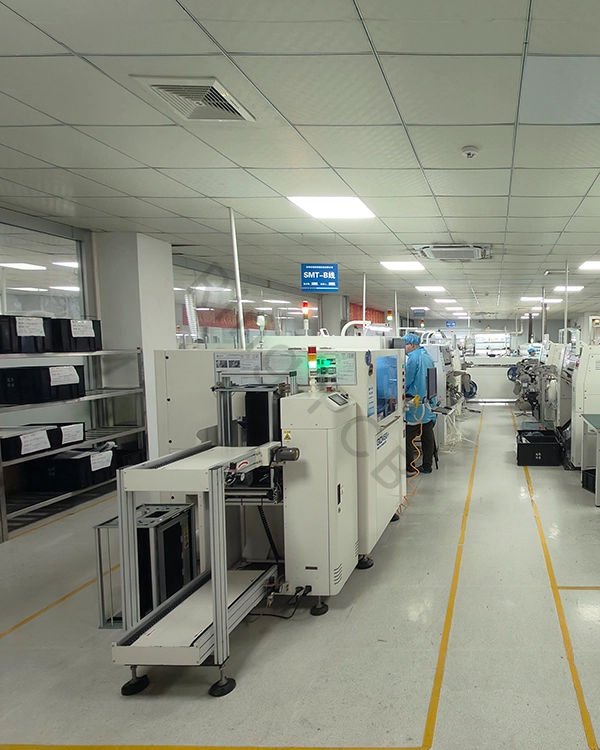
For smart robotics projects, these capabilities can support the production of controller boards, communication boards, and other custom electronic assemblies.
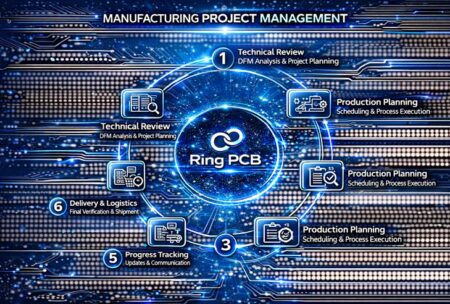
Customers can submit Gerber files, BOMs, placement data, and technical requirements for engineering review. Ring PCB can then evaluate manufacturing feasibility and coordinate the required fabrication and assembly processes.
With integrated PCB manufacturing and full-turnkey EMS services, Ring PCB helps customers manage the transition from prototype builds to repeat production.
Contact Ring PCB: rfq@ringpcb.com
Conclusion
Multilayer PCB technology provides the routing flexibility needed by increasingly integrated robot control systems. However, reliable smart robotics PCBA production also depends on suitable stackup design, signal integrity, thermal management, precise assembly, and effective testing.
For robotics OEMs, early collaboration with a capable PCB and PCBA manufacturer can help identify production risks and establish a more consistent manufacturing process.