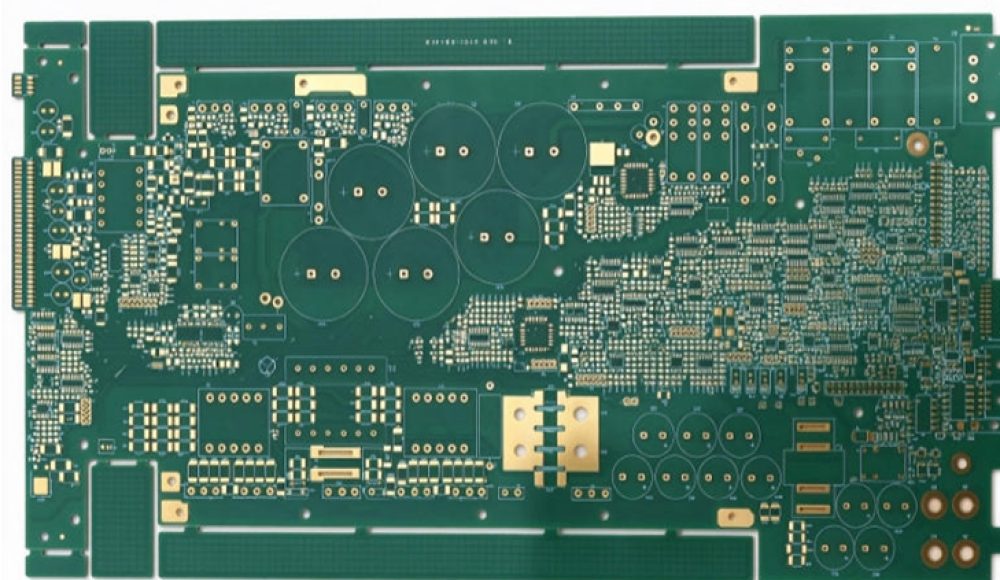
1. Why Material Selection Matters in High-Power PCB Manufacturing
Industrial power electronics, motor control systems, power supplies and energy management equipment place demanding requirements on printed circuit boards. These products may carry substantial current, generate considerable heat and operate through repeated temperature changes.
For these applications, PCB material selection is not simply a matter of choosing a standard FR-4 laminate. Engineers must consider thermal properties, copper thickness, mechanical stability and compatibility with the complete PCB manufacturing process.
Two technologies are particularly relevant: High Tg FR-4 laminates and Heavy Copper PCBs.
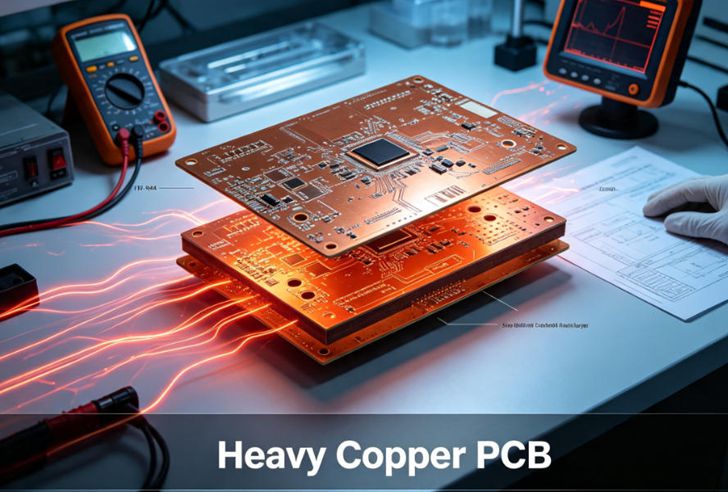
High Tg FR-4 materials are developed to provide improved thermal stability and dimensional performance compared with conventional FR-4 formulations. Heavy Copper PCBs use thicker copper layers to accommodate demanding current paths and selected thermal requirements.
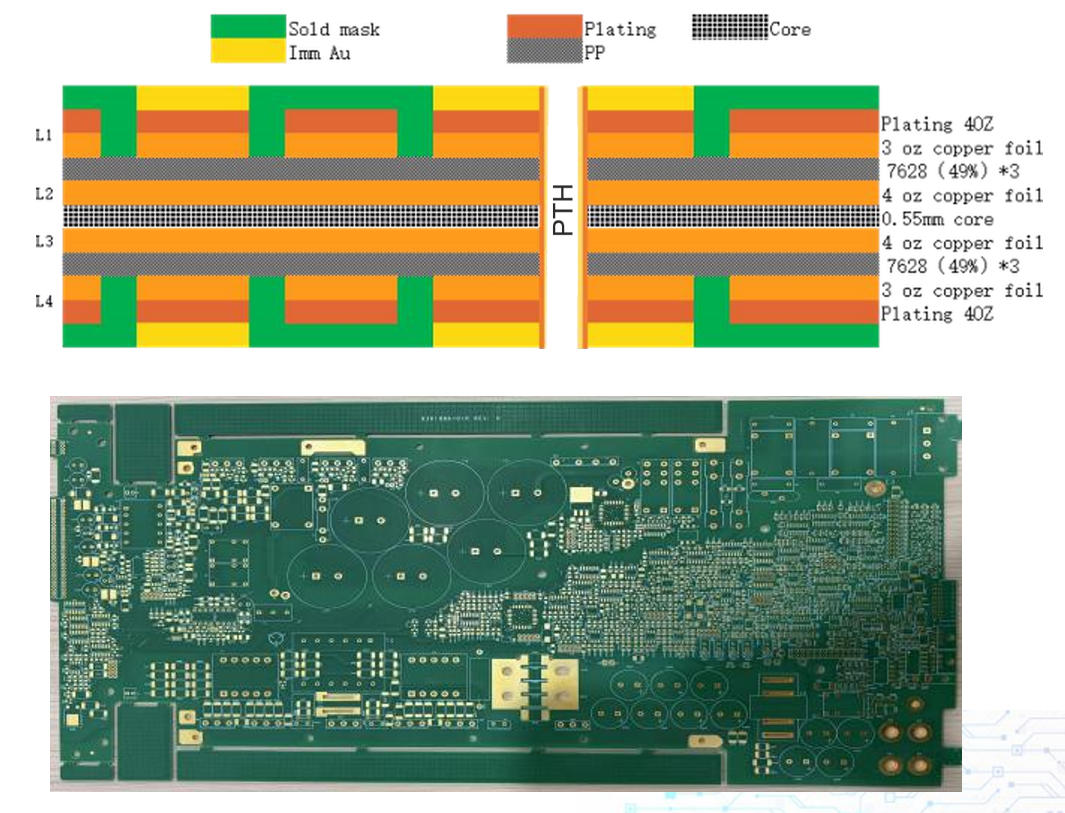
Combining these technologies can be beneficial for industrial power applications. However, the final performance depends on the complete material system, copper distribution, board construction and manufacturing process.
2. Understanding High Tg FR-4 in PCB Manufacturing
The term Tg refers to the glass transition temperature of a laminate. It describes the temperature region in which the resin system changes from a relatively rigid glassy state to a softer, more flexible state.
Above Tg, the material’s thermal expansion behavior changes, particularly along the Z-axis of the PCB.
This matters because excessive expansion through the board thickness can increase mechanical stress on plated-through holes and other interconnections during repeated heating and cooling.
Why Choose High Tg FR-4?
Compared with conventional FR-4 formulations, suitable High Tg FR-4 materials can offer:
- Improved dimensional stability at elevated temperatures
- Lower Z-axis expansion in relevant temperature ranges
- Better resistance to thermal stress during lead-free assembly
- Improved suitability for multilayer PCB constructions
- Greater thermal reliability when matched to the application
For example, Isola’s IS420 is a 170°C Tg FR-4 system with a reported decomposition temperature of 350°C. Its datasheet also provides Z-axis CTE and time-to-delamination data, illustrating why material selection should involve more than comparing Tg values alone.
Nevertheless, a higher Tg does not automatically mean that a PCB can operate continuously at that temperature. The actual operating limit depends on the entire laminate system, components, solder joints, insulation requirements and equipment environment.
Tg, Td and CTE: Three Properties Buyers Should Understand
When evaluating a High Tg FR-4 PCB, buyers should pay attention to three important properties.
Glass Transition Temperature (Tg)
Tg indicates the transition region of the resin system. It is useful for comparing laminate thermal behavior, but it should not be treated as the maximum continuous operating temperature.
Decomposition Temperature (Td)
Td indicates the temperature at which the laminate begins to experience significant thermal decomposition under a specified test method. It provides additional information about thermal resistance.
Coefficient of Thermal Expansion (CTE)
CTE describes how much a material expands or contracts as temperature changes. For multilayer PCBs, Z-axis CTE is especially important because it affects the mechanical stress experienced by plated-through holes.
These values should be reviewed together with the manufacturer’s material datasheet and the intended assembly profile.
3. Why Combine High Tg FR-4 with Heavy Copper PCB Technology?
High Tg FR-4 and Heavy Copper PCB technology address different aspects of PCB performance.
High Tg FR-4 focuses on the thermal and dimensional behavior of the substrate, while heavy copper focuses on the conductor structure.
Combining them can provide a practical solution for applications that require both stable multilayer construction and substantial current-carrying capability.
Supporting Industrial Power Circuits
Industrial motor drives, power conversion equipment and control power supplies may contain high-current paths alongside sensitive control circuits.
Heavy copper layers can provide larger conductor cross-sections, while High Tg FR-4 can help the substrate withstand demanding thermal processing and operating conditions.
The actual copper thickness and laminate grade must be selected according to the electrical load, temperature range and manufacturing requirements.
Improving Thermal and Mechanical Stability
Copper distributes heat along its conductor paths, while the laminate provides the structural foundation for the PCB.
A suitable High Tg FR-4 material may help maintain dimensional stability under repeated thermal exposure. Meanwhile, heavy copper can provide additional conductor cross-section and heat spreading in selected areas.
However, FR-4 is not a substitute for a dedicated heat sink or thermal management system. The complete heat path, including power components, thermal interfaces, airflow and enclosure design, must still be evaluated.
Supporting Multilayer Power and Control Integration
Some industrial boards combine high-current power circuits with control signals, feedback circuits and communication interfaces.
A multilayer construction can separate different circuit functions across layers. Heavy copper can be assigned to selected power layers, while other layers can accommodate control and signal routing.
This approach requires careful stackup planning to balance electrical requirements, dielectric thickness and lamination feasibility.
4. How to Select the Right High Tg FR-4 and Copper Combination
There is no single material combination suitable for every heavy copper application. Engineering teams should evaluate the following factors before finalizing the PCB specification.
Operating Temperature
Identify the expected ambient temperature, component operating temperatures and thermal cycling conditions. Do not select a laminate based only on the highest temperature appearing in a product specification.
Assembly Temperature Profile
Lead-free soldering can expose PCBs to relatively high temperatures. Review the number of reflow cycles, peak temperature, exposure duration and material time-to-delamination data.
Copper Weight
Determine the required copper thickness for each layer based on current, conductor geometry and acceptable temperature rise. A uniform heavy copper specification across every layer may not be necessary.
Multilayer Structure
Check the total layer count, core and prepreg selection, finished board thickness and copper distribution. The stackup must be compatible with the selected laminate and the fabricator’s process capabilities.
Electrical Requirements
For boards carrying both power and control signals, evaluate insulation spacing, conductor geometry, impedance requirements where applicable and the effects of copper thickness on routing.
5. Common Material Selection Mistakes
Even when High Tg FR-4 Heavy Copper PCB technology appears suitable, incomplete specifications can create unnecessary manufacturing risks.
Common mistakes include:
- Selecting materials by Tg alone without checking Td and Z-axis CTE
- Assuming a high Tg rating guarantees high thermal conductivity
- Specifying the same copper weight on every layer without evaluating actual current requirements
- Ignoring prepreg resin flow and filling requirements around thick copper features
- Overlooking the assembly reflow profile when choosing laminate materials
- Selecting a special laminate without checking availability and production lead time
To avoid these problems, customers should provide the fabricator with complete stackup information, material requirements, copper specifications and assembly conditions before production.
6. High Tg FR4 Heavy Copper PCB Manufacturing at Ring PCB
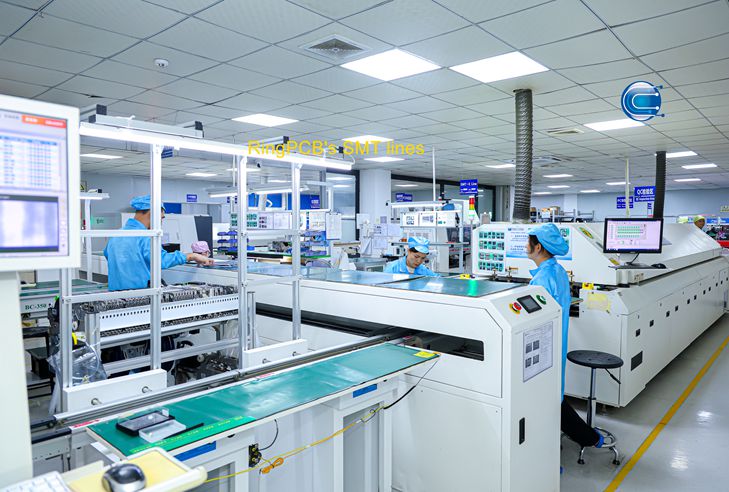
Ring PCB provides PCB fabrication services for industrial electronics and demanding power-related applications.
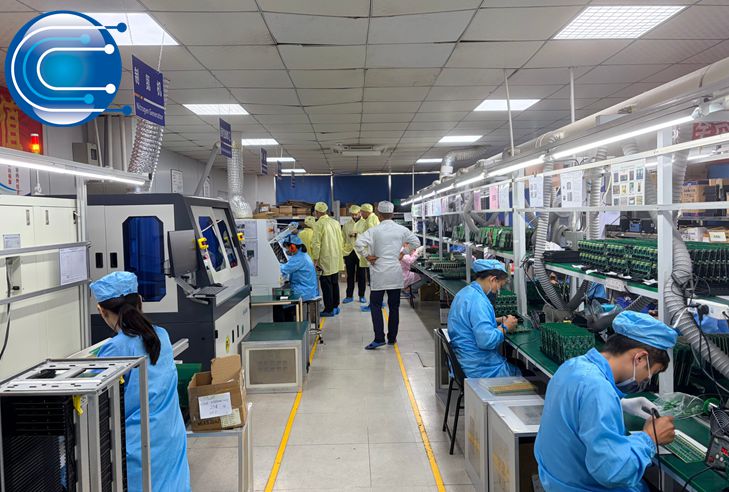
Established in 2008, Ring PCB operates a self-owned manufacturing facility covering more than 10,000 square meters. Its manufacturing capabilities include multilayer PCB fabrication, Heavy Copper PCB production and specialized PCB constructions.
Published process capabilities include:
- Up to 30 layers for mass production
- Up to 70 layers for sample projects
- Inner and outer copper up to 12 oz for mass production
- Copper up to 20 oz for sample projects
- Finished board thickness from 0.3–6.0 mm for mass production
- Finished board thickness from 0.2–10 mm for sample projects
High Tg FR-4 material selection and heavy copper construction are evaluated according to the required laminate grade, stackup, board dimensions, copper distribution and production conditions. Specific material availability and process feasibility should be confirmed during project review.
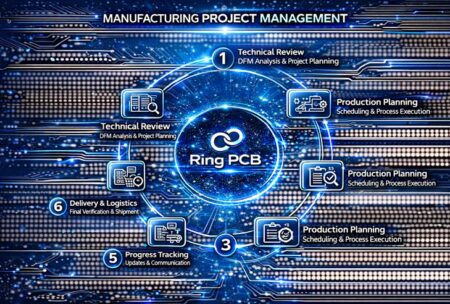
Customers can submit Gerber files, stackup specifications and technical requirements for manufacturing communication and feasibility evaluation.
If you are sourcing a High Tg FR4 Heavy Copper PCB manufacturer for industrial power electronics or other demanding applications, contact Ring PCB at rfq@ringpcb.com.
References
- Isola Group. IS420 High Performance Laminate and Prepreg.
- Isola Group. Thermal Reliability Laminates and Prepreg.
- IPC. IPC-4101: Specification for Base Materials for Rigid and Multilayer Printed Boards.
- IPC. IPC-2152: Standard for Determining Current-Carrying Capacity in Printed Board Design.