Choosing a PCB manufacturer is a purchasing decision with long-term consequences for product quality, engineering efficiency, and supply continuity. Although unit price is easy to compare, it does not reveal the full cost of manufacturing a printed circuit board.
A lower quotation may exclude important inspection requirements, use different material assumptions, or require additional coordination between fabrication and assembly suppliers.
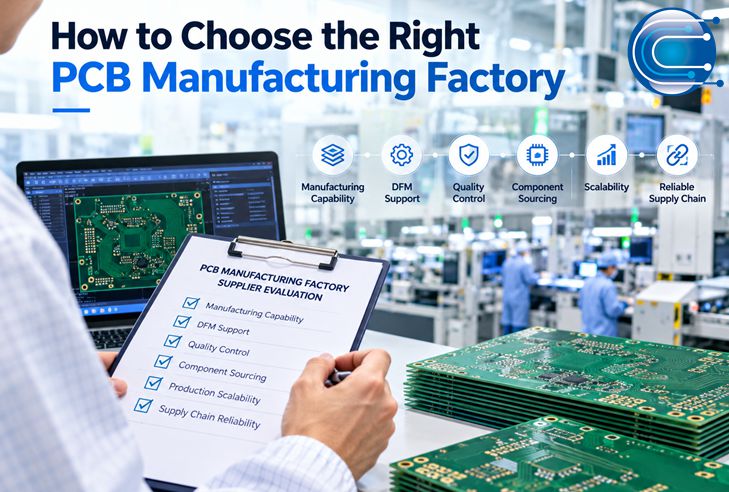
For OEM purchasing teams, a more effective approach is to compare technical suitability, documentation, quality processes, communication, and the total cost of delivering usable boards.
Start With Technical Fit, Not a General Capability List
PCB manufacturers may specialize in different technologies, production quantities, and levels of complexity.
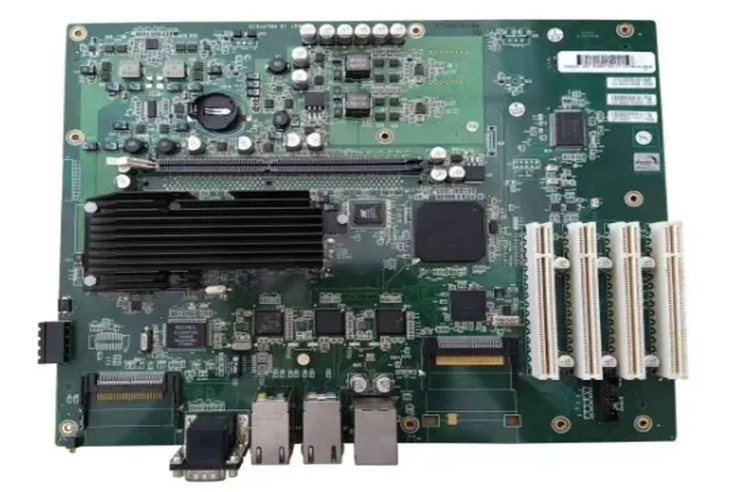
A supplier suitable for a standard two-layer control board may not be the best choice for an HDI design, heavy copper power board, or high-layer-count multilayer PCB.
Before requesting quotations, identify the board’s essential requirements.
These may include layer count, finished thickness, copper weight, minimum trace and space, material type, surface finish, impedance control, and special via structures.
Then ask each manufacturer to evaluate the actual design against its manufacturing capabilities.
This approach helps avoid comparing quotations that appear similar but are based on different technical assumptions.
Evaluate Engineering Review and DFM Communication
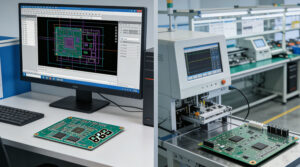
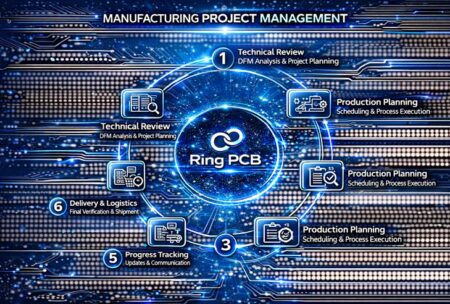
Design for Manufacturability (DFM) review can identify production concerns before a board enters fabrication.
For example, a PCB manufacturer may flag insufficient annular rings, difficult-to-etch heavy copper geometries, or an HDI via structure that requires clarification.
However, a useful engineering review should do more than list potential problems. It should explain the manufacturing concern and identify the information or design decision needed to resolve it.

OEMs should also establish who approves any proposed change.
Electrical requirements, mechanical interfaces, material specifications, and other customer-controlled features should not be changed without appropriate authorization.
Clear communication at this stage can reduce repeated questions, engineering delays, and avoidable manufacturing rework.
Compare the Complete Quotation Scope
A fair quotation comparison requires consistent specifications.
One supplier may quote bare PCB fabrication only, while another may include additional testing, special materials, or packaging requirements.
Even when two quotations cover fabrication alone, they may assume different copper weights, surface finishes, tolerances, or inspection levels.
Purchasing teams should therefore compare the same technical package and request clarification of any exclusions.
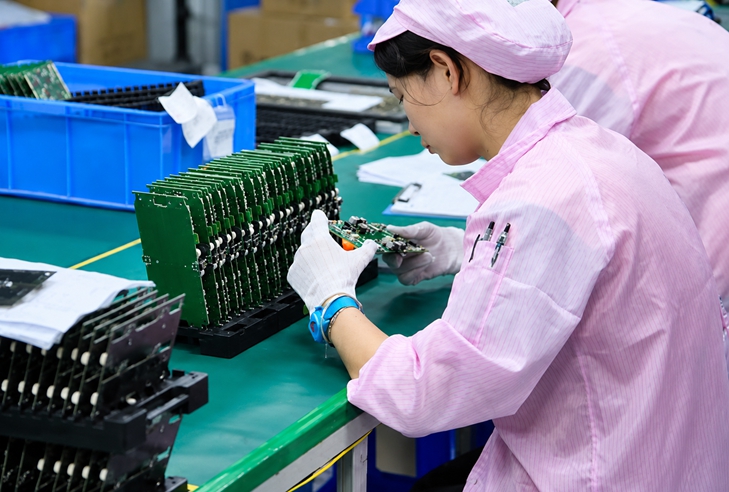
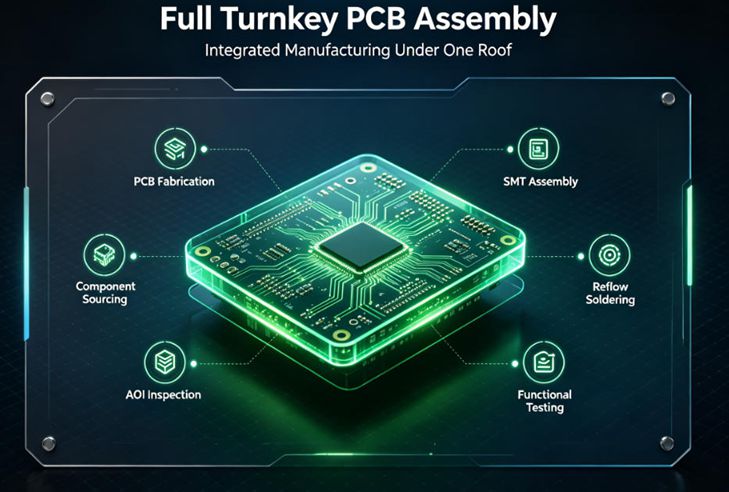
For PCBA projects, the comparison should also account for component sourcing, stencil preparation, SMT and through-hole assembly, inspection, and any agreed functional testing.
A transparent scope makes it easier to understand the real cost of the finished product.
Consider Quality Records and Traceability
Quality management is particularly important when PCBs are used in industrial, medical, automotive, or other applications with specific customer requirements.
OEMs should clarify how the manufacturer controls fabrication revisions, material specifications, inspection records, and nonconforming products.
Traceability requirements vary by industry and contract. If a project requires material batch records, specific test reports, or defined retention periods, these expectations should be agreed upon before production.
Certifications can provide useful evidence of a supplier’s management systems, but buyers should verify the issuing body, validity, scope, and certified entity.
A certification should not automatically be interpreted as proof that every product meets every possible application-specific requirement.
Assess Component Sourcing and Supply Coordination
When PCB assembly is required, component sourcing can affect both cost and delivery schedules.
The BOM should identify approved manufacturer part numbers, quantities, and any restrictions on substitute components.
Critical or long-lead-time parts should be reviewed early so that procurement risks can be identified before the production release.
If alternatives are necessary, the customer should approve them according to the project’s electrical, mechanical, and regulatory requirements.
Working with a manufacturer that coordinates PCB fabrication and assembly can simplify communication between these stages.
However, OEMs should still confirm component sourcing responsibilities, material verification, and the treatment of shortages or substitutions in the quotation.
Look Beyond the Initial Prototype
A supplier’s suitability should also be considered in the context of future production.
A project may progress from prototype evaluation to design revisions, qualification builds, and repeat orders.
During this transition, controlled documentation becomes essential. Approved fabrication data, BOM revisions, and inspection criteria should remain consistent with the released product definition.
Customers should ask how engineering changes are managed and how updated files are distinguished from earlier revisions.
They should also confirm whether the supplier can support the required production quantities and technology as the project develops.
This helps reduce the risk of changing suppliers simply because the original manufacturing arrangement was not evaluated for later stages.
Evaluate Lead Time Realistically
Delivery time depends on the PCB technology, material availability, order quantity, process complexity, and required inspection.
A standard multilayer board may have different manufacturing needs from an HDI board with sequential lamination or a heavy copper board requiring specialized etching.
Purchasing teams should distinguish fabrication lead time from assembly, testing, shipment, and final delivery.
They should also clarify when the quoted schedule begins, such as after technical approval or material confirmation.
A realistic delivery commitment is more useful than a short but ambiguous lead-time claim.
How Ring PCB Supports OEM Manufacturing Projects
Established in 2008, Ring PCB provides PCB fabrication, component sourcing, SMT and through-hole assembly, inspection, and full-turnkey PCBA services. Its published capabilities include multilayer PCB manufacturing up to 62 layers.

The company also supports HDI, heavy copper, and other specialized PCB requirements, subject to review of the specific construction and process specifications.
For qualifying projects, Ring PCB offers PCB prototyping in as little as 3 days and PCB/PCBA production schedules as short as 7 days. Actual schedules depend on the board design, materials, order scope, and agreed requirements.
Ring PCB reports UL, ISO 9001, ISO 14001, ISO 13485, and IATF 16949 certifications within its quality and management framework. OEM customers should confirm which certification scope and product-specific requirements apply to their projects.
When comparing PCB manufacturers, evaluate the technical fit, quotation scope, quality documentation, engineering communication, and production continuity together. These factors provide a more complete basis for selecting a manufacturing partner than unit price alone.
To request a project-specific quotation, send your Gerber files, stackup, BOM if assembly is required, quantity, and target schedule to rfq@ringpcb.com.
References
- IPC. IPC-6012, Qualification and Performance Specification for Rigid Printed Boards.
- IPC. IPC-2221, Generic Standard on Printed Board Design.
- Ring PCB. https://www.ringpcb.com/