For OEMs purchasing electronic assemblies, consistent quality is just as important as manufacturing capability. A prototype may pass initial inspection, but maintaining the same quality across repeated production batches requires a controlled manufacturing process.
This is particularly important for industrial control electronics, communication equipment and other products expected to operate reliably over extended periods. Soldering defects, component placement errors, incorrect materials or uncontrolled production changes can lead to rework, delivery delays and field failures.
A reliable PCBA manufacturing process therefore needs more than a final visual check. It requires quality planning, process monitoring, appropriate inspection methods and clear communication between the customer and manufacturer.
1. Quality Control Begins Before Production
The first opportunity to prevent manufacturing problems is before the PCB enters production.
At this stage, the manufacturer needs to understand the customer’s supplied production documents and technical requirements. These may include Gerber files, BOM data, assembly drawings, PCB specifications and inspection criteria.
Several details deserve particular attention:
Document revision: Confirm that the latest Gerber files, BOM and assembly drawings are being used. Conflicting revisions can result in incorrect boards or component placement.
BOM accuracy: Manufacturer part numbers, package information and quantities should be checked to reduce procurement and assembly errors.
PCB specifications: Layer count, material, copper weight, board thickness, surface finish and other manufacturing requirements should be clearly identified.
Assembly information: Component orientation, polarity, connector positions and special assembly instructions should be available where applicable.
Inspection requirements: The customer and manufacturer should agree on relevant acceptance criteria and any additional inspection or testing requirements.
This preparation helps establish a common manufacturing baseline before materials are purchased or production begins.
2. PCB Fabrication Quality: Building a Reliable Foundation
PCBA quality depends partly on the quality of the bare PCB. Even a well-controlled assembly line cannot fully compensate for a PCB that does not meet the specified construction requirements.
For multilayer boards, important fabrication controls include:
- Inner-layer pattern accuracy and registration
- Lamination quality and layer alignment
- Drilling accuracy and hole-wall preparation
- Copper plating and plated through-hole integrity
- Solder mask registration and coverage
- Surface finish quality
- Board dimensions and final inspection
For industrial applications, material selection and thermal performance may also affect long-term reliability. The PCB construction should be appropriate for the operating environment and the expected assembly process.
Where the customer specifies FR-4, the required material grade should be identified clearly. Tg, CTE and other laminate properties may be relevant depending on the board’s layer count, thermal exposure and operating conditions.
A manufacturing review should identify any unclear specifications before production rather than relying on assumptions.
3. SMT Assembly: Controlling the Critical Process Steps
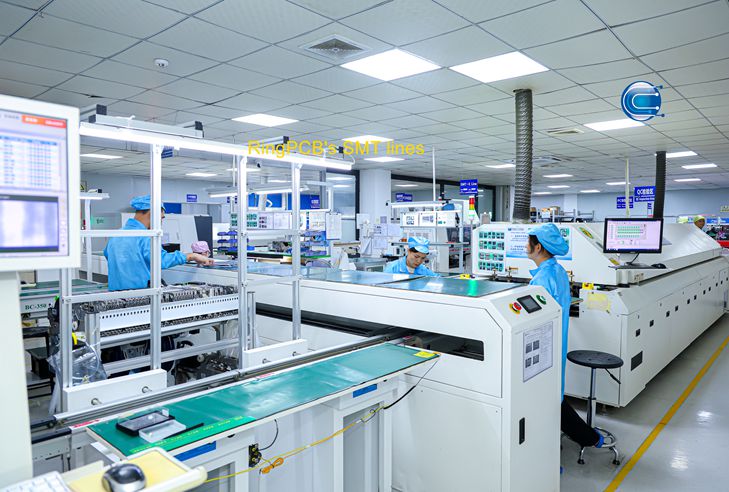
Surface Mount Technology (SMT) is widely used in modern PCBA manufacturing because it supports compact layouts, high component density and efficient automated assembly.
However, reliable SMT production depends on controlling several connected process steps.
Solder Paste Printing
Solder paste is applied to PCB pads through a stencil. The amount and position of the deposited paste influence the quality of the final solder joints.
Potential problems include insufficient paste, excessive paste, bridging and inconsistent deposits. Solder Paste Inspection (SPI), where used, helps identify printing issues before components are placed.
Component Placement
Pick-and-place equipment positions components on the solder paste deposits. Placement accuracy is important for fine-pitch components, small packages and densely populated boards.
The production setup should use the correct component data, feeder information, orientation and placement program. Incorrect polarity or package selection can lead to assembly defects even when the placement equipment is operating normally.
Reflow Soldering
The PCB passes through a reflow oven, where the solder paste is heated according to a defined temperature profile.
The profile should be suitable for the solder paste, PCB construction and components. Excessive or insufficient thermal exposure can contribute to poor solder joints or component-related issues.
For boards with different component sizes and thermal characteristics, process parameters should be evaluated carefully rather than applying one profile without consideration of the assembly.
4. Through-Hole Assembly and Mixed-Technology Boards
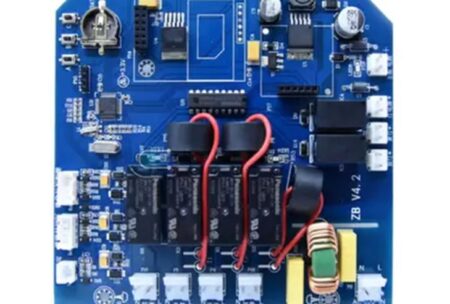
Many industrial control boards combine SMT components with through-hole parts. Connectors, terminals, transformers and certain power components may use through-hole mounting because of their mechanical or electrical requirements.
Depending on the assembly design, through-hole soldering may involve manual soldering, wave soldering or selective soldering.
Important process considerations include:
- Correct component insertion and orientation
- Proper lead length and hole fit
- Solder coverage and joint formation
- Thermal exposure of components and PCB
- Cleanliness and inspection access
Mixed-technology boards require coordination between SMT and through-hole operations. The assembly sequence should consider component height, soldering method and the risk of affecting previously assembled parts.
5. Inspection Methods: Selecting the Right Combination
No single inspection method can identify every possible PCBA defect. An effective quality plan uses inspection methods that match the board structure, component packages and customer requirements.
Automated Optical Inspection (AOI)
AOI uses cameras and image processing to examine visible assembly features. It can help identify missing components, incorrect polarity, placement errors and certain soldering defects. Its effectiveness depends on inspection programming, component visibility and process setup.
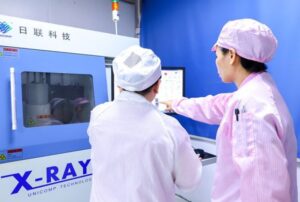
X-ray Inspection
X-ray inspection can help evaluate hidden solder joints that cannot be seen from the board surface. It is particularly useful for certain BGA and bottom-terminated component packages. However, X-ray is not a substitute for every other inspection method.
First Article Inspection (FAI)
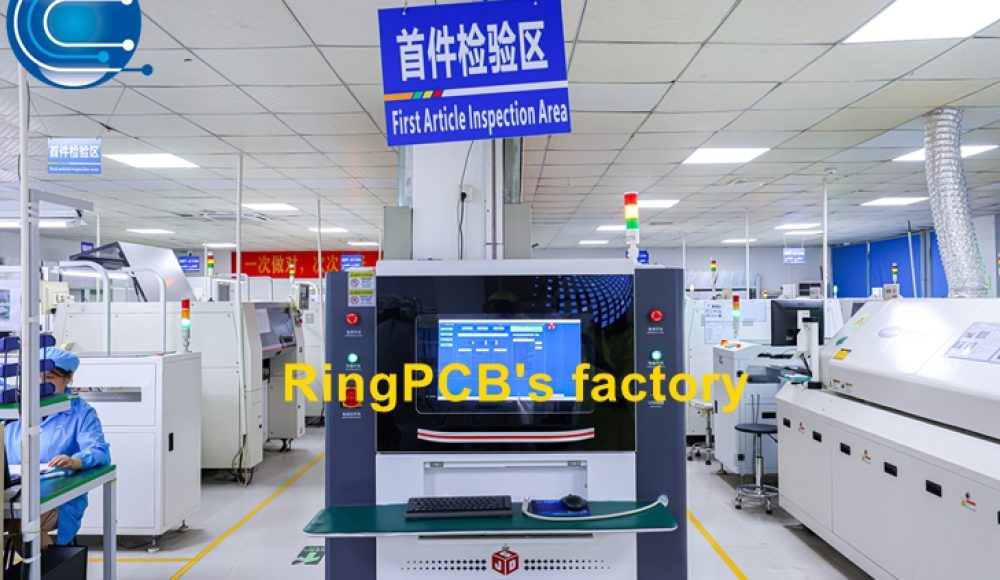
FAI checks the initial production output against the agreed specifications and documentation. It provides an opportunity to identify issues before proceeding with a larger production quantity.
Electrical Testing
Where specified, electrical testing can help verify continuity, isolation or other electrical characteristics of the assembly.
Functional Testing
Functional testing evaluates whether the assembled board performs defined functions under specified test conditions. Test fixtures, test programs and acceptance limits need to be agreed upon as part of the project scope.
IPC-A-610 is a commonly used reference for electronic assembly acceptability. Buyers should confirm the applicable class and any additional customer-specific criteria rather than assuming that one inspection method or standard covers every product requirement.
6. First Article Inspection: An Important Step Before Volume Production
First Article Inspection is particularly valuable when introducing a new PCBA, changing a manufacturing process or starting a new production run.
It provides an early opportunity to verify whether the assembled product matches the agreed requirements.
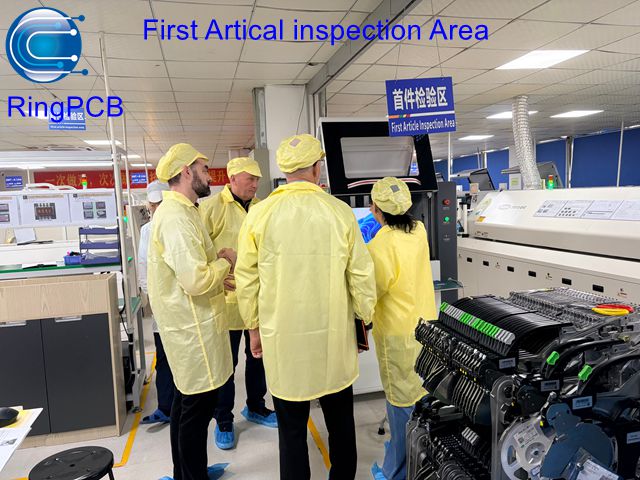
A typical FAI review may include:
- PCB dimensions and construction
- Component part numbers and placement
- Polarity and orientation
- Soldering quality
- Assembly workmanship
- Relevant inspection and test results
- Documentation and revision consistency
The exact inspection scope depends on the product and customer requirements.
FAI should not be treated as a guarantee that every future production unit will be defect-free. Instead, it is one part of a broader quality system that also needs process control, material management and ongoing inspection.
7. Maintaining Quality During Mass Production
Once a product moves into mass production, consistency becomes a key concern. Changes in materials, component batches, production settings or document revisions can affect the final assembly.
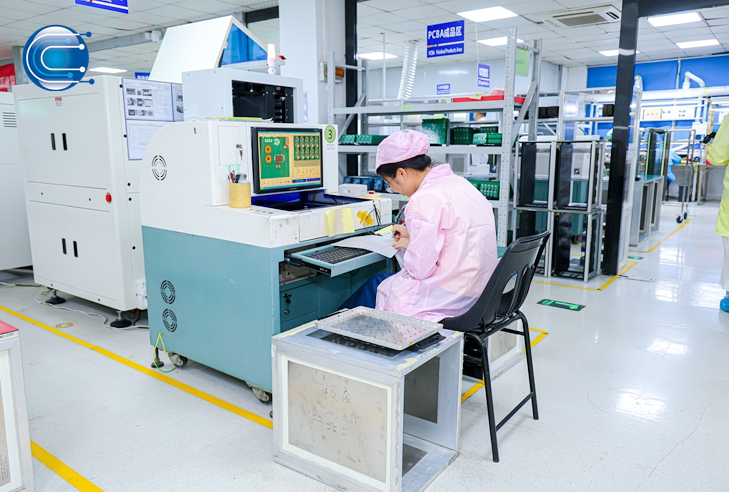
To reduce these risks, OEMs and PCBA manufacturers should maintain clear controls for:
Material management: Verify that components and PCB materials meet the agreed specifications.
Revision control: Use approved production documents and communicate changes before implementation.
Process monitoring: Maintain appropriate assembly parameters and inspection criteria.
Nonconformance handling: Record and evaluate defects, determine corrective actions and verify whether the issue has been resolved.
Repeat-order consistency: Keep the relevant specifications and approved material information consistent across production batches.
For long-lifecycle industrial products, these practices are especially important because replacement boards and repeat orders may be required years after the first production run.
8. How Digital Manufacturing Is Influencing Quality Management
Quality control is also evolving as manufacturers invest in automation and production data.
Deloitte’s 2026 Manufacturing Industry Outlook reports that 80% of surveyed manufacturing executives planned to allocate at least 20% of their improvement budgets to smart manufacturing initiatives. The report also identifies digital tools, analytics and AI-enabled capabilities as important areas of manufacturing development.
In electronics manufacturing, digital production information can help connect equipment data, inspection results and process records. When implemented appropriately, these systems may improve visibility and help manufacturers identify process variations earlier.
However, digital tools do not replace sound manufacturing fundamentals. Accurate production documents, trained personnel, suitable equipment and clearly defined acceptance criteria remain essential.
For customers, the practical question is whether a supplier’s inspection and quality processes are appropriate for the product, consistently applied and clearly communicated.
PCBA Quality and Manufacturing Support from Ring PCB
Ring PCB provides PCB fabrication and PCBA manufacturing services, including component sourcing, SMT assembly, through-hole assembly and production quality inspection.
The company operates a 10,000-square-meter company-owned factory and has advanced first article inspection equipment to support production verification. Its PCB manufacturing capability covers multilayer boards with up to 62 layers.
For suitable projects, Ring PCB offers PCB prototyping in as little as 72 hours. Production schedules depend on board complexity, material availability, order quantity and confirmed technical requirements.
By working from customer-provided Gerber files, BOM data and relevant specifications, Ring PCB can discuss the manufacturing scope and quality requirements for each project.
If you are planning a new PCBA project or looking for a manufacturing partner for repeat production, contact Ring PCB at rfq@ringpcb.com.
References and Further Reading:
- IPC — IPC-A-610, Acceptability of Electronic Assemblies
- Deloitte — 2026 Manufacturing Industry Outlook
- IPC — Technical resources on PCB materials and manufacturing