Demand for high-power electronic systems is expanding across data centers, industrial automation, telecommunications, renewable energy, and electric mobility. As these applications require greater power capacity and higher operating efficiency, manufacturers must scale production without losing control of component supply, assembly quality, or delivery schedules.
For high power supply manufacturers, scaling production is not simply a matter of adding more assembly capacity. Power supply PCBA programs often involve specialized semiconductors, magnetic components, high-current connectors, and multilayer or heavy-copper circuit boards. A delay in any critical material can interrupt the entire production plan.
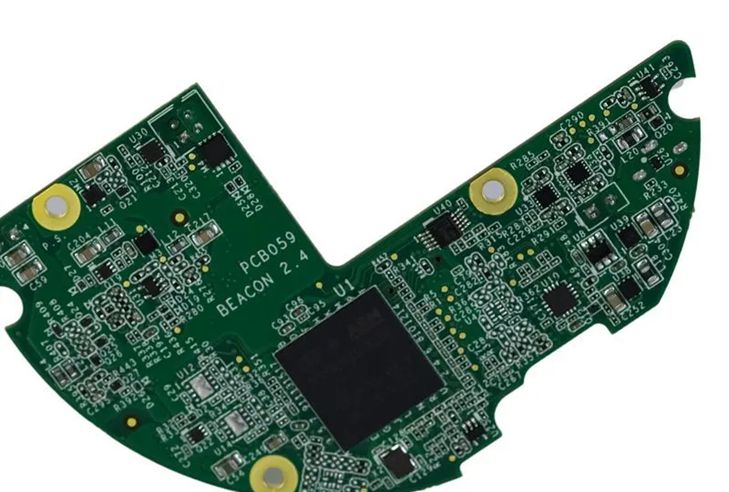
Full turnkey PCBA solutions offer one way to coordinate PCB fabrication, component sourcing, and assembly under an integrated manufacturing arrangement. When properly managed, this approach can help OEMs improve purchasing efficiency, reduce supplier coordination work, and establish a more predictable path from prototype to volume production.
1. Why Demand for High Power Supply Manufacturing Is Growing
The expansion of AI computing and data-center infrastructure is creating additional demand for power conversion equipment.
The International Energy Agency’s 2025 Energy and AI analysis projected that electricity generation to supply data centers could rise from approximately 460 TWh in 2024 to more than 1,000 TWh in 2030. Its later analysis estimated data-center electricity consumption at around 485 TWh in 2025, with the figure potentially reaching approximately 950 TWh by 2030.
These projections illustrate the scale of the energy infrastructure challenge. Data centers require power distribution, conversion, backup systems, and thermal management. At the same time, industrial electrification, renewable energy systems, and EV charging continue to create demand for reliable power electronics.
For PCBA manufacturers, this trend can translate into more complex boards, larger component requirements, and higher expectations for supply-chain responsiveness.
2. Why Scaling Power Supply Production Is Difficult
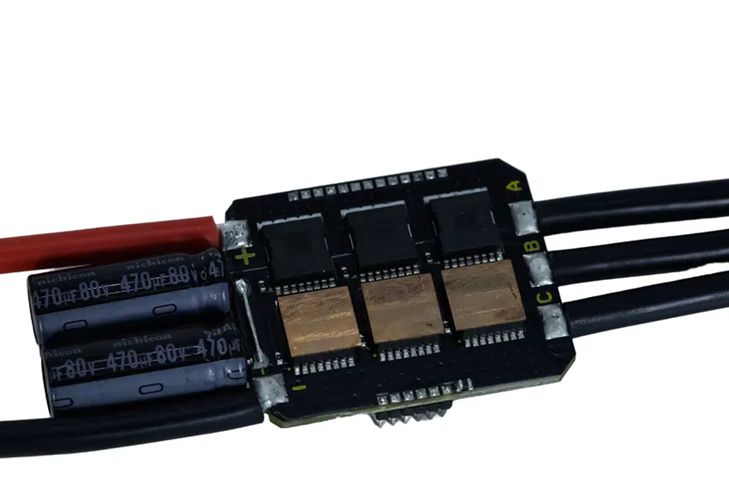
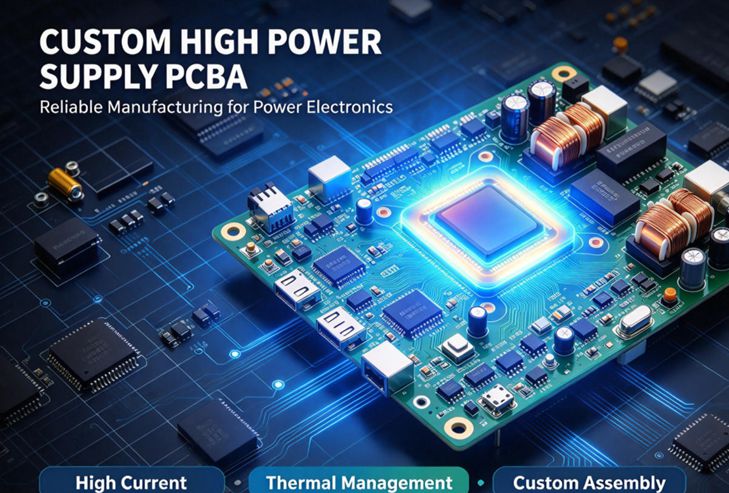
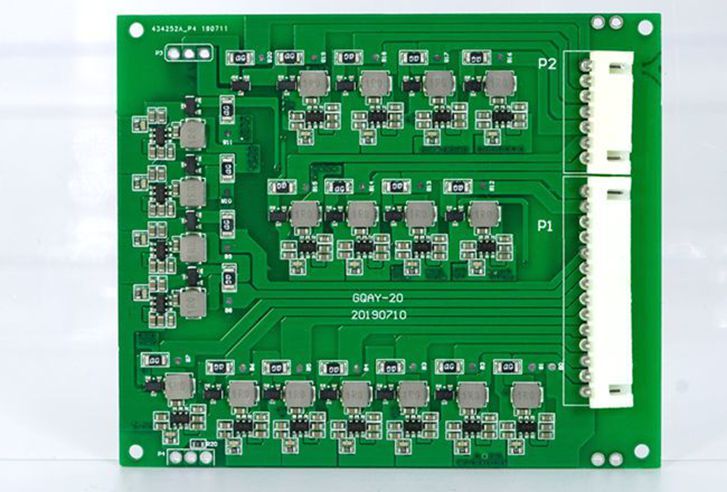
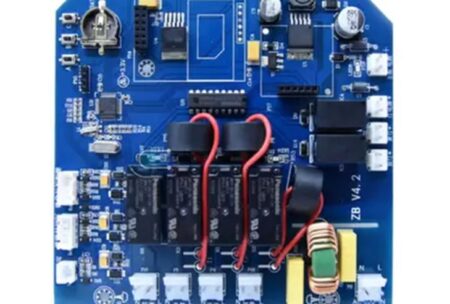
A high-power supply PCBA may contain switching controllers, MOSFETs, IGBTs, SiC or GaN devices, transformers, inductors, capacitors, rectifiers, sensors, and protection circuits.
These components do not always share the same sourcing conditions or assembly requirements.
Several challenges can emerge as production volume increases.
Specialized Component Availability
Power semiconductors and magnetic components may have specific manufacturers, package types, voltage ratings, and thermal characteristics. A shortage of one critical part can stop the assembly of an otherwise complete board.
Material Cost Fluctuations
Component prices, copper costs, logistics, and exchange rates can affect the overall PCBA budget. Buyers need to understand the cost structure rather than comparing assembly prices alone.
Production Capacity
Prototype assembly and mass production require different planning. A process suitable for a small engineering build may need further validation before it can support repeatable high-volume production.
Quality Consistency
As output increases, material control, placement accuracy, soldering processes, and inspection planning must remain consistent.
Consequently, production scaling requires coordination across procurement, PCB fabrication, assembly, and quality management.
3. How Full Turnkey PCBA Supports Production Scaling
In a full turnkey arrangement, the manufacturing partner manages the agreed PCB and component procurement activities as well as the assembly process.
This can reduce the number of separate supplier interfaces that the OEM needs to manage.
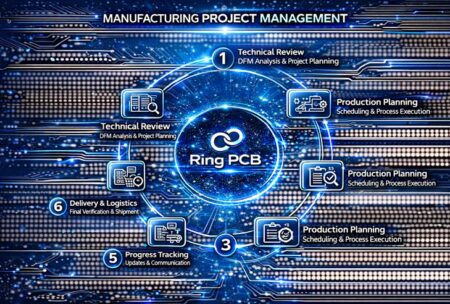
A typical workflow includes:
- Reviewing Gerber files, BOM data, assembly drawings, and technical requirements.
- Evaluating PCB fabrication specifications and manufacturing feasibility.
- Checking component availability and procurement lead times.
- Purchasing approved components according to the agreed BOM.
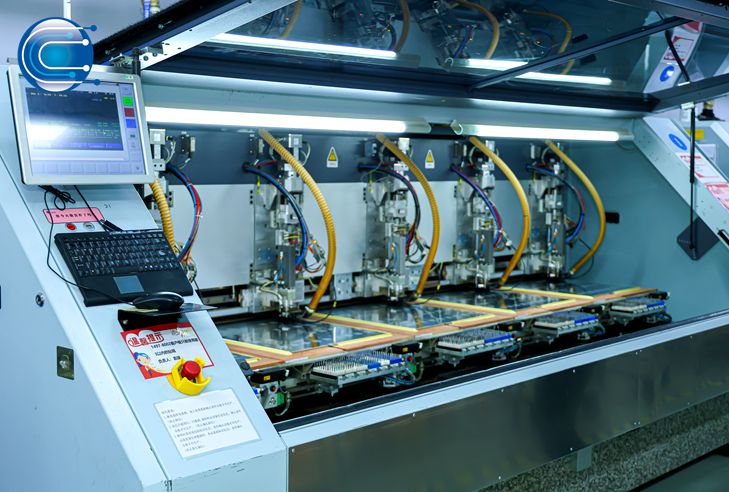
- Coordinating SMT and through-hole assembly.
- Performing the agreed inspection activities.
- Preparing completed assemblies for delivery.
The advantage is not that every risk disappears. Rather, responsibility for the agreed manufacturing scope is coordinated through a more unified process.
For OEMs scaling production, this can make it easier to track material readiness, identify potential bottlenecks, and align PCB and component delivery with assembly schedules.
4. Building a More Resilient Component Procurement Strategy
Component sourcing is often one of the most important considerations in high-power PCBA production.
A robust procurement process should begin before the purchase order is released.
Review the BOM Early
The BOM should include manufacturer part numbers, quantities, package information, and approved manufacturer details wherever applicable. Incomplete descriptions can create sourcing errors or quotation delays.
Identify Long-Lead-Time Components
Power semiconductors, transformers, inductors, and specialized capacitors may require longer procurement planning. Identifying these items early helps the OEM make more realistic production commitments.
Establish Approved Alternatives
An alternative component should be evaluated against electrical ratings, package dimensions, thermal characteristics, and relevant qualification requirements. Any substitution must receive customer approval before implementation.
Define Material Responsibility
The OEM and supplier should agree on who purchases each component, who approves vendors, and how excess or unused materials are handled.
Plan for Product Lifecycle Changes
High-power products may remain in production for years. Manufacturers should monitor component lifecycle status and establish a process for reviewing obsolescence risks.
A turnkey PCBA partner can coordinate these activities within the agreed sourcing scope, but the customer should retain control over critical design decisions and component approvals.
5. Coordinating PCB Fabrication and Assembly Capacity
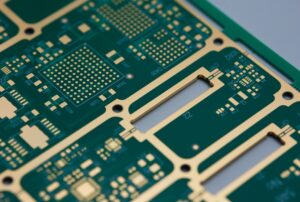
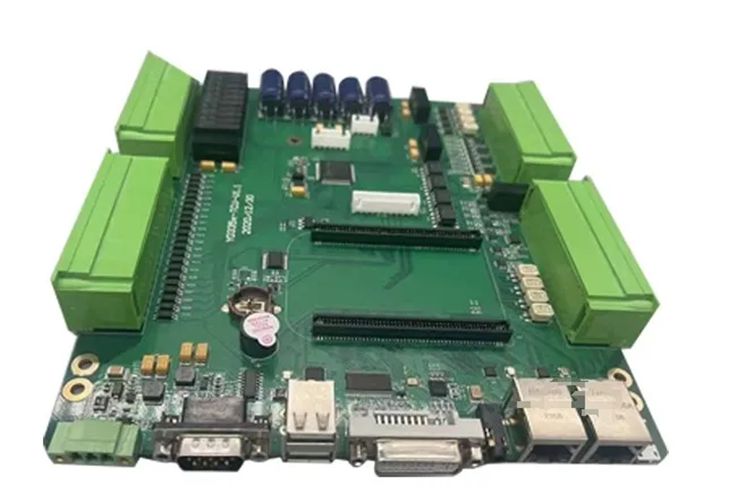
High-power supply boards may require multilayer construction, heavier copper, larger board dimensions, or specific finished thicknesses.
These requirements should be reviewed together with the assembly plan.
For example, heavier copper can support higher-current PCB structures, but it may introduce additional fabrication considerations involving etching, plating, finished hole dimensions, and trace geometry. Large thermal-mass components can also affect soldering conditions.
If PCB fabrication and assembly are scheduled independently, material mismatches or delivery gaps may create avoidable delays.
An integrated manufacturing plan should therefore align:
- PCB stackup and copper specifications
- Board dimensions and finished thickness
- Component package and footprint data
- SMT and through-hole process requirements
- Procurement lead times
- Inspection and acceptance criteria
- Prototype and production quantities
This coordination is especially important when a product moves from engineering samples to repeat production.
6. Moving from Prototype to Volume Production
A successful prototype is an important milestone, but it does not automatically prove that a board is ready for mass production.
During the NPI stage, the manufacturer and customer should review assembly documentation, component availability, process compatibility, and inspection requirements.
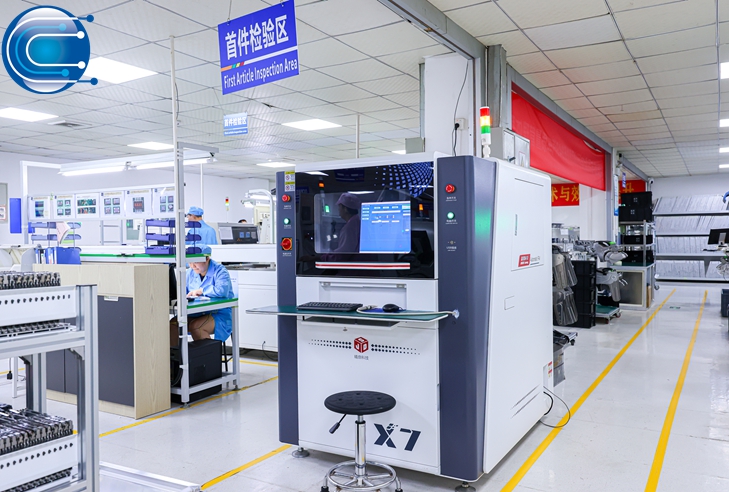
First Article Inspection can help verify that an initial build conforms to the agreed documentation and specifications. The scope of FAI should be defined in advance, including the characteristics to be checked and the records to be provided.
Before scaling up, the OEM should confirm that:
- The PCB revision and BOM are controlled.
- Approved component sources are established.
- Any alternative parts have been authorized.
- Assembly instructions are complete.
- Inspection criteria are agreed.
- Material planning supports the expected order quantity.
- Engineering changes follow a documented approval process.
A staged production ramp can also help identify issues before the full target volume is released.
7. Quality Control for High Power Supply PCBA
High-power assemblies may operate under significant electrical and thermal loads. Therefore, assembly workmanship and process consistency deserve careful attention.
The quality plan may include incoming material inspection, visual inspection, automated optical inspection, X-ray inspection for selected hidden joints, and customer-defined electrical or functional tests.
The exact inspection scope depends on component packages, board design, product risk, and supplier capability.
IPC J-STD-001 provides requirements for soldered electronic assemblies, while IPC-A-610 provides workmanship acceptance criteria. The applicable class and revision should be agreed before production.
It is also important to distinguish assembly inspection from product validation. A board may meet its specified assembly workmanship criteria, while system-level efficiency, temperature rise, protection behavior, and electrical performance require separate validation by the product manufacturer.
8. How to Evaluate a Turnkey PCBA Supplier
When choosing a supplier for high-power production, OEMs should evaluate the complete manufacturing workflow.
Key questions include:
Can the supplier support the required PCB construction? Review layer count, copper weight, board size, thickness, and other process limits.
Can it manage the required component sourcing scope? Clarify approved sources, procurement responsibility, and substitution procedures.
Does it support both SMT and through-hole assembly? High-power boards may use a mixture of small control components and large power connections.
Can it support prototype and repeat production? Confirm how NPI, FAI, and production planning are handled.
Are inspection requirements clearly defined? Review available inspection methods and agree on acceptance criteria.
Is communication structured? Establish how the supplier reports shortages, engineering questions, and schedule changes.
The best partner is one whose actual manufacturing capabilities match the product requirements and whose process can support the intended production volume.
Scaling High Power Supply PCBA with Ring PCB
Ring PCB provides PCB fabrication, component sourcing, SMT assembly, through-hole assembly, and production quality inspection. Its manufacturing resources include five automated SMT lines and a company-owned factory covering more than 10,000 square meters.
For high-power supply projects, Ring PCB’s published process capabilities include up to 12 oz inner and outer copper for mass production and up to 20 oz for samples. Its multilayer PCB capability is listed at up to 30 layers for mass production and 70 layers for samples. Actual feasibility depends on the complete board specification and project requirements.
Customers can submit Gerber files, BOM data, assembly drawings, and technical specifications for manufacturing review. Ring PCB can discuss component sourcing, PCB fabrication, and assembly requirements before confirming order acceptance.
To discuss production planning for your high power supply PCBA, contact rfq@ringpcb.com.
References and Further Reading
- International Energy Agency — Energy and AI (2025).
- IEA — Key Questions on Energy and AI (2026).
- IPC — IPC J-STD-001: Requirements for Soldered Electrical and Electronic Assemblies.
- IPC — IPC-A-610: Acceptability of Electronic Assemblies.
- IPC — IPC-2152: Standard for Determining Current-Carrying Capacity in Printed Board Design.
- EMA Design Automation — PCB Electronics Supply Chain 2025: Status and Trends.