For many OEMs, the greatest challenge in electronics manufacturing is not producing the PCB itself. It is coordinating everything that must happen around it.
A typical product may require PCB fabrication, dozens or hundreds of components, stencil preparation, SMT assembly, through-hole processing, programming, inspection, functional testing, mechanical integration, and international logistics. When these activities are divided among several suppliers, every handoff becomes another point where time, information, cost, or accountability can be lost.
This is why full-turnkey electronics manufacturing is becoming an important sourcing model for companies that want to simplify production without losing visibility over quality.

What Is Full-Turnkey Electronics Manufacturing?
In a full-turnkey model, one manufacturing partner manages most or all of the production chain.
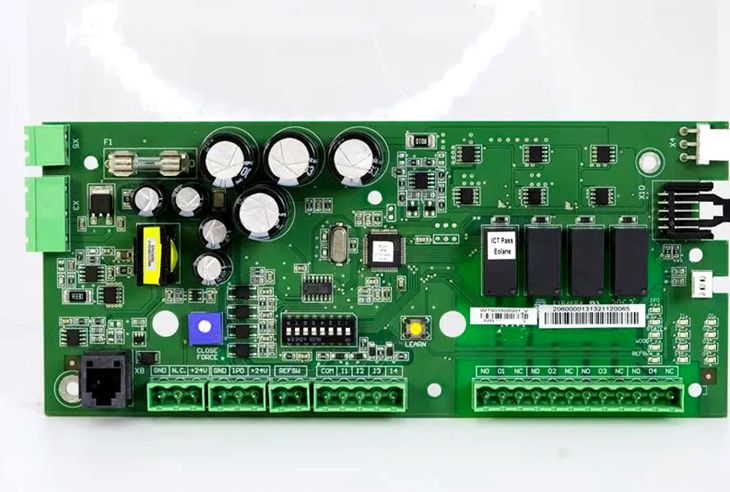
The customer typically provides manufacturing data such as Gerber or ODB++ files, BOM, centroid or pick-and-place files, assembly drawings, test requirements, and product specifications. The manufacturer then coordinates PCB fabrication, component sourcing, assembly, inspection, testing, and other agreed services.
The objective is not merely to put multiple services on one quotation. A successful turnkey model creates a connected production flow in which engineering, procurement, fabrication, assembly, and quality teams work from the same project requirements.
Fewer Supplier Handoffs Can Mean Fewer Production Risks
Consider a conventional fragmented supply chain.
One company fabricates the PCB. Another purchases components. A third performs SMT assembly. A fourth handles functional testing. If a board fails during assembly, the OEM may need to determine whether the cause came from PCB fabrication, component quality, stencil design, soldering, handling, or the original design.
Meanwhile, production can stop while several suppliers exchange files and responsibility.
A full-turnkey structure can simplify this process because manufacturing information and problem solving are more centralized.
This becomes increasingly valuable as electronic systems become more complex. IPC has highlighted challenges spanning design, materials, PCBA, thermal management, reliability, and metrology as advanced packaging moves into board-level systems.
Total Cost Matters More Than Unit Price
B2B buyers naturally compare quotations. However, PCB and PCBA sourcing decisions should consider total landed manufacturing cost rather than only the quoted unit price.
Hidden costs can include engineering administration, repeated shipping, incoming inspection, excess component inventory, duplicated tooling, supplier management, production delays, rework, and quality investigations.
For example, purchasing components independently may appear cheaper until excess reels, minimum order quantities, logistics costs, and unused inventory are included.
Likewise, sourcing the cheapest bare PCB may not reduce total cost if dimensional variation or solderability issues later reduce assembly yield.
Therefore, a useful turnkey quotation should make the production scope clear: PCB fabrication, components, tooling, assembly, testing, packaging, and any additional services should be identified so procurement teams can make a meaningful comparison.
Component Sourcing Is Becoming a Strategic Function
The BOM is one of the largest sources of uncertainty in electronics manufacturing.
Availability changes, lifecycle status, long lead times, price volatility, and counterfeit risks can all affect production. Trade and material-cost uncertainty have added another layer of complexity. IPC reported that electronics manufacturers continued to face elevated material costs and trade-related uncertainty in its supply-chain sentiment research.
Consequently, component sourcing should not begin only after PCB fabrication is complete.
A stronger workflow checks BOM availability early, identifies high-risk parts, confirms manufacturer part numbers, reviews approved alternatives, and aligns purchasing with the expected production volume.
This allows design and procurement teams to make decisions before shortages become production stops.
DFM, DFA and DFT Should Work Together
Full-turnkey manufacturing is most effective when engineering begins before the first board reaches the production line.
DFM evaluates whether the PCB can be fabricated consistently. DFA considers whether components can be assembled efficiently. DFT determines whether the completed board can be inspected and tested effectively.
These disciplines can uncover problems such as unsuitable pad geometry, insufficient component spacing, inaccessible test points, panelization issues, difficult solder joints, or unnecessary manufacturing complexity.
IPC specifically promotes DFM, DFA, and DFT as methods for improving manufacturability, assembly, testability, cost, and reliability.
For OEMs, this means the manufacturing partner should contribute engineering feedback instead of simply building whatever files are received.
Inspection and Testing Must Match Product Risk
Not every PCBA needs the same test strategy.
A simple consumer board may require a different verification plan from an industrial controller, medical device, automotive module, or high-speed communications product.
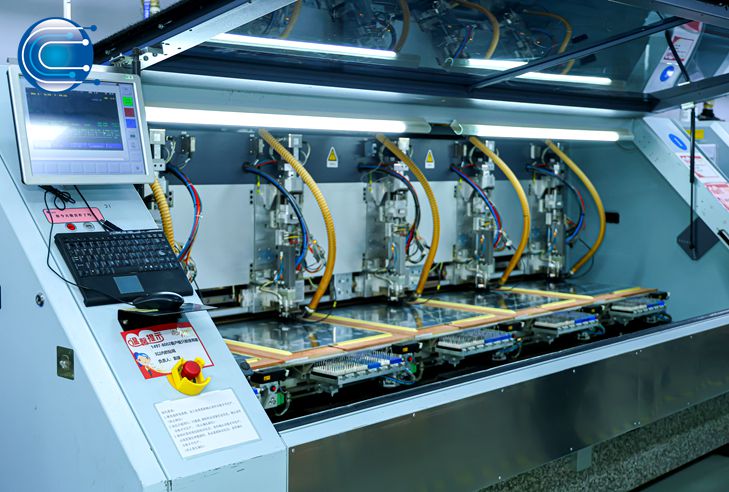
Depending on the design, inspection can include SPI, AOI, X-ray, flying probe, ICT, functional testing, and other customer-specific verification.
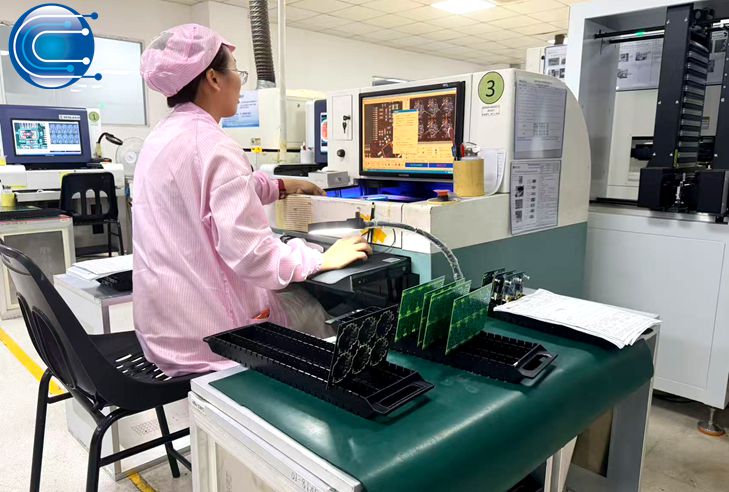
For BGA and QFN devices, for example, X-ray inspection can provide visibility into solder joints hidden underneath the package. Functional testing can then determine whether the assembled board performs according to defined requirements.
The important point is to define the quality plan before volume production rather than adding testing only after defects appear.
Turnkey Manufacturing Should Still Provide Transparency
Some buyers worry that consolidating manufacturing means losing supply-chain visibility. It should not.
A capable EMS partner should provide clear BOM information, approved substitutions, manufacturing feedback, inspection records, project status, and traceability appropriate to the application.
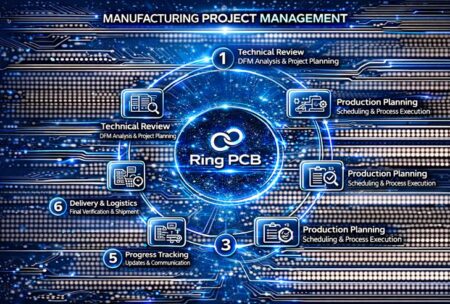
In fact, consolidation can improve transparency when all major production stages follow a coordinated project flow.
A Practical Full-Turnkey Approach
Ring PCB provides full-turnkey PCB and PCBA manufacturing that combines PCB fabrication, component sourcing, SMT and THT assembly, inspection, testing, and related EMS support. Engineering support includes DFM/DFT review, while manufacturing capabilities cover prototypes, low-volume projects, high-mix requirements, and scalable production.
For OEMs, the goal is straightforward: reduce unnecessary supplier coordination while maintaining engineering communication and manufacturing control.
If your next product requires PCB fabrication and assembly—or you want to compare a turnkey approach with your current multi-supplier model—send your Gerber files, BOM, assembly requirements, and expected quantity to rfq@ringpcb.com