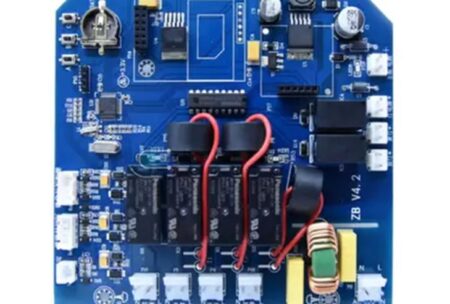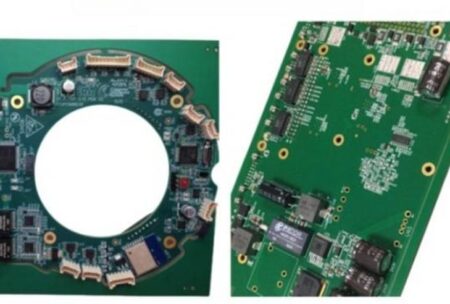
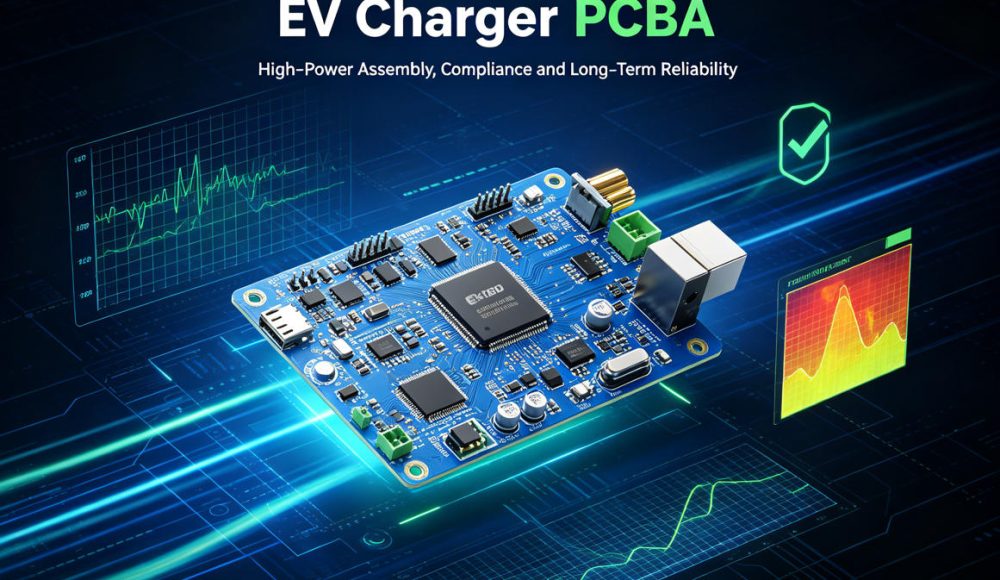
The global expansion of electric vehicle (EV) charging infrastructure is creating new opportunities for charging equipment manufacturers. However, as demand grows, OEMs face a more complicated challenge: how to scale production while maintaining component availability, assembly consistency, cost control, and delivery reliability.
An EV charger is a complex electronic product. Its power conversion, control, communication, monitoring, and protection functions depend on multiple PCB assemblies and a coordinated supply chain. Managing PCB fabrication, component procurement, and assembly through separate suppliers can increase purchasing workload and create communication gaps.
This is why full turnkey PCBA services are becoming an important manufacturing option for EV charger manufacturers. By integrating material sourcing and PCB assembly under one coordinated process, turnkey manufacturing can help OEMs simplify supplier management and improve production planning.
1. EV Charging Growth Is Increasing Manufacturing Pressure
The expansion of charging infrastructure is changing the requirements placed on EV charger manufacturers.
According to the International Energy Agency’s Global EV Outlook 2025, more than 1.3 million public charging points were added worldwide in 2024, bringing the global total to more than 5 million. The number of ultra-fast chargers rated at 150 kW or above also grew by more than 50% during the year.
This growth is not limited to one charger category. Residential AC chargers, commercial charging stations, highway fast chargers, and high-power DC charging systems all require different electronic architectures and production capabilities.
For manufacturers, increasing demand can create several operational challenges:
- More complex BOMs and component sourcing requirements
- Greater demand for power semiconductors and specialized electronic components
- Shorter product development and production planning cycles
- Higher expectations for consistent assembly quality
- Greater pressure to coordinate multiple suppliers
As a result, production scalability depends not only on the assembly line but also on the reliability of the entire manufacturing supply chain.
2. What Does Full Turnkey PCBA Mean for EV Charger Projects?
Full turnkey PCBA generally means that the manufacturing partner manages the agreed material procurement and PCB assembly activities based on the customer’s approved project documentation.
Depending on the contract, the scope may include PCB fabrication, electronic component sourcing, SMT assembly, through-hole assembly, and specified inspection activities.
For EV charger manufacturers, this integrated approach can reduce the need to coordinate separate suppliers for each production stage.
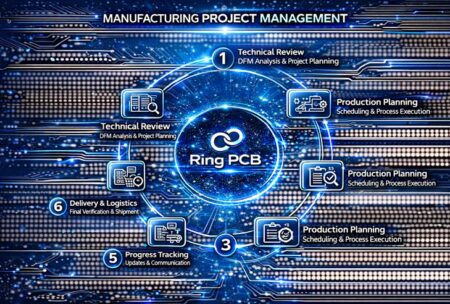
A typical turnkey workflow includes:
Step 1: Manufacturing Data Review
The customer provides Gerber files, BOM data, assembly drawings, and technical requirements. The manufacturing team reviews the documentation to identify missing information, component issues, and process considerations.
Step 2: PCB Fabrication Planning
The PCB structure, layer count, copper weight, finished thickness, surface finish, and other manufacturing requirements are evaluated against the approved design.
Step 3: Component Procurement
The supplier sources components according to the approved BOM and agreed procurement conditions. Any proposed alternative should be submitted for customer approval before use.
Step 4: PCB Assembly
The bare boards and components proceed through the agreed SMT and through-hole assembly processes.
Step 5: Inspection and Delivery
The assembled boards are inspected according to the agreed quality requirements, then packaged and delivered under the project specifications.
The main advantage is process coordination. Instead of managing several independent purchasing and production interfaces, the customer works with one manufacturing partner for the agreed scope.
3. Reducing Component Sourcing Risks in EV Charger Production
Component availability is a major concern for EV charger manufacturers, particularly when a product uses power semiconductors, isolated drivers, high-voltage capacitors, current sensors, connectors, and communication components.
A shortage of one critical component can delay an entire assembly batch, even when the PCB and other materials are ready.
A full turnkey PCBA supplier can support material planning by reviewing the BOM before production and identifying potential sourcing concerns.
Important checks include:
Manufacturer Part Number Verification
Each component should be matched to the approved manufacturer part number. Similar descriptions do not necessarily indicate electrical or mechanical compatibility.
Lifecycle and Availability Review
Obsolete, end-of-life, or long-lead-time components should be identified early. This allows the customer to consider an approved alternative or adjust the production schedule.
Alternative Component Control
For critical components, the customer should define whether alternatives are permitted and what approval process must be followed. The supplier should never assume that a substitute is acceptable simply because it has a similar package or nominal rating.
Incoming Material Inspection
Purchased components should be checked according to the agreed incoming inspection requirements. Part identification, packaging condition, quantity, and other specified criteria help reduce the risk of incorrect materials entering production.
These practices are especially important when the same EV charger model must be manufactured repeatedly over an extended period.
4. Why Integrated Manufacturing Helps Production Coordination
When PCB fabrication, component sourcing, and assembly are handled by separate suppliers, each production stage may have its own schedule, communication process, and material status.
For example, a PCB delivery delay may affect the assembly schedule, while a component shortage may leave completed bare boards waiting for materials. If responsibility is divided across several vendors, identifying the cause of a delay can take additional time.
A turnkey arrangement can simplify coordination because the manufacturing partner manages the agreed activities within a shared production plan.
However, turnkey manufacturing does not automatically eliminate supply-chain risks. Lead times, supplier capacity, logistics, and material allocation still need to be managed.
OEMs should therefore ask their PCBA partners:
- How are component shortages communicated?
- Are procurement lead times reviewed before order confirmation?
- How are customer-approved alternatives controlled?
- Can material status be reported during production?
- How are engineering changes reflected in purchasing and assembly records?
Clear answers to these questions are more useful than a general promise of fast delivery.
5. Manufacturing Requirements for EV Charger PCB Assemblies
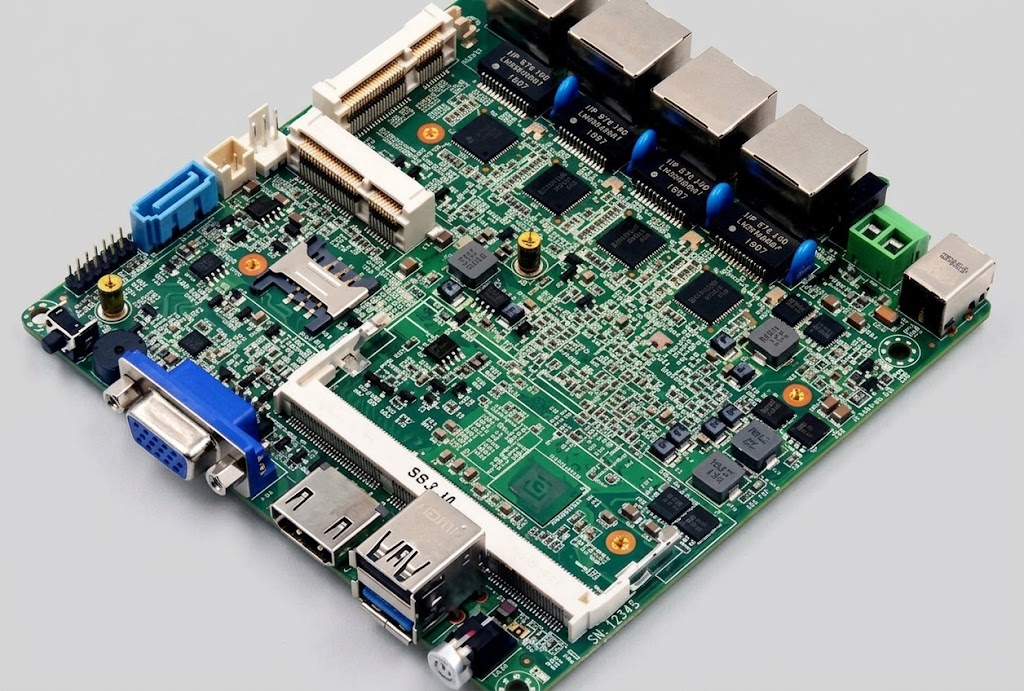
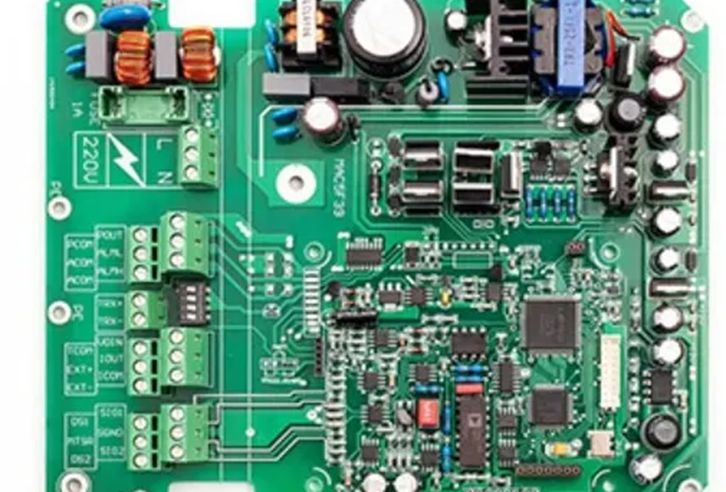
EV charger electronics can include power boards, control boards, communication boards, and auxiliary power assemblies. Each may require a different PCB structure and assembly process.
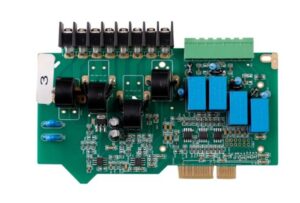
Power boards may need heavier copper, suitable board thickness, and careful thermal consideration. Control boards may require fine-pitch SMT placement, compact routing, and stable soldering processes. Communication boards may have specific impedance or signal-routing requirements.
A manufacturing partner should therefore review each board according to its own technical requirements rather than applying one standard process to every assembly.
For example, copper weight and trace geometry should be evaluated against the approved electrical design. High-voltage isolation distances must be defined by the equipment design and applicable safety requirements. Component placement and soldering conditions should also account for the thermal mass of large power devices and connectors.
The customer should provide clear technical documentation, including PCB fabrication data, BOM, assembly drawings, and inspection criteria.
6. Quality Control: Establishing Requirements Before Production
Quality management should be planned before the first production order.
For EV charger PCBAs, inspection requirements may include incoming material checks, visual inspection, automated optical inspection, X-ray inspection for selected hidden solder joints, and customer-defined electrical or functional tests.
The exact methods depend on the board design and the supplier’s available processes. Inspection methods should not be treated as interchangeable: AOI, X-ray, and functional testing evaluate different characteristics.
Customers should also define the applicable assembly workmanship criteria. IPC J-STD-001 addresses requirements for soldered electronic assemblies, while IPC-A-610 provides acceptance criteria for electronic assembly workmanship.
For charging equipment, system-level safety and performance validation remains the responsibility of the product manufacturer and relevant design authority. A PCBA supplier should follow the approved manufacturing and inspection requirements, rather than making unsupported claims about complete charger certification.
7. How to Select a Full Turnkey PCBA Partner
Before selecting a supplier, EV charger manufacturers should evaluate more than the quoted assembly price.
A practical supplier assessment should cover:
Manufacturing Scope: Confirm whether the supplier supports PCB fabrication, component sourcing, SMT, and through-hole assembly.
PCB Capability: Review layer count, copper weight, board dimensions, thickness, and other relevant process limits.
Procurement Management: Understand how the supplier verifies parts, manages shortages, and handles proposed substitutions.
Quality Requirements: Confirm inspection methods, acceptance criteria, and production documentation.
Production Scalability: Evaluate whether the supplier can support prototype builds and planned volume production under clearly defined schedules.
Communication: Establish a clear process for technical clarification, engineering changes, material issues, and order updates.
The right partner should be able to explain how its manufacturing process matches the specific requirements of the EV charger project.
Full Turnkey PCB and PCBA Manufacturing with Ring PCB
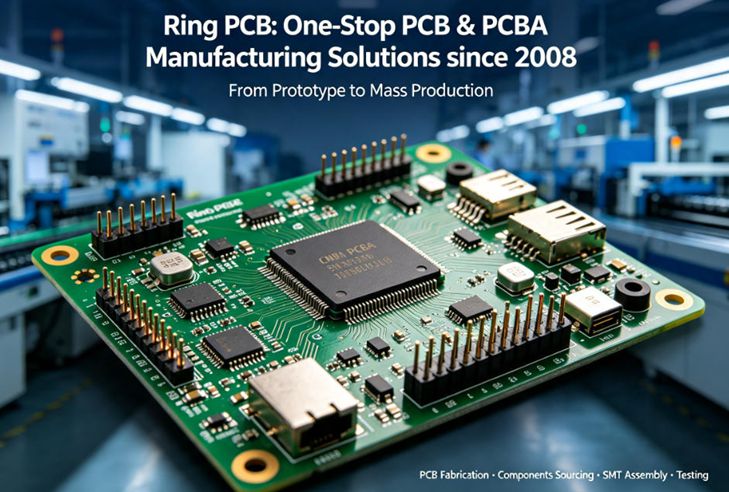
Ring PCB provides PCB fabrication, component sourcing, SMT assembly, through-hole assembly, and production quality inspection. Its manufacturing resources include five automated SMT lines and a company-owned factory covering more than 10,000 square meters.
For EV charger projects, Ring PCB can review customer-provided Gerber files, BOM data, assembly drawings, and technical specifications to evaluate PCB fabrication and assembly requirements. Its published PCB capabilities include multilayer and heavy-copper production, which may support different power and control board requirements subject to project review.
Whether a project requires full-turnkey, partial-turnkey, or consigned assembly, the service scope and material responsibilities can be discussed during the quotation process.
To discuss your EV charger PCBA project, contact rfq@ringpcb.com.
References and Further Reading
- International Energy Agency (IEA) — Global EV Outlook 2025: Electric Vehicle Charging.
- IEA — Global EV Outlook 2025: Executive Summary.
- IPC — IPC J-STD-001: Requirements for Soldered Electrical and Electronic Assemblies.
- IPC — IPC-A-610: Acceptability of Electronic Assemblies.
- IEC — IEC 61851 Series: Electric Vehicle Conductive Charging Systems.