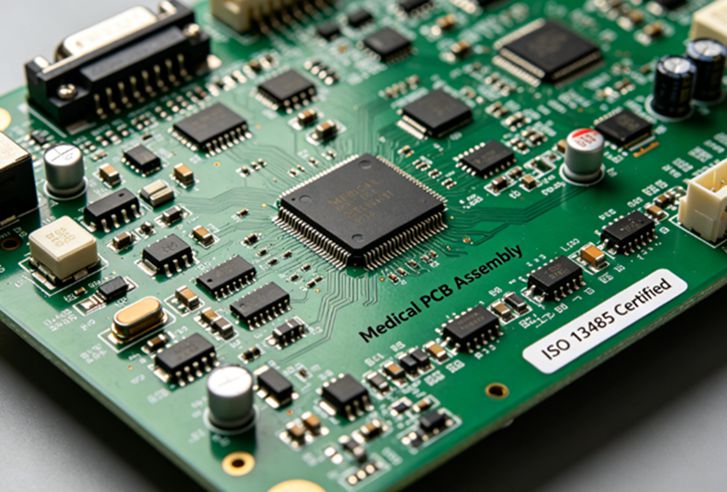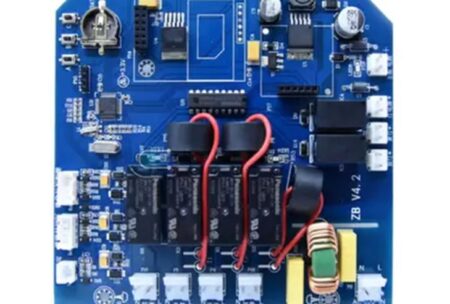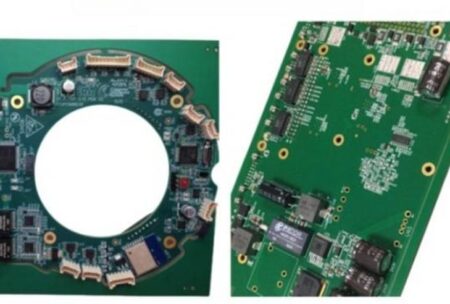
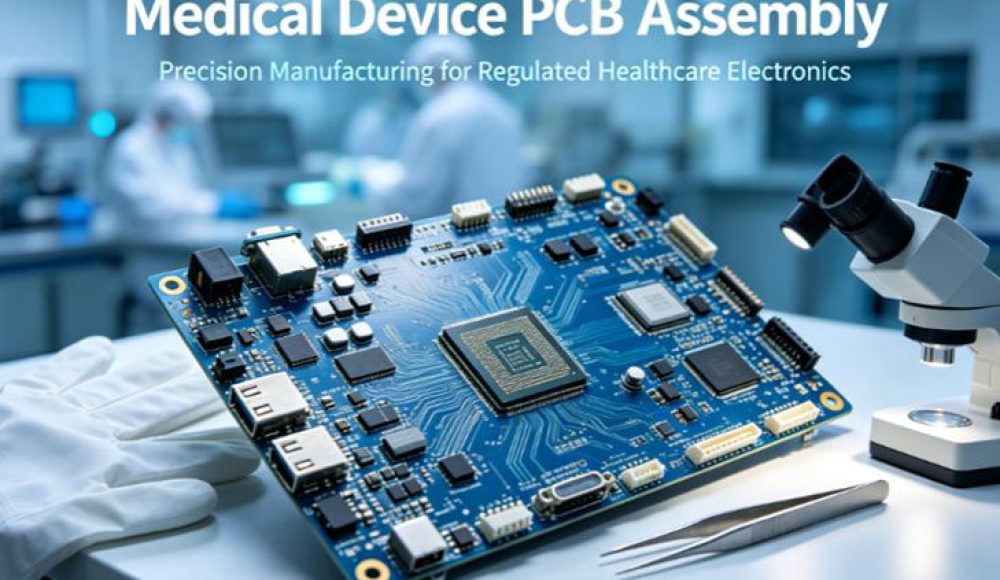
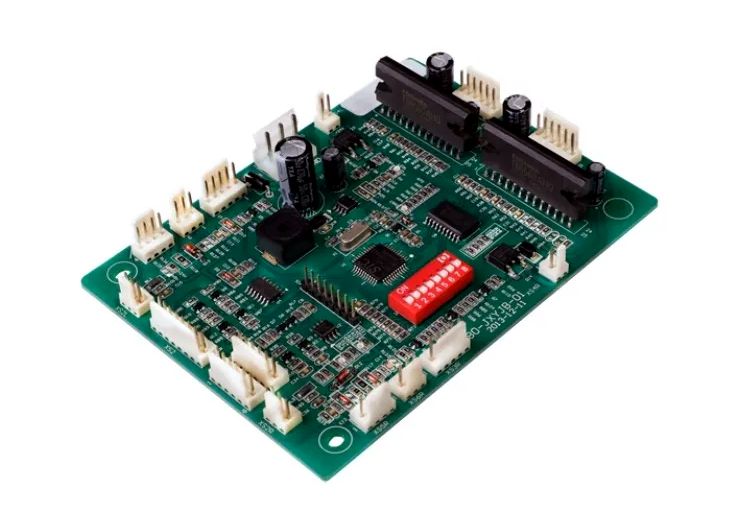
Medical devices increasingly rely on sophisticated electronic assemblies to support monitoring, diagnosis, imaging, treatment, and patient care. From portable patient monitors to diagnostic instruments and medical imaging systems, printed circuit board assemblies (PCBAs) are essential to the operation of modern medical equipment.
However, medical device PCBA manufacturing involves more than accurate component placement and soldering. OEMs must consider product risk, component quality, process consistency, documentation, supplier controls, and long-term product support.
The regulatory environment is also evolving. On February 2, 2026, the U.S. Food and Drug Administration’s Quality Management System Regulation (QMSR) became effective, incorporating ISO 13485:2016 by reference into the FDA’s medical device quality management framework.
For medical device manufacturers, this development reinforces the importance of a controlled quality system throughout the product lifecycle. This article examines the major PCBA manufacturing considerations and what medical electronics companies should evaluate when selecting an assembly partner.
1. Why Medical Device PCBA Requires a Different Manufacturing Approach
Medical electronic assemblies can be used in products with very different functions and risk profiles.
Examples include:
- Patient monitoring equipment
- Diagnostic and laboratory instruments
- Medical imaging systems
- Portable medical devices
- Infusion and therapy equipment
- Surgical and clinical equipment
- Medical communication and control modules
The electronic requirements vary by application. A portable monitor may prioritize compact size and low power consumption, while an imaging system may require complex multilayer FR-4 boards, high-speed signal routing, and sophisticated power management.
What these applications have in common is the need for controlled manufacturing processes and clearly defined product requirements.
A PCBA supplier should understand the assembly documentation, component specifications, inspection criteria, and customer quality requirements. However, the medical device manufacturer remains responsible for the finished product’s intended use, regulatory compliance, and overall safety and performance.
2. Understanding the 2026 FDA QMSR Change
One important regulatory development for medical device manufacturers is the FDA’s Quality Management System Regulation.
The QMSR became effective on February 2, 2026, amending the device current good manufacturing practice requirements in 21 CFR Part 820. It incorporates ISO 13485:2016 by reference and aligns the FDA’s quality management framework more closely with internationally recognized medical device quality requirements.
This change matters because medical device manufacturers need to maintain a quality management system that addresses product realization, risk management, supplier controls, production processes, and quality records.
For OEMs purchasing PCB assemblies, the practical implication is that supplier management should be clearly defined.
Important questions include:
- Does the supplier understand the customer’s quality requirements?
- Are incoming materials controlled according to agreed procedures?
- Are production processes documented and managed?
- Are nonconforming materials and assemblies handled through defined procedures?
- Can the supplier provide the manufacturing records required by the customer?
- Are engineering and material changes reviewed before implementation?
It is important to distinguish regulatory responsibility. The QMSR directly applies to manufacturers of finished medical devices within its scope. A PCB assembly supplier is not automatically subject to every finished-device regulatory obligation simply because its boards are used in medical equipment. Nevertheless, the OEM may impose specific quality and documentation requirements on its suppliers as part of its own quality management system.
3. Component Sourcing and Supplier Control
Component sourcing is a critical consideration in medical device PCBA manufacturing.
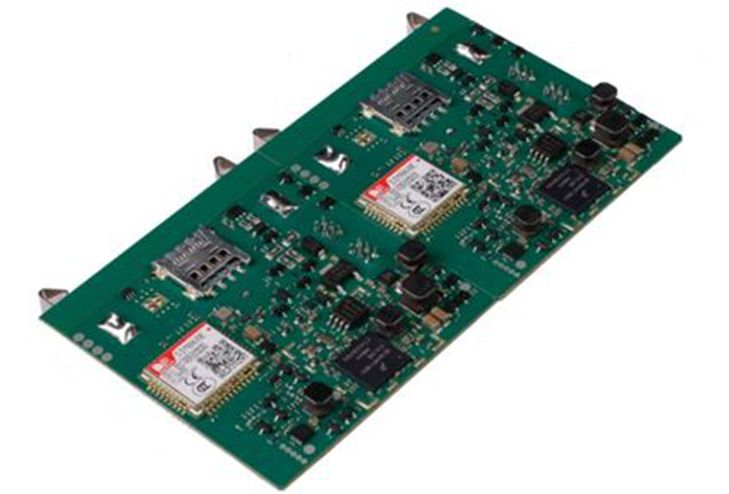
Medical electronics may contain microcontrollers, analog front ends, sensors, memory devices, power management ICs, connectors, and specialized components. Their performance and lifecycle availability can directly affect the finished product.
A controlled procurement process should address several issues.
Approved Manufacturer and Part Numbers
The BOM should identify the approved components as clearly as possible. Manufacturer part numbers, package details, and required specifications should be consistent with the PCB design and assembly documentation.
Component Authenticity and Incoming Inspection
The customer and supplier should agree on acceptable sourcing channels and incoming inspection requirements. Part identification, packaging condition, quantity, and other specified checks help reduce the risk of incorrect or unsuitable materials entering production.
Lifecycle and Obsolescence Management
Medical devices may remain in production for many years. Component discontinuation can therefore create significant redesign and qualification work.
OEMs should identify critical components, review lifecycle information, and establish an approval process for replacement parts.
Substitution Approval
A component that appears electrically similar may have different accuracy, tolerance, temperature characteristics, package dimensions, or qualification status. Any proposed replacement should undergo customer review and approval before procurement or assembly.
These controls are particularly important for products where component changes may affect system performance or product validation.
4. PCB Design and Material Requirements for Medical Electronics
Medical device PCBAs can involve a wide range of board constructions.
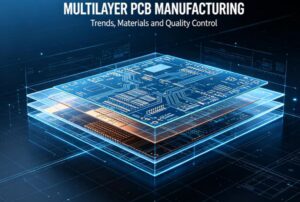
Some products use compact double-sided or four-layer boards, while advanced diagnostic and imaging equipment may require more complex multilayer structures.
The PCB specification should reflect the electrical, thermal, mechanical, and environmental requirements of the device.
Important considerations include:
Layer Count and Routing Density
The layer structure should provide sufficient routing resources for signal, power, and ground networks. High-density designs may require careful stackup planning and specialized via structures.
Material Selection
The laminate should meet the required electrical, thermal, and mechanical characteristics. FR-4 is suitable for many applications, while more demanding designs may require specific material grades.
Signal Integrity
Sensitive measurement circuits and high-speed interfaces may require controlled impedance, suitable reference planes, and carefully managed return paths.
Power Distribution
Power and ground structures should be designed according to current demand, voltage requirements, and the electrical architecture.
Mechanical Reliability
Board thickness, copper balance, mounting holes, connectors, and component placement should be reviewed against the product’s mechanical environment.
The final manufacturing specification should clearly identify all critical parameters and applicable acceptance criteria.
5. SMT and Through-Hole Assembly Process Control
Medical device PCBAs often combine fine-pitch SMT components with connectors, terminals, and other through-hole devices.
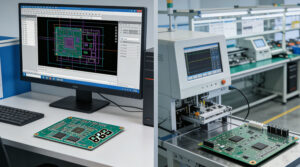
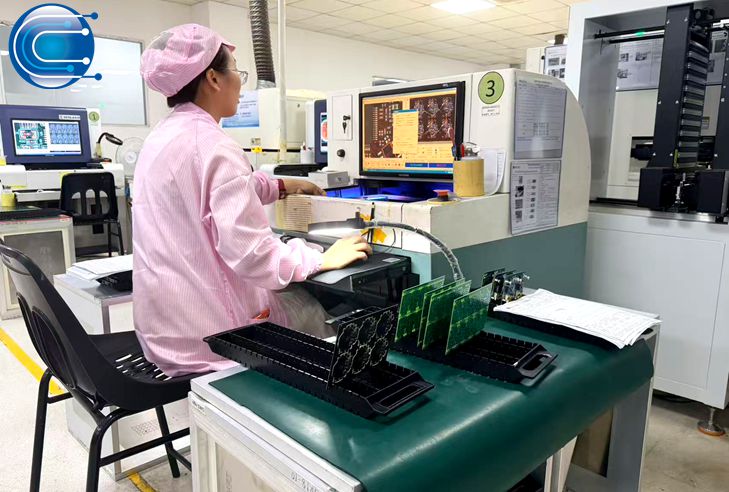
SMT assembly typically involves solder paste printing, component placement, reflow soldering, and post-process inspection. Through-hole assembly may involve manual or automated soldering according to the component and board requirements.
Process control is important at each stage.
Solder Paste Printing: Stencil design, paste condition, and printing consistency influence solder volume and joint formation.
Component Placement: Correct placement, orientation, and package compatibility are essential, especially for fine-pitch integrated circuits and polarity-sensitive components.
Reflow Soldering: The thermal profile should be appropriate for the solder alloy, component specifications, and PCB construction.
Through-Hole Soldering: Lead fit, hole dimensions, solder coverage, and component seating should meet the agreed assembly requirements.
Post-Assembly Inspection: Inspection should be selected according to the component packages, assembly risks, and customer acceptance criteria.
For medical products, manufacturing instructions and process changes should be controlled through the agreed quality procedures.
6. Inspection, Testing and Manufacturing Records
A medical device PCBA quality plan should distinguish between workmanship inspection, electrical verification, and product-level functional validation.
Different inspection methods provide different information.
- Visual Inspection: Evaluates observable assembly workmanship and component condition.
- Automated Optical Inspection: Identifies certain visible placement and soldering defects.
- X-ray Inspection: Helps examine selected hidden solder joints, including certain area-array connections.

- Electrical Testing: Checks specified electrical continuity, isolation, or circuit characteristics.
- Functional Testing: Evaluates defined board functions using customer-approved procedures.
Not every board requires every method. The inspection plan should reflect the design, product risk, and customer requirements.
Manufacturing documentation may also include approved production instructions, inspection records, material identification, nonconformance reports, and change-control records where specified by the customer.
IPC J-STD-001 provides requirements for soldered electrical and electronic assemblies, while IPC-A-610 provides assembly workmanship acceptance criteria. These standards can support consistent communication between the OEM and PCBA supplier, but they do not replace medical device regulatory requirements.
7. Traceability and Engineering Change Management
Traceability is an important consideration for medical electronics, especially when products require long-term service support or investigation of manufacturing issues.
The level of traceability should be defined by the finished-device manufacturer’s quality system and the specific supplier agreement.
Depending on the project, relevant records may include:
- PCB revision and production lot information
- BOM revision and approved component details
- Material and supplier identification
- Assembly production records
- Inspection and test results
- Nonconformance and corrective-action records
- Approved engineering changes
Change management is equally important.
A change in PCB material, stackup, component manufacturer, soldering process, or assembly specification may affect product performance or validation status. The supplier should communicate proposed changes and obtain the required customer approval before implementation.
This is particularly important for long-lifecycle medical products, where maintaining consistency across production batches can be a major purchasing concern.
8. How to Select a Medical Device PCBA Manufacturer
Selecting a medical electronics manufacturing partner requires a structured supplier evaluation.
Before placing an order, OEMs should assess:
Quality Management: Understand the supplier’s quality system, certifications, documented processes, and quality responsibilities.
Manufacturing Capability: Confirm whether its PCB fabrication and assembly processes match the required layer count, board dimensions, components, and tolerances.
Component Procurement: Review sourcing arrangements, approved suppliers, material inspection, and substitution controls.
Inspection Resources: Confirm the availability of inspection equipment and whether the proposed inspection plan meets project requirements.
Documentation and Communication: Establish how production records, quality issues, and engineering changes will be communicated.
Production Scalability: Evaluate whether the supplier can support prototype builds, repeat production, and long-term material planning.
A capable partner should be transparent about its manufacturing scope and should not make unsupported claims about finished-device certification or regulatory approval.
Medical Device PCB and PCBA Manufacturing with Ring PCB
Founded in 2008, Ring PCB provides PCB fabrication and PCBA manufacturing services for global electronics customers. Its self-owned 10,000+ square meter manufacturing facility is supported by approximately 500 employees and advanced production and inspection equipment.

Ring PCB operates under management systems and certifications including ISO 13485, ISO 9001, ISO 14001, IATF 16949, and UL. Its manufacturing services include multilayer PCB fabrication, component sourcing, SMT assembly, through-hole assembly, and production quality inspection.
With PCB manufacturing capability up to 62 layers and five automated SMT lines, Ring PCB supports a range of electronic manufacturing requirements. Customers can submit Gerber files, BOM data, assembly drawings, and specific technical requirements for manufacturing review before order confirmation.
For medical electronics projects, the applicable quality requirements, inspection scope, documentation, and material controls should be discussed and agreed during the project review.
To discuss your medical device PCBA requirements, contact rfq@ringpcb.com.
References and Further Reading
- U.S. Food and Drug Administration (FDA) — Quality Management System Regulation (QMSR), effective February 2, 2026.
- FDA — Quality Management System Regulation: Frequently Asked Questions.
- ISO — ISO 13485:2016, Medical Devices: Quality Management Systems.
- IPC — IPC J-STD-001: Requirements for Soldered Electrical and Electronic Assemblies.
- IPC — IPC-A-610: Acceptability of Electronic Assemblies.
- IPC — IPC-6012: Qualification and Performance Specification for Rigid Printed Boards.