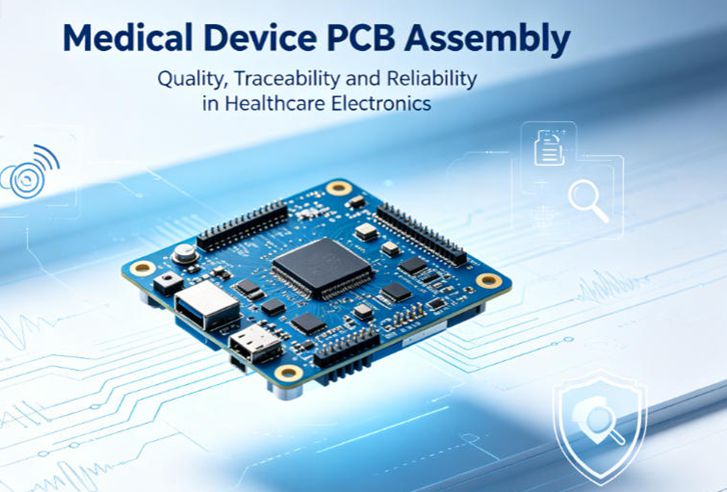
The global medical device PCB market is projected to grow at a CAGR of 5.7% from 2026 to 2033, reaching nearly $35 billion by the end of the forecast period. Behind this rapid expansion lies a non-negotiable reality: medical electronics operate under some of the strictest reliability and regulatory frameworks in the world. For OEMs and device developers, selecting the right PCB assembly partner is not merely a purchasing decision—it directly impacts patient safety, regulatory approval timelines, and long-term brand reputation.
Why Standard Commercial-Grade Assembly Falls Short for Medical Devices
Many procurement teams initially assume that standard industrial PCB assembly is sufficient for medical products. In practice, the gap between commercial Class 2 and medical-grade Class 3 assembly is substantial.
IPC-A-610 Class 3 has become the baseline for medical device PCB assembly, especially for life-support systems, implantable devices, and Class II/III equipment under FDA and EU MDR regulations. Class 3 enforces tighter solder joint criteria, stricter placement tolerances, and zero tolerance for defects that would be acceptable in consumer electronics. For example, partial solder wetting and minor voids that pass Class 2 inspection are classified as defects under Class 3 rules, as they can lead to premature failure in high-stakes medical environments.
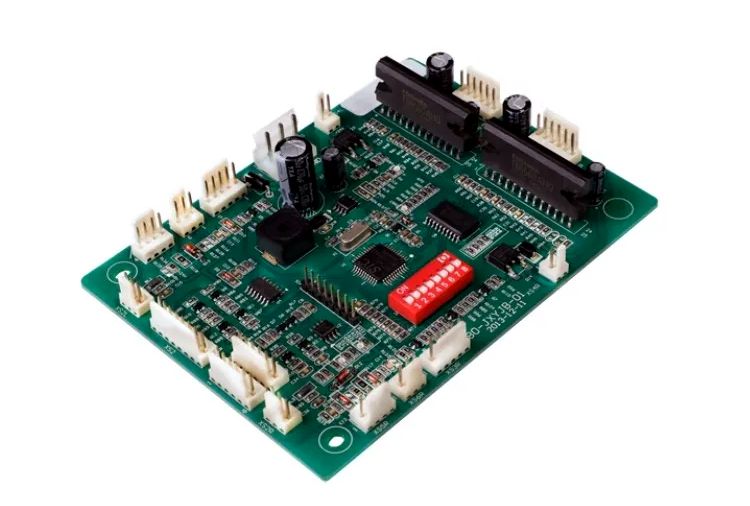
Beyond IPC standards, medical PCBs must also satisfy application-specific requirements. Implantable devices demand ionic contamination levels below 0.5 µg/cm², far stricter than the 1.56 µg/cm² allowed by general IPC-6012 Class 3 specifications. Patient-connected circuits must comply with IEC 60601-1 leakage current limits, and long-term life-support equipment requires B10 lifetimes of 15 years or more with high statistical confidence.
Regulatory Traceability: More Than Just Batch Records
One of the most overlooked challenges in medical device PCB assembly is documentation and traceability. ISO 13485 quality management systems mandate full lot traceability, design history files (DHF), and device history records (DHR) for every production batch.
This means every critical detail must be retained and retrievable: reflow temperature profiles per production run, per-board AOI and test results, nonconformance records, and calibration logs for all inspection equipment. For regulated medical products, incomplete documentation can delay FDA 510(k) clearance or EU CE marking by months, or even result in product recalls.
Unfortunately, many general-purpose assembly houses cannot produce this level of granular documentation on demand. They may provide summary pass/fail reports, but lack the structured, audit-ready record-keeping required for medical regulatory submissions. This creates hidden risk for buyers who discover compliance gaps only after production has begun.
Material Compliance: From Substrates to Component Sourcing
Medical PCBs require careful material selection at every level. Base laminates must offer high Tg values (typically 170°C or higher) for thermal stability, and devices with patient contact need biocompatible substrates and coatings certified to ISO 10993-5 and ISO 10993-10 standards for cytotoxicity and sensitization.
Component sourcing adds another layer of risk. RoHS 3 and REACH SVHC restrictions apply to all medical electronics entering major markets, and sub-tier supplier material changes can quietly introduce non-compliant substances without the OEM’s knowledge. Authorized franchised distribution, incoming XRF screening, and full material declaration management are therefore essential for medical-grade assembly.
Building Reliable Medical PCBA with Ring PCB
Medical device success depends on a PCB manufacturing partner that understands both technical precision and regulatory discipline. Ring PCB brings deep expertise in medical-grade PCB manufacturing and PCBA assembly, built on ISO 13485, ISO 9001 and IPC Class 3 production standards.
Our self-operated facilities handle the full workflow in-house—from medical-grade PCB fabrication and precision SMT placement to X-Ray BGA inspection, ionic contamination testing, and comprehensive functional validation. We maintain complete, audit-ready traceability records for every batch, including material certificates, process logs, and inspection reports, so your team has the documentation needed to support regulatory submissions.
Whether you are developing patient monitoring equipment, diagnostic imaging systems, portable medical wearables or industrial healthcare devices, our engineering team provides early-stage DFM review, material guidance, and test strategy support to streamline your path from prototype to volume production.
To discuss your medical device PCB assembly project and receive a tailored manufacturing proposal, send your design files and requirements to rfq@ringpcb.com.