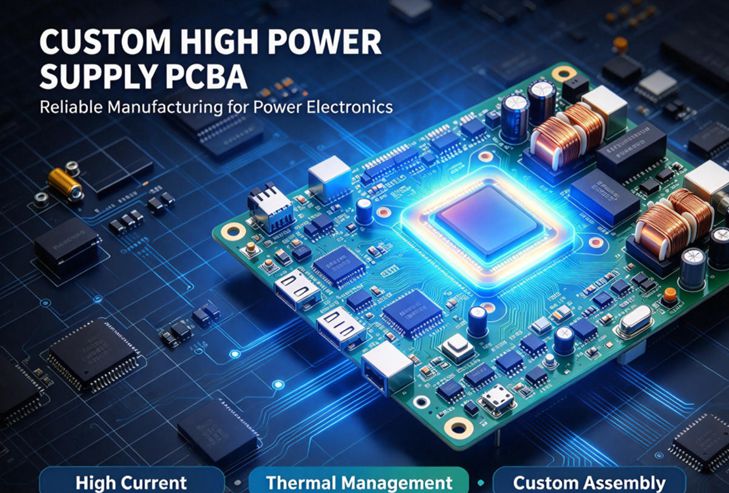
High power supply PCBA forms the backbone of energy storage, industrial inverter, server power and EV auxiliary power systems. As global demand for high-efficiency power electronics rises, OEM buyers are increasingly aware that even minor manufacturing defects on these boards can lead to costly field failures. According to recent industry research, thermal-related issues account for more than half of all high-power PCBA breakdowns in field operation. Therefore, selecting a qualified PCBA manufacturer becomes one of the most critical decisions for power product developers.
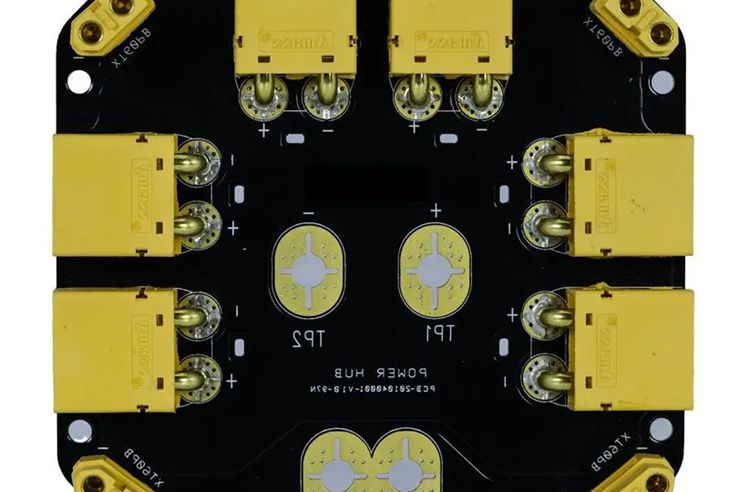
Why High Power Supply PCBA Has Higher Manufacturing Standards?
Unlike low-voltage signal PCBA, high power supply PCBA carries large continuous current, high voltage stress and frequent thermal cycling. Heavy copper traces, large power semiconductors and bulky magnetic components create uneven heat distribution across the board. Even small solder voids or insufficient copper thickness can trigger hotspots during full-load operation.
Furthermore, modern power electronics adopt GaN and SiC wide-bandgap chips. These components switch extremely fast, bringing new challenges such as voltage spike suppression and noise control. While these new devices improve power density and efficiency, they also require tighter process control during assembly. In short, high power supply PCBA cannot be produced with ordinary SMT assembly workflows.
Main Reliability Risks Faced by High Power Supply PCBA
First, thermal fatigue. Temperature cycles from cold startup to continuous full load repeatedly expand and contract different materials. Over time, solder joints may crack, causing intermittent power dropouts. Second, solder voiding under power components. Voids reduce heat transfer and accelerate component aging. Third, copper trace erosion at high current, especially if the plating quality fails to meet IPC standards.
In addition, insulation safety is non-negotiable. High voltage creepage and clearance must strictly follow relevant safety standards. Many OEMs find that prototype samples pass testing, but mass production batches introduce inconsistent quality. This inconsistency often comes from manufacturers lacking dedicated high-power test procedures.
Essential Testing Procedures for High Power Supply PCBA
A reliable PCBA manufacturer will not only run simple continuity tests. For high power supply PCBA, the standard validation stack includes AOI, X-ray inspection for BGA and QFN solder joints, full-load burn-in test, thermal cycling test, hipot high voltage isolation test, and real-time temperature rise monitoring.
Burn-in testing simulates long operating hours under rated load, exposing early latent defects before shipment. X-ray scanning is mandatory to check solder void ratio underneath power chips. Without these tests, finished boards may look fine visually but fail once installed into end equipment.
How to Choose the Right PCBA Manufacturer for Your High Power Project
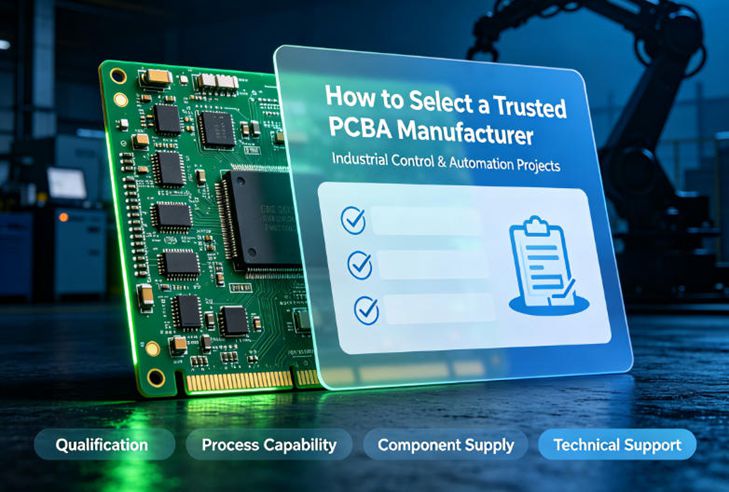
When evaluating suppliers, buyers should verify factory certifications, heavy copper capability, thermal test facilities, and traceability for each batch. Many contract assemblers can handle simple low-power boards but lack experience with high-current, high-voltage assemblies. Ask whether they can provide full test reports, and check their experience with similar industrial or energy storage power projects.
Cost should not be the only factor. Cutting corners on copper thickness or skipping burn-in tests may lower unit price, but it creates huge warranty costs and brand reputation damage later. Balancing cost, lead time and reliability is the target for mature OEM procurement teams.
At Ring PCB, we are a direct-source factory familiar with the strict requirements of high power supply PCBA. Our team handles heavy copper PCB fabrication and PCBA assembly for power modules, equipped with X-ray, hipot and burn-in testing lines. We follow IPC-A-610 standards throughout production, helping customers validate prototypes and ramp smoothly to mass orders. Whether you are developing energy storage power modules or industrial power supplies, we can support your custom assembly needs.
If you have a new high power PCBA project and want reliable manufacturing support, feel free to send your BOM and specifications to rfq@ringpcb.com.