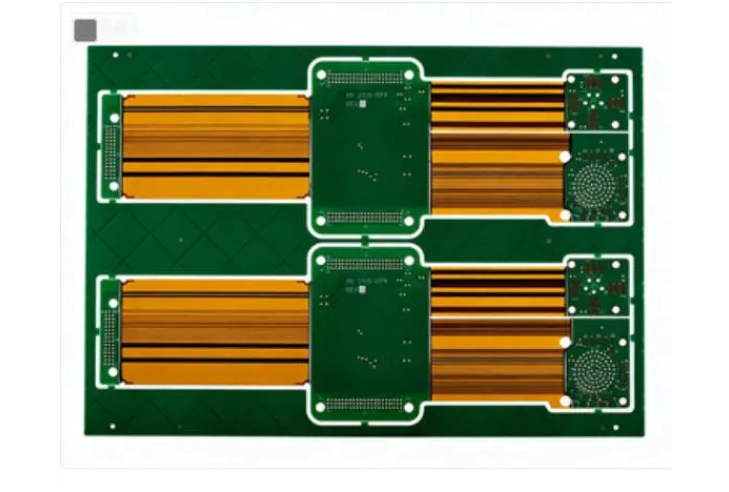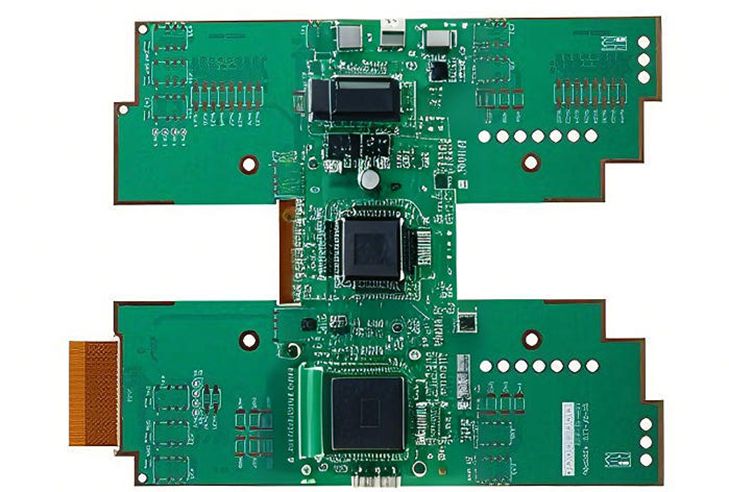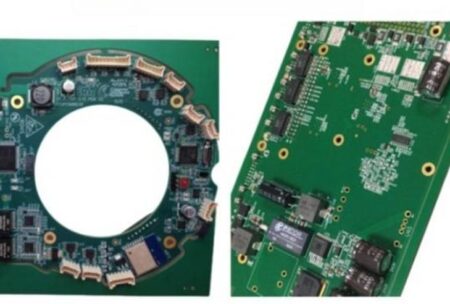

Rigid-Flex PCB is often viewed as a premium PCB technology. Compared with a conventional rigid board, its material, lamination, fabrication, and process-control requirements can result in a higher bare-board price.
However, B2B buyers should be careful about evaluating rigid-flex technology only through PCB unit cost.
A product assembled from multiple rigid PCBs may also require connectors, cables, wiring harnesses, additional assembly operations, mechanical hardware, inspection, and inventory management. Once these costs are included, the lowest-cost bare PCB solution may not always deliver the lowest total manufacturing cost.
Therefore, OEMs should evaluate Rigid-Flex PCB at the system level.

PCB Price and Product Cost Are Different
Consider an electronic product containing several interconnected rigid boards.
Each connection may require a cable, FPC, connector, socket, or wiring harness. Those parts must be specified, purchased, inspected, stocked, assembled, and sometimes manually connected during final assembly.
Each additional component also creates another potential supply-chain dependency.
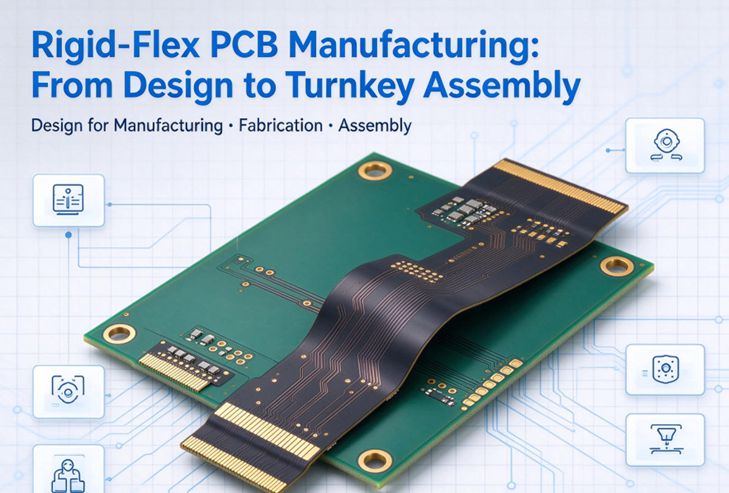
Rigid-Flex PCB can combine rigid circuit sections and flexible interconnections into one integrated circuit structure. In suitable applications, this can eliminate some connectors and cable assemblies while simplifying internal product architecture.
The bare PCB may cost more, but the complete bill of materials and assembly process may become simpler.
This is why procurement teams should compare total cost rather than only PCB quotations.
Connector Reduction Can Create Hidden Savings
Connectors are useful components, but they are not free from cost or risk.
Beyond the connector purchase price, companies must consider footprints, mating components, cable preparation, assembly labor, incoming inspection, mechanical space, and potential field failures.
A connector can also become a lifecycle concern if the manufacturer changes availability or discontinues a specific series.
Rigid-flex designs can eliminate selected board-to-board or board-to-cable connections by routing the electrical connection directly through flexible circuit sections.
For high-density products, the benefit can be particularly important because reduced connector count may also free valuable enclosure space.
Nevertheless, connector elimination should never be treated as an automatic design rule. Engineers must evaluate serviceability, replacement requirements, mechanical movement, and product architecture before deciding whether integration provides a real advantage.
Smaller Products Need Manufacturing Decisions Earlier
Miniaturization continues to influence electronics design.
Wearables, portable medical devices, compact industrial sensors, robotics, cameras, communication modules, and aerospace electronics often require significant functionality inside limited mechanical space.
In these products, PCB layout and mechanical design can no longer be developed independently.
Rigid-flex technology allows circuits to bend and occupy multiple planes inside an enclosure. As a result, designers may reduce cable routing space and create more compact assemblies.
However, this flexibility requires early cooperation between mechanical engineers, PCB designers, and the PCB Manufacturer.
Bend locations, rigid-to-flex transitions, stiffeners, component keep-out zones, mounting points, and final folded geometry should be reviewed before the design reaches production.
A late mechanical change can affect not only the enclosure but also copper routing, flex length, impedance, and manufacturing tooling.
Reliability Has a Cost Value Too
Total cost should also include reliability.
Every connector, cable, solder joint, and manual assembly step represents another interface that must remain reliable throughout the product lifecycle.
Applications exposed to vibration, repeated movement, compact packaging, or difficult assembly conditions may benefit from reducing unnecessary interconnections.
At the same time, a poorly designed rigid-flex circuit can create its own reliability problems.
Copper traces should not experience excessive stress during bending. Vias and component pads should generally be kept away from inappropriate bend locations. Bend radius, copper construction, grain direction, coverlay, and transition geometry should match the mechanical requirements.
For dynamic flex applications, the design considerations become even more demanding because the circuit may bend repeatedly during operation.
Therefore, the correct question is not whether rigid-flex is inherently more reliable. The correct question is whether the complete interconnect architecture is more suitable for the intended application.
Manufacturing Yield Must Be Included in Cost Analysis
Complex PCB technology requires stable manufacturing processes.
Rigid-flex fabrication can involve polyimide processing, coverlay application, sequential lamination, controlled-depth structures, dimensional compensation, drilling, plating, imaging, and routing.
If design tolerances are unnecessarily aggressive, manufacturing yield can decline.
That directly affects cost.
Consequently, experienced PCB manufacturers should provide DFM feedback before production. Engineers may be able to adjust spacing, hole structures, flex geometry, panel utilization, or tolerances without changing the intended electrical performance.
The objective is to achieve the required function without creating avoidable manufacturing difficulty.
For procurement teams, a supplier offering a slightly higher unit price but stable yield and repeatable quality may ultimately provide lower project cost than a cheaper source with inconsistent production.
Turnkey PCB Assembly Changes the Cost Equation
Another important consideration is what happens after the rigid-flex board leaves fabrication.
The board still requires components, stencil printing, SMT placement, reflow, inspection, programming, testing, and possibly final mechanical assembly.
Flexible areas can also make handling more challenging during PCBA production.
Dedicated carriers or fixtures may be required to keep the assembly flat and stable during printing, placement, reflow, and inspection.
When PCB fabrication and assembly are managed separately, the OEM must coordinate manufacturing requirements between multiple suppliers.
A turnkey PCB assembly model can simplify this interface.
The PCB Manufacturer and assembly team can coordinate panelization, fiducials, tooling areas, support fixtures, component orientation, assembly sequence, and inspection requirements before production begins.
That coordination can reduce unnecessary process changes later.
Component Sourcing Should Be Part of the Calculation
A complete cost analysis must also include the BOM.
Component shortages, minimum order quantities, excess inventory, obsolete parts, and long lead times can have a greater financial impact than small differences in PCB pricing.
For this reason, full-turnkey electronics manufacturing should combine engineering review with BOM verification and component sourcing.
High-risk components can be identified before production. Approved alternatives can be discussed when appropriate, and purchasing quantities can be aligned with prototype, pilot, or production requirements.
This is especially useful for companies managing multiple products or frequent engineering revisions.
When Does Rigid-Flex Make Financial Sense?
Rigid-flex technology is not the lowest-cost solution for every project.
For a simple product with generous enclosure space and only one or two reliable interconnections, conventional rigid PCBs and cables may remain the practical choice.
Rigid-flex becomes more attractive when system-level benefits justify the additional fabrication complexity.
These benefits may include reduced connector count, lower assembly labor, smaller mechanical size, lower weight, simplified installation, improved interconnection consistency, or better use of available enclosure space.
Therefore, OEMs should compare complete product architectures rather than comparing rigid and rigid-flex bare-board prices in isolation.
Building a Better Cost Model With Your Manufacturer
The best time to evaluate these tradeoffs is before the design is frozen.
A PCB Manufacturer with fabrication and turnkey PCB assembly capabilities can review both board-level manufacturability and downstream assembly requirements.
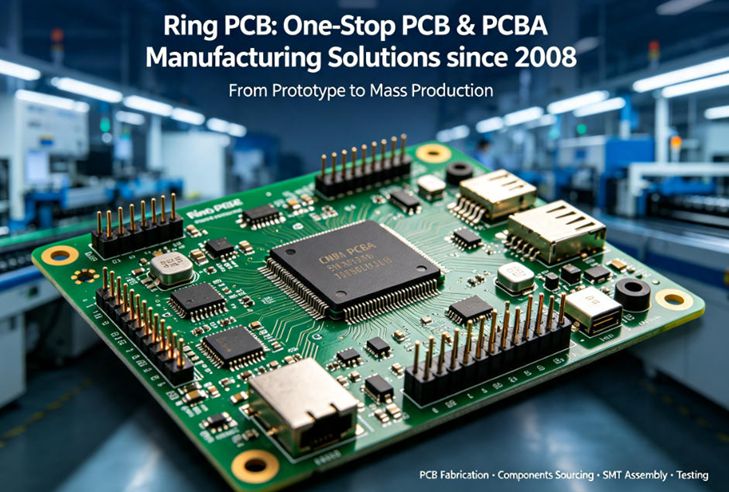
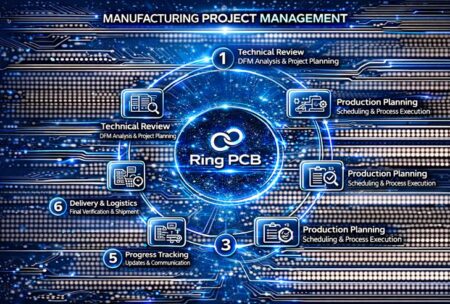
Ring PCB supports Rigid-Flex PCB fabrication together with component sourcing, SMT and THT assembly, inspection, testing, and other EMS services. This allows customers to evaluate the project as a complete manufacturing workflow rather than treating the bare PCB and PCBA as unrelated purchases.
For prototypes, small batches, NPI builds, or scalable production, early review of Gerber or ODB++ data, BOM, mechanical requirements, and expected quantities can help identify unnecessary cost and manufacturing risk before production begins.
For a Rigid-Flex PCB or full-turnkey PCBA quotation, contact rfq@ringpcb.com.