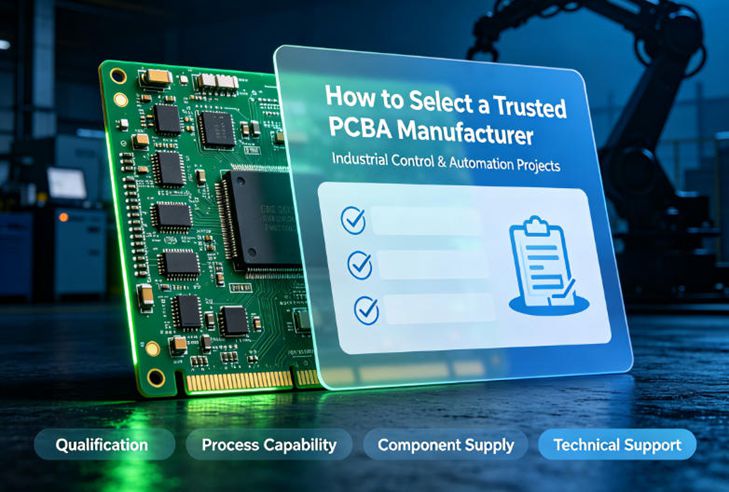
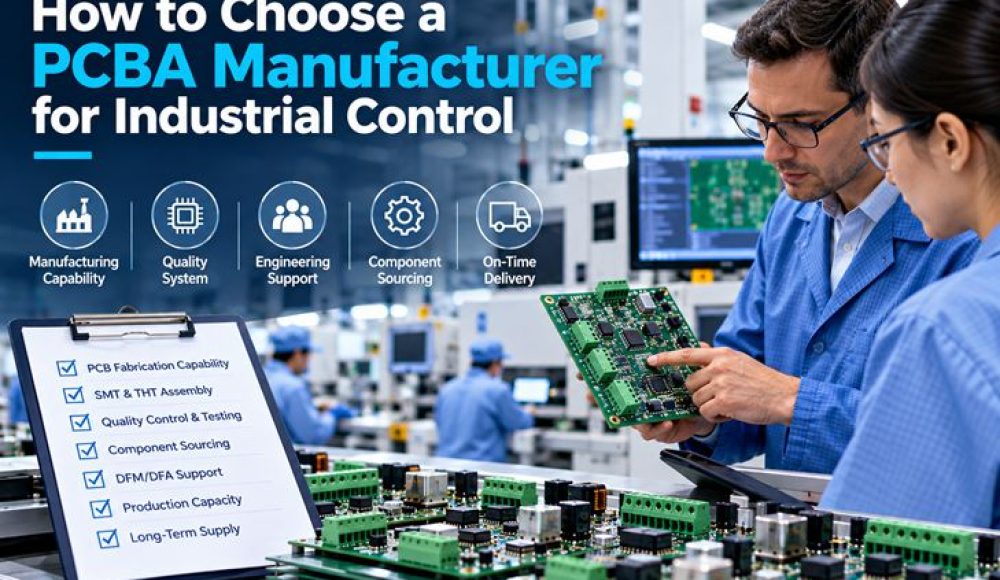
Choosing a PCBA Manufacturer for industrial control equipment involves more than comparing assembly quotations. OEMs must evaluate manufacturing capabilities, quality systems, engineering support, supply-chain stability, and the ability to maintain consistent production over an extended product lifecycle.
Industrial automation products frequently include complex multilayer PCBs, fine-pitch components, industrial connectors, power electronics, and communication interfaces.
A manufacturing defect can create consequences beyond the cost of replacing a circuit board, including equipment downtime, service visits, and disrupted production.
Therefore, selecting a manufacturing partner should be treated as a technical and commercial qualification process.
Understand Your Industrial Control Requirements
Before contacting potential manufacturers, OEMs should define the requirements of their industrial control assembly.
These may include operating temperature, expected service life, PCB layer count, copper thickness, component density, assembly technologies, environmental exposure, and testing requirements.
For example, a compact industrial IoT gateway may require fine-pitch SMT assembly and controlled-impedance communication circuits.
A motor controller may instead prioritize power handling, thermal performance, heavy copper, and reliable terminal connections.
Meanwhile, a PLC I/O module may require numerous through-hole connectors and comprehensive functional testing.
The best manufacturing partner is the one whose processes match the product’s actual requirements.
Evaluate PCB Fabrication Capabilities
A PCBA manufacturer with coordinated PCB fabrication capabilities can help address problems before assembly begins.
During supplier qualification, review the manufacturer’s supported PCB materials, layer counts, minimum trace and spacing, drill sizes, copper weights, surface finishes, and impedance capabilities.
Ask whether the supplier can manufacture high-Tg FR-4, multilayer PCBs, HDI structures, and other technologies relevant to your product.
Equally important, confirm how the factory manages dimensional accuracy, electrical testing, and material traceability.
A technically capable supplier should be able to review your manufacturing files and explain any process limitations.
Review SMT and Through-Hole Assembly Processes
Industrial PCBAs often combine small SMT components with larger through-hole devices.
Therefore, the manufacturer should demonstrate competence in both assembly methods.
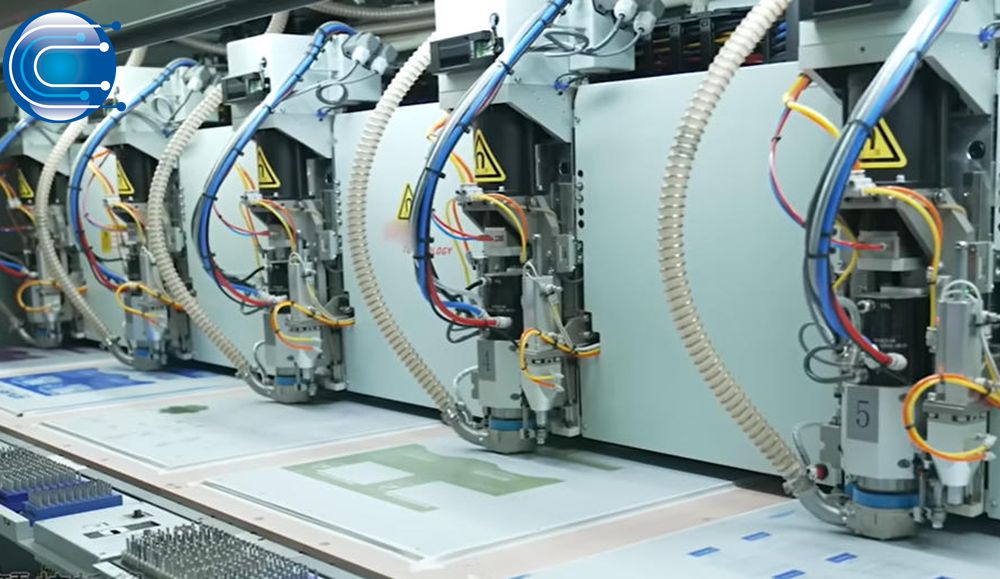
For SMT production, evaluate solder paste printing, placement equipment, reflow control, and inspection capabilities.
For through-hole assembly, review wave soldering, selective soldering, manual soldering controls, and inspection criteria.
If the design includes BGAs, QFNs, fine-pitch ICs, or large thermal pads, ask how soldering quality is verified.
Do not assume that advanced placement equipment alone guarantees high assembly yield.
Process control, trained operators, documented work instructions, and defect analysis are equally important.
Ask About DFM, DFA, and DFT Support
One of the most useful supplier evaluation criteria is engineering responsiveness.
A reliable PCBA Manufacturer should review more than component placement files.
Design for Manufacturability (DFM) can identify PCB fabrication constraints, while Design for Assembly (DFA) evaluates assembly risks.
Design for Testability (DFT) helps determine whether critical functions can be verified efficiently.
Potential problems include insufficient component spacing, unsuitable solder mask openings, difficult panelization, inaccessible test points, and inconsistent BOM information.
Identifying these issues before production can reduce rework, engineering changes, and delays.
OEMs should ask for a documented engineering review rather than relying only on a verbal assurance that the design is manufacturable.
Verify Quality Standards and Inspection Coverage
Quality certifications provide useful information about management systems, but they should not replace process audits.
ISO 9001 may demonstrate a structured quality management system. Other certifications may be relevant depending on the industry and customer requirements.
However, the actual assembly acceptance criteria should also be defined.
IPC-A-610J is used for electronic assembly acceptability, while IPC J-STD-001J addresses soldered electrical and electronic assembly requirements.
The applicable class, revision, and contractual requirements should be agreed before production.
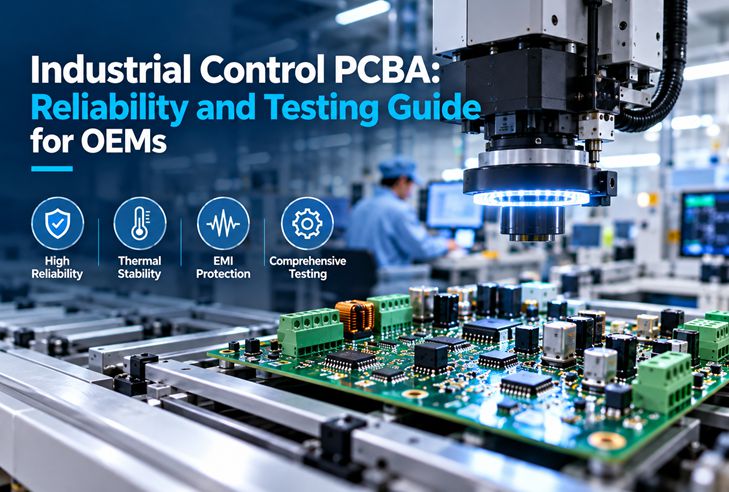
Furthermore, review inspection methods such as SPI, AOI,x-ray, , ICT, flying probe, and functional testing.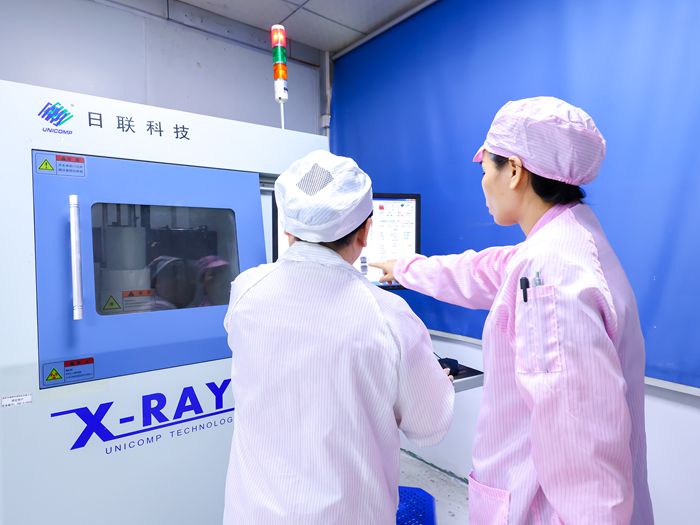
Ask how nonconforming assemblies are handled and whether corrective actions are documented.
Examine Component Sourcing and BOM Control
Component procurement is a major source of manufacturing uncertainty.
IPC’s May 2025 electronics manufacturing survey reported continued material-cost pressure and trade-related uncertainty. It also found that 53% of surveyed manufacturers said tariff uncertainty was delaying investment or sourcing decisions.
For industrial equipment manufacturers, long product lifecycles make sourcing issues particularly important.
Ask potential suppliers how they verify manufacturer part numbers, identify obsolete components, manage approved vendor lists, and prevent unauthorized substitutions.
Also confirm whether the manufacturer provides component traceability and clear communication when availability changes.
A low assembly price may offer little value if critical components cannot be sourced reliably.
Evaluate Prototype-to-Production Capability
Industrial control products frequently require several development stages.
Engineering prototypes validate electrical functionality.
Pilot builds evaluate manufacturing repeatability, tooling, inspection, and testing.
Volume production then requires stable sourcing, process documentation, scheduling, and quality control.
A supplier that supports all three stages can reduce the need for repeated production transfers.
However, OEMs should verify that the manufacturer can handle both small engineering orders and larger production quantities without compromising communication or process consistency.
Ask how production revisions, tooling changes, and test procedures are transferred between stages.
Calculate Total Manufacturing Cost
Comparing quotations requires more than looking at the assembly price per board.
Total manufacturing cost can include PCB fabrication, components, tooling, assembly, testing, packaging, logistics, inventory, and engineering support.
Additional costs may arise from rework, production delays, excess components, or repeated supplier coordination.
Therefore, request a quotation with a clearly defined scope.
For full-turnkey electronics manufacturing, confirm which services are included and which require separate charges.
This allows procurement teams to compare suppliers more accurately and identify potential hidden costs.
Assess Communication and Project Management
Technical capability is valuable only when supported by effective communication.
During supplier qualification, evaluate how quickly the engineering team responds to technical questions and whether it provides clear explanations.
Ask how project milestones are communicated, how engineering changes are approved, and how unexpected production problems are escalated.
For international OEMs, communication across time zones can also affect project efficiency.
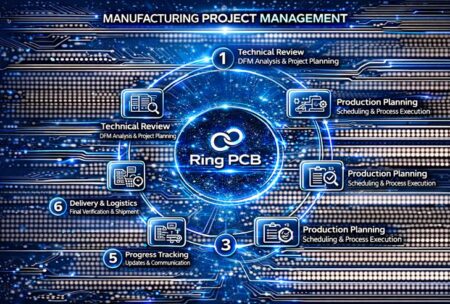
A manufacturer should provide a clear process for RFQs, technical reviews, production updates, and quality feedback.
A Practical Industrial PCBA Manufacturing Partner
A suitable PCBA Manufacturer should combine relevant manufacturing capabilities with engineering support, quality control, sourcing discipline, and flexible production.
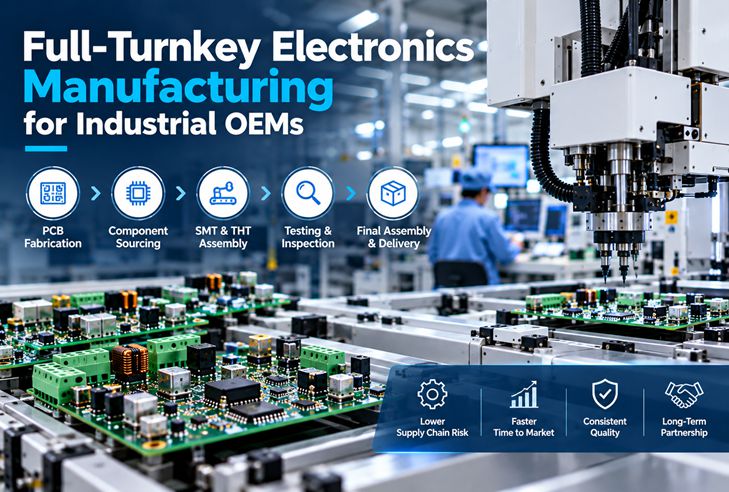
Ring PCB provides PCB fabrication, component sourcing, SMT and THT assembly, inspection, testing, and full-turnkey electronics manufacturing for industrial control and other electronic applications.
Its manufacturing services support OEM projects ranging from prototypes and low-volume production to larger production requirements.
For buyers evaluating industrial control PCBA suppliers, a useful first step is to submit complete manufacturing files and request an engineering review alongside the quotation.
Contact Ring PCB at rfq@ringpcb.com with your Gerber files, BOM, pick-and-place data, assembly drawings, quantities, and quality requirements.
References
- IPC. Electronics Industry Demand Holds Steady Amid Tariff Turbulence. May 22, 2025.
https://www.ipc.org/news-release/electronics-industry-demand-holds-steady-amid-tariff-turbulence - IPC. IPC Releases “J” Revisions to Two Leading Standards for Electronics Assembly. April 8, 2024.
https://www.ipc.org/news-release/ipc-releases-j-revisions-two-leading-standards-electronics-assembly - Ring PCB. PCB & PCBA Manufacturer China | Full Turnkey PCB Assembly. Company manufacturing information.
https://www.ringpcb.com/