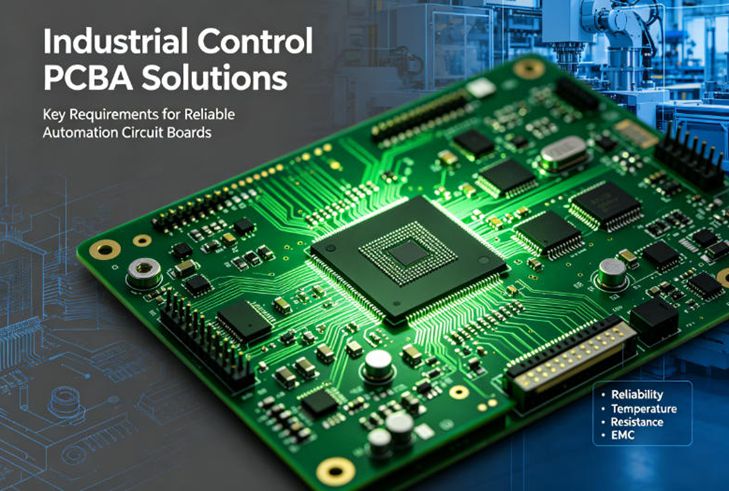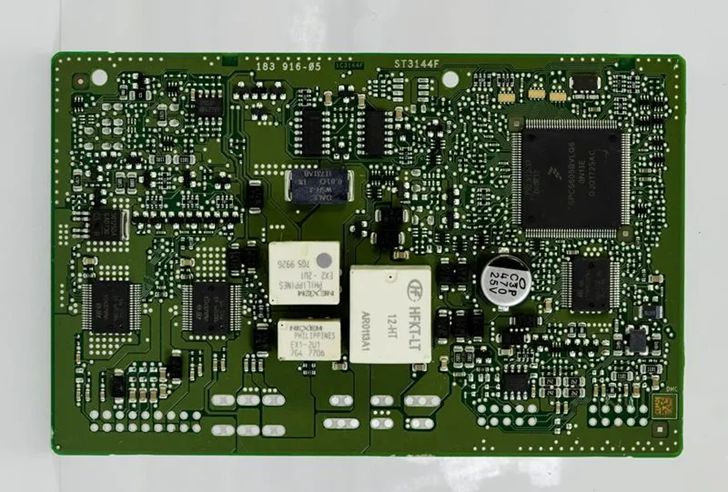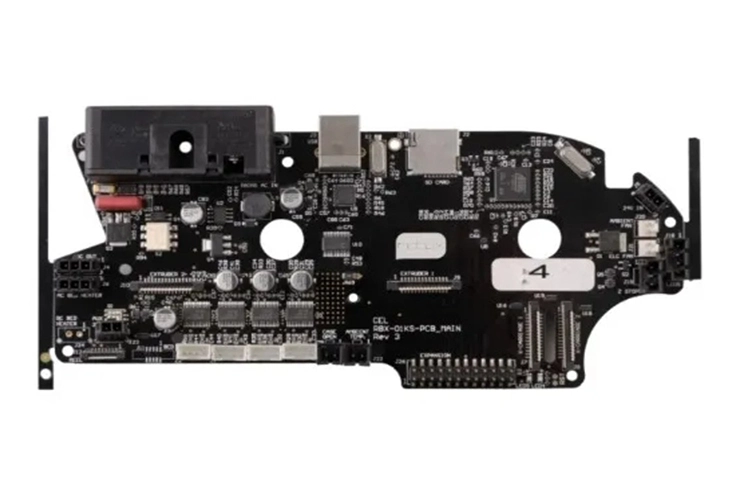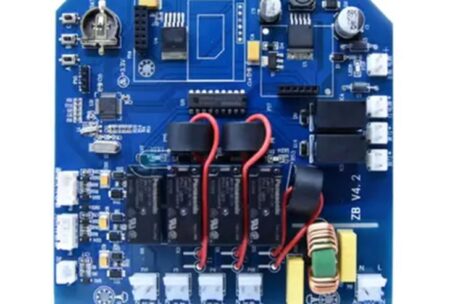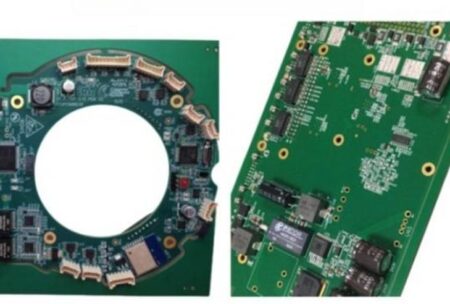
Industrial automation depends on electronic control systems that operate reliably under demanding conditions. From programmable logic controllers (PLCs) and motor drives to industrial gateways, sensor interfaces, and machine controllers, printed circuit board assemblies form the electronic foundation of modern production equipment.
However, PCBA for Industrial Control Devices requires more than accurate component placement and soldering. Continuous operation, electrical interference, vibration, thermal cycling, and long equipment lifecycles create reliability challenges that must be addressed throughout manufacturing.
According to the International Federation of Robotics (IFR), global industrial robot installations reached 542,076 units in 2024, while the worldwide operational stock exceeded 4.66 million units. This growing automation infrastructure highlights the importance of dependable industrial electronics.
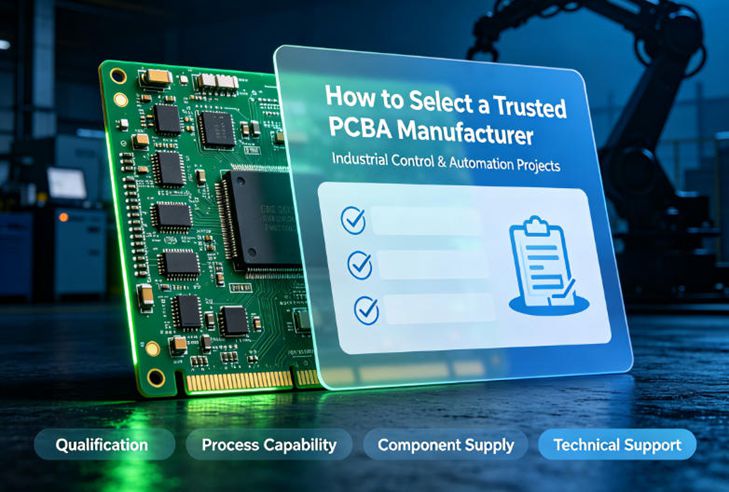
For OEMs, choosing a capable PCBA Manufacturer is therefore a decision about equipment uptime, lifecycle cost, and manufacturing consistency.
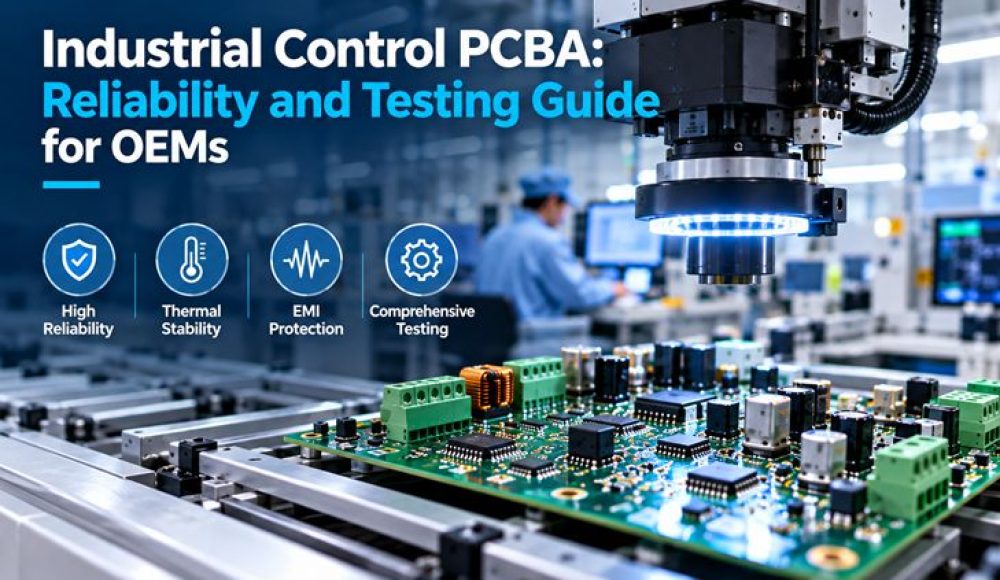
Why Industrial Control PCBAs Require Higher Reliability
Unlike many short-lifecycle consumer products, industrial control electronics may remain in service for years.
A PLC controller, industrial communication gateway, or power management board may operate continuously inside an electrical cabinet exposed to temperature fluctuations, switching noise, and mechanical vibration.
These conditions can accelerate solder joint fatigue, connector wear, corrosion, and component degradation.
Consequently, industrial PCBA reliability must be considered during material selection, PCB fabrication, component sourcing, assembly, and testing.
Manufacturers should understand the intended operating environment before selecting production processes or inspection methods.
PCB Materials and Stackup Design
The PCB substrate influences electrical performance, mechanical stability, and thermal reliability.
FR-4 remains widely used in industrial electronics, but its properties vary by material grade.
For applications involving elevated temperatures or demanding thermal cycles, high-Tg FR-4 may be appropriate.
Meanwhile, multilayer PCB stackups can help separate power distribution, signal routing, and reference planes.
This is particularly useful for controllers combining microprocessors, communication interfaces, analog sensors, and power electronics.
A qualified PCB Manufacturer should evaluate copper thickness, dielectric properties, layer registration, via structures, and controlled impedance where required.
Importantly, material specifications should match actual operating conditions rather than being increased without engineering justification.
Power Integrity and Thermal Management
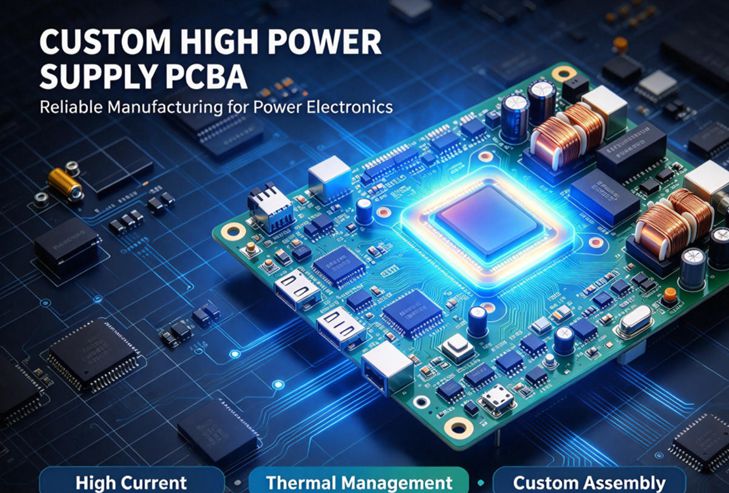
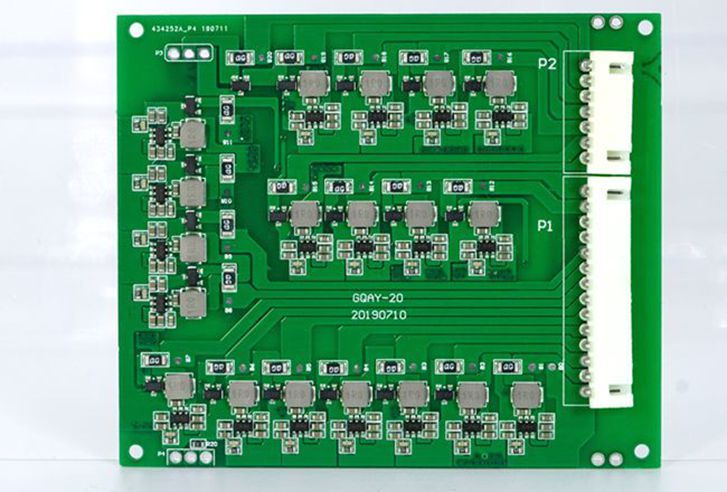
Industrial control boards frequently combine low-voltage digital electronics with higher-current power circuits.
Poor power distribution can create voltage instability, excessive heating, and electromagnetic interference.
For example, motor control PCBAs may contain MOSFETs, gate drivers, current-sensing circuits, and communication interfaces operating in close proximity.
Engineers must consider copper cross-sectional area, current density, thermal vias, component spacing, and heat dissipation.
During manufacturing, solder paste volume, thermal pad soldering, and component placement can influence thermal performance.
Therefore, DFM and DFA reviews should address both electrical design and assembly-related thermal risks.
Managing EMI and Signal Integrity
Electromagnetic interference is another major concern in industrial environments.
Variable-frequency drives, motors, relays, and switching power supplies can generate electrical noise that affects nearby control circuits.
Industrial PCB assemblies may require carefully designed grounding, filtering, shielding, differential routing, and separation between noisy power sections and sensitive signals.
For high-speed interfaces such as Ethernet, controlled impedance and appropriate stackup design become particularly important.
However, PCB assembly quality also matters.
Incorrect component placement, missing filters, solder bridges, or poor grounding connections can undermine an otherwise sound design.
For this reason, manufacturers should combine engineering review with suitable electrical and functional verification.
SMT and Through-Hole Assembly Requirements
Industrial control PCBAs often use mixed assembly technologies.
SMT is commonly used for processors, memory, sensors, passive components, and communication ICs.
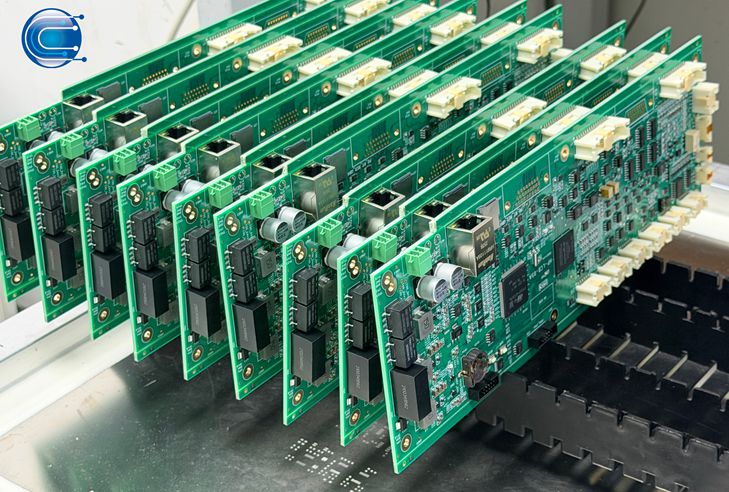
Through-hole assembly remains relevant for connectors, terminals, transformers, relays, and mechanically stressed components.
A PCBA Manufacturer must therefore control both processes.
For SMT, critical factors include solder paste printing, placement accuracy, reflow profiles, and moisture-sensitive component handling.
For through-hole components, solder fill, hole-to-lead clearance, thermal mass, and mechanical stability require attention.
When necessary, selective soldering or dedicated fixtures may help protect temperature-sensitive components and maintain process consistency.
Inspection and Testing for Industrial Reliability
No single inspection method can detect every potential failure.
Instead, industrial PCBAs benefit from a layered quality strategy.
Solder Paste Inspection (SPI) evaluates paste deposition before placement.
Automated Optical Inspection (AOI) identifies visible assembly defects, while X-ray inspection can evaluate hidden solder joints beneath BGA and QFN packages.
In-Circuit Testing (ICT) or flying probe testing can detect certain electrical faults, depending on accessibility and test coverage.
Functional Circuit Testing (FCT) verifies whether the assembled board performs according to defined requirements.
For industrial controllers, functional testing may include communication interfaces, digital and analog I/O, power sequencing, relay outputs, or sensor inputs.
Environmental stress testing may also be appropriate when specified by the OEM.
The goal is to match inspection coverage to the actual risks of the product.
Quality Standards and Traceability
IPC J-STD-001J addresses soldering processes and materials, while IPC-A-610J provides electronic assembly acceptance criteria.
These standards offer a common framework for discussing workmanship and quality expectations.
However, OEMs should agree on the applicable acceptance class and contractual requirements before production.
Traceability is equally important.
Manufacturing records may include PCB material lots, component batches, assembly revisions, inspection results, and functional test data.
These records support failure investigations and corrective actions.
Furthermore, controlled engineering changes help prevent unintended differences between prototype, pilot, and volume production.
Why Full-Turnkey Manufacturing Supports Reliability
A fragmented manufacturing process can create communication gaps between PCB fabrication, component procurement, assembly, and testing.
For industrial control products, these gaps may increase the risk of incorrect component substitutions, outdated drawings, or inconsistent manufacturing requirements.
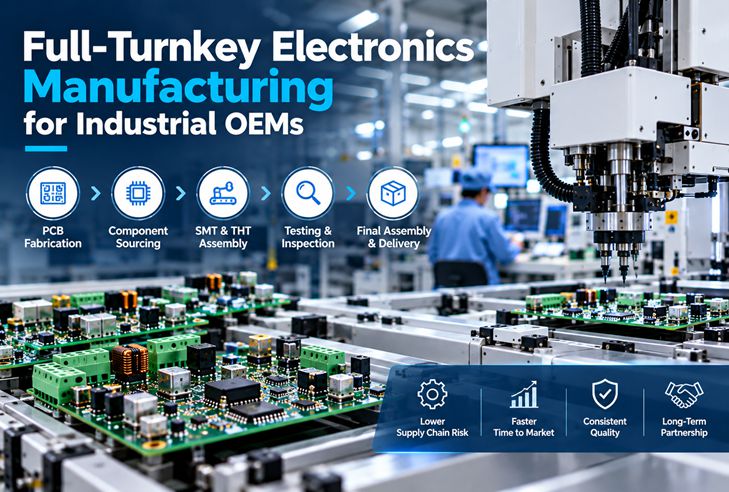
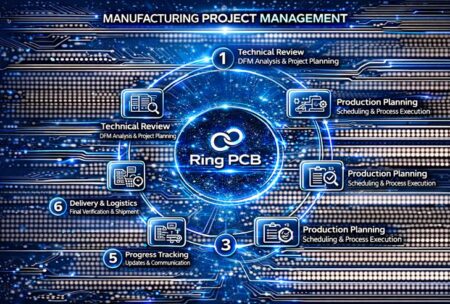
Full-turnkey electronics manufacturing connects these activities through a coordinated workflow.
When engineering, sourcing, production, and quality teams share the same project requirements, potential issues can be identified earlier.
This does not automatically guarantee reliability, but it can improve accountability and simplify problem resolution.
Building Reliable Industrial Control Electronics With Ring PCB
Reliable PCBA for Industrial Control Devices requires an integrated understanding of materials, circuit complexity, assembly technology, inspection, and application-specific testing.
Ring PCB supports industrial electronics projects through PCB fabrication, component sourcing, SMT and THT assembly, engineering review, AOI and X-ray inspection, functional testing, and full-turnkey electronics manufacturing.
With manufacturing support from prototypes and small batches to volume production, Ring PCB helps OEMs coordinate critical production stages while maintaining clear technical communication.
For industrial control PCBA quotations or manufacturing reviews, send your Gerber files, BOM, assembly drawings, quantities, and testing requirements to rfq@ringpcb.com.
References
- International Federation of Robotics (IFR). World Robotics 2025 – Industrial Robots, Executive Summary. 2025.
- IPC. IPC Releases “J” Revisions to Two Leading Standards for Electronics Assembly. April 8, 2024.
- Ring PCB. Full Turnkey PCB Assembly. Company service information.