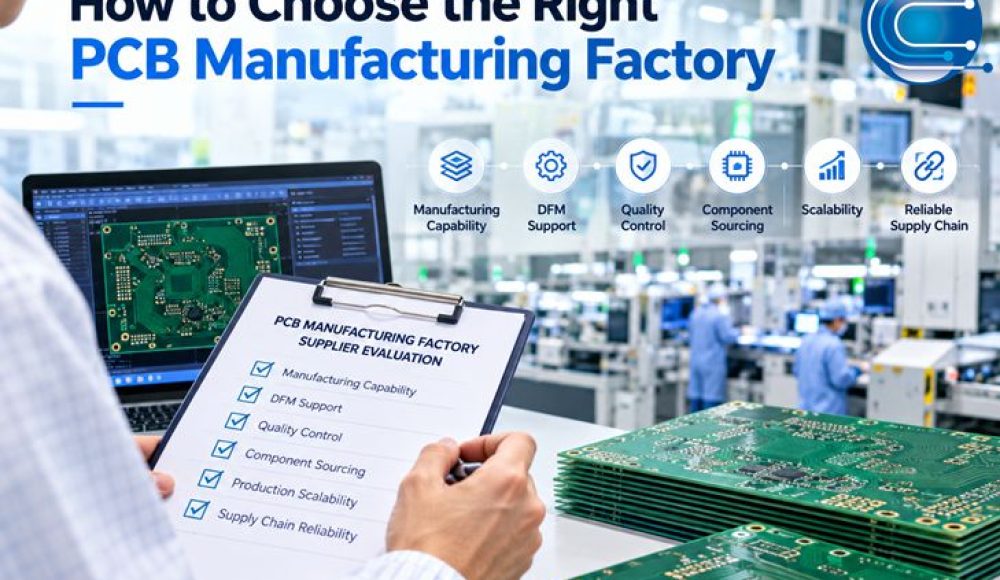
Choosing a PCB manufacturing factory is no longer simply a matter of comparing board prices and lead times. As electronic products become smaller, faster, more connected, and more complex, OEMs need manufacturing partners that can manage fabrication accuracy, component availability, assembly quality, testing, traceability, and production scalability.
For procurement teams and engineers, the real question is therefore not “Who offers the lowest PCB price?” but “Which manufacturer can reduce the total risk of moving this product from design to production?”
1. Start With PCB Manufacturing Capability
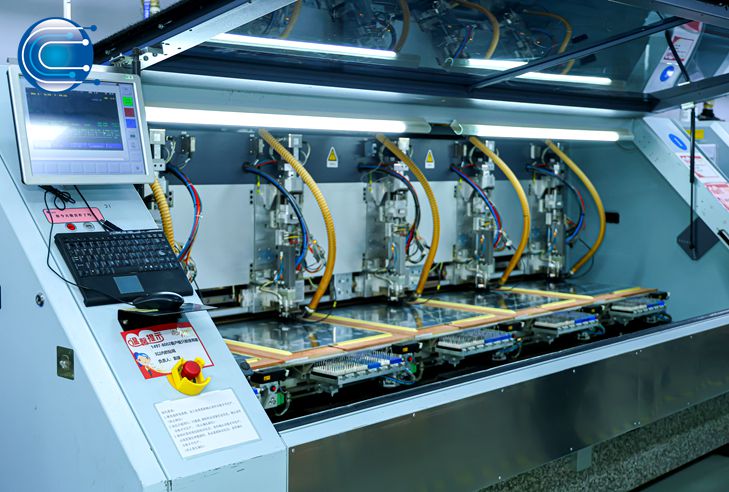
The first step is to determine whether the factory can manufacture the PCB technology your design actually requires.
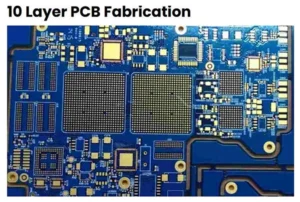
A basic PCB may only require standard FR-4 materials, conventional through holes, and moderate trace widths. However, products used in telecommunications, automotive electronics, industrial control, medical equipment, AI hardware, and high-speed computing may require multilayer stackups, HDI structures, controlled impedance, blind or buried vias, heavy copper, rigid-flex construction, or high-frequency laminates.
This matters because PCB complexity continues to increase alongside advanced packaging and system integration. IPC industry research highlights growing challenges involving materials, power delivery, thermal management, PCBA processes, reliability, and metrology as advanced packages are integrated onto increasingly complex boards.
Therefore, before placing an order, provide your potential PCB supplier with the Gerber or ODB++ files, stackup requirements, material specifications, copper weight, impedance requirements, surface finish, and mechanical drawings. Ask the engineering team to confirm manufacturability rather than assuming that every PCB factory can reliably build the design.
2. Evaluate DFM Before Evaluating Price
One of the most useful services a PCB manufacturing factory can provide happens before production begins: Design for Manufacturability, or DFM.
A professional DFM review can identify issues involving trace and spacing limitations, annular rings, drill-to-copper clearance, solder mask openings, panelization, board edge clearance, impedance structures, and other manufacturing constraints.
For assembled boards, the review should go further. Component footprints, polarity, spacing, thermal design, BGA layout, test access, and assembly processes should also be considered.
IPC emphasizes DFM, Design for Assembly and Design for Test as methods for reducing production problems, controlling cost, and improving final product reliability.
In other words, good engineering support can be more valuable than a small difference in unit price. Finding a design problem before fabrication is normally easier and less expensive than discovering it after hundreds or thousands of boards have been produced.
3. Look Beyond Bare PCB Fabrication
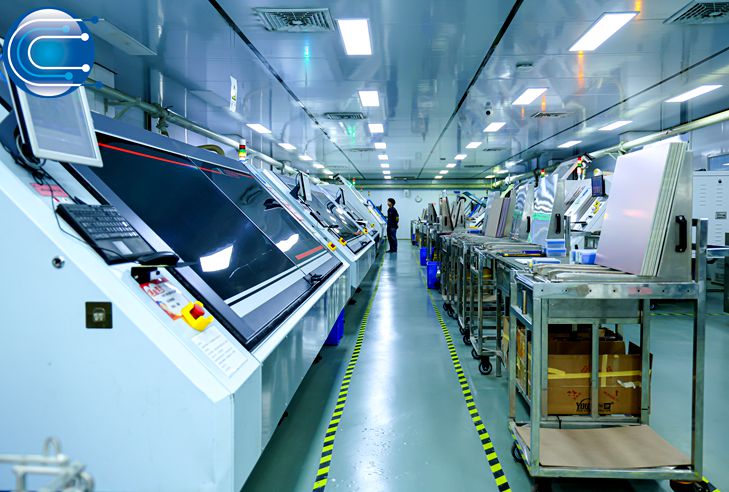
Another important consideration is whether your supplier only manufactures bare PCBs or can also support PCB assembly.
Managing separate vendors for PCB fabrication, component procurement, SMT assembly, through-hole assembly, testing, and logistics can create additional coordination work. When a design revision occurs, determining which supplier has the latest files can also become difficult.
For this reason, many OEMs are evaluating integrated PCB and PCBA manufacturing.
A capable supplier may support:
- PCB fabrication and engineering review
- BOM verification and component sourcing
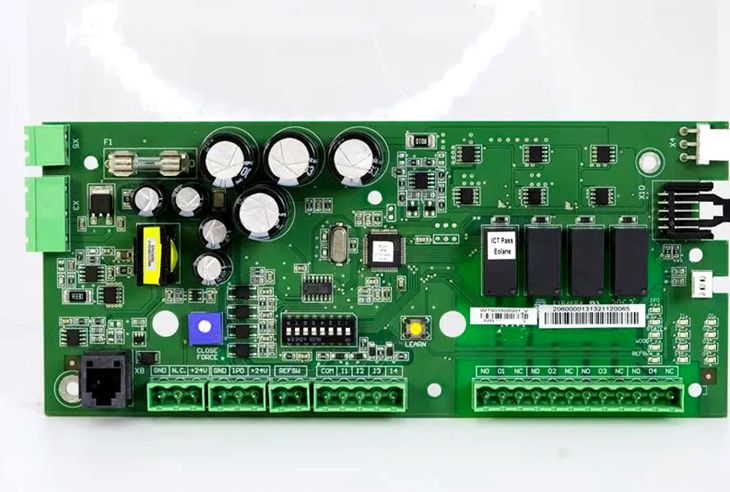
- SMT and THT assembly
- BGA and fine-pitch component assembly
- AOI and X-ray inspection
- ICT, flying probe, or functional testing
- Programming and product configuration
- Box build and final integration
The advantage is not simply convenience. Integrated manufacturing can improve communication between fabrication, sourcing, assembly, and quality teams.
4. Examine Quality Control and Traceability
Quality should be evaluated as a manufacturing system rather than as a final inspection step.
For PCB fabrication, relevant controls may include incoming material verification, dimensional inspection, AOI, impedance testing, electrical testing, microsection analysis, and final visual inspection.
For PCB assembly, the inspection strategy may include SPI, AOI, X-ray, ICT, flying probe, and functional testing depending on product requirements.
This becomes especially important for BGAs, QFNs, and other packages where solder joints cannot be completely inspected visually.
Industry development is also moving toward more intelligent inspection. IPC has highlighted the potential of AI-enhanced AOI to improve detection accuracy, reduce manual intervention, and increase production efficiency.
When auditing a factory, ask not only what inspection equipment it owns, but also when each inspection is performed, what acceptance criteria are applied, and how defects are recorded and traced.
5. Check Whether Production Can Scale
A prototype supplier is not automatically a suitable mass-production partner.
During the prototype stage, flexibility and engineering communication are usually the priorities. During volume production, however, consistency, capacity planning, component continuity, process control, yield, and delivery performance become increasingly important.
Therefore, ask how the manufacturer manages the transition from prototype to NPI, pilot production, and volume manufacturing.
A factory that supports both small and large orders can reduce the need to transfer the project to another supplier after validation. This can also reduce repeated engineering setup, tooling changes, and process qualification.
6. Consider Supply Chain Risk, Not Just Component Price
Component sourcing remains another major concern for electronics buyers.
IPC industry surveys have highlighted persistent material-cost pressure and trade uncertainty across electronics manufacturing. These conditions make BOM management, approved alternatives, component lifecycle checks, and sourcing traceability increasingly important.
Before selecting a supplier, ask how it manages obsolete parts, long lead-time components, alternative manufacturers, counterfeit prevention, and BOM changes.
A slightly cheaper quotation can quickly become expensive if a critical component delays production for several weeks.
From PCB Factory to Manufacturing Partner
Ultimately, selecting a PCB manufacturing factory should involve more than comparing quotations. Manufacturing capability, engineering support, sourcing, quality control, testing, traceability, scalability, and communication all influence the true cost and risk of a project.
Ring PCB supports this broader manufacturing model by combining PCB fabrication with component sourcing, SMT and THT assembly, inspection, testing, and full-turnkey electronics manufacturing. Our manufacturing capabilities support projects from prototypes and small batches through scalable volume production, allowing engineering and procurement teams to manage more of the production process through one coordinated manufacturing partner.
If you are evaluating a PCB or PCBA project, send your Gerber files, BOM, drawings, and manufacturing requirements to rfq@ringpcb.com for project review.