Industrial control equipment manufacturers face a difficult balancing act: they must maintain reliable electronics, manage component costs, respond to engineering changes, and deliver products on schedule.
As automation systems become more connected and sophisticated, managing PCB fabrication, component procurement, assembly, and testing through separate suppliers can introduce unnecessary complexity.
Full-turnkey electronics manufacturing offers an alternative approach by coordinating these activities within a single manufacturing workflow.
For OEMs producing PLC controllers, industrial gateways, motor drives, power monitoring devices, and embedded control systems, this approach can simplify project management and improve production visibility.
However, its real value depends on how effectively the manufacturing partner integrates engineering, sourcing, production, and quality control.
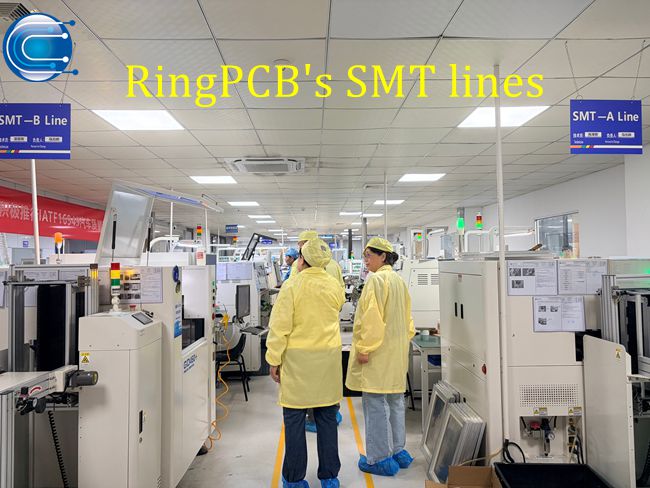
Industrial Automation Is Creating New Manufacturing Demands
Industrial automation continues to expand worldwide.
According to the International Federation of Robotics, factories installed 542,076 industrial robots in 2024, while the global operational stock reached approximately 4.66 million units.
These figures demonstrate the substantial installed base of automation equipment, although they do not directly measure industrial PCBA demand.
As automation infrastructure grows, OEMs must support increasingly diverse electronic control products, including motion controllers, sensor interfaces, communication gateways, and machine control boards.
These products often combine analog sensing, digital processing, power management, and industrial communication within compact assemblies.
Consequently, manufacturing coordination becomes increasingly important.
What Does Full-Turnkey Electronics Manufacturing Include?
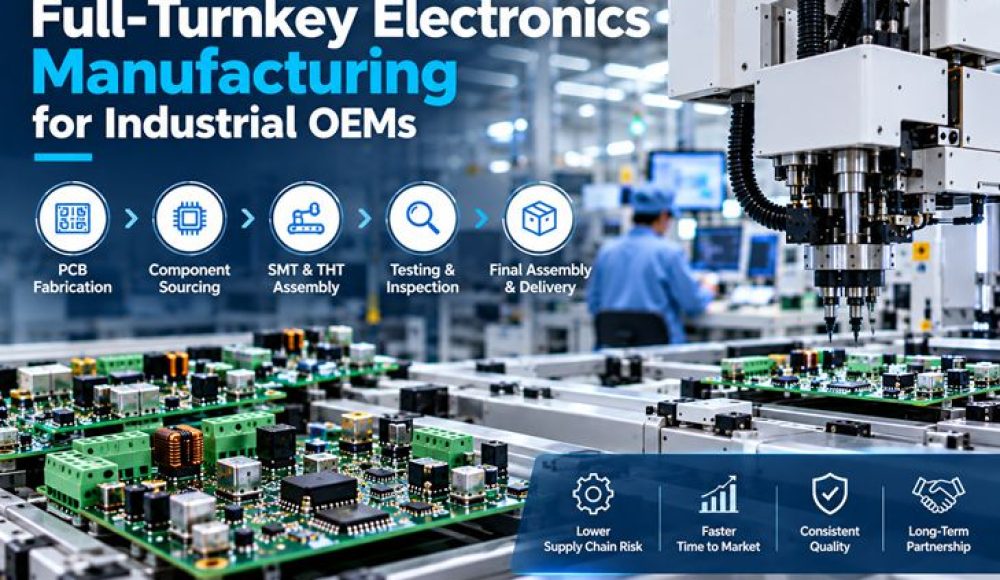
Full-turnkey electronics manufacturing covers the coordinated production of electronic assemblies from customer-supplied manufacturing data.
A typical service includes PCB fabrication, BOM verification, component sourcing, stencil preparation, SMT assembly, through-hole assembly, inspection, testing, and delivery.
Depending on the project, programming, conformal coating, cable assembly, and box build may also be included.
The OEM generally provides Gerber or ODB++ files, BOM, pick-and-place data, assembly drawings, and technical specifications.
The manufacturing partner then reviews these requirements and coordinates the agreed production stages.
This differs from consignment assembly, where the customer may supply the PCB, components, or both.
The key advantage of a full-turnkey model is centralized coordination rather than simply combining several services into one quotation.
Reducing Supplier Handoffs and Production Delays
Consider an industrial controller manufactured through four separate suppliers.
One factory produces the bare PCB, another sources components, a third performs assembly, and a fourth conducts functional testing.
If the PCB dimensions change or a component becomes unavailable, several companies may need to revise their schedules and documentation.
This can increase administrative work and create uncertainty over which files or revisions are approved.
With full-turnkey electronics manufacturing, engineering and production teams can coordinate these changes through one project workflow.
For example, a component substitution can be reviewed against the PCB footprint, assembly process, and test requirements before purchasing is finalized.
This coordination can reduce avoidable delays, although actual lead-time improvements depend on the project and supplier capabilities.
BOM Management Is Critical for Industrial OEMs
Industrial control products often have longer service lives than consumer electronics.
As a result, component lifecycle management becomes a significant concern.
A microcontroller, communication IC, relay, or power management component may become difficult to source during the product’s production life.
In addition, minimum order quantities, lead-time changes, and price fluctuations can complicate purchasing.
IPC’s 2025 supply-chain sentiment research identified elevated material costs, trade uncertainty, and pressure on manufacturers’ profit margins.
Therefore, BOM review should begin before manufacturing release.
A capable turnkey partner can identify components with sourcing risks, verify part numbers, and coordinate approved alternatives with the OEM.
Importantly, substitutions should follow documented engineering approval rather than being made solely for purchasing convenience.
Connecting DFM, DFA, and DFT
Another advantage of integrated manufacturing is the opportunity to coordinate engineering reviews.
DFM evaluates PCB fabrication feasibility.
DFA addresses assembly considerations such as component spacing, solderability, orientation, and process access.
DFT focuses on test access and verification requirements.
For an industrial control board, these disciplines often overlap.
For example, a dense multilayer PCB may be electrically functional but lack sufficient test points for efficient production testing.
Similarly, a large through-hole connector may require special soldering considerations that affect panelization and component placement.
By reviewing these issues together, the manufacturer can help reduce avoidable changes during NPI.
Coordinating SMT, THT, and Mixed Assembly
Industrial control PCBAs frequently require mixed assembly processes.
Fine-pitch processors, communication ICs, and passive components are typically mounted using SMT.
Terminal blocks, power connectors, transformers, and certain mechanical components may require through-hole assembly.
These processes must be planned in the correct sequence.
The manufacturer should evaluate soldering temperatures, component sensitivity, board support, fixture requirements, and inspection access.
Furthermore, process documentation should define how different assembly stages are controlled.
When fabrication and assembly teams collaborate early, they can also optimize panel design and tooling requirements.
Functional Testing Before Equipment Integration
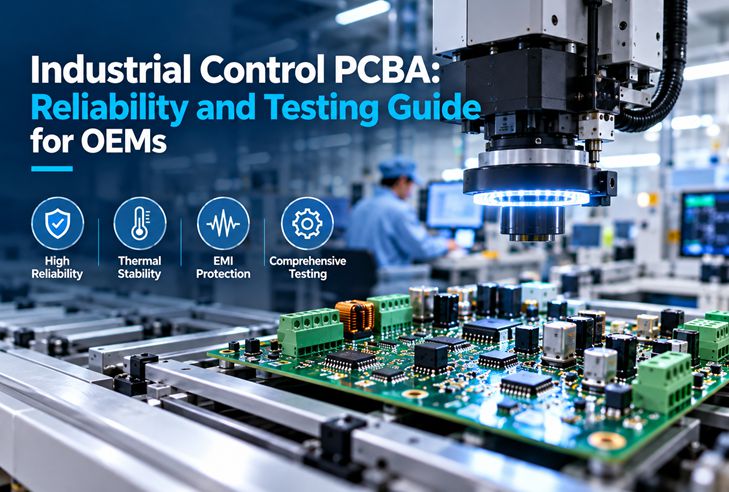
For industrial control devices, visual inspection alone is insufficient.
A board may have acceptable solder joints but still fail to communicate, measure sensor inputs, control outputs, or regulate power correctly.
Functional testing should therefore reflect the intended product behavior.
For example, a PLC I/O module may require verification of digital inputs, output switching, analog measurement accuracy, and communication interfaces.
A motor controller may require power sequencing, gate-driver checks, current-sensing verification, and protection-function testing.
Testing requirements should be defined by the OEM, including acceptance limits and required fixtures.
When functional testing is integrated into the turnkey workflow, failures can be investigated with better access to assembly and manufacturing records.
Flexible Production for Changing Order Volumes
Industrial OEMs rarely have identical production requirements.
One customer may need 20 engineering samples, another may require 300 pilot units, while an established equipment manufacturer may need recurring production batches.
Demand can also fluctuate because of customer projects, equipment upgrades, or product revisions.
Therefore, production flexibility is an important consideration when selecting an EMS partner.
A suitable manufacturer should be able to support prototype builds, high-mix low-volume production, and larger recurring orders.
Using a consistent manufacturing workflow across these stages can reduce repeated setup and documentation work.
However, capacity, component availability, and lead times should always be confirmed for each project.
Improving Traceability and Change Control
Industrial electronics manufacturing requires disciplined documentation.
PCB revisions, BOM versions, assembly instructions, test procedures, and approved component alternatives should remain synchronized.
Without revision control, a production batch may unintentionally use outdated components or manufacturing files.
Full-turnkey manufacturing can simplify document coordination by connecting the major production stages through a common project process.
Traceability may include material batches, component lots, production dates, inspection records, and functional test results.
The required level of traceability should reflect the application and customer specifications.
For OEMs, these records can support quality investigations, maintenance planning, and long-term product management.
How Ring PCB Supports Industrial Electronics Manufacturing
The value of full-turnkey electronics manufacturing is ultimately measured by how well it helps OEMs control production complexity.
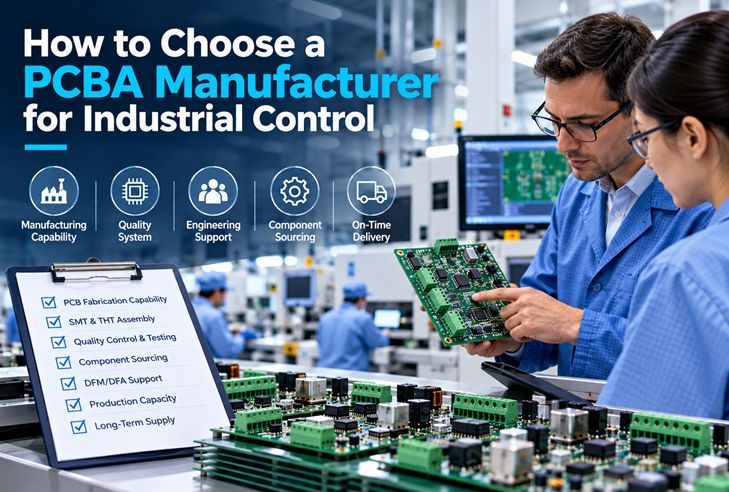
Ring PCB supports industrial control projects with PCB fabrication, component sourcing, SMT and THT assembly, DFM engineering review, AOI and X-ray inspection, functional testing, and coordinated EMS services.
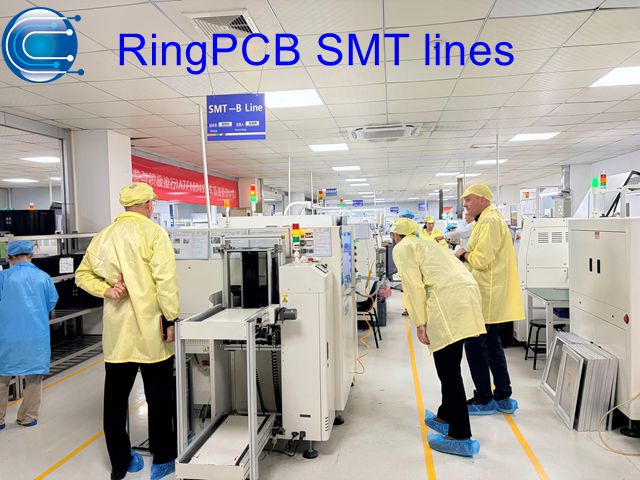
With experience in industrial PCB and PCBA manufacturing, Ring PCB supports prototypes, small-batch orders, and scalable production while helping customers coordinate engineering requirements and manufacturing activities.
For OEMs developing PLC controllers, industrial gateways, embedded control boards, or other industrial electronics, early manufacturing review can help identify sourcing and production risks before larger commitments are made.
Send your Gerber files, BOM, assembly drawings, testing requirements, and expected order quantities to rfq@ringpcb.com to discuss your industrial control PCBA project.
References
- International Federation of Robotics (IFR). World Robotics 2025 – Industrial Robots, Executive Summary. 2025.
https://ifr.org/img/worldrobotics/Executive_Summary_WR_2025_Industrial_Robots.pdf - IPC. Electronics Industry Demand Holds Steady Amid Tariff Turbulence. May 22, 2025.
https://www.ipc.org/news-release/electronics-industry-demand-holds-steady-amid-tariff-turbulence - Ring PCB. Full Turnkey PCB Assembly. Company service information.
https://www.ringpcb.com/product/full-turnkey-pcb-assembly/